The Tang Dynasty (618 – 906 AD) – Part 3/4

September 25, 2010

Later, after the first Tang emperor, Taoism was removed as the national religion and all religions were treated equal.

This benefitted Buddhism.

In 1987, archeologists discovered an underground temple/palace below the Famen Temple that had been built and sealed during the Tang Dynasty and found a solid-gold pagoda and inside was a finger bone of the founder of Buddhism, Sakyamuni.

The seventeen-hundred year-old Famen Temple was built during the Eastern Han Dynasty. To date, this is the largest underground Buddhist palace/temple in China.

Although China is known as the home of tea, it wasn’t until the Tang Dynasty that drinking tea became part of the culture when the Chinese also invented noodles.

Chang’an, known as Xian when it was the capital of China’s first emperor, had an east and west market that sold goods from around the known world.

A popular past time for both men and women during the dynasty was playing polo, which had been introduced from Persia.

Art, music and dance flourished in the Tang capital.  The political flexibility of the Tang Dynasty promoted social tolerance leading to stability.

Continued in Tang Dynasty – Part 4 or return to The Tang Dynasty (618 – 906 AD) – Part 2

______________

Lloyd Lofthouse is the award-winning author of the concubine saga, My Splendid Concubine & Our Hart. When you love a Chinese woman, you marry her family and culture too. 

To subscribe to “iLook China”, look for the “Subscribe” button at the top of the screen in the menu bar, click on it then follow directions.


The Tang Dynasty (618 – 906 AD) – Part 2/4

September 24, 2010

During the Sui (589-617) and Tang Dynasties, China went through a period of cultural and spiritual development.

The country’s ethnic groups along with Confucianism, Buddhism and Taoism coexisted peacefully with foreign religions such as Islam.

Literature and the arts developed more than before.

The Han Dynasty (206 BC to 219 AD) opened the Silk Road for trade, and the civilizations of Rome, Ancient Egypt, of the Euphrates and Tigris Rivers and India continued trade with the Tang Dynasty.

http://www.youtube.com/watch?v=acjINcNNOPI

According to Tang Dynasty records contact was maintained with more than 300 countries and regions across the known world, so the Silk Road was also known as the Envoy Road.

People from countries such as Japan, Korea, and India as well as Tehran came to China.

Many foreigners had positions in the central government of the Tang Dynasty, and they served both as civil officials and military officers.

The Tang Dynasty demonstrated respect for all foreign religions.  During this time, Christianity was introduced to China.

The Imperial family of the Tang Dynasty had been a military family in Northwest China for generations and they made Taoism the national religion.

Laozi, the founder of Taoism, advocated harmony between people and nature, which was reflected in the beliefs of the first rulers of the Tang Dynasty.

Continue with Tang Dynasty – Part 3 or return to The Tang Dynasty (618 – 906 AD) – Part 1

______________

Lloyd Lofthouse is the award-winning author of the concubine saga, My Splendid Concubine & Our Hart. When you love a Chinese woman, you marry her family and culture too. 

To subscribe to “iLook China”, look for the “Subscribe” button at the top of the screen in the menu bar, click on it then follow directions.


The Eighteen Levels of Chinese Hell

June 27, 2010

Many Chinese believe heaven/paradise is out of reach of ordinary mortals. However, hell is a harsh reality and the souls of the dead must go.

Buddhists brought this concept of hell to China from India, and over time, this belief grew wings and picked up baggage as it spread. Taoism, Buddhism and traditional Chinese folk religions believe that the souls of the dead must experience several tests before reaching the gates of hell, where demons demand money to enter, which might explain why many Chinese burn paper money at funerals to make sure beloved family members have some for the journey.

one of the eighteen levels to hell

There are eighteen levels on this journey—each one a test. For criminals, the souls are heavy and the trip long and painful. Chinese almanacs graphically illustrated the punishments. Good souls were light and made the journey quickly.

Today, these beliefs are probably more alive in rural China than urban areas where Mao’s Cultural Revolution had more of an impact driving out old beliefs.  Most Taiwanese and many in Hong Kong still hold to these beliefs.

If given a choice, which hell would you select—Chinese, Islamic or Christian?

Discover The Failure of Multiculturalism in the United States

_______________

Lloyd Lofthouse is the award-winning author of My Splendid Concubine [3rd edition]. When you love a Chinese woman, you marry her family and culture too. This is the love story Sir Robert Hart did not want the world to discover.

Subscribe to “iLook China”!
Sign up for an E-mail Subscription at the top of this page, or click on the “Following” tab in the WordPress toolbar at the top of the screen.

About iLook China


Chinese Poetry

May 3, 2010

Traditional Chinese Poetry is very similar to Western poetry.  Lines in Chinese poetry may have a fixed number of syllables and rhyme was required, so ancient Chinese poetry resembles traditional English verse and is not at all like the free verse in today’s Western culture.

Modern Chinese poets have written in free verse, but many still write with a strict form.

In the end, the form is not as important as what the poem says. Western poetry often focuses on love while painting an image of the poet as a lover.

Influenced by Confucius and Taoism, the ancient Chinese poet shows he or she is a friend—not a lover and often paints a picture of a poet’s life as a life of leisure without ambitions beyond writing poetry and having a good time.

Chinese Dragon Boat Races

According to legend, this Chinese poet killed himself to protest the corruption of the time, and it is said that the Dragon Boat Festival was named to honor his sacrifice.

Battle
By Qu Yuan (332-295 B.C.)

We grasp our battle-spears: we don our breastplates of hide.
The axles of our chariots touch: our short swords meet.
Standards obscure the sun: the foe roll up like clouds.
Arrows fall think: the warriors press forward.
They menace our ranks: they break our line.
The left-hand trace-horse id dead: the one on the right
is smitten.
The fallen horses block our wheels: they impede the
yoke-horses?”

Translated by Arthur Waley 1919

If interested in Chinese art and/or opera, see Peking Opera.


Traditional Chinese Diet

April 11, 2010

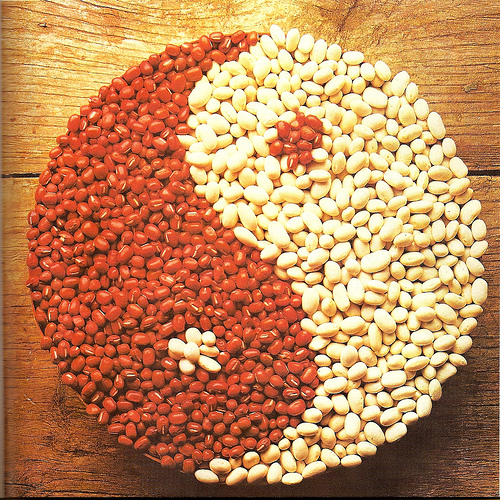
The concept of balance as taught by Confucius and Lao Tzu (Taoism) also plays an important role in diet. In China, yin foods are considered calming. It is believed that traditional Chinese foods come in three categories—yin, yang and neutral.

Yin foods should be eaten in summer and only in moderation in the winter as they are all very cooling. Yin foods are cool or cold in nature, clear away heat and eliminate toxins. Yang is the opposite of yin, and foods in this category are considered warm, dispel cold and treat symptoms from too much yin.

Some yin foods: Bananas, Clams, Crab, Grapefruit, Lettuce, Watercress, Watermelon, Apples, Cucumber, Pears, Mango, Spinach, Strawberries, Tomatoes

The yin and yang of food

Some yang foods: Cherries, Chicken, Dates, Ham, Leeks, Mutton, Peaches, Raspberries, Shrimps, Sunflower Seeds, Wine, Garlic, Ginger, Onion, Pepper

Some neutral foods: Beef, Beets, Carrots, Celery, Corn, Egg, Potatoes

The Chinese philosophy for eating is different from America and the West. Traditional Chinese medicine applies these philosophies to avoid or treat disease through diet. Once a Chinese doctor determines the nature of an imbalance, he or she aims to restore balance through acupuncture, herbs, and changes in diet or lifestyle. It is believed that as balance is restored in the body, so is health.

See “Health Care Without Drugs” http://wp.me/pN4pY-ey

Sign up for an RSS Feed for  iLook China

Lloyd Lofthouse is the author of the award winning My Splendid Concubine and writes The Soulful Veteran and Crazy Normal.