An Insider’s View from Speak Without Interruption

March 30, 2010

In this post, instead of hearing form an outsider who has visited China and studied the culture for a decade while writing two novels about Robert Hart, the Godfather of China’s modernization, let’s see what Will Liu writes about China, his home.
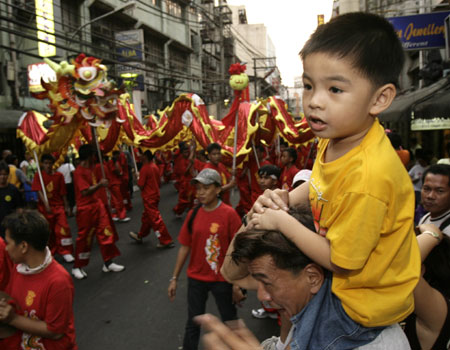
Lunar New Year in China

“This Chinese New Year Season, something did surprise me. As a rule, every year…, I must make the trip to the hometown of my wife, where her father still lives…. What astonished me is that I could not find anybody smoke in the bus! Just last year and before, that was what tortured me most. You cannot avoid smoke, no matter on a bus or in a cab.”

Liu write about the differences he sees between cities.

Then in Part II, Liu writes, “Now, more and more people, especially young people celebrate Christmas Day. Nevertheless, we still take the Chinese New Year as our major … holiday, which we call the Spring Festival. Like the Christmas Season, we have a long Chinese New Year Season, typically the government approves a legal vacation of 3 days from New Year’s Eve till January the 2nd according to the Chinese lunar calendar.”

See another point-of-view from and expatriate, Tom Carter’s Teaching English in the Middle Kingdom http://wp.me/pN4pY-is


Super Power Dawn

March 29, 2010

Alan Caruba writes about Super Power China at “Speak Without Interruption”. “As the sun begins to set on an America whose dollar set the standard and whose capacity for manufacturing was unchallenged, a new superpower is emerging and it is China.”

Two notable individuals from history predicted more than a century ago what is taking place in China—the first was a young Irishman from Belfast who arrived in China in 1854 and left in 1908.  His name was Robert Hart and to historians, he’s known as the Godfather of China’s modernization.

Hart wrote near the end of the 19th century that in a hundred years China would be a superpower again. Jack London, who visited China and wrote about it, made the same prediction.

The way the government has decentralized power in China is not new. Imperial China did the same. The Emperor appointed the governors to the provinces based on who earned the highest scores in the Imperial exams and they ruled like kings. 

As for a market economy, China may have invented this on a national scale more than a millennia ago proving that it doesn’t take a democracy or republic to prosper.

If you spend time in China, you will discover that the Chinese are born entrepreneurs, who find ways to get around government restrictions to make money. Sadly, this has led to the pollution in China today—something the central government is struggling to deal with as they transition to green power.

As for long term planning, consider that the top men in China’s government are engineers or scientists compared to America’s leaders who are mostly lawyers. After Mao, China implemented term and age limits for government positions, something America does not have.

______________

Lloyd Lofthouse is the award-winning author of the concubine saga, My Splendid Concubine & Our Hart. When you love a Chinese woman, you marry her family and culture too.

If you want to subscribe to iLook China, there is a “Subscribe” button at the top of the screen in the menu bar.


Transporting Goods by Road in China

March 26, 2010

Originally Published (see more photos here) at Speak Without Interruption on February 19, 2010 by Bob Grant—publisher/editor for Speak Without Interruption. Posted on iLook China, 3/26/10 at 08:00

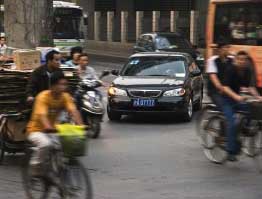
About any time, day or night, in major Chinese cities you can see any type of vehicle transporting all imaginable products on the roads. There are trucks carrying ocean containers and Mercedes carrying people. I have traveled to England, Ireland, Holland, Italy, Canada, Mexico, Indonesia, Malaysia, Korea, and China. I would not call myself a “world traveler” but, of all the countries in which I have traveled, I found China to be the most diverse in terms of the types of vehicles that transported goods on their roads.

Regardless of where my travels took me in China—rural or city—there were always a lot of people transporting goods in any type of vehicle that could move on its own, by animal, or under human power. The fact that people were busy working was not of particular note. It was the diversity of their means of transportation within a single view that was of interest to me. Also, they all seemed to move with purpose—whether carrying large or small items. I suppose that is really not so different than any other parts of the world—for some reason it just struck me as another admirable quality of the Chinese people.

Photo from original post on Speak Without Interruption

Most of the smaller commercial trucks are blue—I have no idea why? I asked a couple of times but really did not receive an answer. Maybe there was a sale on blue paint? I am certain there is a reason, but since I don’t know it, I can’t share it with you—rather just make reference to it.

I will say that with all those vehicles on the road it did add to the air pollution. In most states in the U.S., vehicles have to pass safety inspections before they can be licensed. I am not certain this is a rule in China—if it can move it is road ready. 

In my travels inside China for business, I found the Chinese to be very capitalistic in nature—certainly contrary to how I viewed the Chinese people prior to me actually visiting the country. The diversity in the means of transporting their goods is just one example of this fact at least in my mind.

Read more of Bob Grant’s guest posts at http://wp.me/pN4pY-gJ


Flowers, Greenery, and Gardens

March 17, 2010

Originally Published at Speak Without Interruption on February 18, 2010 by Bob Grant — publisher/editor for Speak Without Interruption. Posted on iLook China, 3/17/10 at 08:00

The photos with this guest post are from my collection. Click on Originally Published to see more.

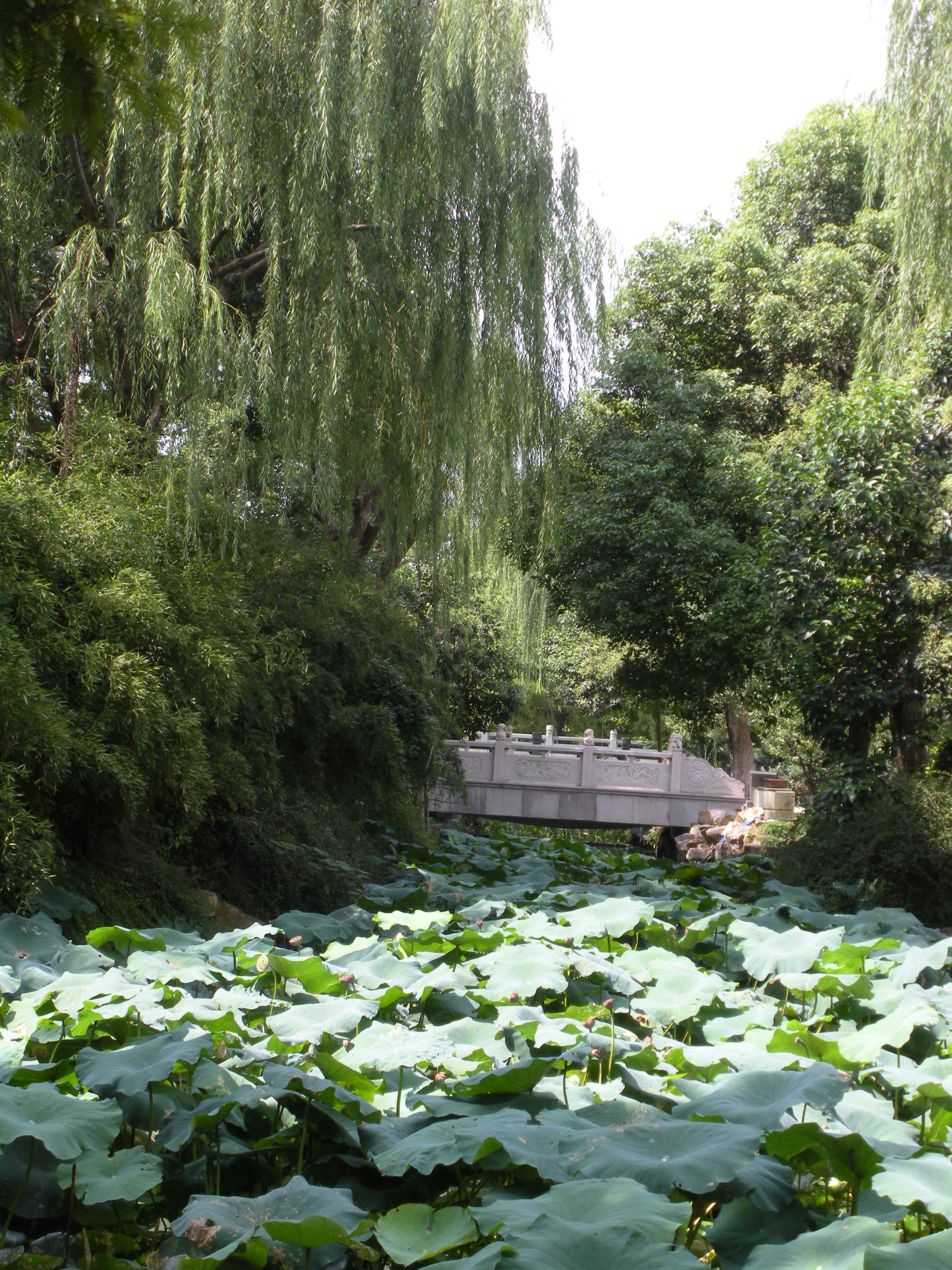
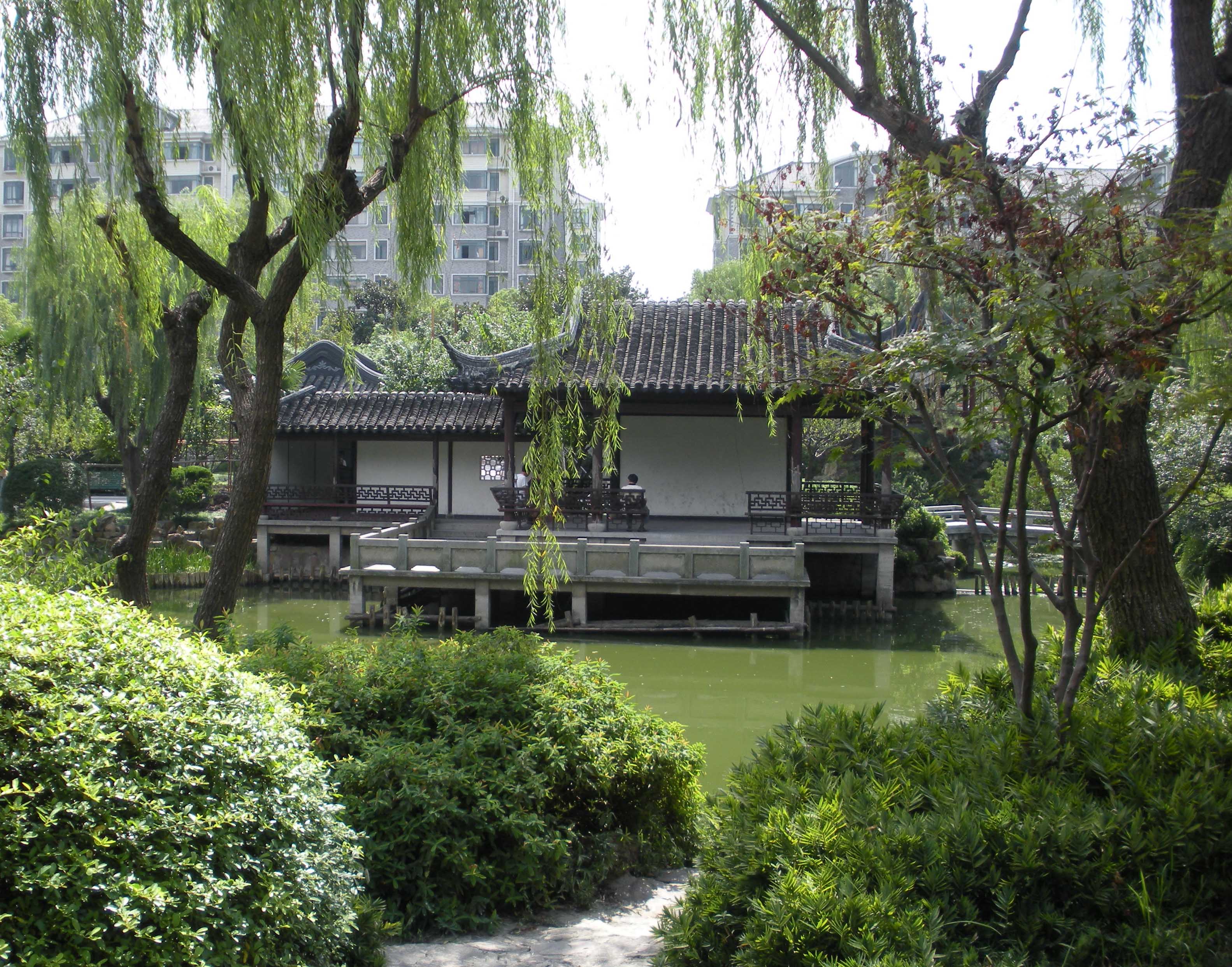
One of the aspects of my trips to China, that I truly enjoyed, was seeing all of the flowers, greenery, and gardens along the way.  I wanted to specifically mention this fact, and state, the photos you might have seen of typical Chinese landscapes are true.  In fact, there were many more beautiful sights – of plants and flowers – than I had anticipated.  I saw them in cities – in the country – in hotels – in restaurants – in offices – and other places too numerous to mention.  Our office was in southern China – with a tropical climate – so there were flowers and greenery there any time of the year I visited.  As you go farther north, in China, there are the four seasons; however, even when it was too cold for outdoor plants there were many indoor ones wherever I went.

Shanghai Public Park

I do not enjoy planting or maintaining plants but I certainly like looking at them.  The growing scenery I saw in China always gave me a feeling of tranquility.  I had once thought about buying a condo in Shenzhen so I could stay longer when I visited.  One of the condos had a small patio (this was a multistoried condo building) and each patio came with a beautifully planted garden with flowers, plants, and trees.  It was a place where I would have enjoyed going every evening and just sitting.  It was covered so I could have enjoyed it in most types of weather.

Shanghai Public Park

Because I never stayed in the Western type hotels – rather staying where my Chinese associates stayed – I was treated to a unique insight on how some of the Chinese population lived.  Some of the hotels – where I stayed – were literally right next to apartment buildings.  I could actually look out my window into those apartments.  I can’t say that I saw anything “personal” in nature but I did get to see how some Chinese decorated their apartments and balconies.  I could also see the gardens many planted on the rooftops of their apartment buildings.  Staying in those places certainly gave me even more appreciation of the Chinese people in that I saw a side of their lives that most “Westerners” would never see unless they stayed in places where I stayed.

I will always have fond memories of the many beautiful things I saw growing in China – it is a picture that will remain with me forever.

If you want to see more of China, see Visiting Xian at http://wp.me/pN4pY-8o


Tolerance to Infinity Guest Post by Bob Grant

March 13, 2010

Originally published at Speak Without Interruption on February 17, 2010 by Bob Grant — publisher/editor for Speak Without Interruption. Posted on iLook China, 3/13/10 at 08:00

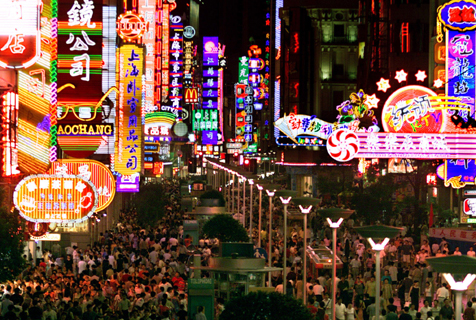
(Note: There are more photos at the original site. The Nanjing Road photo here does not appear at Speak Without Interruption.)

Wherever people normally congregate in groups—shopping areas, elevators, subways, airports, city streets, and the like—there are a lot more people in China congregating in those same places.  Again, I can only use my own experiences – in these types of crowds in China – but I was amazed how tolerant people were of each other.  In some cases I was squeezed to the people next to me so closely that I could almost feel their hearts beating.  In these situations – personal space was at zero.  I was crammed into a subway once and could literally stand – without holding on to anything – because we were packed so close together (not that I really had anything to hold on to anyway).  The exit from this subway was orderly and people were polite to each other – and me.  At our stop, we had to ask people to move, which was difficult for them, but we got off with no problems or delays.

Nanjing Road, Shanghai - this is the normal crowd

 I am not certain the Chinese people have a choice living – and working – among that many other people.  However, I saw it as another attribute of China and its people.  As a “Westerner” I could have easily been accosted by anyone in these large crowds as most of the time I was the only non-Chinese among them.  But this never happened.  No one stared at me or otherwise acknowledged me as anything other than one of them.  Perhaps I am reading too much into these situations, but I will go with my feelings here and believe this is a nation of extremely tolerant individuals. 

 Places I went did not always have these types of crowds, but in the locations where large crowds congregated, I was always impressed by the politeness of my fellow “Crowdies”.  I can’t say the same for other crowds, in which I have found myself, in the US and other parts of the world.  I think China is unique in this area and its people have Tolerance to Infinity.

 Read China Trip 2008 at  http://wp.me/pN4pY-c