The Evolving Sexual Revolution in China: Part 1 of 5

December 16, 2014

The world’s biggest country is going through the world’s largest sexual revolution.  From the Internet to corner sex shops, China is changing. But lost in the mix, millions of single men can’t find a date much less a mate.

As China goes through what the West experienced in the 1960s, Mao’s Little Red Book has been replaced with a black book filled with phone numbers and date information.

Mao’s taboos against capitalism and sex have been gone for decades. With these changes comes the dark side—drugs, prostitution, HIV and STDs. Under Mao, sexuality was crushed. Everyone wore the same baggy colored clothes. Everyone had the same haircut. Young couples who fell in love and were caught were punished. But tday, cosmetics, perfume and stylish clothes have replaced Mao uniforms.

Millions are learning about romance and love. However, millions of others have been left with sexual, psychological problems and are very ignorant about sex. They were victims of Mao’s Cultural Revolution’s sexual repression.

Continued on December 17, 2014 in Part 2

View as Single Page

_______________

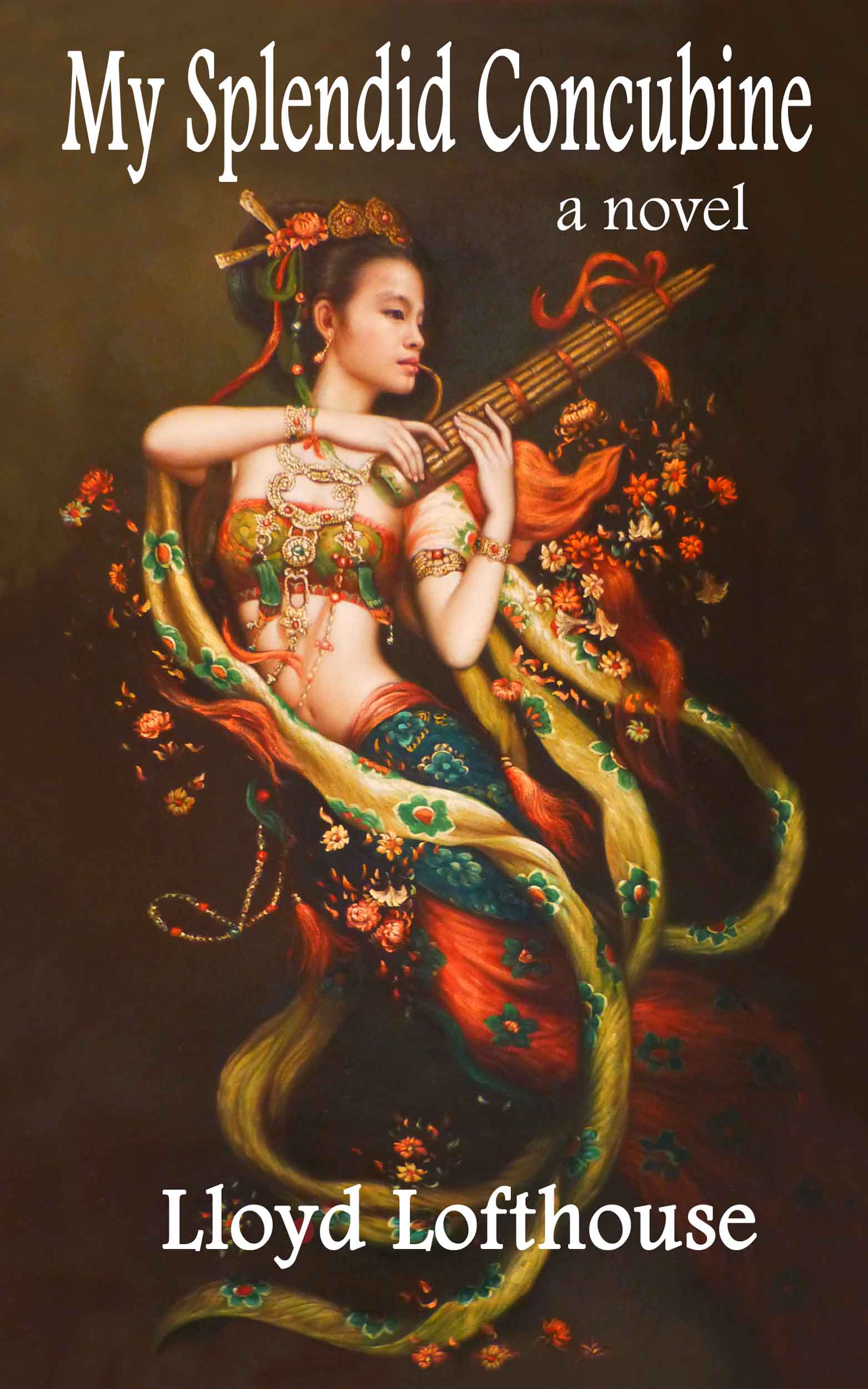
Lloyd Lofthouse is the award-winning author of My Splendid Concubine [3rd edition]. When you love a Chinese woman, you marry her family and culture too. This is the love story Sir Robert Hart did not want the world to discover.

Kindle_LR_e-book_cover_MSC_July_25_2013

Subscribe to “iLook China”!
Sign up for an E-mail Subscription at the top of this page, or click on the “Following” tab in the WordPress toolbar at the top of the screen.

About iLook China

China’s Holistic Historical Timeline


Balzac and the Little Chinese Seamstress

June 25, 2013

Based on a novel written by Dai Sijie, who also directed the film.
ISBN: 978-0385722209
Publisher – Anchor (October 29, 2002)

I read Balzac and the Little Chinese Seamstress soon after it came out.  A few years later, we drove more than sixty miles to see the Mandarin language movie. Checking Amazon recently, I saw 264 customer reviews for the book with an average of 4.1 out of 5 stars. This short novel spent twenty-three weeks on the New York Times best-seller list. The author, born in China, moved to France where he learned to read, speak and write French. The book was originally written in French and translated into English by Ina Rilke.

The story is about two likable, teenage boys and their struggle after being banished to a peasant village for “re-education” during the Chinese Cultural Revolution. Sons of doctors and dentists, the boys work at muscling buckets of excrement up the mountainside and mining coal. Then there is the little seamstress of the title, whom Luo, one of the boys, falls in love with. He dreams of transforming the seamstress from a simple country girl into a sophisticated lover. He succeeds beyond his expectations, but the result is not what he expected.

This link goes to the Mandarin language DVD with English subtitles. Discover more Chinese cinema through Joan Chen’s Xiu Xiu: The Sent Down Girl

_______________

Lloyd Lofthouse is the award-winning author of My Splendid Concubine [3rd edition]. When you love a Chinese woman, you marry her family and culture too. This is the love story Sir Robert Hart did not want the world to discover.

His latest novel, Running with the Enemy, was awarded an honorable mention in general fiction at the 2013 San Francisco Book Festival.

Subscribe to “iLook China”!
Sign up for an E-mail Subscription at the top of this page, or click on the “Following” tab in the WordPress toolbar at the top of the screen.

About iLook China


The Complex Evolution of Sex in China

October 10, 2012

A Guest Post by Richard Burger of The Peking Duck

One of the questions I hear the most is whether the Chinese people’s attitude toward sex is conservative or open-minded. And the answer is that it’s complicated.

First, there is more than one China: there’s rich China and poor China, urban and rural China, young China and older China.

Generalizations are tricky, and there always have to be qualifiers. It’s safe to say that in the larger cities like Beijing and Shanghai people are far less hung up than they were about sex twenty years ago.

Even in most of the second-tier cities you’ll find gay bars, sex shops, young couples holding hands and a lot of young people finding one-night stands over the Internet.

Sexologist Li Yinhe estimates that more than 50 percent of young urban Chinese have premarital sex, something that was unheard of thirty-five years ago. In the countryside that number is probably far lower, but most young people are leaving their rural hometowns to find work in the larger cities.

At the same time, however, traditional Chinese beliefs still hold sway over many of these young people.

For example, sex is not something you talk about openly.

In addition, when it comes time to choose a spouse, nearly all young Chinese will include their parents in the process, striving to make it a family decision.

Many if not most husbands still place a high premium on virginity and expect to see blood on the sheets the night of their honeymoon. This attitude is so fixed that every year hundreds of thousands of Chinese women have an operation to restore their hymens, or buy inexpensive artificial hymens that seep artificial blood.

This is an anomaly: more Chinese young people are having premarital sex yet men still expect their wives to be virgins.

China is in a tug of war between its conservative past and the lure of Western-style sexual freedom.

Looking at the trends and how quickly China’s sexual revolution has progressed, I would have to predict that sexual openness and tolerance will increase, and eventually China will shake off the vestiges of the sexual puritanism that prevailed under Mao.

However, for now, sex remains a touchy subject, even in the cities. Sex education, for example, is mandatory but often biology teachers who are supposed to teach it are too squeamish and simply skip to the next chapter. When they do teach this subject, the focus is on biology and anatomy, with little or no reference to contraception or sexual morality, such as the woman’s right to say no.

Here, too, there are signs of improvement in the larger cities, but it is very slow going. Sex remains a taboo subject that most Chinese are not comfortable discussing outside of their bedroom.

Discover more of China’s Sexual Revolution

____________________________

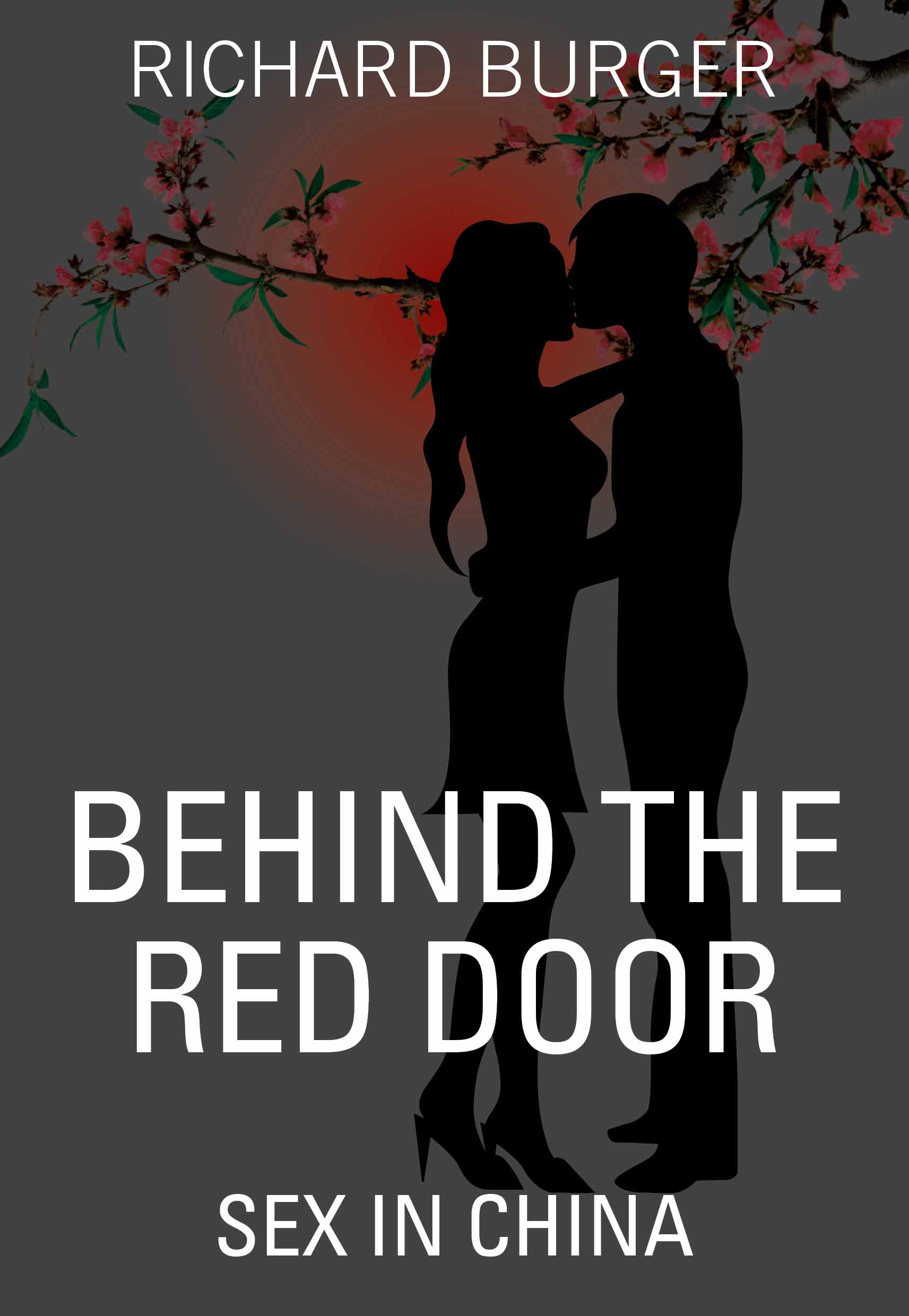
Richard Burger is the author of Behind the Red Door: Sex in China, an exploration of China’s sexual revolution and its clash with traditional Chinese values.

Subscribe to “iLook China”!
Sign up for an E-mail Subscription at the top of this page, or click on the “Following” tab in the WordPress toolbar at the top of the screen.

About iLook China


TABOO IS THE NEW NORMAL

October 1, 2012

A review of “Behind the Red Door” by Richard Burger
Review by Tom Carter

Among the many misimpressions westerners tend to have of China, sex as some kind of taboo topic here seems to be the most common, if not clichéd.  Forgetting for a moment that, owing to a population of 1.3 billion, somebody must be doing it, what most of us don’t seem to know is that, at several points throughout the millennia, China has been a society of extreme sexual openness.

And now, according to author Richard Burger’s new book Behind the Red Door, the Chinese are once again on the verge of a sexual revolution.

Best known for his knives-out commentary on The Peking Duck, one of China’s longest-running expat blogs, Burger takes a similar approach to surveying the subject of sex among the Sinae, leaving no explicit ivory carving unexamined, no raunchy ancient poetry unrecited, and, ahem, no miniskirt unturned.

Opening (metaphorically and literally) with an introduction about hymen restoration surgery, Burger delves dàndàn-deep into the olden days of Daoism, those prurient practitioners of free love who encouraged multiple sex partners as the ultimate co-joining of Yin and Yang.  Promiscuity, along with prostitution, flourished during the Tang Dynasty – recognized as China’s cultural zenith – which Burger’s research surmises is no mere coincidence.
Enter the Yuan Dynasty, and its conservative customs of Confucianism, whereby sex became regarded only “for the purpose of producing heirs.”  As much as we love to hate him, Mao Zedong is credited as single-handedly wiping out all those nasty neo-Confucius doctrines, including eliminating foot binding, forbidding spousal abuse, allowing divorce, banning prostitution (except, of course, for Party parties), and encouraging women to work.  But in typical fashion, laws were taken too far; within 20 years, China under Mao became a wholly androgynous state.

We then transition from China’s red past into the pink-lit present, whence prostitution is just a karaoke bar away, yet possession of pornography is punishable by imprisonment – despite the fact that millions of single Chinese men (called bare branches) will never have wives or even girlfriends due to gross gender imbalance.

Burger laudably also tackles the sex trade from a female’s perspective, including an interview with a housewife-turned-hair-salon hostess who, ironically, finds greater success with foreigners than with her own sex-starved albeit ageist countrymen.

Western dating practices among hip, urban Chinese are duly contrasted with traditional courtship conventions, though, when it comes down to settling down, Burger points out that the Chinese are still generally resistant to the idea that marriage can be based on love.  This topic naturally segues into the all-but-acceptable custom of kept women (little third), as well as homowives, those tens of millions of straight women trapped in passionless unions with closeted gay men out of filial piety.

Behind the Red Door concludes by stressing that while the Chinese remain a sexually open society at heart, contradictive policies (enforced by dubious statistics) designed to discard human desire are written into law yet seldom enforced, simply because “sexual contentment is seen as an important pacifier to keep society stable and harmonious.”

____________________________

Travel Photographer Tom Carter traveled for 2 years across the 33 provinces of China to show the diversity of Chinese people in  China: Portrait of a People, the most comprehensive photography book on modern China published by a single author.

Also by Tom Carter Eating Smoke — a question and answer with author, Chris Thrall in addition to Harlequin Romance Invades China

If you want to subscribe to iLook China, there is a “Subscribe” button at the top of the screen in the menu bar.

Note: This guest post by Tom Carter first appeared in China in City Weekend Magazine. Reblogged with permission of Tom Carter. Behind the Red Door was published by Earnshaw Books

Sex, Sex, Sex as Reported by “The China Law Blog”

January 3, 2011

The China Law Blog posted a piece in August 2009 that I became aware of recently titled “A Western Woman in China….Sex, Sex, Sex????!!!!

Dan of The China Law Blog mentions a post at Gina in Shanghai, another Blog. He summarizes Gina’s post with “Chinese view Western women to be like the women in “Sex in the city”.

Then he finishes his brief post with a question “How do you feel about attitudes toward sex in China?”

Actually, I don’t think I have an opinion on that topic.

After all, how others behave or think is not my problem to carry around like a burden, as Gina seems to be doing.


Does this episode of “Sexy Beijing” hosted by Sufei support the “Sex in the City” Stereotype Gina is talking about?

Then I clicked on the link that took me to Gina in Shanghai to read her longer post.

I discovered that Gina is from Palo Alto in the US, which isn’t far from where I live in the East Bay.

Reading her post, I sensed her frustration but also saw her inability to accept others for who they are and what they believe. From what I’ve learned, 85% of an individual’s personality is formed by the environment he or she grew up in and only 15% comes from genetics.

In fact, the multitude of environments in China are very different from the US, where most people grow up as if they live in a jar expecting the rest of the world outside the jar to learn how to act and think like them as if all Americans were the same–isn’t that a reverse stereotype?

In her conclusion, Gina wrote, “There are frustrations with the way we are treated differently, and that the way we look comes associated with really heavy assumptions about our personality, our behavior, our way of life, and even our country…”

When I finished reading Gina’s post, I thought how Americans do the same thing to the Chinese—stereotype them with heavy assumptions about their personalities, their behavior, their way of life and even their country.

Most of those assumptions are supported by American politicians and the Western media and of course maybe individuals such as Gina when she says, “At first, I found these statements funny, but this quickly became something that made me incredibly angry and defensive. As a woman who is quite proud of my independence and my personal choices, I hated being pigeonholed into this ‘morally degenerate’ category. But it seemed like a losing battle…”

That poses a question—is there a double standard when it comes to sex or is it because women and men are different genetically and they grow up in different individual environments?

Shatter your stereotype of China (if you have one) and learn about China’s Sexual Revolution

______________

Lloyd Lofthouse is the award-winning author of the concubine saga, My Splendid Concubine & Our Hart. When you love a Chinese woman, you marry her family and culture too.

If you want to subscribe to iLook China, there is a “Subscribe” button at the top of the screen in the menu bar.