Seven Wonders of China (2/5)

August 9, 2010

2. Hanging Monastery

Another popular tourist site is the fifteen-hundred year old wooden Hanging Monastery.   The monastery is suspended fifteen stories above the valley floor on the side of a sheer cliff.  It is a mystery why the monastery was built there and why.

One reason might be the floods that once plagued the valley. Today, a dam controls the water. The monastery was built in an indentation in the cliff below an overhand.

What cannot be seen from the valley floor is the Hanging Monastery was built into the cliff’s face. More than forty caves and rooms were dug into the rock.  This process allowed supports to be built into the cliff.  The thin wooden pillars are only there for decoration and were added in the last century.

3. The Great Wall

One of the world’s greatest treasures is the almost four-thousand mile Great Wall, which took two-thousand years to complete.

The early great wall was made of layers of pressed earth and straw. The Qin Dynasty completed the first wall.  The Han Dynasty extended the wall toward Mongolia.  The Ming Dynasty built the wall stronger of stone and mortar.  The Chinese used smoke and fire to send messages over long distances to warn of enemy attacks.

See Traveling the Great Wall or return to The Seven Wonders of China – Part 1

______________

Lloyd Lofthouse is the award-winning author of The Concubine SagaWhen you love a Chinese woman, you marry her family and culture too. This is the love story Sir Robert Hart did not want the world to discover.

Subscribe to “iLook China”!
Sign up for an E-mail Subscription at the top of this page, or click on the “Following” tab in the WordPress toolbar at the top of the screen.

About iLook China


Seven Wonders of China (1/5)

August 9, 2010

1. Xian, the first emperor and the Terra Cotta Warriors

From this Discovery Channel program on the Seven Wonders of China, we learn that there are 55 ethnic groups and 235 living languages. The first of the seven wonders is near Xian, which was the capital of 13 of China’s Dynasties.

In 1974, Chinese farmers digging a well near Xian discovered the first of the terra cotta warriors guarding China’s first emperor, Shi Huangdi, of the Qin Dynasty (221 – 207 BC).

The terra cotta warriors are one of China’s most popular tourist attractions. About 10 million tourists visit annually.  No two terra cotta soldiers look alike.

The first emperor centralized the government, standardized the written language, currency, and weights and measures. With these changes, he created China’s national identity.  Forcing hundreds of thousands of workers, he also had The Great Wall completed.

Most Chinese believe in the immortality of the spirit and life after death.

It is tradition that the Chinese believe there is continuity between life and death, and people may take things with them for comfort in the spiritual world, which explains why the first emperor had such an elaborate tomb built.

Discover more about The First Emperor: The Man Who Made China

______________

Lloyd Lofthouse is the award-winning author of The Concubine Saga. When you love a Chinese woman, you marry her family and culture too. This is the love story Sir Robert Hart did not want the world to discover.

Subscribe to “iLook China”!
Sign up for an E-mail Subscription at the top of this page, or click on the “Following” tab in the WordPress toolbar at the top of the screen.

About iLook China


The Han Dynasty (2/3)

August 4, 2010

In Xuzhou, there is an underground tomb for a Han king and his wife.  An entire mountain was hollowed out to build this tomb, and it is open to tourists.   It is still unknown how the Han Dynasty constructed the tomb.  Experts say that it would take 300 workers ten years to build it but there wasn’t room for that many workers.

http://www.youtube.com/watch?v=QCbxZOELBHA&NR=1

The tomb has two entrances.  One entrance faces Xian, the ancient capital of the Qin Dynasty one thousand miles from Xuzhou. How the architects managed that, no one knows.

In 1984, hundreds of Han Dynasty terra-cotta warriors were discovered at the foot of the Lion Mountains. These figurines were there to guard their lord in the afterlife.  These terra cotta troops are smaller than the ones build for the first emperor near Xian, but they are just as detailed.

In the museum for one Han king is a hand-carved jade cup with a cap that screws on to seal the liquid inside.  Even today, no one can carve a jade cup with such detail and craftsmanship

Return to Part 1 of the Han Dynasty

_______________

Lloyd Lofthouse is the award-winning author of the concubine saga, My Splendid Concubine & Our Hart. When you love a Chinese woman, you marry her family and culture too. 

Sign up for an RSS Feed for iLook China


China’s Warrior King

July 17, 2010

Qin Shi Huangdi (259 – 210 BC) unified China by using advanced weapons and brutal tactics. The Qin Dynasty arsenals made swords and other weapons with a precision unknown in Europe. Trigger mechanisms for crossbows and arrows were made in runs of tens of thousands.

The Qin military machine had one command—attack.

At this time, the Roman Empire had gathered 80,000 troops to defend Rome against Hannibal. In China, the king of Qin had an army of one-million.

Bravery was valued above all else. When a Qin soldier was killed in battle, it was up to his fellow troops to avenge his death. The penalty for cowardice was death.  More than two million will die before Qin Shi Huangdi conquerors all China.

Qin’s officers were advanced in rank by winning in battle. If you wanted to be advanced in rank, you brought back the head of an enemy solider. The honorable way to treat prisoners of war was to bury them alive.

Emperor Qin Shi Huangdi was the father of a unified China. He was also brutal and ruthless.

To discover more, see The First Emperor: The Man Who Made China (Part 1 of 9)

_________________________

Lloyd Lofthouse is the award-winning author of the concubine saga, My Splendid Concubine & Our Hart. When you love a Chinese woman, you marry her family and culture too. 

Sign up for an RSS Feed for iLook China


The Pipa

March 27, 2010

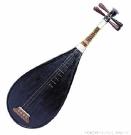
I’m taking a break from serious topics like politics and economics to write about the Chinese pipa, a four stringed lute (or Chinese guitar) with a pear-shaped body. Historical records show that the pipa first appeared during the Qin Dynasty (222 – 206 BCE), and it become one of the most popular stringed instruments in China and has survived more than two-thousand years.

pipa

Traditional Chinese music has been traced back 7,000 to 8,000 years. For centuries this music was heard primarily by the royalty and high government officials. By the Tang Dynasty, records show that this music had spread to the common people.

Traditional Chinese musical instruments can be divided into four categories: stringed instruments, percussion instruments, plucked instruments, and wind instruments.

If you enjoyed this, discover the The Erhu

______________

Lloyd Lofthouse is the award-winning author of The Concubine Saga. When you love a Chinese woman, you marry her family and culture too. This is the love story Sir Robert Hart did not want the world to discover.

Subscribe to “iLook China”!
Sign up for an E-mail Subscription at the top of this page, or click on the “Following” tab in the WordPress toolbar at the top of the screen.

About iLook China