Poverty and China’s Peasant Farmers – Part 1/3

September 11, 2010

If you read about China, you may have heard that hundreds of millions live below the poverty level.  After all, many peasant farmers in rural China do not earn much money.

Are they poor?  Are they starving?  Are they homeless?

How do we measure poverty in an industrialized, electronic, virtual Internet nation? The answer is that poverty is measured by the lack of money and/or credit.

http://www.youtube.com/watch?v=h235t89WpYU

In the above video, the narrator says that the way people lived in America before the Industrial Revolution was different from the way we live today.  Nine out of ten people in rural areas.

There was a large, mostly poor lower class, a small rich upper class and not much of a middle class.

Rural people raised most of their food on small farms. They didn’t have to leave home each day to work at a job in a town or city. There were families and small village communities that depended on each other in a collective lifestyle.

Back then, there were no electric lights, no movies, no telephones, no recorded music and no cars (and not much pollution).

Ordinary people used their hands to make most of the things they needed. 

The world was quiet because there were no noisy machines.  The pace of life was slower.

See China’s Changing Face – Farmers’ Friend the Organic Way

_______________

Lloyd Lofthouse is the award-winning author of the concubine saga, My Splendid Concubine & Our Hart. When you love a Chinese woman, you marry her family and culture too. 

If you want to subscribe to this Blog, there is a “Subscribe” button at the top of the screen in the menu bar.


Dead Zones

August 28, 2010

In the 2010, July/August Smithsonian magazine, there is an interesting piece about Jellyfish: The Next King of the Sea.

You may be asking what jellyfish has to do with China. Before I’m done, I will make that connection.

The piece mentions about 500 coastal, ocean “dead zones” around the world that have been so depleted of oxygen due to manmade pollution that the acidity level of the oceans is rising and threatening most of the life there.

Imagine the oceans without turtles, whales or porpoises and no more salmon suppers.

The Smithsonian says few sea creatures survive in these “dead zones” but the jellyfish does. A map in the magazine shows that the east coast of the U.S.A. and the Gulf Coast are thick with “dead zones”.

Europe is also dense with “dead zones” and so are Southern Japan and the tip of South Korea.

However, what’s surprising is how few dead zones there are along China’s coast.

The reason for that may be the fact that China started to industrialize in the 1980s, but Europe and America started polluting more than a century earlier than China, which I mentioned in Where Did All that Pollution Come From.

 Maybe China will realize that they still have time to save the oceans along their shores and do something before they have as many “dead zones” as the US and Europe.

_______________

Lloyd Lofthouse is the award-winning author of the concubine saga, My Splendid Concubine & Our Hart. When you love a Chinese woman, you marry her family and culture too. 

Sign up for an RSS Feed for iLook China


The Challenge to Reduce China’s Carbon Footprint

July 5, 2010

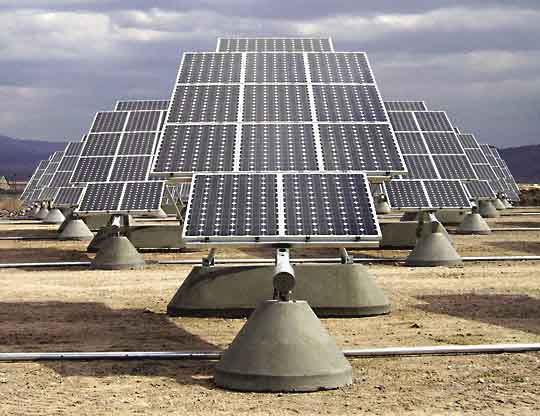
Bloomberg reported that China Datang Corp has started construction on a rooftop solar power plant in Jiangsu province as another step in China’s goals to cut carbon emssions. Plans are for this power plant to generate 6.2 gigawatt hours of power reducing the need for coal-powered generating plants.

Solar Power

This plant is not the only one under construction.  China is already the world’s leading producer of solar panels, and China is also building a 2,000-megawatt project in the Mongolian desert, which is planned for completion in 2019, and may be the largest solar power facility on the globe. Along with solar power, China plans to install 100 gigawatts of wind power by 2020. Source: World Changing

With the demand from China’s people to improve lifestyles, cutting back on carbon emissions is going to be a challenge as reported in China Juggles an Increase in Carbon Emissions and Renewable Energy Plans.

See Electricity is the Key

_________________________

Lloyd Lofthouse is the award-winning author of the concubine saga, My Splendid Concubine & Our Hart. When you love a Chinese woman, you marry her family and culture too. 

Sign up for an RSS Feed for iLook China


The Power of Debate in China

April 29, 2010

“The news triggered a heated debate that was played out all over the Chinese-language media and on the Internet. Eventually, the government backed down, and it’s been left up to industry groups to figure out new guidelines.” Source: Gr-r-r-r! Why I hate China’s e-bikes

This quote from Adrienne Mong, an NBC News Producer, caught my eye. Gasp! Is this evidence from a Western Media source that the people of China have a voice and use it? I hope Adrienne doesn’t lose her job for this slip.

This sounds like America where public debates often have an impact on public policy even if that impact is negative since the majority rules—well, in theory, since in America the majority is often ignored while we constantly hear from “loud” minorities. Take the Tea Bag people, who represent less than 15% of the population, as an example. I wish they’d shut up.

Every time I’ve been in China, we walk, take taxis or use the subways.  We don’t bike, but I have admired the electric bikes.  This is the first I’ve heard of an e-bike without lights.

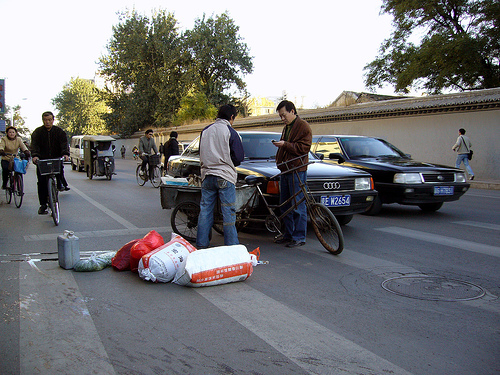
bicycle and an Audi 80 collide in China

Considering that America loses about 45,000 people a year to highway deaths and, according to Adrienne Mong, China loses twice that with almost five times the population, I’m surprised the numbers for road kill in China are not higher. Many of the drivers in China are crazy. The busy streets look more like an NFL game in the Super Bowl. I’ve often observed that red lights are ignored and crossing any street and sometimes even using sidewalks is risky.

Also see, Where Did All that Pollution Come From?

______________

Lloyd Lofthouse is the award-winning author of the concubine saga, My Splendid Concubine & Our Hart. When you love a Chinese woman, you marry her family and culture too. 

If you want to subscribe to iLook China, there is a “Subscribe” button at the top of the screen in the menu bar.


One Party Advantage

April 4, 2010

The West’s loudest criticisms of China are a one party system, limited religious freedom and government censorship. Is it possible that these same things are also China’s strengths?

President of China, Hu Jintao

Clean water, air and plentiful, healthy food are precious. China’s one-party system ruled by scientists and engineers excels at solving these challenges. Instead of becoming embroiled in partisanship battles over political and religious differences, as in the United States, China is moving ahead to clean up their environment with no “Tea Bag People” or opposition claiming global warming is not caused by carbon emissions.

China has already become the leader in solar power and wind turbine technology. Now, in the last few years, China has emerged as an early leader in adopting “clean coal” technologies. The next industry China is poised to dominate is high-speed rail with plans to add more at home while considering a line from Beijing to London.

The motivation behind this sudden awareness to the dangers of pollution is because China’s government, with a cultural foundation in Confucianism, must meet the needs of the people or be swept from power. Even if a few complain and suffer, the needs of the many must come first.

Discover Hitting Endless Homeruns


______________

Lloyd Lofthouse is the award-winning author of the concubine saga, My Splendid Concubine & Our Hart. When you love a Chinese woman, you marry her family and culture too.

If you want to subscribe to iLook China, there is a “Subscribe” button at the top of the screen in the menu bar.