China’s Long History with Burma/Myanmar – Part 1/4

September 24, 2010

The Economist (September 9, 2010) published a critical piece about China’s relationship with Myanmar – Welcome, Neighbor – China hosts another tinpot dictator from next door

“Tinpot dictator” are the two key words in the title of this opinion piece, as if the United States has never hosted “tinpot” dictators.

A well-written criticism of the U.S. government from Sri Lanka sets the record straight.

“I wish the spokesman of the (U.S.) State Department … would explain how Washington’s concern for democracy in Sri Lanka squares with US support for repressive regimes such as the one in Uzbekistan or the autocratic rule in Saudi Arabia, both countries in which the U.S. has military facilities.

“In post-World War II period, Washington has militarily propped up such dictators including several in South Korea, Ferdinand Marcos who was ousted by the Filipino people, Indonesia’s Suharto also thrown out by the people, Vietnam’s Dinh Diem, various military governments in Thailand, Singapore’s autocrat Lee Kwan Yew, the military dictators in Pakistan from Ayub Khan to Pervez Musharraf, all of them from our part of the world…” Source: The Ugly Americans Once More (Lankaweb, Sri Lanaka’s first Social Media website)

The Economist only mentions a half century of history between China and Burma/Myanmar.

Yet China’s history with Burma/Myanmar goes back about two thousand years.

The opinion piece also does not mention that China, since 1982, has not been into nation building as the U.S. has since 9/11, when President G.W. Bush launched wars against Iraq and Afghanistan with threats toward Iran and North Korea. 

See In the National Interest

______________

Lloyd Lofthouse is the award-winning author of the concubine saga, My Splendid Concubine & Our Hart. When you love a Chinese woman, you marry her family and culture too. 

If you want to subscribe to iLook China, there is a “Subscribe” button at the top of the screen in the menu bar.


Defector / Traitor (4/4)

August 5, 2010

We have a friend who came from China to the US to study in the 1980s. She thought about defecting but didn’t. She loved her family and friends too much to hurt them, so she went back to China. Years later, she returned to the US legally and become an American citizen without defecting, and no village in China suffered for her act.

In China, every defection is considered a loss of face by the government.  In a collective society like China, the individual is not the only one to carry the burden of guilt.  The family, friends and comrades left behind also carry that burden.


Defecting is a two-way street Joe Dresnok – U.S. Army Defector one nation’s defector/hero is another nation’s deserter/traitor

When defectors from China arrive in the US, they are often treated as heroes and the media splashes the defector’s story on TV, newspapers and magazines. Many defectors are rewarded and they prosper in their new country. In fact, until 1988, Taiwan paid defectors a handsome sum in gold.

However, whatever the reason for defecting, in the ideological war between the “isms” (Communism versus Capitalism), those left behind often become collateral damage. See Media Slugfest Using Taiwan

Merriam-Webster’s Online dictionary defines “traitor” as one who betrays another’s trust or is false to an obligation or duty

Return to Defector/Traitor – Part 3 or start with Part 1

______________

Lloyd Lofthouse is the award-winning author of The Concubine Saga. When you love a Chinese woman, you marry her family and culture too. This is the love story Sir Robert Hart did not want the world to discover.

To subscribe to “iLook China”, look for the “Subscribe” button at the top of the screen in the menu bar, click on it then follow directions.


The Dangers of the Korean Incident

July 30, 2010

Sunny Lee writing for the The Korea Times reports that the majority of Chinese policymakers and academics feel that the Cheonan incident, where a North Korean torpedo allegedly sank a South Korean navy ship, “may” not be true. However, that doubt is not the only factor playing a crucial role in Chinese decision-making.

The Chinese also feel that the US and South Korea are politically motivated and overreacting. China sees the incident as part of the 60-year-long hostility between the two Koreas. In fact, China wants the US, South Korea and North Korea to pull back from the incident.

China’s opinion may be the best advice. 

If you do not agree, consider World War I, the “Great War” if a war may be called great. World War I was not caused by dictators hungry for power as in the case of Mussolini and Hitler and the military oligarchy that ruled Japan during World War II.

World War I was caused by a strong sense of nationalism and emotions that were allowed to rule the day. Strong feelings of nationalism fed hatred in pre-war Europe. It turned Frenchman against German and Russian against Austrian.  Source: Causes of World War I

Regarding the Cheonan incident, China is the cool head while the hotheads are the US, South Korea and North Korea. If these hot heads prevail, how much suffering and death would add to the 45 deaths already caused by the sinking of the Cheonan?

The match that lit World War I was the assassination of one man, the Archduke Franz Ferdinand of Austria on June 28, 1914.  By the end of the war in late 1918, fifteen-million people had been killed, making the war one of the deadliest in history. 

Does the world want that in Asia?  America’s Military Industrial Media Empire might, but China clearly doesn’t—evidence that war is the last thing China wants.

Discover more about China and North Korea

_____________________

Lloyd Lofthouse is the award-winning author of the concubine saga, My Splendid Concubine & Our Hart. When you love a Chinese woman, you marry her family and culture too. 

Sign up for an RSS Feed for iLook China


A Matter of Distance and Perspective

July 7, 2010

President Obama demonstrates that he does not understand the Chinese thought process in his response to President Hu Jintao of China over how to handle North Korea’s recent sinking of the Cheonan, a South Korean naval ship.

The New York Times Asia Pacific section reports that President Obama has accused Beijing of “willful blindness” toward what North Korea has done.  Some American officials say this was an act of war. Obama indicated the way China is handling this would not solve the problem.

There are two voices to pay attention to. Leon E. Panetta and China’s spokesman, Qin Gang. Mr. Qin said, “China is a neighbor of the Korean Peninsula, and on this issue our feelings differ from a country that lies 8.000 kilometers distant. We feel even more direct and serious concerns.”

Leon E. Panetta, the Director of the Central Intelligence Agency, said he believed that the sinking of the Cheonan was part of a succession struggle in North Korea.”

America tends to handle crises of this kind like a bull in a China shop, and what gets broken doesn’t hurt the US homeland. China, on the other hand, will handle this issue like delicate surgery.  One wrong move could end in disaster.  After all, who is closer to that nuclear bullring and how can Obama understand when China’s shoes won’t fit his feet?

See China and North Korea

_________________________

Lloyd Lofthouse is the award-winning author of the concubine saga, My Splendid Concubine & Our Hart. When you love a Chinese woman, you marry her family and culture too. 

Sign up for an RSS Feed for iLook China


Circular Thinking and Arrows

June 10, 2010

The school where I taught had students from more than a dozen nationalities. For that reason, I attended in-services to become aware of cultural differences.  I learned that Westerners think as an arrow flies—straight.  However, those from the Middle East and Asia think in circles as in figurative language with possibly more than one meaning.

This means that when someone from the Middle East or Asia says or does one thing, he or she may mean something different.

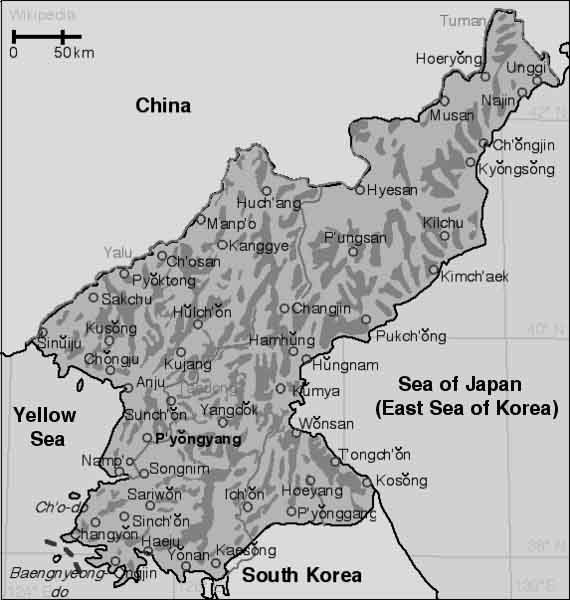
North Korea Map

Recently, China has been under global pressure to condemn North Korea for the sinking of a South Korean warship on March 26 that killed 46 sailors. The Christian Science Monitor reported on June 8 that China has  blamed North Korea for killing three of its citizens and arrested a North Korean government official for drug trafficking—something unheard of before.

Could this be China’s circular way to pressure North Korea to admit sinking the South Korean ship or to stop threatening war and return to the peace table? North Korea relies on China for food and financial aid and if China has a reason to limit or stop that support, the stability of Kim Jon-il’s government would be threatened.

See China and North Korea

_____________________

Lloyd Lofthouse is the author of the award winning novels My Splendid Concubine and Our Hart. He also Blogs at The Soulful Veteran and Crazy Normal.

Sign up for an RSS Feed for iLook China