Unlike Mao’s time, today’s Chinese leaders must answer to the seventy-million party members scattered throughout China. These people listen to the 1.3 billion Chinese that do not belong to the party. The result: if an elected official is not doing his or her job, that person usually isn’t reelected.
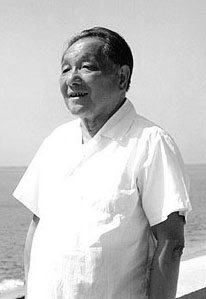
Deng Xiaoping
Other changes took place after Mao. Under Deng Xiaoping, the People’s Republic announced a policy of “socialism with Chinese characteristics.” John Gittings in The Changing Face of China quoted Deng Xiaoping as saying, “Planning and market forces are not the essential difference between socialism and capitalism. A planned economy is not the definition of socialism, because there is planning under capitalism; the market economy happens under socialism, too. Planning and market forces are both ways of controlling economic activity.”
Soon after Mao died in 1976, Deng Xiaoping’s Beijing Spring was introduced. This was a brief period lasting from 1977 into 1978. During that time, the public was allowed greater freedom to criticize the government, which wasn’t allowed under Mao.
An example of this may be seen in “The Awakening” (Su-Xing), a movie produced during this period starring Joan Chen (Chen-Chung) and Gau Fei. [ISBN: 978-7-88611-603-2]. There are no English subtitles so it helps to have someone that reads or speaks Mandarin beside you while watching the movie that can point out the subtle criticisms of the Party that appear in the film, which was considered controversial at that time.
There was also a new Beijing Spring between 1997 to November 1998 where the Chinese government relaxed some control over political expression and organization. It was during this time that China signed the International Covenant on Civil and Political Rights.
Learn about China’s Modern Dynasty
______________
Lloyd Lofthouse is the award-winning author of The Concubine Saga. When you love a Chinese woman, you marry her family and culture too. This is the love story Sir Robert Hart did not want the world to discover.
To subscribe to “iLook China”, look for the “Subscribe” button at the top of the screen in the menu bar, click on it then follow directions.


 Posted by Lloyd Lofthouse
  iLook China