Keeping Mao Alive in the West – Part 2/4

June 30, 2011

Another fact that The Economist left out of Boundlessly loyal to the great monster was that Mao was not in charge of The Cultural Revolution. He started the movement to retain power then put his wife in charge. While she was busy dismantling the nation, Mao was hanging out inside the walls of The Forbidden City.

His wife put students in charge of the schools and made teachers victims.

Before that, Mao turned butchers and peasants into doctors without any medical education to guide them in the healing arts. These untrained doctors were known as bare-foot doctors with little to no training, which I wrote about at China’s Health Care During Mao’s Time.

However, as crazy as it may sound, the bare-foot doctors worked.  Life expectancy was about 35 when Mao launched this program and by the time Mao died, life expectancy had increased by twenty years.

The people that Mao liberated from feudalism know that Mao Zedong was also a poet long before he ruled China. The years of Civil War from the early 1920 to 1949, assassination attempts and broken promises by Chiang Kai-shek , and fighting the brutal Japanese during World War II must have changed Mao. For sure, The Long March was a bloody influence that possibly led to a bad case of Post Traumatic Stress Disorder (PTSD), which tends to make one paranoid.

After all, fighting a Civil War for almost 25 years and living in caves had to have an impact on Mao.  If US soldiers come home with PTSD after one tour of combat, imagine more than two decades living a life of combat.

The Maoists that The Economist mentions mostly want to have the power back but not necessarily the purges and/or denunciations of The Cultural Revolution.

With nostalgia, this minority of Maoists remembers a different time from a different perspective since they may have been the peasant leaders of the adolescent Red Guard.

Many in the West probably do not know that the Red Guard and the People’s Liberation Army (PLA) were two different forces and the PLA for the most part was not involved in The Cultural Revolution.  In fact, several times the PLA stopped the rampaging Red Guard from some of its destruction of all things old in China.

Continued on July 1, 2011 in Keeping Mao Alive in the West – Part 3 or return to Part 1

______________

Lloyd Lofthouse is the award-winning author of the concubine saga, My Splendid Concubine & Our Hart. When you love a Chinese woman, you marry her family and culture too.

To subscribe to “iLook China”, look for the “Subscribe” button at the top of the screen in the menu bar, click on it then follow directions.


Capturing a Vanishing China

June 23, 2011

I feel compelled to write about a one-star review that appeared recently of Tom Carter’s China: Portrait of a People.

In fact, as I write this post, Carter’s book has had 100 reviews. Eighty-eight earned five stars and eleven four-star reviews. There is only one one-star review.

My wife is Chinese and was born in Shanghai (discover the modern city) during Mao’s Great Leap Forward then was sent to a labor camp as a teen during The Cultural Revolution. When she first saw the photos in Tom Carter’s book, she said he is the first and only photojournalist to capture the heart and soul of China.

What she was talking about was the rural Chinese who have always been the invisible heart and soul of China. If it weren’t for those same rural Chinese, Mao and the Communist Party would have never won China’s Civil War.

What follows is the rambling, rant of a one star review written by someone calling him or herself Xuemin Lin.

Lin says, “Ignorance of all American who think that these photos show the reality China, you don’t know the truth. Tom Carter pictures can only show that poor farmers and rural areas. He ignoring the majority of China’s middle class and developed districts in urban life intentionally. We have a modern apartment and a beautiful new car and stylish clothes. Why Tom Carter just want to show the barefeet farmers and the minorities? His pictures make you believe we Chinese all are swarthy skin and the tooth is not good and make our homes in the mountains area. China’s economy has grown rapidly. The United States owes a debt to total billions of dollars to China. China will soon become a superpower in the world! Han people will lead Asia and then the world. So, do not believe that this book is shows the real China! Tom Carter in a planned way only want to show you the poor! I upload his video got from the Youku website so yourself can see his photos is not the good. Do not by this book I suggest!”

Lin claims that the majority of Chinese belong to the emerging middle class. Lin is wrong. China has a few decades to go until more than a billion people join the modern middle class lifestyle.

Even China’s leaders have admitted that China is not as developed as America or Europe and that China will never rival American super power status. The best China may attain is a regional military super power and a global economic super power.

To understand what I mean, you may want to read Amy Chua’s Day of Empire: How Hyperpowers Rise to Global Dominance–and Why They Fall.

It is a fact that China is modernizing at a pace never before seen in history and more than three hundred million Chinese now live in urban cities similar to Shanghai and Beijing and belongs to China’s middle class. However, that leaves about 1.2 billion people that have not yet joined that middle class and 800 million of those people still live as Carter shows us in his photos.

If China accomplishes its goal to modernize most of China and lift the majority of Chinese into the middle class, the world that Tom Carter captured with his photos will vanish. Our only reminder of that China will be his book.

What Lin’s one-star review really reveals is a shame among some Chinese that should not exist. China should be proud of its rural peasants because they have always been the backbone of China and those people deserve their moment in the sun or between the covers of China: Portrait of a People

When I visit China, I want to escape America for a few weeks but realize that I cannot escape the Golden Arches of McDonalds, or Starbucks, Pizza Hut and KFC, which is the worst thing China could adopt from America.  In addition, China has also inherited the obesity, diabetes, heart disease and cancer that come with this fast food, middle class, and motorcar culture invented in the West.


Some of America’s history captured in photos and song.

In addition, I’ve complained that China has no artist comparable to America’s Charles Russell or Bev Doolittle — great artists that captured the heart and soul of the America that existed before Europe and the industrial revolution arrived to fill the air with poison.

However, Tom Carter’s photos capture some of that world in China that will soon be lost. After China has paved over its past, without Tom Carter’s photos we would never know what that world was like.

Therefore, I ask the Xuemin Lins of China, “What is it you have against Tom Carter capturing what is fast disappearing as China becomes another middle class, smog choked clone of Los Angeles, London, Paris and New York?”

I prefer the China where people are practicing Tai Chi in the early morning fog.

______________

Lloyd Lofthouse is the award-winning author of the concubine saga, My Splendid Concubine & Our Hart. When you love a Chinese woman, you marry her family and culture too.

To subscribe to “iLook China”, look for the “Subscribe” button at the top of the screen in the menu bar, click on it then follow directions.


China and India’s Mutual Collectivism and History – Part 1/2

September 10, 2010

There appears to be an obsession in the West that India, since it is a democracy, is the country that will counter China’s economic and military growth.

The American Interest published a piece in their May/June 2010 issue – The Return of the Raj, which points out that where G. W. Bush failed to build an Indo-U.S. defense pact, Secretary of State Clinton in a visit to India in July 2009 did open the door to significant arms transfers from the U.S. to India.

If the United States and India can together rediscover and revive the Indian military’s expeditionary tradition, they will have a solid basis for strategic cooperation not only between themselves but also with the rest of the world’s democracies. Source: The American Interest

In another piece, A Himalayan rivalry, The Economist focuses on the 1962 conflict between India and China saying, “Memoires of a war between India and China are still vivid in the Tawang valley…”

However, memoires aren’t everything. There is also knowledge, and China is not the same country it was in 1962.

In 1962, some of the factors that led to the war between India and China were linked to Mao’s policies, the Great Leap Forward and the Cultural Revolution.

The Maoists were removed from power in the 1980s, and China is not a socialist nation as it was then.

Go to Part 2

______________

Lloyd Lofthouse is the award-winning author of The Concubine Saga. When you love a Chinese woman, you marry her family and culture too. This is the love story Sir Robert Hart did not want the world to discover.

Subscribe to “iLook China”
Sign up for an E-mail Subscription at the top of this page.

About iLook China


Mao Zedong, the Poet

July 27, 2010

Many outside China think of Mao Zedong (1893 – 1976) as a brutal dictator. Yet, he was fifty-six when he became the ruler of China and seventy-two at the beginning of The Cultural Revolution.

In fact, while commanding the Red Army during The Long March (1934-1935), we see a man who respected China’s peasants proving he was more of a nationalist than a Communist. Then there was the move away from Communist Russia after Nixon’s visit to China in 1972, when Mao said, “Our common old friend, Generalissimo Chiang Kai-shek, doesn’t approve of this.”

In 1935, Mao’s poem, “The Long March”, reveals an awareness of the sacrifice and the willingness to suffer to accomplish great things.

The Red Army fears not the trials of the March,
Holding light ten thousand crags and torrents.
The Five Ridges wind like gentle ripples
And the majestic Wumeng roll by, globules of clay.
Warm the steep cliffs lapped by the waters of Golden Sand,
Cold the iron chains spanning the Tatu River.
Minshan’s thousand li of snow joyously crossed,
The three Armies march on, each face glowing.

Mao was a complex man, and it wasn’t until after the failure of the The Great Leap Forward (1958 – 1961) that the fatal attraction and power of leadership corrupted him leading to the horrors of The Cultural Revolution (1966 – 1976), which Mao’s critics in the West use to define him.

Anyone who follows all of Mao’s life instead of relying on his last decade would understand that he cared deeply about the common people while punishing the landowners and wealthy, who abused them.  On the other hand, his foe, Chiang Kai-shek, supported the landowners and wealthy while crushing the peasants and workers.

There is a post on About China.info that says, “Mao’s poetry exhibits a spirit of boldness and power, weaving together history, reality and commitment… Bold transformation of myth and literary quotations are a distinct feature of Mao’s poetry.”

At Mao Zedong Poems, Two Birds” A Dialogue (1965), reveals what Mao may have been thinking about as President Johnson increased America’s involvement in Vietnam. Was Mao also warning us of what he was about to do in 1966, when he launched The Cultural Revolution?

Two Birds: A Dialogue (1965)

The roc wings fanwise,
Soaring ninety thousand li
And rousing a raging cyclone.
The blue sky on his back, he looks down
To survey Man’s world with its towns and cities.
Gunfire licks the heavens,
Shells pit the earth.
A sparrow in his bush is scared stiff..
“This is one hell of a mess!
O I want to flit and fly away.”
“Where, may I ask?”
The sparrow replies,
“To a jewelled palace in elfland’s hills.
Don’t you know a triple pact was signed
Under the bright autumn moon two years ago?
There’ll be plenty to eat,
Potatoes piping hot,
Beef-filled goulash.”
“Stop your windy nonsense!
Look, the world is being turned upside down.”

Through Mao’s poetry, we learn more about the man—not the modern emperor.

Discover China’s Privately Passionate Poetry

______________

Lloyd Lofthouse is the award-winning author of The Concubine Saga. When you love a Chinese woman, you marry her family and culture too. This is the love story Sir Robert Hart did not want the world to discover.

Subscribe to “iLook China”!
Sign up for an E-mail Subscription at the top of this page, or click on the “Following” tab in the WordPress toolbar at the top of the screen.

About iLook China


China’s Great Leap Forward (1958 to 1961) – Part 1 of 6

June 21, 2010

Before reading this series about Mao’s Great Leap Forward, I recommend you first read China, The Roots of Madness to understand what led to Mao’s era as the leader of Communist China (1949 – 1976). This link will take you to that post.  When you finish, return to China’s Great Leap Forward.

_____________________________

Mao’s era begins in October 1949 with victory celebrations in Beijing, as the country with the largest population in the world sees a Communist government come to power.

(when the advertisement appears, advance the video scroll bar to 2:00 minutes to avoid it)


Mao says, “The People’s Republic of China is founded today. China will be free of inequality, poverty and foreign domination.”  In 1950, most Chinese live as they have for centuries. The video shows what this life was like.  Before Mao, most lived in poverty and were in debt to landowners.

Hu Benxu, a peasant farmer in Sichuan says that in the past, there was justice for the rich but nothing for the poor.

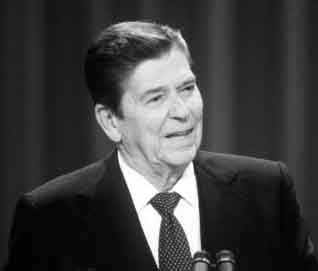
President Ronald Reagan

Chiang Kai-shek believed that improvements would spread through the country (sort of like President Reagan’s trickledown theory, which didn’t work) as foreign investments poured into China. But the opposite happened. As the country industrialized, the gap between the rich and the poor grew wider. The rich held on to money and wanted more. Protests about working condition in the factories were met with death from Chiang Kai-shek’s troops.

Meanwhile, Mao promised land reforms, and his troops treated the peasants with respect. When Mao won China, he said, “We Chinese should work hard. The country is poor. Our people are uneducated.  We must make China a modern industrialized state.”

However, there would be many mistakes and much suffering during the next 27 years. After two thousand years of an Imperial system of government, China was embarking on a journey of reinventing a country and a culture without any foreign influence.

Go to Part 2, China’s Great Leap Forward

______________

Lloyd Lofthouse is the award-winning author of the concubine saga, My Splendid Concubine & Our Hart. When you love a Chinese woman, you marry her family and culture too.

If you want to subscribe to iLook China, there is a “Subscribe” button at the top of the screen in the menu bar.