Ming Dynasty (1368-1643 AD) – Part 2, 3/3

November 24, 2010

The reputation of the Chinese products that Admiral Zheng He took with him on his voyages brought him considerable honor and made him welcome everywhere he visited.

On his sixth voyage, he reached the African coast and twelve hundred envoys from sixteen African and Asian countries returned to China with Zheng He’s fleet.

In Beijing, the Ming Emperor presented these envoys with 40 thousand roles of silk and brocade.

Even before the Ming Dynasty, China had been sending diplomatic missions overland to the West for centuries and trade had extended as far as east Africa.

However, never before had a government-sponsored mission the size of Zheng He’s fleet been organized.  His voyages were a vivid demonstration of the economic and cultural prosperity of the Ming Dynasty.


In 1420, the year the Forbidden City was completed, the Yongle Emperor’s Bell was successfully cast. 

The Forbidden City is a testament to Chinese architecture and engineering while in Europe it was still the Middle Ages.

The Great Wall, which the Ming Dynasty had continued to build and strengthen, stretched from China’s eastern coast to the far northwest.

In 1637, the largest encyclopedia of ancient China was published — a comprehensive book covering science and handicraft technologies.

Another encyclopedia was published on agriculture.

A third described China’s geology in detail.

A fourth was the most comprehensive medical book in Chinese history, the Compendium of Materia Medica.

The greatest of China’s ancient literature was also written and published during the Ming Dynasty.

Return to Ming Dynasty (1368-1643 AD) – Part 2, 2/3

______________

Lloyd Lofthouse is the award-winning author of the concubine saga, My Splendid Concubine & Our Hart. When you love a Chinese woman, you marry her family and culture too.

If you want to subscribe to iLook China, there is a “Subscribe” button at the top of the screen in the menu bar.


A Forbidden City Connection to Tibet Revealed

September 14, 2010

Since the Western media is often critical of China and often exaggerates events in Tibet to make China look bad, I was surprised while reading The Last Secrets of the Forbidden City Head to the U.S. by Auston Ramzy.

I was surprised that evidence like this slipped past the Western media censors—sorry, in the West they are called editors.

The TIME piece was about an exhibit traveling to the United States with treasures from the Forbidden City that have not been seen since 1924.

I read, “Many of the 18th century objects that will be displayed are symbols of the emperor’s devout Buddhism. They include a hanging panel filed with niches that hold intricate figurines of Buddhas, deities and historical teachers from the Tibetan Buddhist sect to which [Emperor] Qianlong belonged.” See Buddhism in China

I didn’t know the powerful Qianlong Emperor followed the teachings of Buddhists from Tibet. There are four Buddhist sects in Tibet. The Dalai Lama is the spiritual leader of one of the four, the Yellow Hat sect.

Why would the Qianlong Emperor belong to a Tibetan sect of Buddhism if Tibet were not considered part of China at the time? There is even evidence that Tibetan Buddhist monks traveled to the capital of China to serve the emperors.

I saw this as more evidence that proves China considered Tibet a vassal state or tributary.  In fact, Yuan, Ming and Qing Dynasty troops are known to have occupied Lhasa over the centuries.

I’ve written about primary evidence from the October 1912 National Geographic Magazine that described how the Imperial government in Beijing managed a difficult Tibet, and I’ve mentioned letters Sir Robert Hart wrote in the 19th century that also mention Tibet as part of China.

In 1890, a Convention between Great Britain and China was signed—more proof that China considered Tibet part of its realm and Great Britain agreed.

Yes, Tibet did declare freedom from China in 1913 soon after the Qing Dynasty collapsed and China fell into chaos and anarchy while warlords fought over the spoils.

The British Empire convinced Tibet to break from China. 

It is also a fact that in 1950, after World War II and the end of the rebellion between Chiang Kai-shek’s Nationalists and Chinese Communists that Mao invaded Tibet and reoccupied what the Chinese considered a breakaway province as mainland China still considers Taiwan.

_______________

Lloyd Lofthouse is the award-winning author of the concubine saga, My Splendid Concubine & Our Hart. When you love a Chinese woman, you marry her family and culture too. 

If you want to subscribe to this Blog, there is a “Subscribe” button at the top of the screen in the menu bar.


Seven Wonders of China (5/5)

August 11, 2010

To protect the Shibaozhai temple, the Chinese government had a six-hundred foot high, thirty-three foot thick dike built to protect it.  When completed, the dike will surround the temple and cliff.

7. Forbidden City, Beijing

The Forbidden City is the largest, ancient palace in the world and is one of the most visited tourist sites on the planet.  This palace covers more than 7 million square feet in central Beijing next to Tiananmen Square.  That is the size of eighty football fields and the palace is surrounded by a moat.

In the early fourteen hundreds, the emperor moved the capital of China to Beijing to establish better control over the country.  It took a million laborers and artists fourteen years to build.  The Forbidden City has 9,999.5 rooms—as close as man can get to the palace of the gods, which is supposed to have ten-thousand rooms.

Before the Forbidden City became a tourist attraction, the penalty for sneaking inside was death usually by being beheaded.  Once the empresses and concubines of the emperor moved into the Forbidden City, none were allowed to leave.  Twenty-four emperors ruled China from inside the walls of this palace.

See The Han Dynasty or return to The Seven Wonders of China – Part 4

______________

Lloyd Lofthouse is the award-winning author of The Concubine Saga. When you love a Chinese woman, you marry her family and culture too. This is the love story Sir Robert Hart did not want the world to discover.

Subscribe to “iLook China”!
Sign up for an E-mail Subscription at the top of this page, or click on the “Following” tab in the WordPress toolbar at the top of the screen.

About iLook China


The Prince’s Garden

June 26, 2010

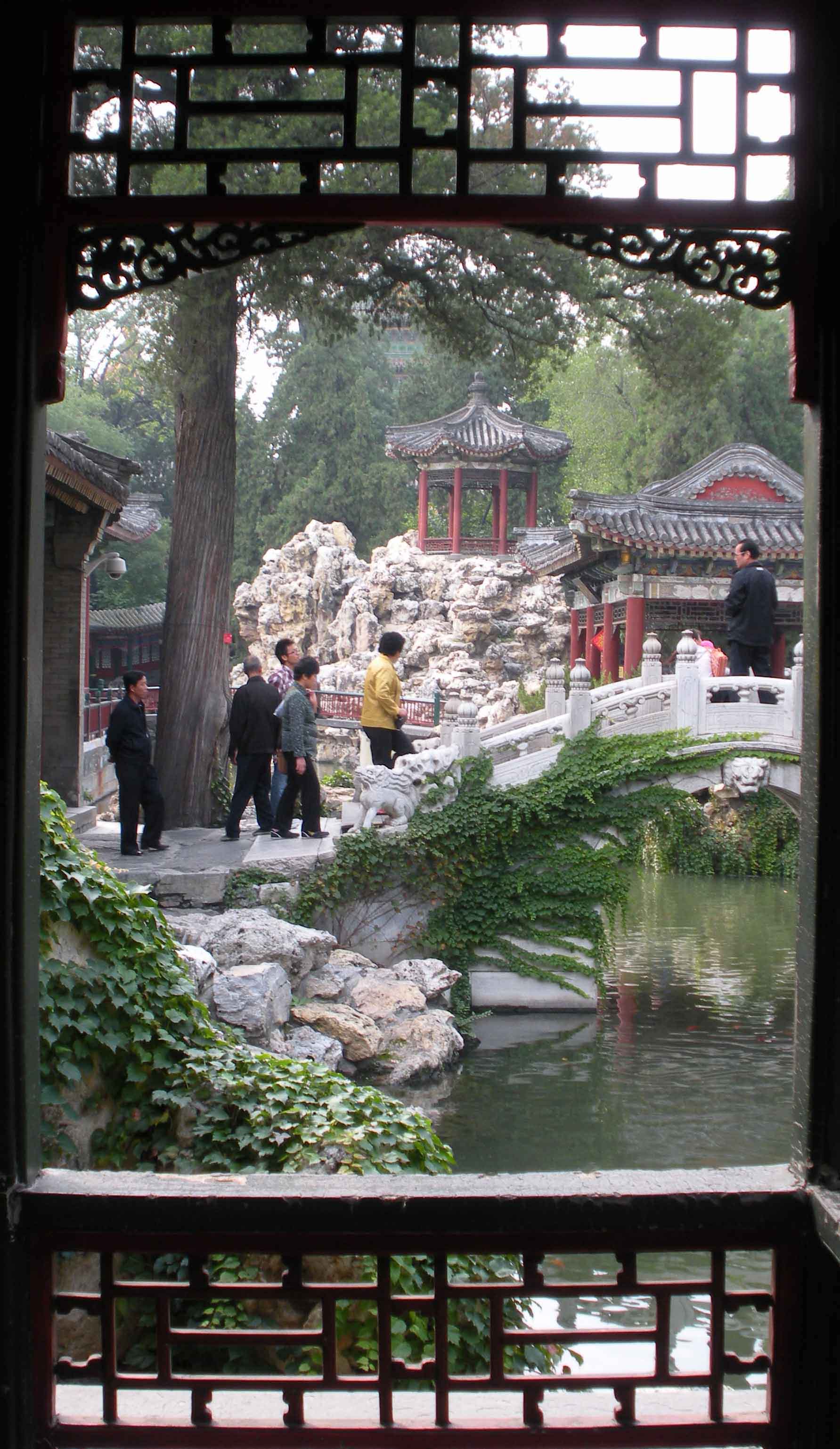
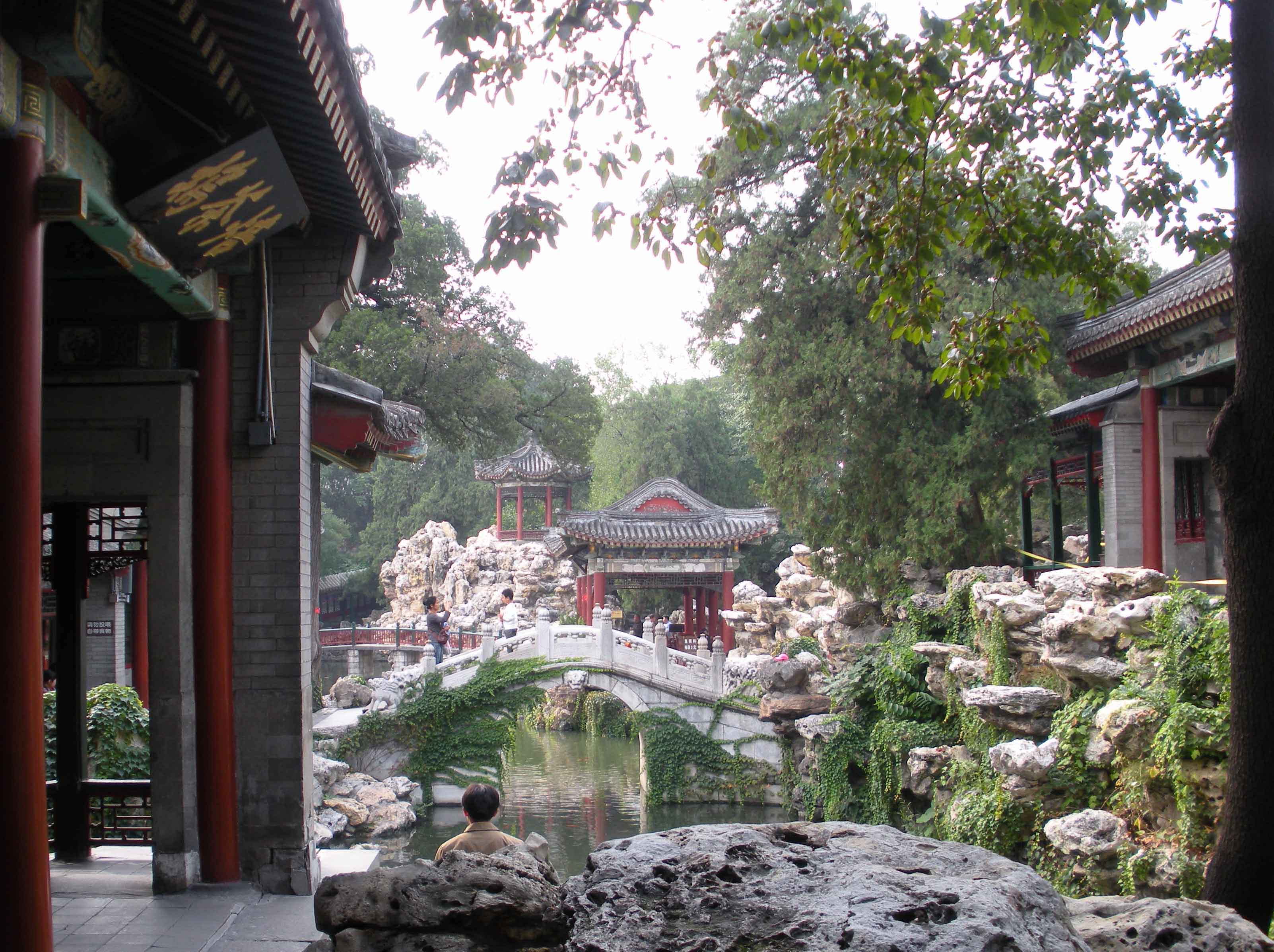
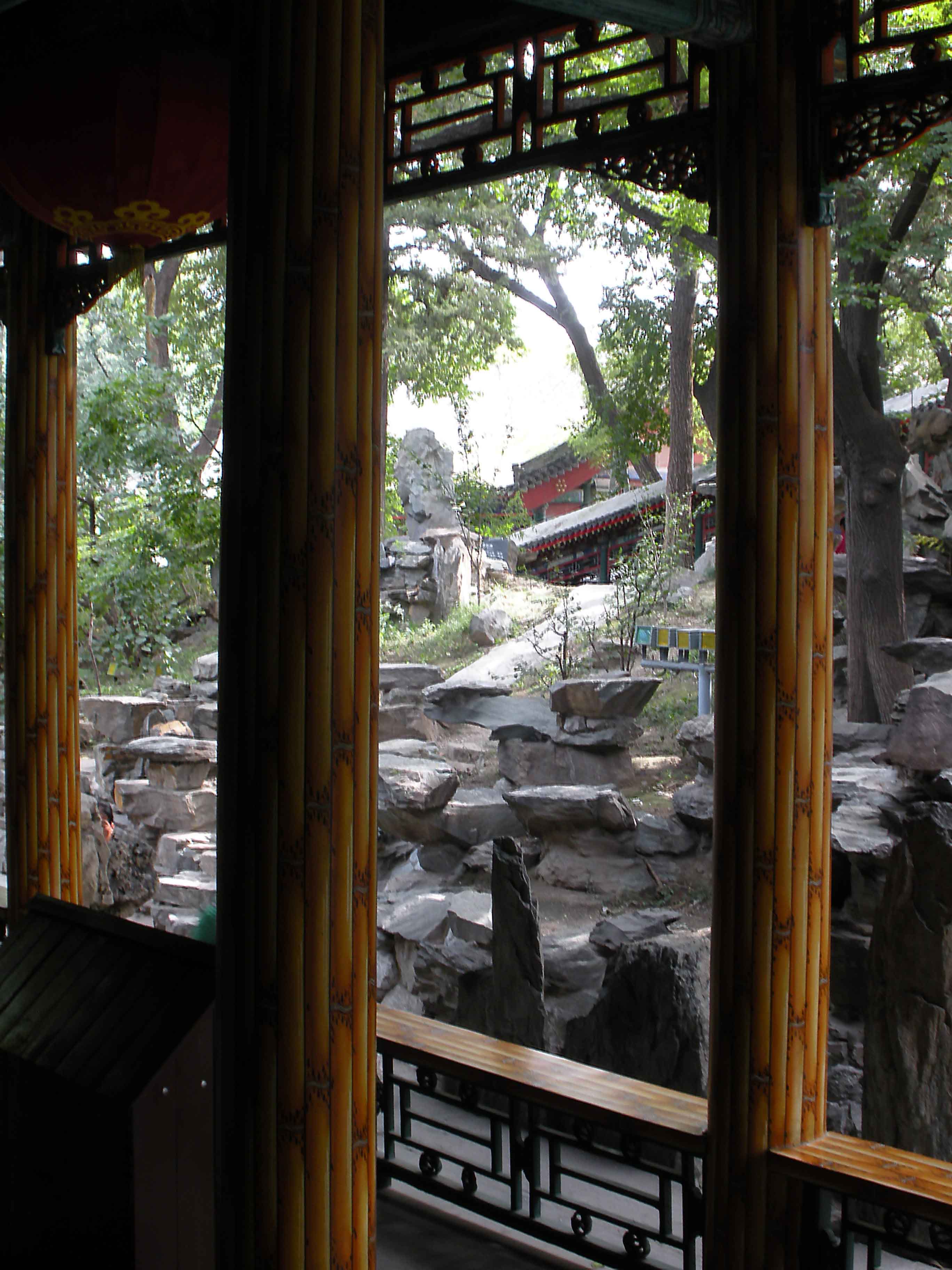
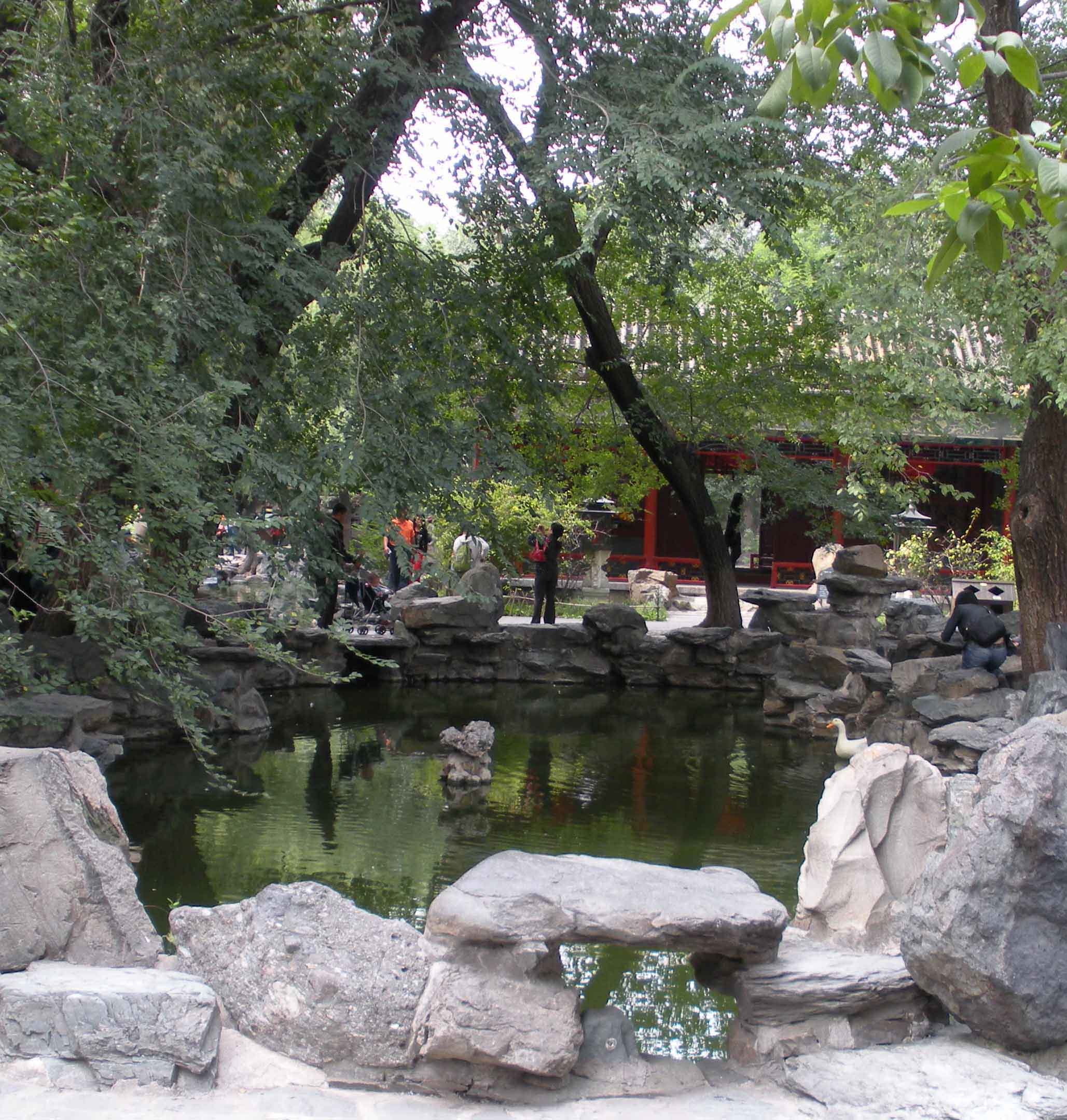
These photos were taken inside Prince Kung’s (1833-1898) palace and garden (once called Gongwangfu). This palace is in Beijing’s Beihai district. Prince Kung was Emperor Hsein Feng’s (1831-1861) younger brother.

As Inspector General for the Emperor of China, Robert Hart, known as the Godfather of China’s modernism, lived in the same hutong that Prince Kung lived in.  The Forbidden City was on the far side of Tiananmen Square.

Robert Hart, the main character in “My Splendid Concubine” and “Our Hart”, often met Prince Kung in this garden.

After 1950, for several decades, this palace and the garden became a communal home for many Chinese. In recent years, the garden, considered one of the best in China, was renovated and is now a tourist attraction, which attracts thousands of visitors daily.

To design a proper Chinese garden one must build a big place in a small space.  Prince Kung’s garden and estate is surrounded by a high wall and outside is Beijing.  Once inside, it is easy to forget that outside the walls is a crowded city. It was also easy for the Qing (Manchu) royals to forget about what was happening throughout China.

Discover The Summer Palace

________________________

Lloyd Lofthouse is the award-winning author of the concubine saga, My Splendid Concubine & Our Hart. When you love a Chinese woman, you marry her family and culture too.

To subscribe to “iLook China”, look for the “Subscribe” button at the top of the screen in the menu bar, click on it then follow directions.


China’s god Culture Gone

May 27, 2010

For millennia, China’s emperors were considered the Sons of Heaven and worshiped as such.  When referred to as the Son of Heaven, a title that predates the Qin unification (221-207 BC), the emperor was recognized as the ruler of “all under heaven”. 

After Imperial China ended, Sun Yat-sen established a brief Chinese republic soon brought to an end by competing warlords, who plunged China into anarchy and violence. It wouldn’t be until 1928 that Chiang Kai-shek would become the victor and dictator of China and reestablish some order.

Mao won China in 1949 and stayed in power until his death in 1976. Mao has been called the modern emperor since he lived in the Forbidden City and ruled for twenty-seven years.  After Mao’s death, Deng Xiaoping and his supporters decided they didn’t want to have another god-like figure ruling China, and the Communist Party added amendments to the Chinese constitution creating term limits and an age limit. 

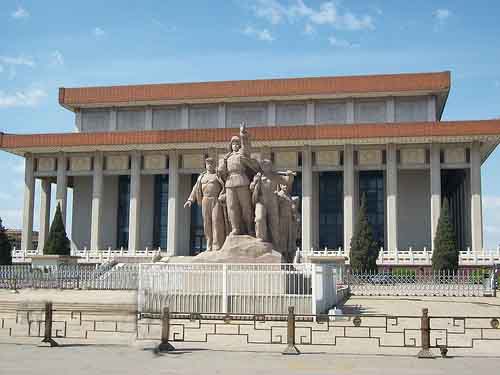
Mao's Tomb

Mao is still revered in China.  His tomb was built in Tiananmen square and his body is preserved beneath the tomb in refrigeration.  Visitors may pay a small fee to visit the tomb and possibly see China’s modern emperor on display behind bulletproof glass with attending guards.

Learn more about China’s Modern Dynasty

____________________________

Lloyd Lofthouse is the author of the award winning novels My Splendid Concubine and Our Hart. He also Blogs at The Soulful Veteran and Crazy Normal.

Sign up for an RSS Feed for iLook China