Education in the Real World – Part 1/2

September 5, 2011

Many Americans live in a fantasy world, as you will learn, which may explain why fantasies and animated movies for children often earn so much money at the box office in the United States while more realistic films of a literary nature earn little.

When Henry Kissinger wrote, “American exceptionalism is missionary. It holds that the United States has an obligation to spread its values to every part of the world,” he may not have realized that spreading these idealistic values applies within the US too, from whichever group has enough political power to make it happen.

Two of these values are how to raise and educate children as if all children are equal and there should be no obstacles to success. The only parallel comparison I can make is that what has happened in America since the 1960s, is similar to what happened in China during the Cultural Revolution but without the slogans.

However, like China during the Cultural Revolution, teachers in the US may face denunciation but for different reasons. At least in China, that insanity ended in 1976.

In the US, this led to a public education system that now teaches most children as if they will all go to college, find happiness and succeed equally.

This American Cultural Revolution also spawned the self-esteem movement in parenting and education, which still raises and teaches the average American child to believe what she dreams will come true (even if she doesn’t work for it).

Due to this wide spread belief among many Americans, a law was passed by President G. W. Bush in 2001 called the No Child Left Behind Act (NCLB), which mandated that America’s Public schools had to be successful with all  students from every walk of life and ethnicity by 2014 or be considered a failure.

NCLB did not require students to study or parents to support teachers or education. The penalties for failure are severe and were designed to only fall on the shoulders of America’s public school teachers.

If a teacher was not successful teaching every child from every walk of life that was enrolled in his class, he could lose his teaching job and see the school where he taught closed even if he succeeded with more than half of his students.

Many factors may cause a child not to cooperate with his teachers or learn in school. When we consider the impact of poverty, hunger, health, safety, environment, lifestyle, and broken families on children, not every child is equal.

When it comes to school, if a child’s mind is occupied by other, more pressing priorities such as hunger or safety, education often takes a back seat to survival, which is a fact that many in the United States refuse to accept.

However, when we study the education systems of other countries such as China, it seems that these real life issues ignored in the United States are treated as a reality of life.

Continued on September 6, 2011 in Education in the Real World – Part 2

______________

This edited and revised post originally appeared on August 8, 2011, at Crazy Normal as Civil Disobedience and No Child Left Behind – Part 4

______________

Lloyd Lofthouse is the award-winning author of The Concubine Saga. When you love a Chinese woman, you marry her family and culture too. This is the love story Sir Robert Hart did not want the world to discover.

To subscribe to “iLook China”, look for the “Subscribe” button at the top of the screen in the menu bar, click on it then follow directions.


Facts about Education — China and the world versus America – Part 3/3

July 30, 2011

Myth:  “American Universities Are Being Overtaken.” (concerning research and development)

ANSWER: “NOT SO FAST.”

Wildavsky says, Asia’s share of the world’s research and development (R&D) spending grew from 27 to 32% from 2002 to 2007, led mostly by China, India, and South Korea.

However, R&D spending worldwide massively surged in the last decade from $790 billion to $1.1 trillion, up 45 percent, and in 2007, the U.S. spent $373 billion (up from $277 billion in 2002) on R&D, which was very high by global standards totaling more than all Asian countries’ combined ($352 billion was spent on R&D in Asia).

Myth: “THE WORLD WILL CATCH UP”

ANSWER: “Maybe, but don’t count on it anytime soon.”

While the global academic marketplace is without doubt growing more competitive, the United States doesn’t have just a few elite schools as most of its foreign competition does, and the U.S. spends about 2.9 percent of its GDP on postsecondary education, about twice the percentage spent by China, the European Union, and Japan in 2006.

If this three part series of posts sparked a curiosity to learn more on this topic, I urge you to take the time and click over to Foreign Policy magazine‘s Website and read all of FP’s Think Again: Education written by Ben Wildavsky.  It’s always nice to discover the facts before you form an opinion or believe someone that does not know what they are talking about. After reading Wildavsky’s piece in FP, it is obvious that America’s schools are not failing and have never been failing and are actually either holding their own or slowly improving.

That doesn’t mean the US should stop working at improving the public education system.  It means that many of the opinions and claims you may read or hear are probably wrong and the key to improving education in the US rests with the parents and not the teachers.

Considering the handicaps and competition teachers in the U.S. public schools face from the average child/adolescent’s poor lifestyles choices while eating horrible diets along with lack of proper sleep and spending far too much time dividing his or her daily hours (more than 10 hours a day on average) watching TV, playing video games, social networking on sites such as Facebook, and sending endless text messages instead of reading and studying, the evidence says American teachers are doing an incredible job.

Return to Facts about Education – Part 2 or start with Part 1

______________

Lloyd Lofthouse is the award-winning author of The Concubine Saga. When you love a Chinese woman, you marry her family and culture too.

To subscribe to “iLook China”, look for the “Subscribe” button at the top of the screen in the menu bar, click on it then follow directions.


Facts about Education — China and the world versus America – Part 2/3

July 29, 2011

Myth: “The United States Used to Have the World’s Smartest Schoolchildren.”

ANSWER: Ben Wildavsky says, “No, it didn’t. Even at the height of U.S. geopolitical dominance and economic strength, American students were never anywhere near the head of the class … the results from the first major international math test came out in 1967 … Japan took first place out of 12 countries, while the United States finished near the bottom …

If American’s ahistorical [unconcerned with or unrelated to history or to historical development or to tradition] sense of their global decline prompts educators to come up with innovative new ideas, that’s all to the good.  But don’t expect any of them to bring the country back to its educational golden age—there wasn’t one.”

Myth: “Chinese Students Are Eating America’s Lunch.”

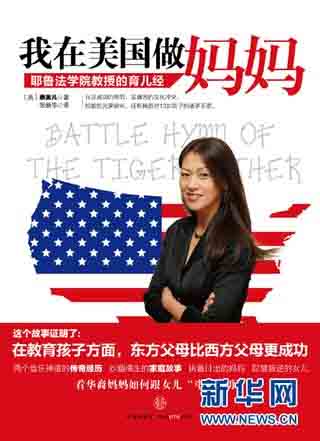
ANSWER: “Only Partly True … China’s educational prowess is real. Tiger moms (such as Amy Chua, who wrote Battle Hymn of the Tiger Mother) are no myth—Chinese students focus intensely on their schoolwork, with strong family support, but these results don’t necessarily provide compelling evidence of U.S. inferiority.”

Wildavsky then says that many of the students in rural China outside Shanghai (the only Chinese city where the PISA international test was conducted) are poorer and less educated than ‘China’s’ coastal cities …

(American) alarmist comparisons with other countries, Waldavksy says, whose challenges are quite different from those of the United States, don’t help.

He says, “Americans should be less worried about how their own kids compare with kids in Helsinki (Finland) than how students in the Bronx measure up to their peers in Westchester Country.”

Myth: “The U.S. No Longer Attracts the Best and the Brightest.

ANSWER:  “WRONG!”

While Wildavsky mentions that the U.S. should be concerned about the future, the U.S. college education system was (and still is) second to none since the United States has long been the world’s largest magnet for international students.

In fact, he says there are more foreign students in the United States now than there were a decade ago—149,999 more in 2008 than in 2000.

For international graduate study, Wildavsky says, American universities are a particularly powerful draw in fields that may directly affect the future competitiveness of a country’s economy: science, technology, engineering, and mathematics.

Continued on July 29, 2011 in Facts about Education – Part 3 or return to Part 1

______________

Lloyd Lofthouse is the award-winning author of The Concubine Saga. When you love a Chinese woman, you marry her family and culture too.

To subscribe to “iLook China”, look for the “Subscribe” button at the top of the screen in the menu bar, click on it then follow directions.


The Ugly Face of Intolerance – Part 2/3

July 4, 2011

I first ran into this particular wall of intolerance on the Amazon Forum where Amy Chua’s critics left reviews and comments about her parenting methods in a hate fest that had mostly nothing to do with the memoir.

What these critics write are attacks on Chua accusing her of being a child molester, a sociopath, or a narcissist, etc.  Often, these critics do not know what they are talking about and the biased ignorance runs deep.

One claim I have been struggling to disprove was the one that said, “Amy Chua does not represent the average mainland Chinese parent and had no right to claim that her parenting methods were Chinese.”

After more than four months, the evidence I have been looking for appeared in China when the China Daily published Tiger Moms’ Popular in China on April 14, 2011.

The China Daily said, “The strict parenting style advocated by Amy Chua, the Yale law professor, in her latest book, Battle Hymn of the Tiger Mother, is still popular in the country today, according to a recent survey.”

“Among 1,795 people polled online by China Youth Daily‘s social research center, 94.9 percent said they know women who are strict mothers, and 55.1 percent said they see merit in Chua’s parenting.…”

“A Beijing high school teacher, surnamed Liu, was quoted as saying that his wife had enrolled their daughter in violin and ballet classes at an early age and had resorted to scolding and spanking when the girl refused to go.

“Strict parenting is also a tradition in other Asian countries, such as Japan and South Korea,” Liu said. “It has merits in raising smarter children and preparing them better for harsh competition in the future.”

In addition, a critic of Chua’s on the Amazon Forum referred to an opinion piece posted on the Psychology Today Blog where Peter Gray, a research professor of psychology at Boston College claimed that 42 one-star reviews from anonymous people that identified themselves as Chinese was enough to conclude that the majority of Chinese (there are more than 1.3 billion Chinese and almost four million are in the US) were critical of Amy Chua’s parenting methods.

When we compare Peter Gray’s opinion in the Psychology Today Blog with information from almost 2,000 people polled online in China, which source do you think is more credible?

Continued on July 5, 2011 in The Ugly Face of Intolerance – Part 3 or return to Part 1

______________

Lloyd Lofthouse is the award-winning author of the concubine saga, My Splendid Concubine & Our Hart. When you love a Chinese woman, you marry her family and culture too.

To subscribe to “iLook China”, look for the “Subscribe” button at the top of the screen in the menu bar, click on it then follow directions.


Spoiled and Confused — China’s new urban generation – Part 1/4

May 25, 2011

A special (guest) report from the front lines of teaching English in China
By Chris “Foreign Monkey” Bewley

When I first arrived in China as an English teacher, I had lofty scholastic goals: I wanted to try a creative variety of class activities and apply a broad spectrum of teaching methods that my students could benefit from to make them competitive in academia and, later, the international job market.

Almost 1 year later, my primary responsibility as a “Foreign Expert English Instructor” has been distilled down to little more than babysitting a bunch of spoiled, undisciplined children who for the most part want nothing to do with English.

At my crowded primary school in a small, semi-urban city in East China, there exists what I have coined the “20/20/20” split in each of my classes (60 kids per class): 20 eager/20 indifferent/20 bad. Basically, I’m teaching 20 while trying to control 40.

To make it fair for everyone, I have to dumb-it-down/ fun-it-up every class. Instead of actually teaching, I find myself playing games with them and jumping around for them like a monkey, which is the only way to retain their attention.

On the positive side, of the eager 20, there are several extremely smart students who I expect one day to be quite successful in what ever they do.  Unfortunately, whenever those eager 20 are trying to learn, the other naughty 40 will try just as hard to spoil it for them.

Continued on May 26, 2011 in Spoiled and Confused Part 2 or discover China’s Future Political Divide Revealed

View as Single Page

_____________________

Chris Bewley has taught English as a foreign language for the past 10 years all over the world, including Japan, Korea, Mexico and Brazil.

To subscribe to “iLook China”, look for the “Subscribe” button at the top of the screen in the menu bar, click on it then follow directions.