Growing Cautiously Into a Modern Republic – Part 1/7

October 23, 2010

The China Law Blog challenged an opinion I wrote about China becoming a republic with more freedom for the people.

I wrote, “The Economist wants India to win this race, because it is called a democracy as is the U.S., but what isn’t mentioned is that China is becoming a republic with a Chinese twist, which is what Dr. Sun Yat-sen wanted.… Once you read the two pieces in The Economist, you may understand why India’s democracy cannot beat China’s evolving republic.” Source: Comparing India and China’s Economic Engines

The China Law Blog criticized this post saying, “In other words, iLook takes what he sees as China’s aspirations and assumes (without a shred of factual support or even argument) that China will very shortly fully achieve those aspirations.”

I don’t recall writing “very shortly“.

In fact, the freedoms the world’s democracies are urging China’s government to implement ASAP may not materialize for decades and some freedoms found in the West may never appear.

To understand why China may be moving toward more freedom slowly, the best place to start is with Dr. Sun Yat-sen (1866 – 1925)

Sun is known as the father of China’s Republic.

To achieve this dream, Sun started by unifying the Communists and Nationalists into a two-party republic in southern China in the early 20th century. Both parties respected Sun, and he made it work.

Unfortunately, Sun died in 1924 at a time when China was in ruins and torn by anarchy and violence between competing warlords.

Then, Chiang Kai-shek, who was a member of the ruling class and a man who hated the Communists, went on a rampage slaughtering Communists and igniting a civil war that would rage even after Japan invaded during World War II. 

Chiang’s first move against the Communists was in the south. His next was in Shanghai to break the labor unions the Communists had been organizing to improve the lives of sweatshop labor working in foreign owned factories. 

Chiang Kai-shek’s goal was to exterminate the labor unions and the Communists, and he had support from the foreign factory owners.

The Communists that survived had no choice but to defend themselves. Surrender wasn’t an option.

Decades later, in 1949, the Communist Party won the revolution under Mao’s leadership and with the support of China’s peasants.

Chiang Kai-shek would flee to Taiwan and protected by the US, he would rule that island under martial law as a brutal dictator for twenty-six years. Taiwan would not become a democracy until years after Chiang and Mao’s deaths.

______________

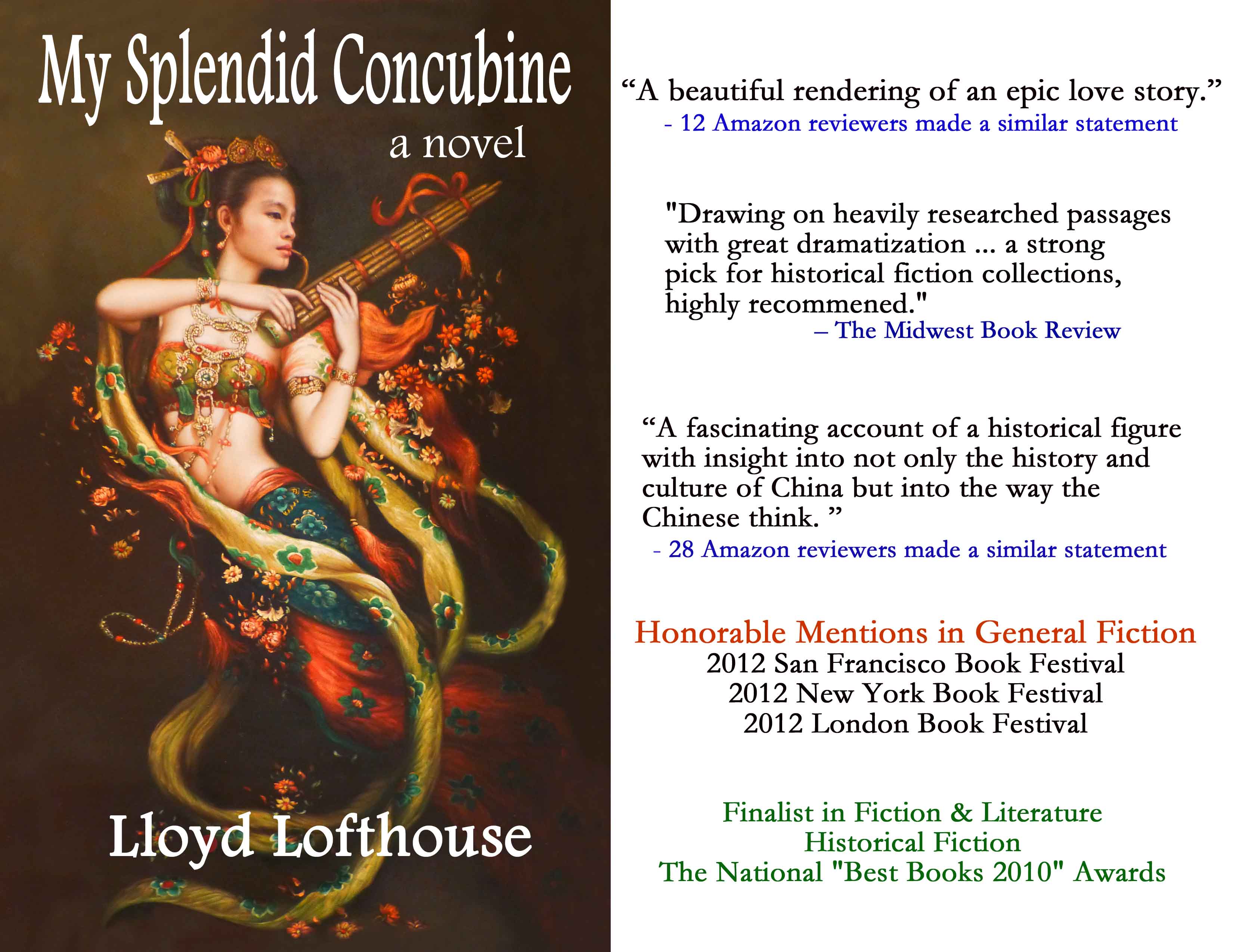
Lloyd Lofthouse is the award-winning author of the concubine saga, My Splendid Concubine & Our Hart. When you love a Chinese woman, you marry her family and culture too. 

If you want to subscribe to iLook China, there is a “Subscribe” button at the top of the screen in the menu bar.


Two Republics – Part 4/4

September 24, 2010

Mao Zedong ruled China from 1949 to 1976 when he died.  For a brief period between the Great Leap Forward and the Cultural Revolution, Mao was forced to retire.  However, when he launched the Cultural Revolution, the people of China returned Mao to power.

Today, China has a one party system and there is a “small” body of citizens entitled to vote for the top leaders who then rule China. 

China has a Constitution but the language of that Constitution is different from the Constitution of the United States and that Constitution is still being Amended as in the U.S.

China does not have a monarch or a hereditary head of state. The fact that China has both term and  an age limit for holding political positions in the government is proof that China is not a dictatorship, which is a popular opinion held around the world.

Under Mao, who ruled for 27 years and who was known by some as “China’s Modern Emperor”, it would be safe to say a dictator ruled China.

Many may not agree with China’s legal system or laws, but that legal system and those laws were written and adopted by the elected representatives who rule China – not by a dictator or a monarch and they are still subject to change through future amendments as is the United States.

The United States and China are both Republics, and the evidence suggests that China is modeling their Republic after America, but  with a Constitution to fit Chinese culture as the elected leaders of China interpret the document that is China’s law of the land.

Dr. Sun Yat-Sen – China’s Democratic Revolutionary wrote that he wanted to model China’s government after America but by combining Western thought with Chinese tradition.

It appears that is exactly what is happening.

If America had more than two centuries to amend the U.S. Constitution, what will China’s Constitution look like one-hundred-and-seventy-two years from now?

What if China is the real republic transitioning from a socialist state while the US was becoming a socialist democracy.

Return to Two Republics – Part 3

______________

Lloyd Lofthouse is the award-winning author of the concubine saga, My Splendid Concubine & Our Hart. When you love a Chinese woman, you marry her family and culture too.

If you want to subscribe to iLook China, there is a “Subscribe” button at the top of the screen in the menu bar.


The Collective Culture versus Individualism – 3/5

September 1, 2010

When I wrote why China is studying Singapore, my goal was to show Westerners why China couldn’t model itself after an individualistic culture like the United States.

It wouldn’t fit China’s culture.

Even Dr. Sun Yat-Sen – China’s Democratic Revolutionary, said any democracy in China would have to fit China’s culture saying, “An individual should not have too much freedom. A nation should have absolute freedom.”

Individualism promotes individual goals and encourages each person to express him or herself freely.  Each person is encouraged to be unique. Rules and laws attempt to ensure independence, choices and freedom of speech.

There is no need to fit in or conform to the group or society.

Relying or being dependent on others is often seen as shameful, and people are encouraged to do things on their own, to rely on themselves. Source: Psychology – Collectivist and Individualist Cultures

However, James Surowiecki says, “We once accused the Japanese of being copycats and now we turn on the Chinese. But the truth is that we have all become imitators.… In many situations, collective decisions are better than individual ones.” Source: Co-Society.com

Go to Collective Culture versus Individualism – Part 4

______________________________

Lloyd Lofthouse is the award-winning author of My Splendid Concubine [3rd edition]. When you love a Chinese woman, you marry her family and culture too. This is the lusty love story Sir Robert Hart did not want the world to discover.

#1 - Joanna Daneman review posted June 19 2014

Where to Buy

Subscribe to “iLook China”!
Sign up for an E-mail Subscription at the top of this page, or click on the “Following” tab in the WordPress toolbar at the top of the screen.

About iLook China

China’s Holistic Historical Timeline


Human Rights – East versus West

July 24, 2010

The loudest voices for human rights originate in the West where the individual has more value than the whole. In China, the opposite is true. In China, the emphasis is on collective rights, which explains why China has the death penalty with the highest execution rate in the world.  The idea is to get rid of individual threats to the collective welfare.

Dr. Sun Yat-sin (1866 – 1925), who is celebrated in mainland China and in Taiwan as the father of modern China, said it best, “An individual should not have too much freedom. A nation should have absolute freedom.”

Interpreted, that means individuals in China will not have the level of freedoms as exercised in Western nations and even if China were to hold democratic elections, that situation will probably not change. Human rights in China does exist but from a collective point of view.

Joe Amon, writing in the Huffington Post, shows his ignorance of Chinese culture when he says, “But the government should be held to account for stifling the work and voices of Chinese AIDS activists and nongovernmental organizations.”

To work for change in China, one must understand the collective thought process of most Chinese.  If change is to take place, it must come from within China and it must be done from a collective point of view. In fact, it is culturally taboo to talk about HIV/AIDS in China since the Chinese seldom talk publicly about the so called white-elephant in the room anyway.

See Human Rights the Chinese Way

______________

Lloyd Lofthouse is the award-winning author of the concubine saga, My Splendid Concubine & Our Hart. When you love a Chinese woman, you marry her family and culture too. 

If you want to subscribe to iLook China, there is a “Subscribe” button at the top of the screen in the menu bar.


Dr. Sun Yat-Sen – China’s Democratic Revolutionary

July 23, 2010

“An individual should not have too much freedom. A nation should have absolute freedom.”
– Dr. Sun Yat-Sen (1866 – 1925)

He is referred to as the father of modern China.  If there were no Sun Yat-Sen and his revolution, there would be no modern China as it is becoming today.

While attending a Christian school in Hawaii, he converted to Christianity, which may have shaped his revolutionary future. It was obvious that his writing was influenced by American thought. With the support he received from the Hawaiian Chinese community, he networked with Chinese people all over the world.

He went on to publish revolutionary ideas seeking to overthrow the Manchu Dynasty and create a democratic China. In 1904, he wrote that he wanted to model China’s government after America but by combining Western thought with Chinese tradition.

Yet, he was considered an idealistic dreamer – that his ideas were impractical.

He said, “The whole world is one family.” (1910)

______________________________

Lloyd Lofthouse is the award-winning author of My Splendid Concubine [3rd edition]. When you love a Chinese woman, you marry her family and culture too. This is the lusty love story Sir Robert Hart did not want the world to discover.

2015 Promotion Image for My Splendid Concubine

Subscribe to “iLook China”!
Sign up for an E-mail Subscription at the top of this page, or click on the “Following” tab in the WordPress toolbar at the top of the screen.

About iLook China

China’s Holistic Historical Timeline