Mao’s War Against Illegal Drugs

June 25, 2010

From The Opium Monopoly by Ellen N. La Motte, we learn how opium addiction became an epidemic in China. Although The Chinese knew about opium for more than a thousand years, it wasn’t until the Portuguese arrived in the 18th century that  the Chinese used it as a drug by smoking it. Merchants from Britain, France, Portugal, America and other nations became the drug cartels that plagued China into the 20th century.

In 1729, the emperor issued the first anti-opium edict, but the supply of opium flooding China went from 220 chests in 1729 to 70,000 in 1858.

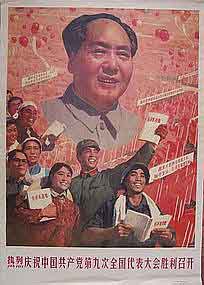
It is estimated that before 1950, as many as 20 million Chinese were addicts. Then Mao had the Red Army execut the drug dealers and forced millions of addicts into compulsory treatment.

Opium growers, who did not want to comply, fled into the Golden Triangle Region of Southeast Asia where many of Chiang Kai-shek’s nationalist troops had gone to escape defeat. Those generals also did business with the CIA, and American soldiers in Vietnam became the new customers. It is estimated that at least 20% of the almost nine million American troops that served in Vietnam became addicted.

China remained free of drugs until Deng Xiaoping declared, “Getting Rich is Glorious” and opened China to world trade. In 2003, it was estimated that China had four million regular drug users even with China’s strict laws concerning illegal drug use.

Sources: Opium and Illegal Drugs in China and How Maoist Revolution Wiped Out Drugs in China

To learn more about Mao’s China, see China’s Great Leap Forward

______________

Lloyd Lofthouse is the award-winning author of the concubine saga, My Splendid Concubine & Our Hart. When you love a Chinese woman, you marry her family and culture too.

If you want to subscribe to iLook China, there is a “Subscribe” button at the top of the screen in the menu bar.


Mao’s Motives

June 24, 2010

Why did Mao cause so much suffering with his failed Great Leap Forward and The Cultural Revolution? Yes, the power Mao held was a corrupting factor in the decisions he made, but  fear of repeating history was also a factor.

Mao's Little Red Book of Quotations

How many millions of Chinese were addicted to Western opium forced on China by Great Britain and France during two Opium Wars?

Historians say that 20 to 30 million were killed due to the Taiping Rebellion. If Christian missionaries had not been forced on China because of the Opium Wars, would that rebellion have taken place?

Another 115,000 Chinese were killed during the Boxer Rebellion, which was a popular peasant uprising against Christian missionaries, foreign meddling and exploitation.

After 1911 when the Qing Dynasty collapsed, chaos and anarchy ruled China, while foreigners—Americans included— lived in luxury in the treaty ports protected by modern foreign military forces. A Century of Madness chronicles this time.

Mao survived Chiang Kai-shek‘s crack down on the labor movement led by the Communist Party. During World War II, Mao’s army not only fought Chiang Kai-shek’s troops but also the Japanese, who killed between 10 to 20 million Chinese in their attempt to conquer China. The peasants trusted Mao’s troops but did not trust Chiang Kai-shek’s army. Why?

Mao believed that socialism would create a better life for the Chinese. His failures were attempts to make China strong enough to defend the country against foreign meddling and invasions. He failed, but Deng Xiaoping didn’t. What happened in Tiananmen Square in 1989—where a few hundred demonstrators were killed—was nothing compared to what China suffered starting with the First Opium War.

______________

Lloyd Lofthouse is the award-winning author of the concubine saga, My Splendid Concubine & Our Hart. When you love a Chinese woman, you marry her family and culture too.

To subscribe to “iLook China”, look for the “Subscribe” button at the top of the screen in the menu bar, click on it then follow directions.


China’s Great Leap Forward ends to be replaced with Mao’s Cultural Revolution (Part 5 of 6)

June 24, 2010

In 1966,  Mao’s Red Book of quotations was used as a textbook in the schools. Shao Ailing, a head teacher in Shanghai said, “The pupils began to realize that all the changes taking place in their families, in school, in Shanghai and China were brought about by Chairman Mao.”

Mao encouraged students to attack authority and the leadership of the Communist Party. This advice came from the “George Washington” of China, the man who had delivered on his promises to the peasants and brought them medicine and land reforms—something the emperors and Chiang Kai-shek had never done.

Tourist Attraction in Today's China

Zhang Baoqing, an early Red Guard member in Beijing, said, “Chairman Mao started the Cultural Revolution to keep up the momentum for change. We thought if we followed Mao, we could not go wrong.”

Mao motivated millions of students from speeches in Tiananmen Square. This time it wasn’t the rural peasants. It was China’s urban youth, who were too young to remember Mao’s mistakes from the Great Leap Forward.

Student anger focused on Mao’s rivals, President Liu Shaoqi and Deng Xiaoping. Even small children were taught to denounce Liu. Then anyone in power was denounced. The structure of the Communist Party collapsed. Schoolteachers were attacked and tortured by their students. Up to a million were killed or driven to suicide.

Return to Part 4, China’s Great Leap Forward or go to Part 6

______________

Lloyd Lofthouse is the award-winning author of the concubine saga, My Splendid Concubine & Our Hart. When you love a Chinese woman, you marry her family and culture too.

If you want to subscribe to iLook China, there is a “Subscribe” button at the top of the screen in the menu bar.


Middle Kingdom Wages Rising

June 14, 2010

William Pesek,  a Bloomberg columnist, writes a piece for the Jakarta Globe about Chinese workers demanding raises.  He mentions the walkout that shut down Honda’s Chinese production lines and the 24% pay raise to get people working again.

more money equals a better quality of life

A flock of suicides at Foxconn, a Taiwan owned company, also demonstrated Chinese worker unrest over low pay and long hours resulting in recent pay increases of 30% with promises of more to come. Since Foxconn turns out Apple, Dell and HP products, this could mean a  jump in high-tech prices around the globe and/or slimmer profits for Wall Street giants.

Pesek says, “Chinese workers demanding higher wages, as they should, must have the folks at Wal-Mart Stores quaking.  It’s hard to exaggerate the effect a big increase in Chinese pay would have on international profit margins and on inflation.”

What choice does China’s government have? Unrest crashed Imperial China in 1911 and changed the country again in 1949. Then after Mao’s death in 1976, China morphed into an open-market economy on steroids under Deng Xiaoping’s management. Recent news signals a possible change from an export-driven economy to one that sprouts from within.

See Deng Xiaoping’s 20/20 Vision or Why China is Studying Singapore

_______________________

Lloyd Lofthouse is the author of the award winning My Splendid Concubine and writes The Soulful Veteran and Crazy Normal.

Sign up for an RSS Feed for iLook China


No Talking About White Elephants

June 12, 2010

Most Chinese do not like anarchy and chaos. They also do not like talking about the “white elephant” in the room. After suffering for more than a century starting with the Opium Wars in 1839, life in China improved after Deng Xiaoping opened a global market economy in China.

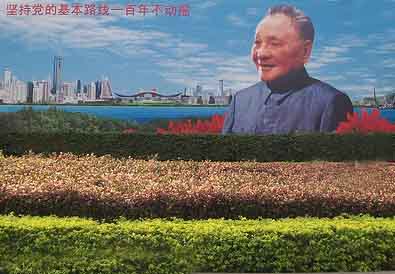
Deng Xiaoping Billboard in China

With that in mind, it should not surprise that when Google was complaining about being hacked by China’s government and refusing to censor their search engine in China, many Chinese turned to Baidu, which operates China’s most popular Internet search engine.

Chinese officials defended the government’s censorship and denied being involved in the cyber-attacks against Google. In fact, most Chinese don’t care what happened to Google.

On February 10, 2010, Simple Thoughts reported that Baidu’s 4th quarter earnings jumped 48%.  Then on June 4, Investor’s Daily Edge reported that Baidu’s stock price was up over 200% in the last year.

It would seem that Google became the “white elephant” in the room—a big mistake in China.

_____________________

Lloyd Lofthouse is the author of the award winning novels My Splendid Concubine and Our Hart. He also Blogs at The Soulful Veteran and Crazy Normal.

Sign up for an RSS Feed for iLook China