Sun Tzu’s “The Art of War” – 1/10

August 18, 2010

Around 500 BC, the King of Wu summons Sun Tzu, one of the greatest military minds in history, to save his kingdom from a more powerful enemy.

Sun Tzu was a warrior, a philosopher and the author of The Art of War.

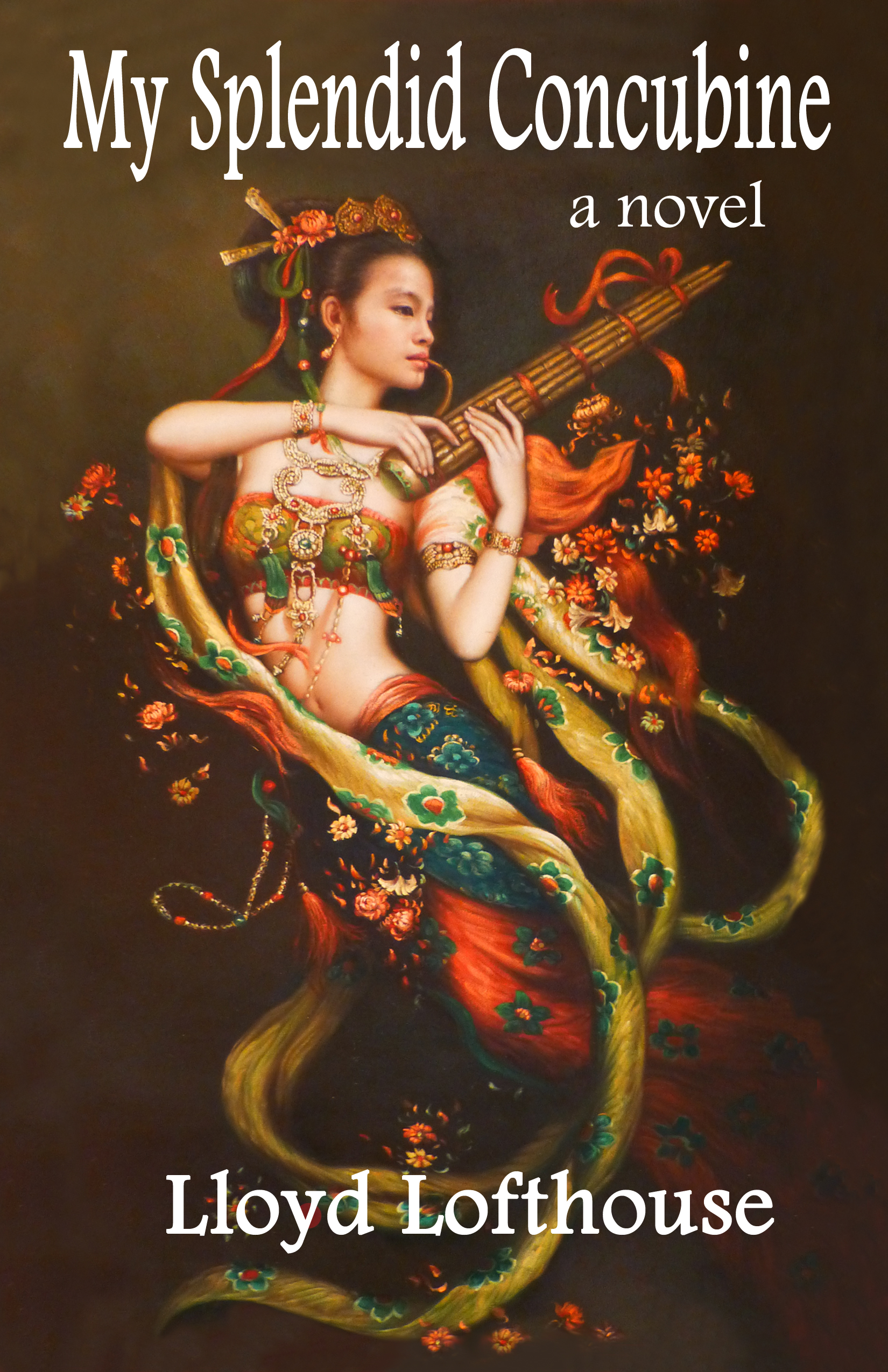
Sun Tzu is important because he had a cohesive, holistic philosophy on strategy.  Sun Tzu tells the King of Wu he can defeat the enemy with a smaller army.  Doubting him, the king challenges Sun Tzu to turn the palace concubines into a fighting force and Sun Tzu accepts.

Sun Tzu shows the concubines what to do, selects the best two students and puts them in charge of the others.  When Sun Tzu orders the exercise to begin, the woman laugh.

He tries again but the concubines laugh again.

Sun Tzu says, “If instructions are not clear and commands not explicit, it is the fault of the general.  But if the orders are clear, and my orders are clear, it is the fault of the subordinate officers.”

Without warning, Sun Tzu beheads the two concubines he had selected to lead the others.  To Sun Tzu, war is a matter of life and death. This is the key principal of his teachings.  Once understood, everyone from the general to the solider will be motivated to win.

While the bodies of the first two concubines are still warm, Sun Tzu appoints two new concubines to lead the others. This time the concubines follow his orders without hesitation. The king of Wu is convinced and  appoints Sun Tzu commander of the Wu army.

Sun Tzu now must train an army of 30 thousand troops to fight a force ten times larger.

Go to Sun Tzu’s “The Art of War” – Part 2

Lloyd Lofthouse is the award-winning author of My Splendid Concubine [3rd edition]. When you love a Chinese woman, you marry her family and culture too. This is the unique love story Sir Robert Hart did not want the world to discover.
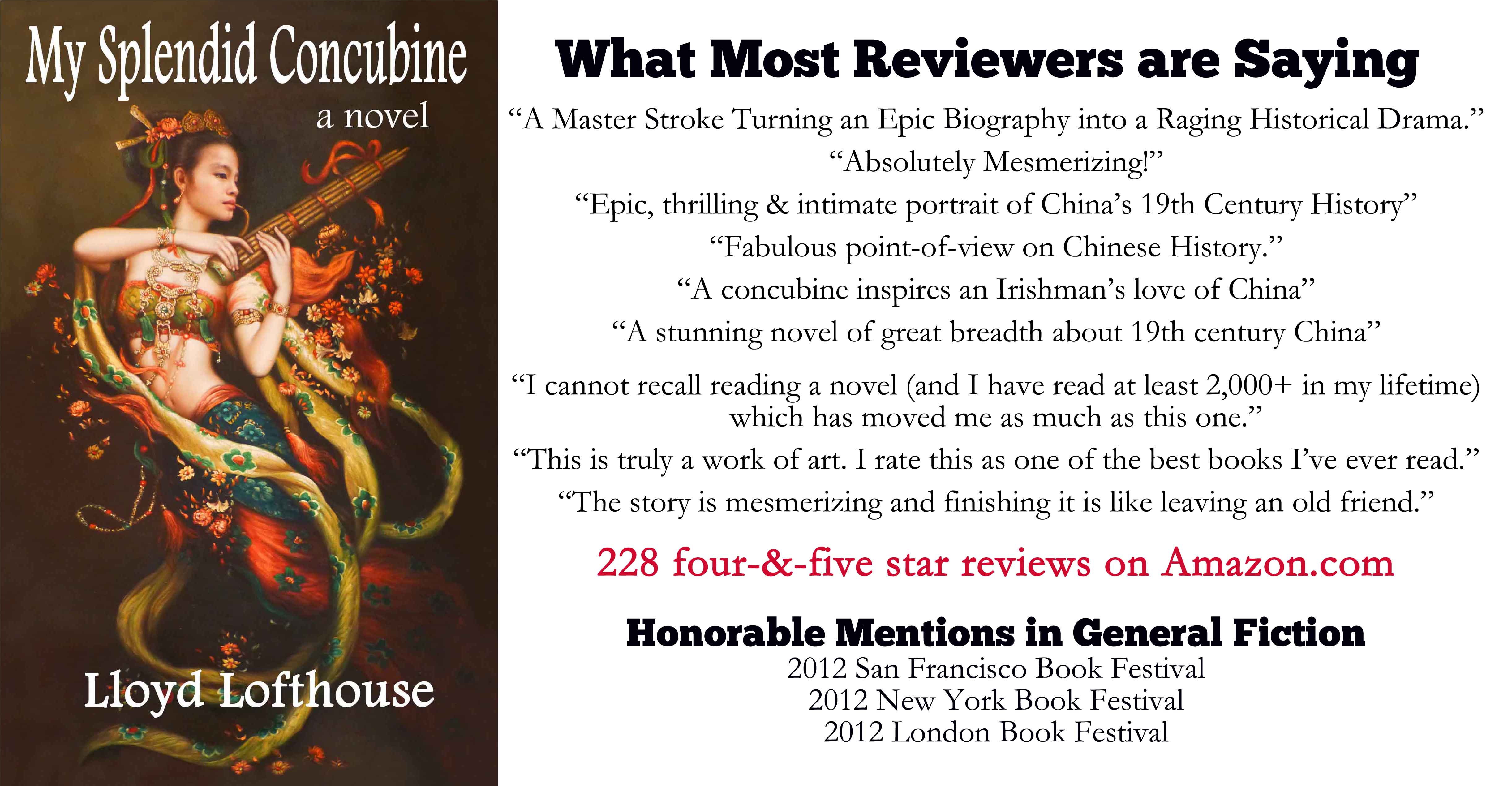
A1 on March 13 - 2016 Cover Image with BLurbs to promote novel

Where to Buy

Subscribe to “iLook China”!
Sign up for an E-mail Subscription at the top of this page, or click on the “Following” tab in the WordPress toolbar at the top of the screen.

About iLook China

China’s Holistic Historical Timeline


Chinese Crossbow and other Inventions (4/4)

August 1, 2010

The Chinese invented rockets long before anyone in the West did. By the 15th century, the Chinese had mass rocket launchers that fired hundreds of rockets in battle. In one battle during the Ming Dynasty, more than one-hundred rocket launchers were used capable of launching 32,000 rockets in an instant.

The Chinese also invented one of the most dangerous weapons on earth—the landmine. The first landmines were invented in 13th century China.  The triggering mechanism for these weapons was kept a secret until the 16th century. Then this concept was used to create the first musket.

During world war I, armies used colored flares to send messages. The Chinese invented this signal method in the 13th century.

The most important contribution to warfare took place during in the 6th century BC— The Art of War by Sun Tzu. Today, American generals study this Chinese book for fighting wars.

Some might ask, if the Chinese were so advanced in waging war, why not conquer the world?  The answer—they had no desire because they were satisfied with what they had in China.

Ironically, the Mongols (Yuan Dynasty 1277 – 1367) conquered China using the weapons that the Chinese had invented.

Return to the Chinese Crossbow and other Inventions Part 3 or start with Part 1

______________

Lloyd Lofthouse is the award-winning author of The Concubine Saga. When you love a Chinese woman, you marry her family and culture too. This is the love story Sir Robert Hart did not want the world to discover.

To subscribe to “iLook China”, look for the “Subscribe” button at the top of the screen in the menu bar, click on it then follow directions.


China’s Grand Canal

April 30, 2010

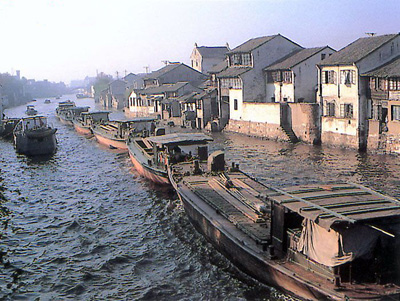
An example of how hard the Chinese work stands in the Great Wall of China and the Grand Canal. To understand the significance, we will look at the Suez and Panama Canals first as a comparison.

China’s Grand Canal

In the 19th century, the French built a canal 100 miles across the Isthmus of Suez. When it opened, the Suez Canal was only 25 feet deep, 72 feet wide at the bottom and 200 to 300 feet wide at the surface. About 20,000 ships use the canal each year. Source: History.com

The Panama Canal was started in 1881 by the French but ended a failure. The Americans finished the canal between 1904 – 1914. The canal was 51-miles long.  Today, it handles over 12,000 ships a year. Source: The Panama Canal

When I was in grade school, we learned about the Panama Canal in glowing terms. I’m sure the French and British brag about the Suez Canal in their textbooks too.

Until my first trip to China in 1999, I had never heard of the Grand Canal, which is the oldest and longest man-made canal in the world at more than a thousand miles from Beijing to Hangzhou south of Shanghai.

China’s Grand Canal

The construction started almost five hundred years before the birth of Jesus Christ and was completed centuries later.  The canal is still in use today.  To finish it, the Pound lock was invented in the 10th century during the Song Dynasty. There are 24 locks and about 60 bridges.  Source: Wikipedia

_______________

Lloyd Lofthouse is the award-winning author of My Splendid Concubine [3rd edition]. When you love a Chinese woman, you marry her family and culture too. This is the love story Sir Robert Hart did not want the world to discover.

Honorable Mentions in General Fiction
2012 San Francisco Book Festival
2012 New York Book Festival
2012 London Book Festival
2009 Los Angeles Book Festival
2009 Hollywood Book Festival

Finalist in Fiction & Literature – Historical Fiction
The National “Best Books 2010” Awards

E-book_cover_MSC_July_24_2013

Subscribe to “iLook China”!
Sign up for an E-mail Subscription at the top of this page, or click on the “Following” tab in the WordPress toolbar at the top of the screen.

About iLook China

China’s Holistic Historical Timeline


Gambling for “Face” – Part 4/4

February 18, 2010

For the Chinese, taking risks is no stranger. It’s probably the reason the Chinese invented paper, the printing press, gunpowder, built multi-stage rockets centuries before anyone in the West did, and the cross bow—China’s list of revolutionary inventions is long so I’ll stop here. Many eventually appeared in the West where Westerners took credit for them. Now you know the truth.

In “What the Chinese Want even More than Oil or Gold”, the focus was on Chinese gambling and about illegal lotteries going legal and national. Since I married into a Chinese family, I understand what the author of this piece is saying, but the topic is more complex than that.

To learn more, I suggest you read the Investoralist, “Where Curious Minds Meet”. The Investorilist piece says that gambling is China’s Achilles heel.

I disagree.

I believe it is risk taking that brought China to greatness in the past.  It’s when most Chinese stopped taking risks that China lost its spot as a regional superpower. It’s all about Face.  Take a risk and win but make a mistake and get caught, you lose ‘Face’ and maybe your life too. Countries like China, Japan and Korea have a high suicide rate.

Return to Part 1 or discover Where Are the Parents

______________

Lloyd Lofthouse is the award-winning author of the concubine saga, My Splendid Concubine & Our Hart. When you love a Chinese woman, you marry her family and culture too. 

To subscribe to iLook China, look for the “Subscribe” button at the top of the screen in the menu bar, click
on it then follow directions.


Chinese “Face” – Part 1/4

February 17, 2010

No, this is not about looks or Botox or face lifting creams or hairstyles, or the desire to have a rounder, paler moon face—the standard of beauty to the Chinese.

What I am writing about is the meaning of “face”.

Dr. Martha Lee wrote, “Nobody ever said what you do with those who have ‘disgraced’ the family name by getting divorced.”

In China, if you do something that is considered a disgrace, like getting divorced, that may be considered a loss of face for everyone in the family.

When our daughter was a pre-teen, we went on weekend hikes in the hills behind our home. The end of the hike was a large park across the street from the La Puente Mall. On one fateful day, when she was nine or ten, she was the first to discover a dead man. She came running back with a shocked look on her face.

It turned out that the dead man was an architect from Taiwan and his company had gone broke.  His loss of face for failing had driven him to take an extension cord from his mother’s house, find a suitable tree in an isolated portion of that park, and hang himself.  He was dead when we reached him.

Continued at Mothers “Face” – Part 2 or learn of Human Rights – East versus West

______________

Lloyd Lofthouse is the award-winning author of the concubine saga, My Splendid Concubine & Our Hart. When you love a Chinese woman, you marry her family and culture too. 

To subscribe to iLook China, look for the “Subscribe” button at the top of the screen in the menu bar, click
on it then follow directions.