History’s Meaning of the Mandate of Heaven – Part 2/5

October 14, 2010

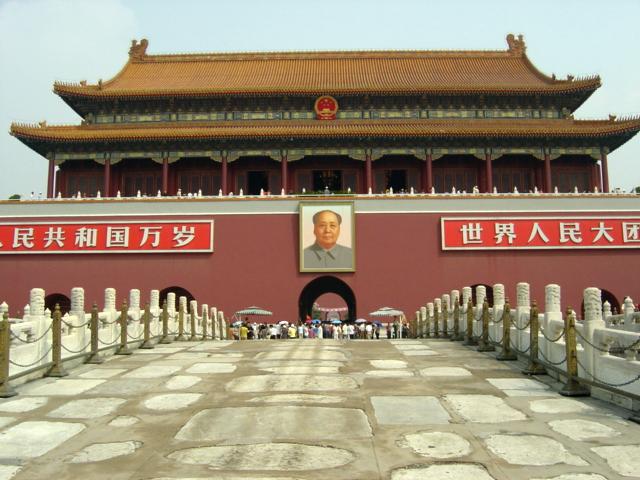
In the last few years, China has revived some of the old Confucian traditions that were stopped during the Cultural Revolution.

Today, actors reenact the ancient traditions for tourists and many of the tourists are Chinese, who are rediscovering roots not seen since 1949.

The Chinese Communists believed they could do away with the old traditions and replace them with something new.

However, just when they thought they had shaken it, it appears that the past has found a way of returning.

The ancient Chinese believed that earth, nature and the cosmos were part of a harmonious natural order, the Tao or Path.


The search for the right path, Taoism, is the second-great stream of Chinese thought — a natural mysticism beside the natural common sense of Confucius, which wasn’t an alternative, but the other half of a necessary life balance.

Western culture sees nature in terms of control and exploitation. However, to the Chinese, it is the source of all harmony and balance.

The little Taoist Temple on the top of sacred Taishan Mountain was wrecked during the Cultural Revolution. Now, it has been rebuilt and real Taoist monks and nuns returned in 1985 to live there and be committed to the old ways.

More than two thousand years ago, after the Silk Road opened, the Chinese gained the wisdom of the Buddha.

To the Chinese, the Western concept of God was foreign, but Buddhism, with its atheistic and democratic message and deep care for ritual was different.

Buddhism was the third-great stream making up the current of Chinese civilization.

Along with Confucian wisdom and Taoist mysticism, it was believed that these three philosophies contained the essential ideas of civilization and without them, life would be unbalanced.

Return to History of the Mandate of Heaven – Part 1

______________

Lloyd Lofthouse is the award-winning author of the concubine saga, My Splendid Concubine & Our Hart. When you love a Chinese woman, you marry her family and culture too. 

If you want to subscribe to iLook China, there is a “Subscribe” button at the top of the screen in the menu bar.


The Long March – Part 1 (2/6)

July 25, 2010

The US and Great Britain supplied bombers, fighters and reconnaissance aircraft to Chiang Kai-shek’s troops and wanted Chiang to attack the Japanese.  Instead, he went after the Communists and signed a truce recognizing a Japanese government in Northeast China.

Chiang wanted to fight army to army the old fashioned way. Mao had his forces avoid a direct assault and fought using hit and run tactics. Advisors from Soviet Russia pressured Mao to be bolder but he refused, while Chiang was getting advice from a Nazi General from Hitler’s Germany.

http://www.youtube.com/watch?v=1bGzqmFOGUs

When the Red Army finally stood their ground as the Soviets urged, the Communists lost sixty-thousand troops. They could not hold the lightly fortified positions they had built, because Chiang’s KMT were better armed.

In October 1934, Mao’s forces streamed out of their territory after suffering horrible losses. The Long March had begun. Nearly 87,000 troops moved in two main columns to the West and to the South.

It would be several weeks before Chiang’s knew the Communists had fled. At this time, Mao came down with a severe case of malaria and had to be carried most of the time.

Start with or return to The Long March, Part 1/1 or go on to The Long March – Part 1/3

________________________

Lloyd Lofthouse is the award-winning author of the concubine saga, My Splendid Concubine & Our Hart. When you love a Chinese woman, you marry her family and culture too. 

Sign up for an RSS Feed for iLook China


The Long March – Part 1 (1/6)

July 24, 2010

Mao’s Long March is considered one of the most significant military campaigns of the 20th Century and one of the most amazing physical feats ever attempted.

Surrounded by hostile armies, 87,000 Communist troops escaped and walked nearly 6,000 miles in one year. It was a desperate retreat for Mao’s Communist Chinese Army from the Nationalist forces (the KMT) of General Chiang Kai-shek. The KMT had a huge advantage with a much larger military force big enough to surround their enemy, the Chinese Communists.

http://www.youtube.com/watch?v=LeLuSGkXpdE

Many say The Long March was a brilliant military maneuver. Others claim it was a series of strategic blunders. However, most historians agree that what was accomplished was astounding. In this documentary, the survivors reveal what happened.

In the 1920s, eighty percent of the 450 million Chinese people were poor peasants who lived in the countryside. Over half owned no land and often worked for little more than food for an absentee landlord.

The difference between the Communists and Nationalists was vast. The Communists wanted to give the land to the peasants while the Nationalists wanted to maintain the old social order.

See The Roots of Madness, which came before The Long March, or go on to The Long March – Part 1/2

________________________

Lloyd Lofthouse is the award-winning author of the concubine saga, My Splendid Concubine & Our Hart. When you love a Chinese woman, you marry her family and culture too. 

Sign up for an RSS Feed for iLook China


Giving up Power is Painful

May 13, 2010

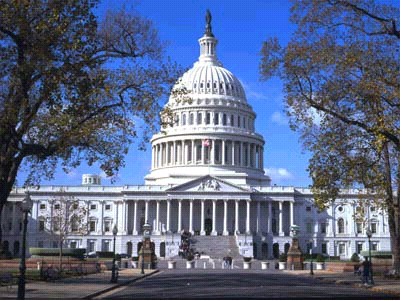
Something I read this morning revealed a similarity about America and China’s governments. Break Up the Parties was in the May 2010, AARP Bulletin about ending the partisan poison that has almost caused a political cardiac arrest in Washington and Sacramento. In Washington, the suggestion was to stop seating Democrats on one side of the aisle and Republicans on the other and seat them alphabetically so they talk to each other. 

In California, Two Government Reform Measures on June 8 Ballot would end the status quo.  Instead of Registered Republican voters only voting for Republican candidates and Democrats for Democratic politicians, this measure, if passed, would open the ballot so all voters could vote for any candidate from any political party.

Gasp! California’s Proposition 14 brought Democrats and Republicans together to defeat it.

Why? For the same reason why most of the 70 million members of China’s Communist Party don’t want to hold open elections and allow all Chinese citizens to vote for multiple parties, which is restricted in both America and China since it isn’t the voters who decide the next President of the United States. The Electoral College does that. 

In case you don’t know, it was 535 handpicked, loyal registered Republicans and Democrats that elected President G. W. Bush to his first term in the White House while the popular vote went to Vice President Al Gore by more than a million. At least in China, the Communist Party has more than 70 million who take part in deciding who the eventual Presidential contenders will be.

Discover an example of how Power Corrupts
____________________________

Lloyd Lofthouse is the author of the award winning novels My Splendid Concubine and Our Hart. He also Blogs at The Soulful Veteran and Crazy Normal.

Sign up for an RSS Feed for iLook China