Propaganda Masquerading as a Movie Review

June 7, 2010

I found another example of media propaganda in a movie review. In June 1989, the Tiananmen Square incident took place in China and “hundreds” of demonstrators died in what started as peaceful demonstrations “demanding” changes in China.

A few months later, a New York Times review made comparisons between the first emperor and China’s modern government. “The depiction of Qin’s bonfire and of his soldiers pushing his flailing enemies (they weren’t the emperor’s enemies) into a ditch caused the American Museum of Natural History to cancel its planned opening of ”The First Emperor of China” last July, when the news was still full of the Chinese Government’s violent suppression of student protests.… This re-enactment of the faraway Qin’s often despotic and often enlightened rule becomes more believable and complex in view of the parallels with recent events.”

The New York Times made a comparison with an event that took place more than two millennia ago but made no mention of the 2/28 Massacre in Taiwan by a US ally where almost thirty thousand noncombatants were killed by Kuomintang troops. There was also no mention of the almost 70,000 U.S. troops in the Philippians, who slaughtered hundreds of thousands of Filipino freedom fighters and non-combatants between 1898 and World War II.

Filipinos killed by US troops before World War II

The New York Times does not review every movie or documentary produced so it is questionable why they would review this lackluster 38-minute documentary about China’s first emperor. Was there another motive behind this review—to remind Americans of the Tiananmen Square incident? After all, let’s not forget anything bad that Communist China does while forgetting worse historical sins committed by American troops and its allies.

See What is the Truth about Tiananmen Square?

_____________________

Lloyd Lofthouse is the author of the award winning novels My Splendid Concubine and Our Hart. He also Blogs at The Soulful Veteran and Crazy Normal.

Sign up for an RSS Feed for iLook China


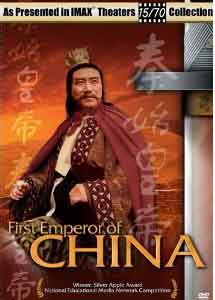
“First Emperor of China” Movie Review

June 7, 2010

Released in 1989 and narrated by Christopher Plummer, this version of the First Emperor of China is about half the length of the nine-part series, The First Emperor: The Man Who Made China (link to part 1), about Qin Shi Huangdi on YouTube.


This documentary was first seen on an IMAX screen, and it covers a few of the known facts about the first emperor’s life.  There is the attempted coup by a prime minister; the assassin with a poison knife; the conquest of six Chinese nations to unify China (too brief on detail); adopting one written language, which resulting in book burning and burying hundreds of scholars alive who disagreed with him; completing the Great Wall of China, and the creation of the Terra Cotta army that would guard his tomb.

Then there is emperor’s quest to live forever by consuming a form of liquid mercury, which shortened his life by decades—an example of how power corrupts absolutely making a man believe he was as powerful as a god.

This link will take you to the New York Times review, which said it was a painless history lesson full of vibrant period details but lacking human drama.

_____________________

Lloyd Lofthouse is the author of the award winning novels My Splendid Concubine and Our Hart. He also Blogs at The Soulful Veteran and Crazy Normal.

Sign up for an RSS Feed for iLook China


Kombucha Fermented Tea

May 30, 2010

Sometimes I wonder about the sanity of most Americans.  It seems they will drink or eat anything that arrives pretty on a plate or in a fancy bottle. I  read a piece this morning that said Lindsay Lohan and other Hollywood types like Madonna, Kirsten Dunst and Halle Berry are into this new (but old) synergy drink called Kombucha.

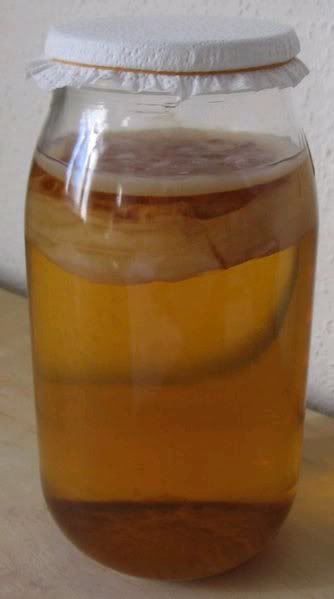
Kombucha Home Brew

No one knows for sure where this fermented tea originated but recorded history says it started in Russia during the late 19th century. Promotional material says the drink comes from ancient China or Japan. In fact, some say that kombucha, known as the Godly Tsche, dates back to the Qin Dynasty (221-206 BC) and was “a beverage with magical powers enabling people to live forever”. Since the first emperor, Qin Shi Huangdi, didn’t live forever, we can discount that claim.

I asked my wife about this tea and she said that as a child she saw it being fermented and that the stuff floating around inside the jar reminded her of dead cockroaches.  Once someone like Pepsi or Coke gets hold of something old like this there is no telling what kind of chemicals will be added. If you want to make this tea, click Kombucha Tea for the home brew recipe.

If you believe the health claims for this tea, you may want to learn about the Chinese “Chong Cao“. Remember, the Food and Drug Adminstration (FDA) hasn’t evaluated any of this stuff yet.

____________________

Lloyd Lofthouse is the author of the award winning novels My Splendid Concubine and Our Hart. He also Blogs at The Soulful Veteran and Crazy Normal.

Sign up for an RSS Feed for iLook China


The First Emperor: The Man Who Made China – Part 9/9

April 23, 2010

In the seventh month of 2010 BC, the first emperor’s search for immortality has ended. At the age of fifty, Qin Shi Huangdi is dead.

While China’s first emperor is being buried according to his wishes, a power struggle rages outside the tomb. By tradition, the oldest son should have become the emperor but several ministers want a younger son on the throne. The others are assassinated and there is a slaughter.

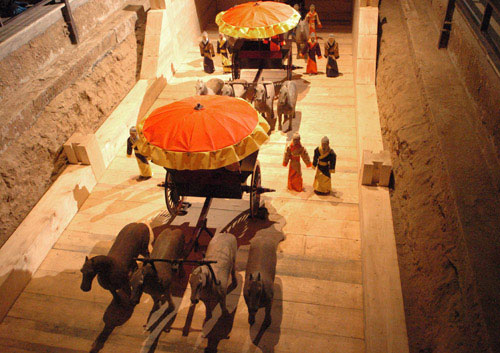
The emperor is also not going alone into the afterlife. While his chosen successors are being assassinated, hundreds of his favorite concubines will stay with their master and die with him. The tomb’s designers and builders will be sealed in the tomb too. Everyone who knows the way dies.

Qin Shi Huangdi left a legacy–a unified nation with a single written language and a system of administration that is still used today.

You may return to Part 8, or start with The Man Who Made China, Part 1

View as Single Page

_________________________

Lloyd Lofthouse is the award-winning author of the concubine saga, My Splendid Concubine & Our Hart. When you love a Chinese woman, you marry her family and culture too. 

To subscribe to “iLook China”, look for the “Subscribe” button at the top of the screen in the menu bar, click on it then follow directions.


The First Emperor: The Man Who Made China – Part 8/9

April 22, 2010

Chinese alchemists knew liquid mercury as the only substance that could dissolve gold. To the ancient mind, that meant mercury had power that might prolong life. However, the human body cannot absorb pure mercury so the Chinese alchemists made a compound the emperor could digest.

As the mercury is absorbed, it slowly destroyed his nervous system and brain. Emperor Qin Shi Huangdi becomes aggressive, argumentative and paranoid. He goes into hiding. Anyone revealing his location is killed. His kidneys’ are failing and he starts talking to the gods.

Thirty-five years after becoming the king of Qin at thirteen, he goes on another Imperial tour.  But this time, he does not see the nation that is bankrupt and near famine. All the emperor can think about is living forever.

He’s told that giant fish guards the island of the immortals. The emperor dreams that he is a sea god who will kill the giant fish. Near the end of 210 BC, he visits the ocean hunting the giant fish with a crossbow while wading in the surf.

His advisors plan what to do with China once the emperor dies. On the return to the capital, the emperor falls ill and the Imperial convoy stops.

Go to Part 9 for The Man Who Made China or return to Part 7

View as Single Page

______________

Lloyd Lofthouse is the award-winning author of the concubine saga, My Splendid Concubine & Our Hart. When you love a Chinese woman, you marry her family and culture too.

To subscribe to “iLook China”, look for the “Subscribe” button at the top of the screen in the menu bar, click on it then follow directions.