Around 500 BC, the King of Wu summons Sun Tzu, one of the greatest military minds in history, to save his kingdom from a more powerful enemy.
Sun Tzu was a warrior, a philosopher and the author of The Art of War.
Sun Tzu is important because he had a cohesive, holistic philosophy on strategy. Sun Tzu tells the King of Wu he can defeat the enemy with a smaller army. Doubting him, the king challenges Sun Tzu to turn the palace concubines into a fighting force and Sun Tzu accepts.
Sun Tzu shows the concubines what to do, selects the best two students and puts them in charge of the others. When Sun Tzu orders the exercise to begin, the woman laugh.
He tries again but the concubines laugh again.
Sun Tzu says, “If instructions are not clear and commands not explicit, it is the fault of the general. But if the orders are clear, and my orders are clear, it is the fault of the subordinate officers.”
Without warning, Sun Tzu beheads the two concubines he had selected to lead the others. To Sun Tzu, war is a matter of life and death. This is the key principal of his teachings. Once understood, everyone from the general to the solider will be motivated to win.
While the bodies of the first two concubines are still warm, Sun Tzu appoints two new concubines to lead the others. This time the concubines follow his orders without hesitation. The king of Wu is convinced and appoints Sun Tzu commander of the Wu army.
Sun Tzu now must train an army of 30 thousand troops to fight a force ten times larger.
Go to Sun Tzu’s “The Art of War” – Part 2
中
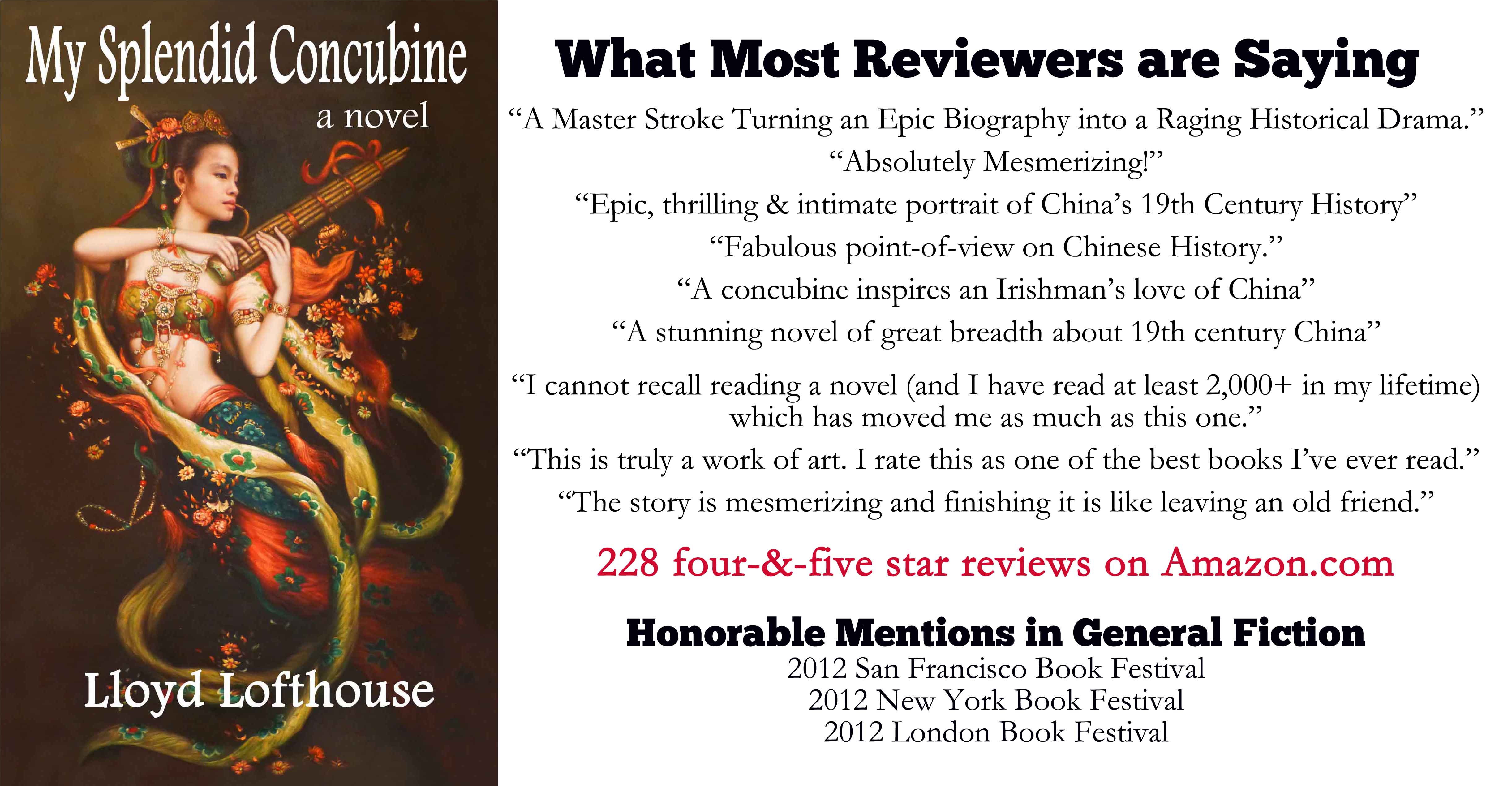
Lloyd Lofthouse is the award-winning author of My Splendid Concubine [3rd edition]. When you love a Chinese woman, you marry her family and culture too. This is the unique love story Sir Robert Hart did not want the world to discover.
Subscribe to “iLook China”!
Sign up for an E-mail Subscription at the top of this page, or click on the “Following” tab in the WordPress toolbar at the top of the screen.
China’s Holistic Historical Timeline


 Posted by Lloyd Lofthouse
  iLook China