China’s Capitalist Revolution (Part 1 of 9)

June 30, 2010

When Chairman Mao died in 1976, he left China in chaos due to the Cultural Revolution. Under Mao, who led the revolution and built the People’s Republic, millions had starved and died (due to poor decisions, droughts, floods, crop losses and a complete embargo by the United States). Deng Xiaoping, who overturned Maoism and taught the Chinese to love capitalism, succeeded him but not without a struggle.

Today, China has transformed the lives of many of its citizens and is challenging the world.  This BBC series is the story of how Communist China learned to love capitalism.  It is also the story of Deng Xiaoping—a survivor often punished by Mao, who refused to quit.

Unfortunately, for all the success Deng had in transforming China into a modern nation, his reputation was stained by what happened during the Tiananmen Square incident. During the demonstrations, Deng, who had been a military man most of his life, was faced with a choice between his modernizing instincts and his commitment to national stability to the party he had served for seventy years since 16.

By bringing wealth and stability to China, Deng defied those who said capitalism could not succeed without Western style politics.  He often said, “Our system has its advantages. We can make decisions quickly.”

If you enjoyed this, see The Roots of Madness or go to Part 2 of China’s Capitalist Revolution.

_________________________

 Lloyd Lofthouse is the award-winning author of The Concubine Saga. When you love a Chinese woman, you marry her family and culture too. This is the love story Sir Robert Hart did not want the world to discover.

To subscribe to “iLook China”, look for the “Subscribe” button at the top of the screen in the menu bar, click on it then follow directions.


Stuck on a Name

June 30, 2010

Dave left this comment for a post on the China Law Blog: “The country (China) is ruled by an organization called “The Communist Party” claiming fealty to the teachings of the German Karl Marx and organizationally based on the teachings of the Russian Lenin.” Source of comment: China Law Blog

Think again, Dave. After Mao died and Deng Xiaoping declared, “Getting rich was glorious”, Marxism and Lenin went in the trash with Maoism. In fact, China is a mixture of capitalism and socialism and the socialism is shrinking.

Check out medical care in China. Soon after Mao died, the cradle to grave socialist system of medicine went into the rubbish. It’s cash, baby, or have a nice death. Along with the state-run hospitals, a growing and very expense private medical system caters to rich expatriates and wealthy Chinese.

In fact, in 2004, there were almost 2 million privately owned enterprises in China. The number of individually owned businesses stood at more than 39 million primarily concentrated in such areas as wholesale and retail, manufacturing and industrial, transport, personal services, and lodging and restaurants. Source: Research Institute of Economy, Trade & Industry, IAA

Soon after 1976, China’s government revised the Chinese Constitution imposing term limits (2 five-year terms) for public office and an age limit (67), something we don’t have in the US. Granted, China still has a one party system but regional governments don’t always listen to Beijing. China is a “Communist” nation in word only.

See Dictatorship Defined

_________________________

Lloyd Lofthouse,
Award winning author of the concubine saga, My Splendid Concubine & Our Hart. When you love a Chinese woman, you marry her family and culture too. 

Sign up for an RSS Feed for iLook China


Keeping China’s People Working

May 30, 2010

Marginal Revolution (MR) posted his or her “China fact of the day” and just about everyone who left a comment got it wrong—as usual.

“Of the 22 Chinese corporations listed on the Fortune Global 500, 21 are controlled by China’s central government or state-run banks.” Source of quote: New York Times

I read the The New York Times piece that was quoted by MR and the gist was that China is going through something similar to what Japan did for the four decades after World War II, and that China cannot depend on manufacturing and exporting goods to the rest of the world to maintain a healthy economy indefinitely.  China “needs” to grow a domestic economy that supports itself and that is what the Chinese are trying to do. If they get it wrong, they will pay a steep price.

The first comment to MR’s “China fact of the day” said, “So much for the triumph of capitalism.”

True, so much for capitalism. After all, it was the Republican, Reagan, Bush, Wild West, capitalist system in the US that caused China to start pumping money back into state-run businesses.

Creating Jobs for China's People

In April 2009, Time did a good job explaining why China’s state owned companies are making a comeback.  When the world’s conomy burst and deflated in 2008 thanks to Wall Street greed, exports from China fell by almost 20% and an estimated 300,000 small and medium-sized private sector companies in China collapsed. “The Crisis hits China’s private sector really hard because China’s private sector accounts for a larger share of China’s manufactured exports, says Yasheng Huang, an MIT professor.

What did China do?  China started to put the people who had lost their jobs in the private sector to work in State Run Companies.  Duh! All anyone has to do is see what happened in the United States during the Great Depression when Herbert Hoover was president to understand why China is acting this way to keep people working and earning money.

See Jobless in America and Angry at China

____________________________

Lloyd Lofthouse is the author of the award winning novels My Splendid Concubine and Our Hart. He also Blogs at The Soulful Veteran and Crazy Normal.

Sign up for an RSS Feed for iLook China


Deng Xiaoping’s 20/20 Vision

February 5, 2010

True, under Mao Zedong (1893 – 1976), China suffered but that isn’t the whole story. During Mao’s Great Leap Forward and the Cultural Revolution, thirty-seven million died—many from starvation. Mao’s form of communist socialism did not work.

On June 30, 1984, Deng Xiaoping said, “Given that China is still backward, what road can we take to develop the productive forces and raise the people’s standard of living? … Capitalism can only enrich less than 10 per cent of the Chinese population; it can never enrich the remaining more than 90 per cent. But if we adhere to socialism and apply the principle of distribution to each according to his work, there will not be excessive disparities in wealth. Consequently, no polarization will occur as our productive forces become developed over the next 20 to 30 years.”

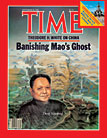
Deng Xiaoping on the cover of Time Magazine

Deng Xiaoping may have been right. Bruce Einhom writing for Business Week, Countries with the Biggest Gaps Between Rich and Poor, October 16, 2009, listed the top countries with the biggest gaps. America was number three on the list. China wasn’t on the list—yet.

What does this mean for America? (CBS/AP)  The Census Bureau reports that 12.5 percent of Americans, or 37.3 million people, were living in poverty in 2007, up from 36.5 million in 2006.

After 2000, the situation in America deteriorated quickly (with President George W. Bush in the White House)—all of the gains in middle-class economic security since WWII were erased within a few years.

PBS reported in “Middle Class Squeeze” (December 13, 2002), the shape of income distribution in America is changing and many are finding it increasingly difficult to afford housing while keeping up with necessities such as food, clothing, transportation, and health care.”

What does capitalism, Chinese style, look like? Under Deng Xiaoping’s economic policies, China became the world’s factory floor.

Prior to 1979, the year China opened its economy to world trade, it was rare to find anything made in China. Since then, exports from China have increased 10,000%, and this year China’s economy become the second largest in the world as Japan slipped to third place.

In the last decade, something happened in China that Mao thought he had destroyed. China grew a middle class. During a trip to China in 2008, we saw the Chinese middle class everywhere we went. Instead of the majority of tourists being foreigners, they are now Chinese.

A middle-class family in China usually owns an apartment, a car, eats out and takes vacations. National Geographic in the May 2008 magazine, said, “they owe their well-being to the government’s (Deng Xiaoping’s) economic policies…”

Current estimates show China’s growth will continue and grow between five and eight percent a year. China’s real GDP growth accelerated on a year-over year basis by a full percentage point, rising from 7.9% in the second quarter to 8.9% in the third quarter (reported Oct. 22, 2009).

Learn about China’s Expanding Middle Class

______________

Lloyd Lofthouse is the award-winning author of The Concubine Saga. When you love a Chinese woman, you marry her family and culture too. This is the love story Sir Robert Hart did not want the world to discover.

To subscribe to “iLook China”, look for the “Subscribe” button at the top of the screen in the menu bar, click on it then follow directions.