The First Emperor: The Man Who Made China – Part 5/9

April 20, 2010

By 223 BC, Shi Huangdi is ready to unify China. Only the states of Chi and Chu are left, but the Chu army destroys his first invasion force.

Shi Huangdi raises another army and invades again. A million troops face each other. It is a standoff.  To win, Shi Huangdi tricks the Chu generals to make a mistake, and the last great obstacle to the unification of China falls.

The last country, Chi, joins without a fight.  Qin becomes China.  At the age of 34, Qin Shi Huangdi is crowned with a veil of stars.  He is the first god emperor of the Qin people.

The system of governance put into place will long outlast the emperor.

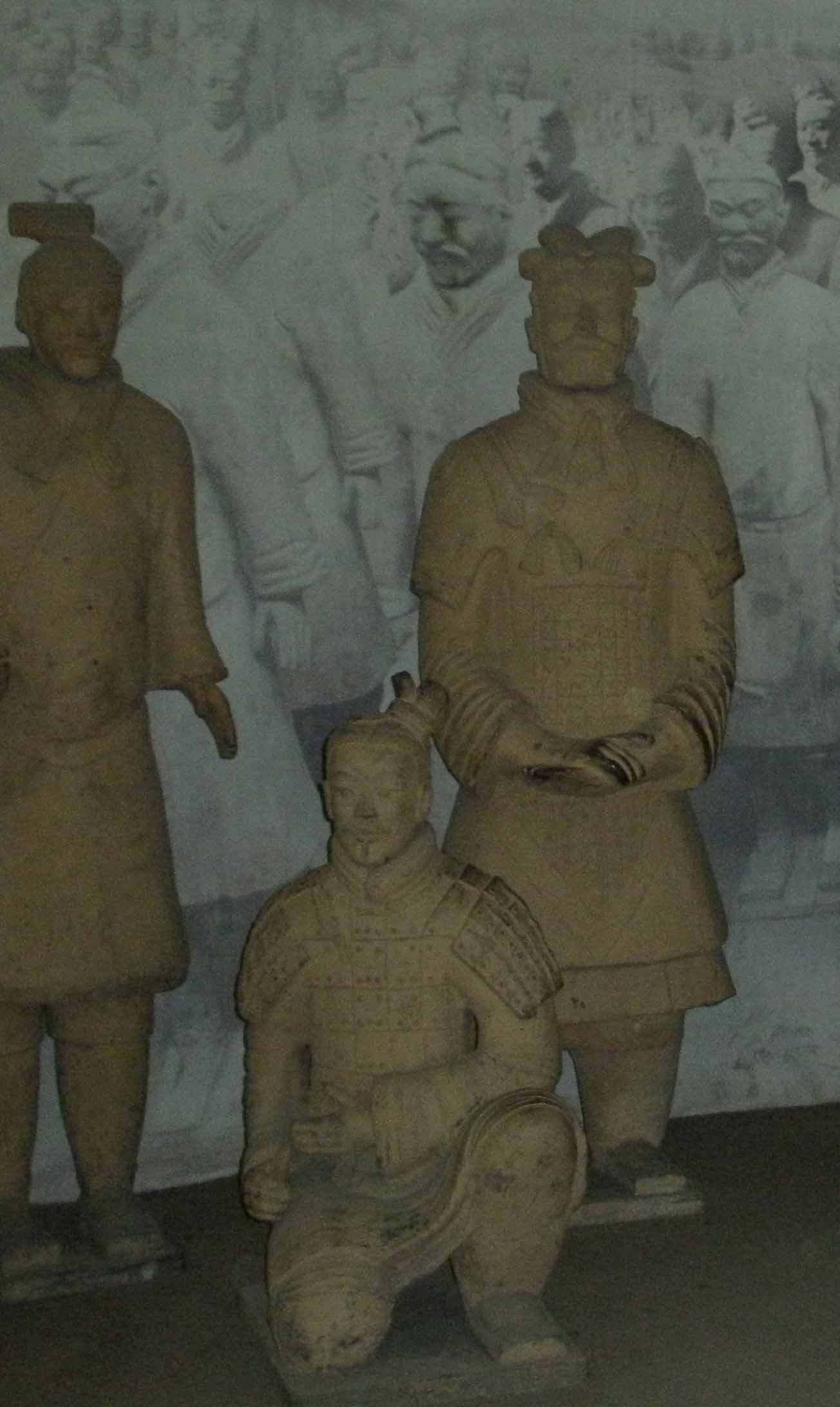
Qin Shi Huangdi commissions a Terra Cotta army that will guard him in death, and the troops are larger than life. In one pit, more than two hundred sets of armor made of stone have been found with no bodies to wear them. It is believed that the armor may have been made for the spirits of dead soldiers who suffered violent deaths in combat so the dead would not become vengeful spirits.

Go to Part 6 of The Man Who Made China or return to Part 4

View as Single Page

_________________________

Lloyd Lofthouse is the award-winning author of the concubine saga, My Splendid Concubine & Our Hart. When you love a Chinese woman, you marry her family and culture too. 

To subscribe to “iLook China”, look for the “Subscribe” button at the top of the screen in the menu bar, click on it then follow directions.


Water – Two Countries Tell a Tale

April 19, 2010

The National Geographic special issue, “Water, Our Thirsty World” (April 2007) compares the world’s largest democracy, India, with China. In “The Big Melt” by Brook Larmer, we see a convincing reason why China’s mix of socialism and capitalism may be the world’s answer to avoid future calamities. Where Western style democracies stall due to partisanship, special interests, religious beliefs and political agendas, China’s government, ruled by engineers and scientists, appears to be planning decades ahead.

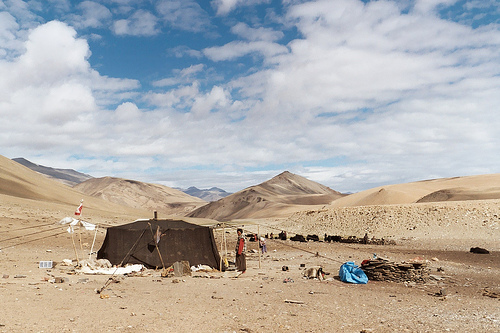
The claims by Tibetan separatists and their supporters that China rules over Tibet with an iron dictatorial fist also appears to be wrong when Larmer visits a family of Tibetan nomads. He writes, “There is no sign of human life on the 14,000 foot high prairie that seems to extend to the end of the world.” Larmer sees “the NOMADS’ tent as a pinprick of white against a canvas of brown.”

Tibetan Nomads

We meet Ba O, a Tibetan nomad. In Ba O’s tent, “there is a small Buddhist Shrine: a red prayer wheel and a couple of smudged Tibetan texts…” A few years earlier, Ba O had several hundred sheep and the grass was plentiful. Now the Tibetan nomad has about a hundred left and fears this way of life is ending.

Ba O says, “This is the way we’ve always done things. And we don’t want that to change.”

However, change is coming, and there is nothing Ba O can do to stop it. The change is not from China’s government. It is from global warming. The Tibetan grasslands are dying and a way of life that has existed for thousands of years may be dying too.

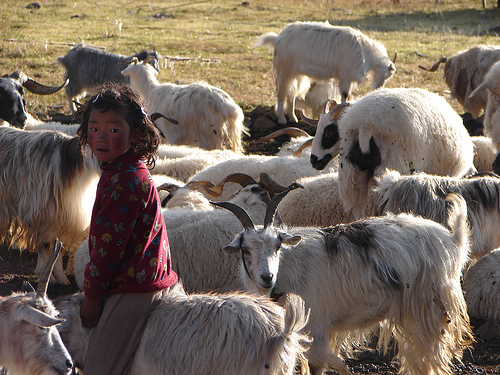
Tibetan girl tending sheep

To insure that the Tibetan nomads will have a place to live, China’s government has been building resettlement villages. The “solid built” houses are subsidized. When the Tibetan nomads can no longer survive on the open Tibetan prairie, it is the nomad’s choice to move into the new villages. The government does not force them to give up their old way of life. Nature does that.

Along with the house comes a small annual stipend for each family so they can eat as they find another way to earn a living. The home Larmer visited had a Buddhist shrine and a free satellite dish for a TV and maybe an Internet connection. In addition, the one child policy does not apply to the Tibetan people since they are a minority in China.

To make sure there will continue to be water to drink, China is planning to build 59 reservoirs in Tibet to capture and save glacial runoff.

In India, the young wife of a fortuneteller spends hours each day searching for water. She lives with her husband and five children in Delhi, India‘s capital. There are fights over water. In a nearby slum, a teenage boy was beaten to death for cutting into a water line.  The demand for water in Delhi exceeds the supply by more than 300 million gallons a day.

What happens to life when there is no water?

See Dictatorship Defined

______________

Lloyd Lofthouse is the award-winning author of the concubine saga, My Splendid Concubine & Our Hart. When you love a Chinese woman, you marry her family and culture too. 

If you want to subscribe to iLook China, there is a “Subscribe” button at the top of the screen in the menu bar.


Dictatorship Defined

April 7, 2010

There is so much misleading information on the Internet and from the Western media regarding China that it boggles the mind. For example, China’s President is listed as a dictator but by definition, he cannot be a dictator.

Dictatorship: 1) government by a ruler who has complete power 2) a country that is ruled by one person who has complete power (source: Longman Advanced American Dictionary)

Chinese Constitution: Article 1

Article 1. The People’s Republic of China is a socialist state under the people’s democratic dictatorship led by the working class and based on the alliance of workers and peasants. The socialist system is the basic system of the People’s Republic of China. Sabotage of the socialist system by any organization or individual is prohibited. Source: Chinese Constitution

I asked my wife, “How can China use the term dictatorship in Article 1 if China isn’t ruled by a dictator?”

She replied, “In Chinese, ‘people’s democratic dictatorship‘ means the people have the power. It’s a translation error.”

I then Googled dictatorship and discovered Parade’s Annual list of…the World’s 10 Worst Dictators.

Parade’s definition of a dictator says, “A ‘dictator‘ is a head of state who exercises arbitrary authority over the lives of his citizens and who cannot be removed from power through legal means.” Hu Jintao, China’s president, was number six on Parade’s list, but the claims used to include Hu Jintao are wrong.
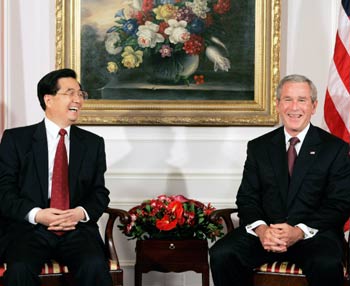
Presidents Hu Jintao and George Bush

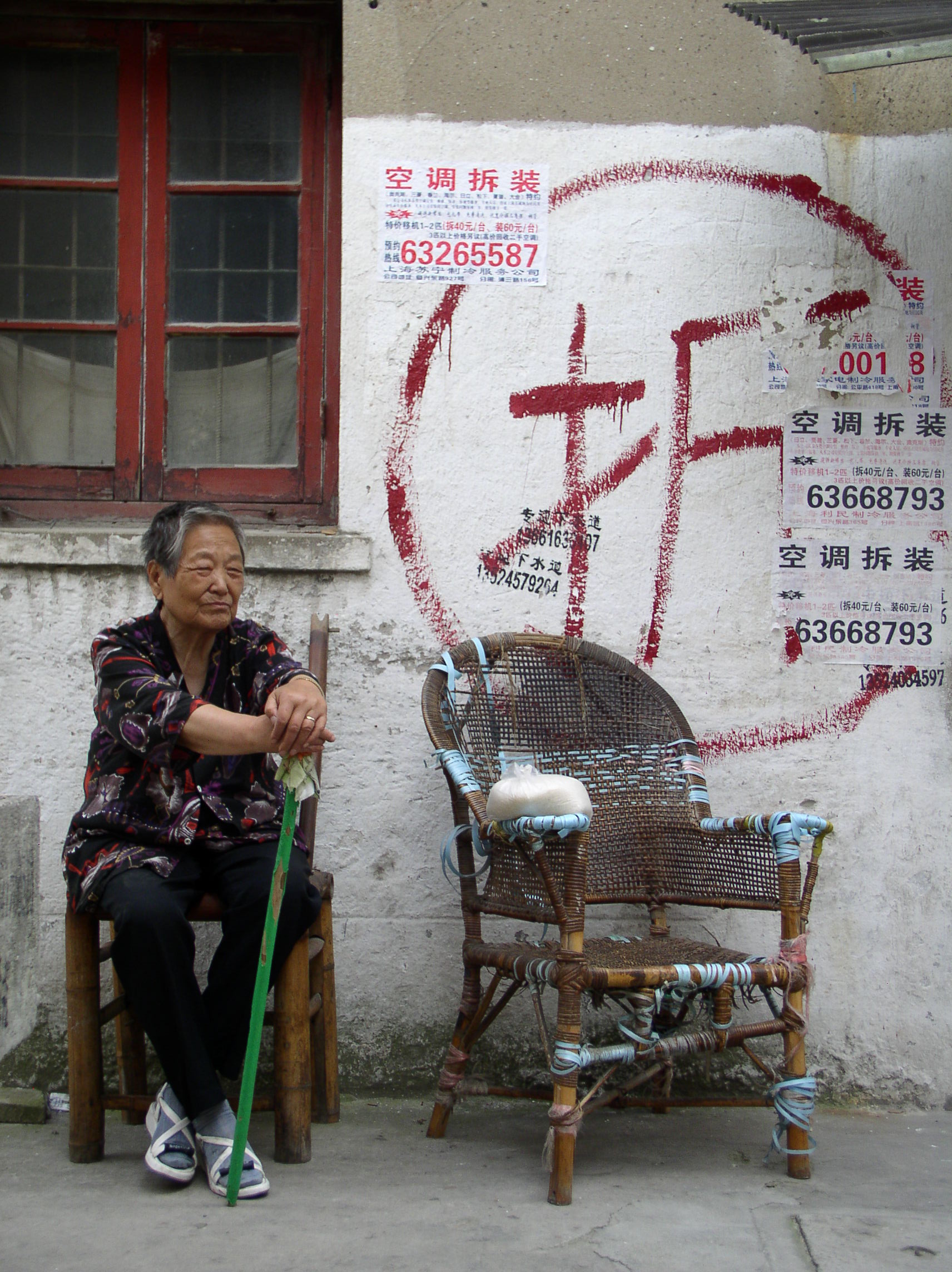
For example, Parade claims that at least 400,000 residents of Beijing were forcibly evicted from their houses prior to the 2008 Olympics. That’s not true—the people sent from Beijing before the 2008 Olympics was transient labor and did not have residence cards and could not own property in Beijing. They were not legal residents and many transient laborers in China rent rooms shared with others in a communal environment crowded with bunk beds crammed in every possible space—like a military barracks. I know, because I’ve seen places like this in Shanghai. I also learned that the government paid for the transportation costs.

The reason Beijing sent those people away was because some were from Tibet and Xinjiang and may have been separatists, who might have staged protests to embarrass China—something the Chinese government avoids like the plague. The truth is, those people were sent home to their villages and were allowed to return to work after the Beijing Olympics. For them, it was like a vacation. Most also return to their villages during the Chinese New Year to be with their families because that’s where their homes are.

Since the Chinese Constitution rules China, Hu Jintao does not exercise arbitrary authority over the lives of his citizens. In fact, I doubt if he makes any legal decisions since the Chinese Constitution puts that power in the hands of China’s legal system. Discover more at China Law and Justice System

Parade is also wrong that China’s president cannot be removed from power through legal means.

Article 79 says, “The term of office of the President and Vice-President of the People’s Republic of China is the same as that of the National People’s Congress, and they shall serve no more than two consecutive terms.”

Article 59. The National People’s Congress is composed of deputies elected by the provinces, autonomous regions and municipalities directly under the Central Government, and by the armed forces.

Article 63. The National People’s Congress has the power to recall or remove from office the following persons:

(1) The President and the Vice-President of the People’s Republic of China;

(2) The Premier, Vice-Premiers, State Councillors, Ministers in charge of Ministries or Commissions and the Auditor-General and the Secretary-General of the State Council;

(3) The Chairman of the Central Military Commission and others on the commission;

(4) The President of the Supreme People’s Court; and

(5) The Procurator-General of the Supreme People’s Procuratorate.

Discover Stereotypes and/or The Failure of Multiculturalism in the United States

______________

Lloyd Lofthouse is the award-winning author of The Concubine Saga. When you love a Chinese woman, you marry her family and culture too. This is the love story Sir Robert Hart did not want the world to discover.

To subscribe to “iLook China”, look for the “Subscribe” button at the top of the screen in the menu bar, click on it then follow directions.

You’ve Come a Long Way, Babe

March 27, 2010

Women in China have walked long distances on healthy feet since 1949 when Mao said, “Women hold up half the sky.”

Today, it seems Chinese women do more than hold up half the sky—they control it. I’m talking about Chen Lu Yu, a popular Chinese television talk show host who reaches an audience estimated at more than 140 million in China.

Chen Lu Yu

Chen has been called the “China’s Oprah”. Chinese media officials have censored the topics Lu Yu covers, but, according to Lu Yu, the show has yet to hear from the Chinese censors. She has talked about HIV, lesbians, transsexuals, marriage problems—you name it, and her Chinese audience loves her.

The show is called “A Date with Luyu” and it first aired on January 5, 2002. Chen has also appeared on America’s Oprah.

Discover Powerful Chinese Women

_______________

Lloyd Lofthouse is the award-winning author of My Splendid Concubine [3rd edition]. When you love a Chinese woman, you marry her family and culture too. This is the love story Sir Robert Hart did not want the world to discover.

His latest novel is the multiple-award winning Running with the Enemy.

Subscribe to “iLook China”!
Sign up for an E-mail Subscription at the top of this page, or click on the “Following” tab in the WordPress toolbar at the top of the screen.

About iLook China

China’s Holistic Historical Timeline


Shanghai

March 15, 2010

The first time I flew into Shanghai, the jet landed at Hangqiao Airport.

There was no Pudong with its Maglev Train, which can move 150 to 200 km/h, running eighteen miles to the city.

Even with the larger Pudong, Hangqiao still handled 25 million passengers in 2009, but more fly into Pudong.

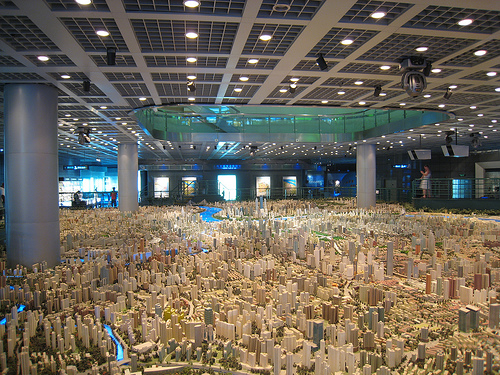
Model of Shanghai

China’s leaders are finishing the job Qin Shi Huangdi started twenty-two hundred years ago, and it’s not easy.

The first emperor unified China with one written language.

Now, the country is being stitched together with one language, Mandarin. It may take several generations.

People are used to speaking the language they grew up with.

There are fifty-six with more dialects, like Shanghainese. Learning English is also mandatory in the public schools.

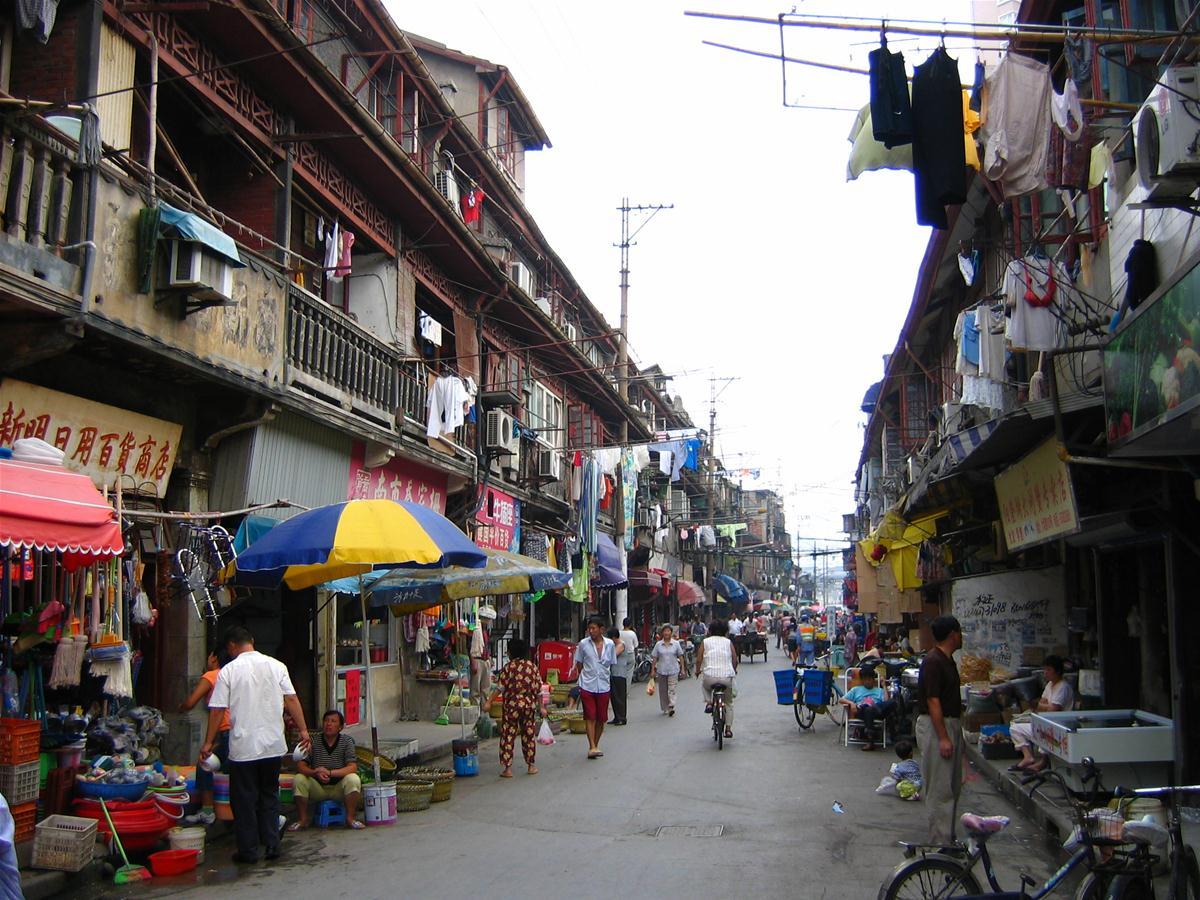
Old Shanghai – I’ve shopped here.

One-hundred-fifty years ago, Shanghai was a sleepy fishing town.

Then England and France started two opium wars with China to force the emperor to allow them to sell the drug to his people.

The treaty that ended the first opium war made Shanghai a concession port and part of the outside world bringing expats, who are still arriving.

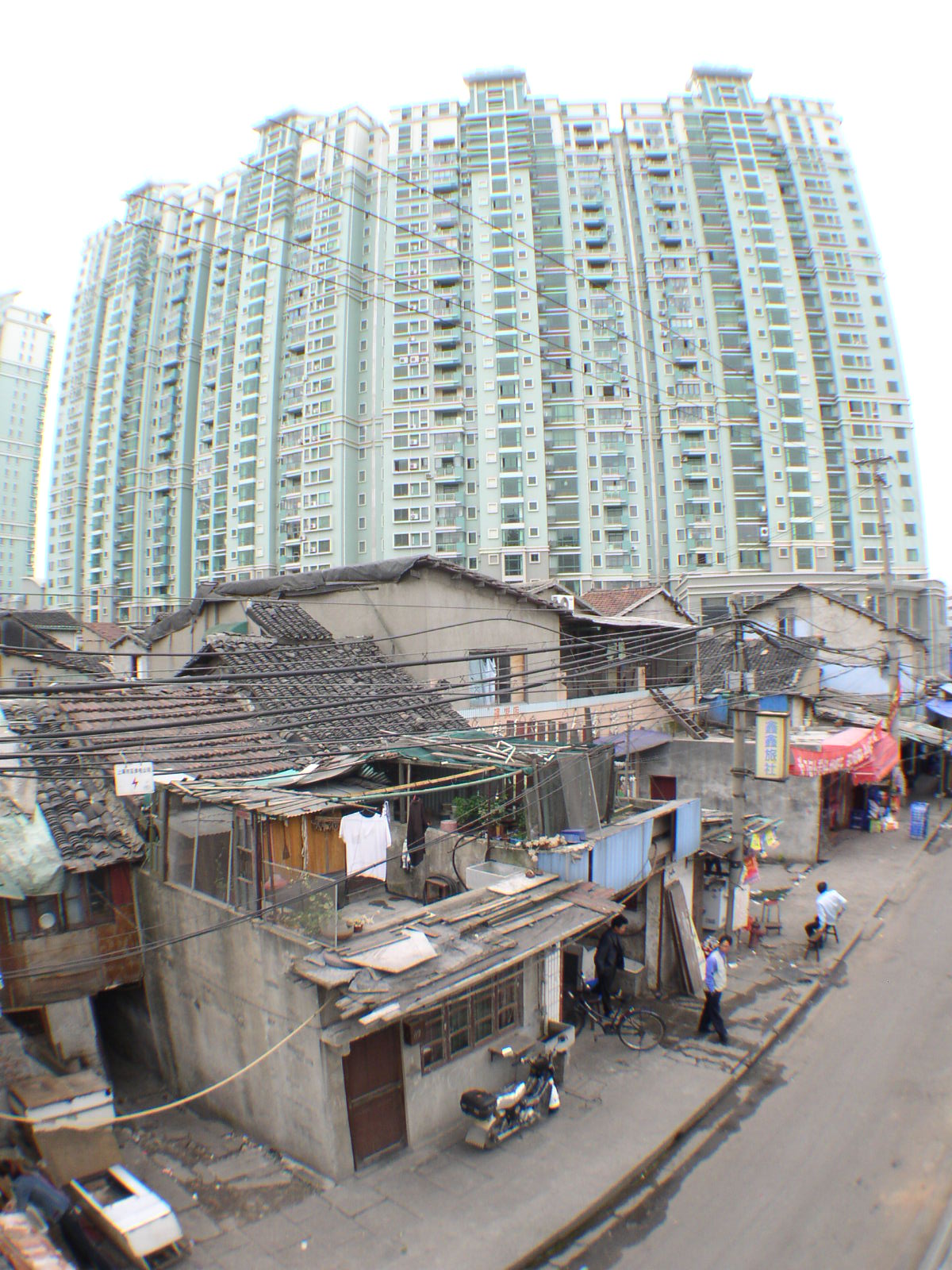
Today, there are twenty million residents and 4,000 high-rises with more on the way. They sprout like mushrooms.

The 101-story World Financial Center is China’s tallest building.

Visit the Shanghai World Expo

The next four Shanghai photos are courtesy of Tom Carter, photo journalist and author of China: Portrait of a People

Tom Carter, photo journalist

See the Shanghai Huangpu River Tour

See more at National Geographic, Shanghai Dreams

See more about Shanghai at Eating Gourmet in Shanghai

Discover Hollywood Taking the “Karate Kid” to China

_______________

Lloyd Lofthouse is the award-winning author of My Splendid Concubine [3rd edition]. When you love a Chinese woman, you marry her family and culture too. This is the love story Sir Robert Hart did not want the world to discover.

Subscribe to “iLook China”!
Sign up for an E-mail Subscription at the top of this page, or click on the “Following” tab in the WordPress toolbar at the top of the screen.

About iLook China