The first grape-vine plantings were in 1997 and the first vintage in 2001.
Judy started the winery because her father liked to drink. Today, Judy produces a quality wine—about 700,000 bottles annually.
Most people do not know that wine is produced in China.
In fact, Judy has competition since there are about 400 wineries in China.
Judy says there is an opportunity in China to make a lot of money in a short period of time, because the country is developing and growing.
The difference between the wine market in China and the rest of the world is that most drinkers in China must drink because they have to. It’s part of the culture of doing business.
Lloyd Lofthouse is the award-winning author of The Concubine Saga. When you love a Chinese woman, you marry her family and culture too. This is the love story Sir Robert Hart did not want the world to discover.
To subscribe to “iLook China”, look for the “Subscribe” button at the top of the screen in the menu bar, click on it then follow directions.
Chris Devonshire-Ellis wrote a convincing piece at China Briefing that India‘s economic growth would speed past China in the near future.
He says, “It (India’s) growth rate could overtake China’s by 2013… Some economists think India will grow faster than any other large country over the next 25 years.”
However, there are flaws in that opinion.
Once again, the foundation of this prediction is based on India being a democracy “where entrepreneurs are all furiously doing their own thing” while China is a culture of secrecy and censorship. Chris mentions a few of China’s other flaws too, which China is struggling to overcome.
What Chris doesn’t mention is the difference in poverty and illiteracy between India and China.
India and China both became independent about the same time—China in 1949 and India in 1947. Due to Chairman Mao’s policies, China suffered horribly from 1949 to 1976 and little progress was made.
For China, most of the progress has taken place in the last three decades. India, on the other hand, has had more than 60 years to solve its problems.
Let’s see what each has accomplished.
The World Banksays, “that China’s record of poverty reduction and growth is enviable. Between 1981 and 2004 the fraction of the population consuming less than a dollar-a-day fell from 65% to 10% and more than half a billion people were lifted out of poverty.”
For India, the World Bank says, “poverty remains a major challenge. According to the revised official poverty line, 37.2% of the population (about 410 million people remains poor, making India home to one-third of the World’s poor people.” UNICEF shows the poverty in India to be 42%.
World Bank studies also established the direct and functional relationship between literacy and productivity on the one hand and literacy and the overall quality of human life on the other.
India’s literacy rate was about 12% when the British left in 1947. Today, literacy is 68%.
In China, literacy is more than 93% with a goal to reach 99% in the next few years.
This means that India has about 800 million literate people competing with 1.2 billion in China.
As for India succeeding, MeriNews.com says, “At a time when we (India) are poised on the threshold of becoming a superpower, the rampant malnutrition and prevalence of anemic children and women to the extent of 48 per cent of the population is a definitive indicator that we have failed as a democracy in ensuring the fundamental requirements of our citizens.”
It appears that China—with its censorship, secrecy and socialist government—has done a much better job of taking care of its citizens.
Lloyd Lofthouse is the award-winning author of the concubine saga, My Splendid Concubine & Our Hart. When you love a Chinese woman, you marry her family and culture too.
If you want to subscribe to iLook China, there is a “Subscribe” button at the top of the screen in the menu bar.
On October 13, I posted Comparing India and China’s Economic Engines, which referred to a flawed opinion piece in The Economist predicting that the future economic growth of India would eventually surpass China.
I felt that The Economist’s opinion was flawed because it was based primarily on a multi-party democracy being superior to the one-party republic in China.
However, reading that issue of The Economist painted a grim picture for India. It is as if The Economist were promising that India was going to sprout wings and fly – then the piece goes into a long list of facts that prove it cannot happen anytime soon.
The China Law Blog chastised me for being unfair to India. The Blog said, “that he wanted me to provide a super-quick summary of The Economist cover story comparing India with China, but it (I) did not,” which was correct.
In fact, I don’t see how I could have quickly summarized the complexity of India’s economy.
To create an in-depth profile of China, I’ve written hundreds of posts. To talk about the reason India’s economy will not surpass China for a long time led to this post, which may be the longest single post I’ve written.
Sorry, it isn’t a super-quick summary. At thirteen hundred words, it’s just quick.
Next, Manjeet Pavarti challenged my opinion in a comment to the post.
It is obvious that Pavarti must be a nationalist who loves his country—an admirable trait except when a patriot is misguided and possibly misinformed.
In Pavarti’s last comment of October 16 at 01:33, he challenged my sources—a photojournalist (Tom Carter) with extensive experience traveling in China and India, and my use of evidence from The Economist.
To correct the shortcomings of the first post on this topic, I talked to Gurnam S. Brard, the author of East of Indus, My Memoires of Old Punjab. He agreed with my opinion and said there are many in India like Pavarti that refuse to see the problems that hold India back from achieving its potential.
I also talked to Alon Shalev, author of The Accidental Activist. Shalev told me of his extensive trip through India with his wife and his impressions were the same as Tom Carter and Gurnam Brard.
Next, is Foreign Policy magazine’s Prime Numbers, Mega Cities, where there are no opinions—just facts. I’m going to list “three” that are roadblocks to India future economic growth.
WATER — From National Geographic we have Mumbai’s Shadow City by Mark Jacobson—a slum holding 12 million people, who live in the middle of India’s financial capital.
Then there is Delhi with 17.3 million residents. One third of the city’s residents have little access to clean water. See Life in the Slums of Delhi, India
Foreign Policy magazine says, “In India, service delivery (of fresh water) will fall woefully short of demand in coming years across most urban infrastructure sectors.”
China, on the other hand, has long-term infrastructure projects and is drilling the world’s longest tunnel to carry water under hundreds of miles of mountains to reach Manchuria in the northeast from the Yangtze River.
Then in Tibet, China is building reservoirs to catch water from glaciers that are melting due to global warming while building villages to relocate Tibetan nomads who discover that the high altitude grasslands they once depended on to feed their herds has dried up and turned to desert due to lack of rainfall.
LITERACY — For a republic or democracy to thrive and survive the population must be literate to understand the issues and support a complex modern society.
However, only 66% of India’s 1.2 billion people are considered literate—that’s more than four hundred million people who cannot read.
In China, literacy is 93.3% up from 20% in 1978.
“Prior to 1978 … Adult literacy was given first priority in literacy campaigns designed to ‘sweep away illiteracy’ (saochu wenmang). Because 80% of adults were illiterate, they were targeted as crucial for securing new China’s economic security.”
It may sound cliché, but reading was (and continues to be) power, and leaders knew that the literate could have considerable influence.” Source: China Philanthropy
The World Illiteracy Map says, “Illiteracy is one of the major hindrances that come in the way of economic growth. Literate manpower helps a country in developing.”
POVERTY & THE MAOIST REVOLT – Foreign Policy magazine reports that rural poverty in India is turning a Communist Revolt in to a raging resource war. “For India this is no longer rural unrest, but a full-fledged guerrilla war.”
“Economic liberalization has not even nudged the lives of the country’s bottom 200 million people. India is now one of the most economically stratified societies on the planet… The number of people going hungry in India hasn’t budged in 20 years.…
“New Delhi, Mumbai, and Bangalore now boast gleaming glass-and steel IT centers and huge engineering projects. But India’s vaster hinterland remains dirt poor—”
China, on the other hand, has managed to contain the Falun Gong problem and the Tibetan and Islamic separatists over the objections of Western human rights activists that cannot stand how China manages unrest.
Due to what many in the West would call brutal measures, harmony and economic progress continue as planned for the vast majority of Chinese.
In addition, in rural China, “Living standards soared in the early 1980s—average incomes doubled in both the cities and the countryside, while there was a boom in both food consumption and the availability of consumer goods.” Source: Socialist Review Index.org.uk
“Growth in (China’s) peasant income, which had reached a rate of 15.2% a year from 1978 to 1984, dropped to 2.8% a year from 1986 to 1991. Some recovery occurred in the early 1990s, but stagnation of rural incomes marked the latter part of the decade.” Source: Asia Times
In fact, the last five-year plan extends electricity to rural China and subsidizes the cost of appliances for rural villages once the electricity is turned on
Tom Carter, one of my sources for this post, is currently living in a small rural village in the tea-producing region of China near Hangzhou and has internet access from a village of twenty people.
I agree that India has the potential to surpass China, but I doubt that will happen in the next few decades due to the economic long-term problems that have to be overcome.
I don’t know where Manjeet Pavarti lives, but I suspect it isn’t outside of the gleaming glass and steel cites like New Delhi, Mumbai or Bangalore.
People living inside these economic growth bubbles may have no idea how serious it is outside and probably don’t care or India would be dealing with these challenges as China has been doing since Mao died in 1976 when Deng Xiaoping and his supporters ended the Cultural Revolution and rejected Maoism.
India became a democracy in 1947, which means it has had more than sixty years to solve these problems, while China has had less than thirty since 1982 when the Republic got its new constitution.
Isn’t it ironic how the West seldom hears about India’s problems but always hears about every bit of negative news that happens in China.
Lloyd Lofthouse is the award-winning author of the concubine saga, My Splendid Concubine & Our Hart. When you love a Chinese woman, you marry her family and culture too.
If you want to subscribe to iLook China, there is a “Subscribe” button at the top of the screen in the menu bar.
On page 11, I read, “many observers think China has done a better job than India of curbing corruption…”
On page 77, a Western banker was quoted saying, “It’s much easier to deal with the well-understood ‘org chart’ of China Inc than the freewheeling chaos of India.”
After reading both pieces comparing China with India, it was obvious that India would never beat China economically.
The Economist wants India to win this race, because it is called a democracy as is the U.S., but what isn’t mentioned is that China is becoming a republic with a Chinese twist, which is what Dr. Sun Yat-sen wanted.
The reason The Economist is wrong about India is because America’s Founding Fathers hated democracy and they had a good reason.
The Live Journal goes into detail on this topic. To quote the Live Journal, “It would be an understatement to say that the (U.S.) Founding Fathers hated democracy. They warned against it vehemently and relentlessly. They equated it – properly – with mob rule.
“in a democracy, two wolves and a sheep take a majority vote on what’s for supper, while in a constitutional republic (which China is becoming), the wolves are forbidden on voting on what’s for supper and the sheep are well armed.…
“The Founders, who hated democracy, gave us a free country (a republic). Our (meaning many Americans) ignorance of history, which has lead to a love of democracy, is causing us to surrender our freedoms at an alarming rate.”
Dr. Sun Yat-sen (1866 – 1925), known as the father of modern China, said he wanted to model China’s government after America but by combining Western thought with Chinese tradition.
When he said this, it was 1910, and America, by definition, was still a republic. Once you read the two pieces in The Economist, you may understand why India’s democracy cannot beat China’s evolving republic.
This topic is continued (with more details and facts) at India Falling Short
_______________
Lloyd Lofthouse is the award-winning author ofMy Splendid Concubine[3rd edition].When you love a Chinese woman, you marry her family and culture too. This is the love story Sir Robert Hart did not want the world to discover.
Subscribe to “iLook China”! Sign up for an E-mail Subscription at the top of this page, or click on the “Following” tab in the WordPress toolbar at the top of the screen.
Chinese culture considers Bamboo lucky because Bamboo is the Chinese symbol for strength.
Bamboo demonstrates strength by growing fast and adapting to new environments. Because of this, many in China see Bamboo as a symbol of luck, which explains why Bamboo is often given as a gift.
Bamboo Flute Music & Beautiful China
In fact, Bamboo is the most popular plant in China. Most Chinese, even in high-rise apartments, have Bamboo plants around in small pots.
Bamboo represents the spirit of summer, simplicity and humility, and respect for elders among other things.
Painting Bamboo goes back centuries. Musical instruments have been made of Bamboo.
China’s first cannons were made of Bamboo.
Painting Chinese Bamboo
My wife has planted Bamboo in the yards of every house we’ve lived in. When my father-in-law visits from China, he has his picture taken in front of the healthiest, tallest stand of Bamboo in the yard.
In Feng Shui, Bamboo is a symbol of strength, fortitude, and rapid growth. When given as a gift, Lucky Bamboo is said to be at its luckiest.
Chinese tradition also gives meaning to the number of stalks given as a gift. Two stalks is a symbol for love, three or six represent happiness while five or seven impart health. The more stalks there are, the more luck there will be.
Lloyd Lofthouse is the award-winning author of The Concubine Saga. When you love a Chinese woman, you marry her family and culture too. This is the love story Sir Robert Hart did not want the world to discover.
To subscribe to “iLook China”, look for the “Subscribe” button at the top of the screen in the menu bar, click on it then follow directions.


 Posted by Lloyd Lofthouse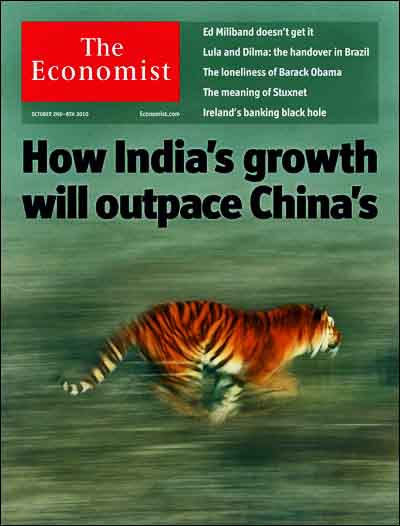
 iLook China