Shanghai’s History & Culture

September 2, 2010

For centuries, Shanghai was a fishing village. It didn’t grow into a town until the 13th century during the Southern Song Dynasty (1260 – 1274), when it became an important port and commercial center.

During the Ming Dynasty (1364 – 1644), Shanghai slowly became a national textile and handicraft center.

After the Opium War in 1840, Shanghai was “forced” by the British and French to serve as a major trading port and became an international colony with foreign concessions.

The British built their concession in 1842—the same year an American neighborhood called the  International Settlement was opened.  The  French arrived in 1847.  Source: Facts and Details

The Russians and Germans arrived later and a Japanese enclave was established in 1895.

The video provides a quick overview of Shanghai’s history and culture.

Today, Shanghai’s population is about 21 million making it one of the largest  metropolitan areas in the world.

Shanghai has developed into a leading international center of business, culture and design with an abundant and diverse offering for dining, shopping and nightlife.

Geographically, the Huangpu River divides the city into two areas—Pushi and Pudong. Pushi is the older part of Shanghai.

Twenty years ago, Pudong was rural and green and had little to offer in housing and shopping.  Much has changed since the sleepy fishing village of the 12th century.

See:
Shanghai

Shanghai Huxinting Teahouse

Shanghai Huangpu River Tour

Eating Gourmet in Shanghai

Chinese Pavilion, Shanghai World Expo

_______________

Lloyd Lofthouse is the award-winning author of the concubine saga, My Splendid Concubine & Our Hart. When you love a Chinese woman, you marry her family and culture too. 

If you want to subscribe to iLook China, there is a “Subscribe” button at the top of the screen in the menu bar.


Train to Tibet

August 26, 2010

Many know Tibet as the Roof of the World. For centuries, Tibet was isolated mostly because it was difficult for anyone to go there—even armies.

In 1903, the British Empire sent an army to Tibet to protect its interests, and it took a year for Sir Francis Younghusband’s invasion force to reach Lhasa in August 1904.

A book was written about that invasion, The British Empire & Tibet 1900-1922. Asian Affairs says, “The great value of Dr. Palace’s study is to highlight the much neglected China angle to the Tibetan issue … [this book is] helping to indicate the very important place of the Tibetan affair in the story of Western imperialism”

Today, the journey to Tibet is not as daunting.  Besides an airport, there is the train to Tibet that leaves Beijing and arrives in Lhasa forty-eight hours later. 

Tourists, both foreign and Chinese, take the train to Tibet to learn more about the people while others stay—changing the demographics.

The train sometimes reaches elevations over 5,000 meters (16,404 feet).

One Western tourist, who had been to Tibet twice, said that the ethnic groups in Tibet are not mixing together. She said there was a Chinese area and another where Tibetans lived.

Makes sense—in American cities emigrants tend to stay close to their kind. In the past, there have been Irish areas, Jewish, German and today there are Vietnamese or Latin or Chinatowns in the U.S.

See Traveling to Tibet

______________

Lloyd Lofthouse is the award-winning author of the concubine saga, My Splendid Concubine & Our Hart. When you love a Chinese woman, you marry her family and culture too.

If you want to subscribe to iLook China, there is a “Subscribe” button at the top of the screen in the menu bar.


Traveling to Tibet

August 26, 2010

I found an interesting post about traveling to Tibet.  When you read between the lines, it is clear that there are risks but the government’s tourist bureau is working to make Tibet a safe destination for tourists.

Although I’ve been to China many times, I’ve never reached Tibet.

Maybe that’s because of the story I heard about the time my brother-in-law got off the plane and had a small stroke and some bleeding.

I’ve hiked/climbed mountains to 11,000 feet (about 3,353 meters) above sea level in hip-deep snow and the elevation does make the heart pound.

Lhasa’s altitude is 3,490 meters or 11,450 feet and is one of the highest cities in the world.

The post I read about traveling to Tibet was from Free Travel Guides. Here are a few of the interesting facts from that post.

  • The oxygen density in Tibet is about 50% of what’s normal at sea level, so altitude sickness is possible.
  • Road conditions are a challenge for tourists who are driving or being driven.
  • Safety is a big concern for the Xizang (Tibet) Autonomous Region.
  • A four-step safety system exits, where tourists will receive security education meaning what to look out for and how to respond, a security alarm code probably similar to the US code on danger from Islamic terrorist attacks, and emergency and travel insurance has been made available and may be mandatory.
  • There is a 110 emergency telephone number to use when needed.
  • The TIB (Tibetan Tourism Bureau) has daily updates related to tourism, security education and conditions of security.
  • The best way to reach Tibet would probably be using the Qinghai-Tibet railway instead of the airport. That way your body has more time to acclimate and you get to see great scenery as you climb into Tibet.
  • About 4 million tourists visited Tibet in 2008 and Tibet has become an increasingly attractive location for tourists.

For more about Tibet see Chinese Gold from Dead Tibetan Caterpillars and/or The Tea Horse Road

______________

Lloyd Lofthouse is the award-winning author of the concubine saga, My Splendid Concubine & Our Hart. When you love a Chinese woman, you marry her family and culture too.

If you want to subscribe to iLook China, there is a “Subscribe” button at the top of the screen in the menu bar.


Covered by the China Daily

August 23, 2010

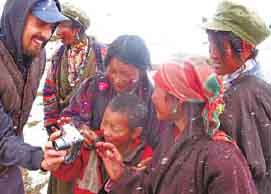
For a Western photo journalist to be featured in the China Daily says a lot when the topic he writes about is China.  For Tom Carter, who has written guest posts for iLook China, it is like a coming of age for a journalist to receive such recognition for his work.

The China Daily is the English language edition of the state-run media.  In China, it is comparable to the London Times, The New York Times, The Los Angeles Times or the San Francisco Chronicle.  When I say it is comparable, the key to that description is “in China”.

The China Daily says of Tom’s work, “There is no single image that can adequately represent the diversity that is China. This is partly why Tom Carter’s 638-page tome of photographs taken during his tour of the country between 2006 and 2008 works so well.”

Photo of Tom Carter in China

“The goal was to portray China as it portrayed itself to me,” Carter says of his travels with his trusty Olympus Camedia C4000, a no-frills four-megapixel camera.

It seems both foreigners and Chinese are hungry for what Carter has to say about “all” of  China.

Recently, Carter had an author event in Shanghai at a bar on the Bund where more than a hundred people came to hear him (paying a 65 yuan cover charge to boot) talk about his journey across China. There was standing room only with a line out the door.

Tom Carter’s book is China: Portrait of a People and is available in the United States through Amazon.

See more about The China Daily

_______________

Lloyd Lofthouse is the award-winning author of the concubine saga, My Splendid Concubine & Our Hart. When you love a Chinese woman, you marry her family and culture too. 

Sign up for an RSS Feed for iLook China


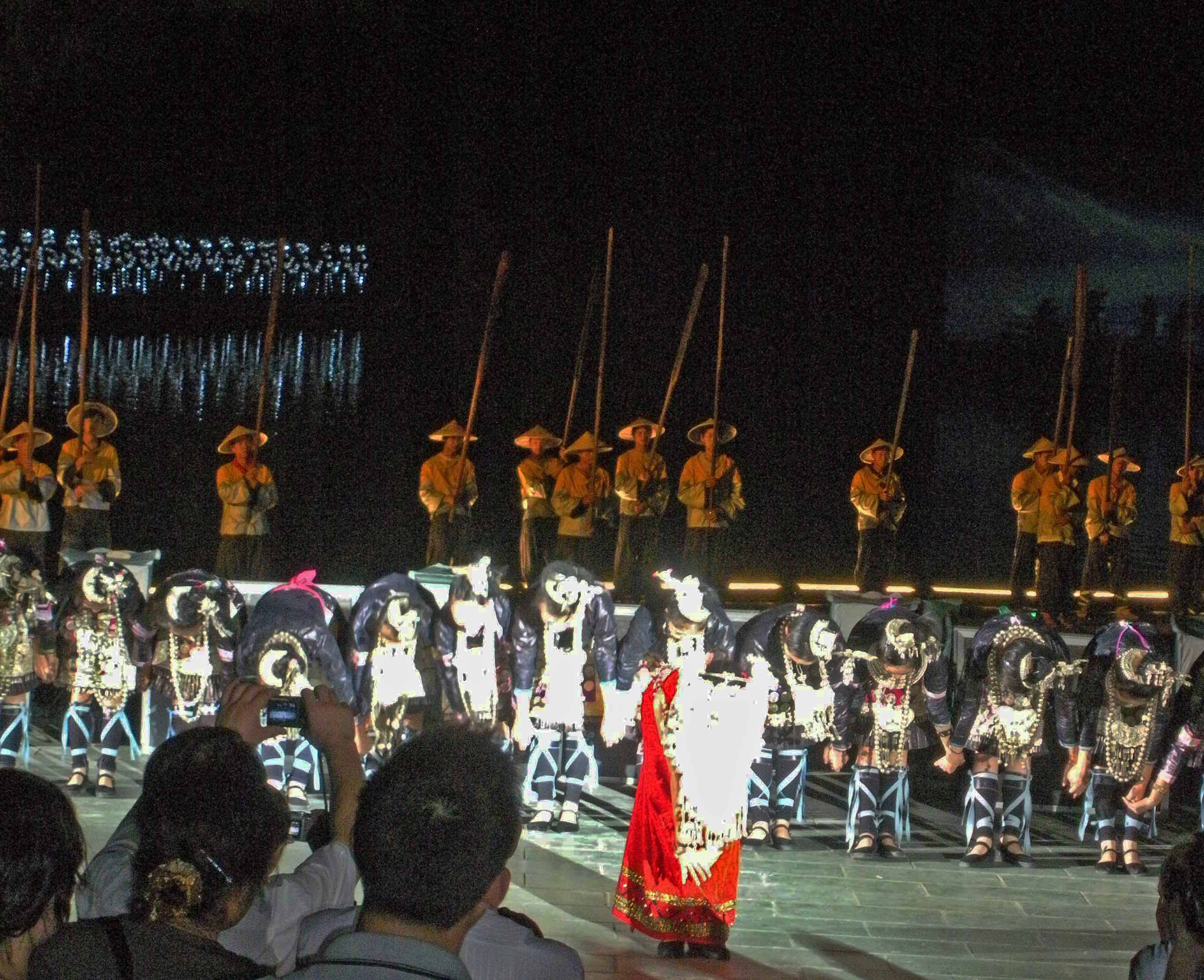
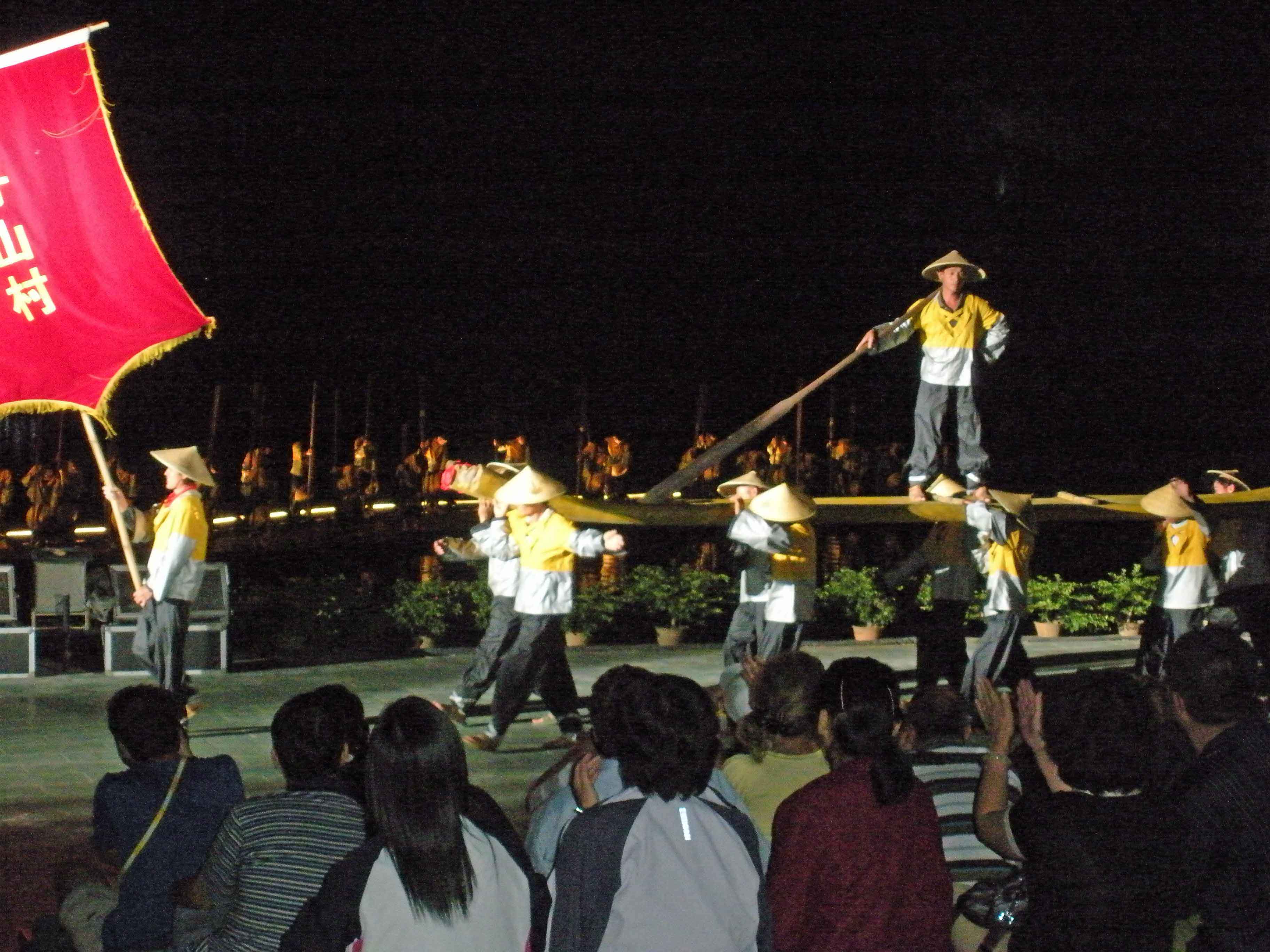
Impressions of Liu Sanjie

August 16, 2010

While visiting China in September/November of 2008, we went to Guilin, went underground to the Reed Flute Cave, hiked the Dragon’s Back, cruised the Li River and spent two days in Yanghsuo.

A brief tour from Guilin to Yanghsuo

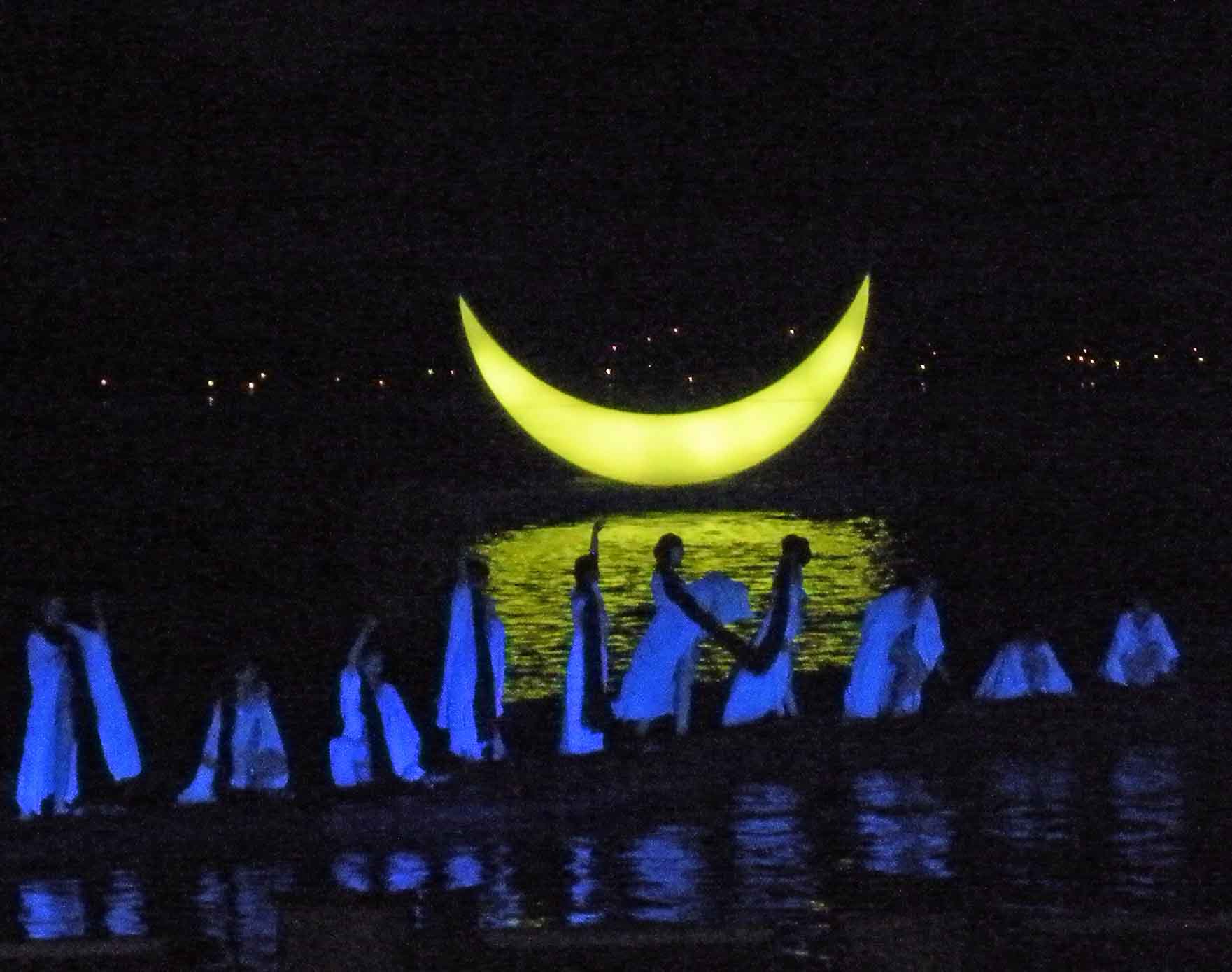
Then we saw Zhang Yimou’s breathtaking staged production, the Impressions of Liu Sanjie, which I recommend to anyone visiting Southeast China.

One of the lightshow scenes from “Impressions of Liu Sanjie”

Zhang Yimou, the director, is an internationally acclaimed Chinese filmmaker. He made his directorial debut in 1987 with the film “Red Sorghum”.

In the 1990s, Zhang Yimou directed “Raise the Red Lantern”—nominated for Best Foreign Language Film at the 1991 Academy Awards.

The “Impressions of Liu Sanjie” is performed on the river at night. However, you may be more familiar with Zhang Yimou’s opening and closing ceremonies for the 2008 Beijing Olympics.

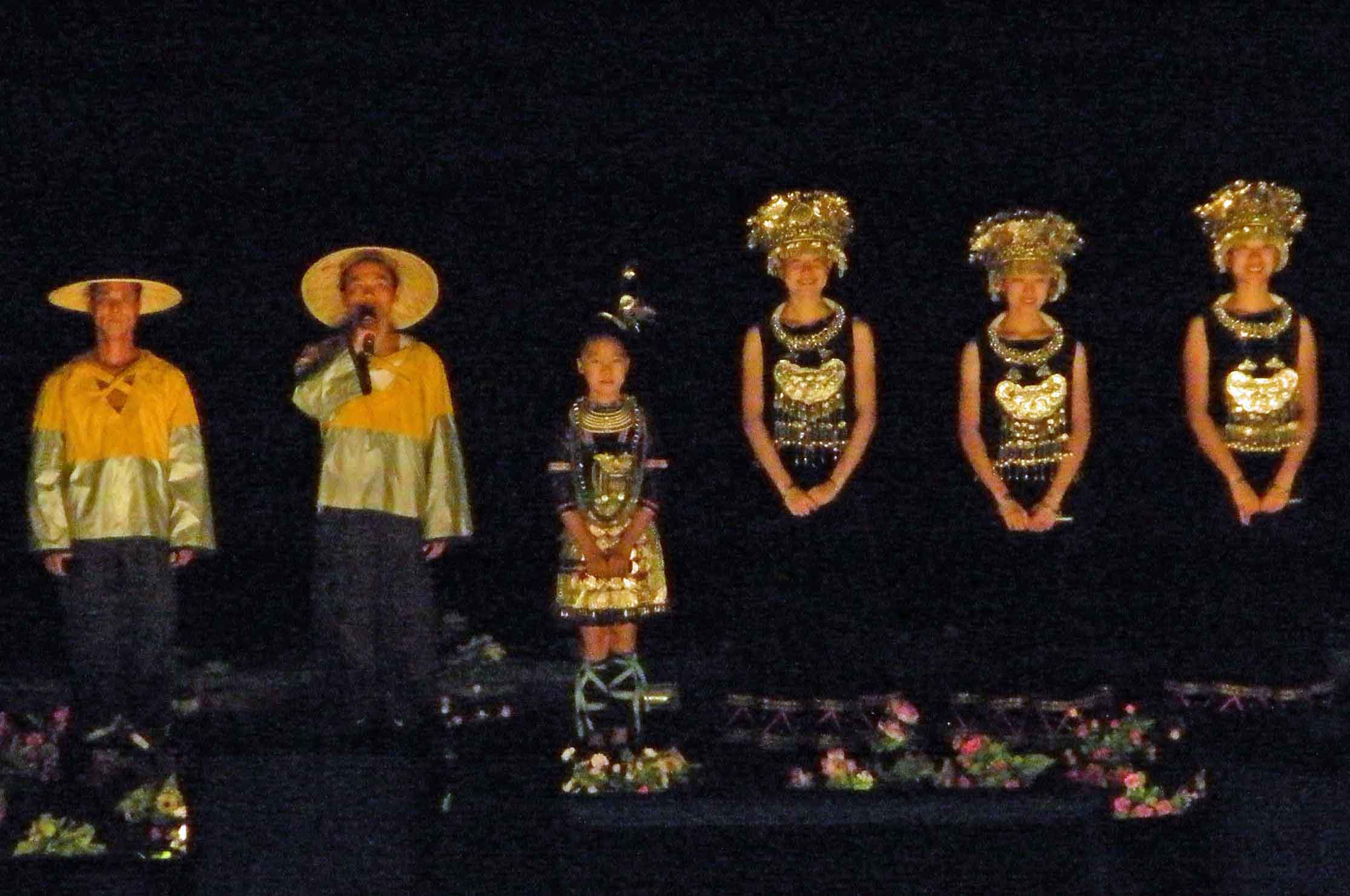
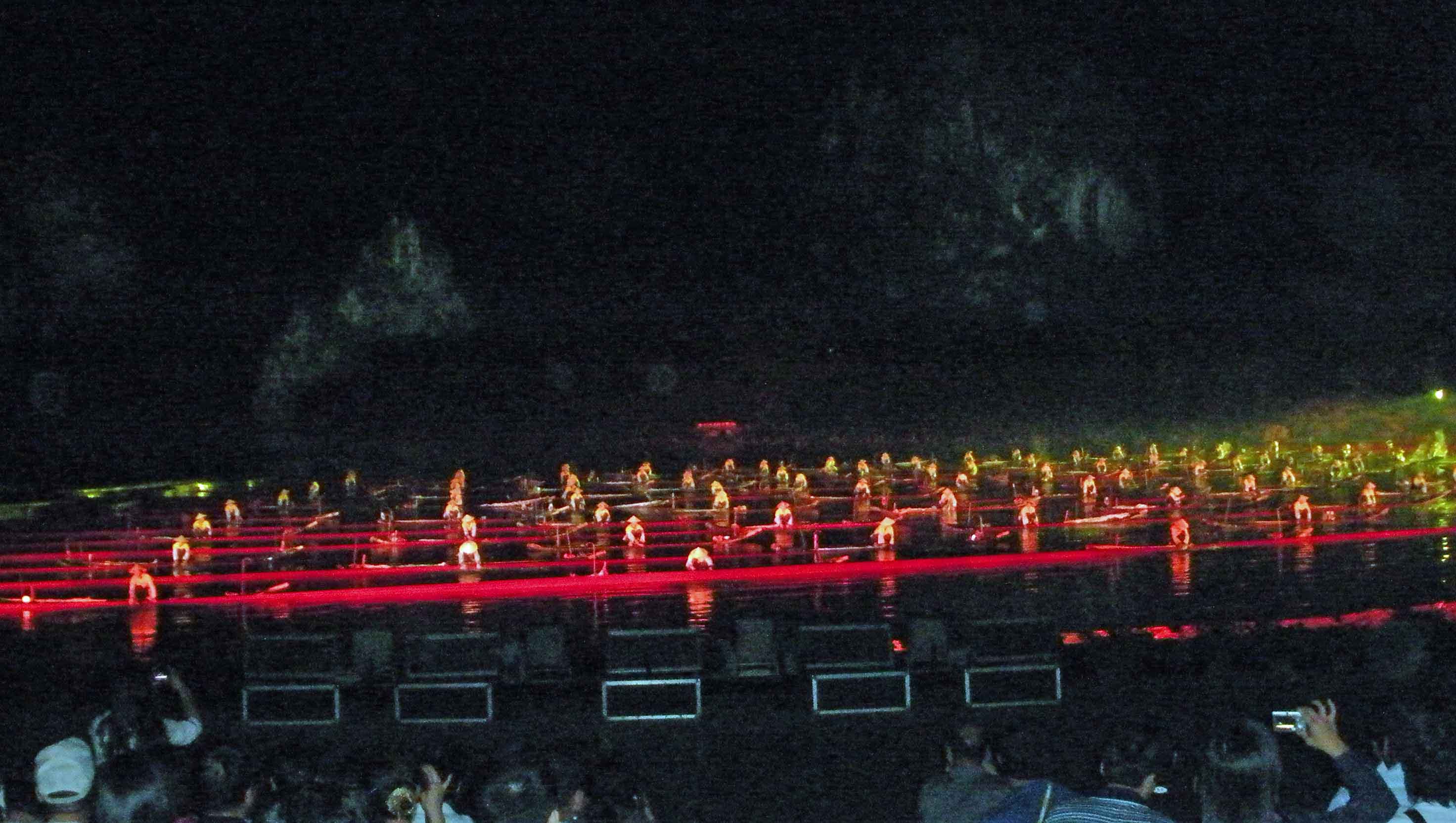
More from the “Impressions of Liu Sanjie”


The “Impressions of Liu Sanjie” is performed with the Karst Mountains and the Li River as the setting.

The cast comes from the local Guangzi Zhuan Autonomous Region  and many may be fishermen by day and actors at night and are from the Zhuang and Yao minority groups, who live in that region.

_______________

Lloyd Lofthouse is the award-winning author of the concubine saga, My Splendid Concubine & Our Hart. When you love a Chinese woman, you marry her family and culture too. 

Sign up for an RSS Feed for iLook China