The Huxinting Teahouse has been around for awhile (several centuries–it was restored in 1784). This pavilion was turned into the tea house in 1855. Nice place to stop and have a cup of tea. Go early. It gets crowded.
famous Shanghai tea house on the water
The area in Shanghai around the Huxinting Teahouse is a good place to shop. Many small shops. Do not pay asking price. Be willing to bargain. Start low and meet in the middle. Don’t be too cheap either.
Shopping before it gets crowded.
The following video gives you a musical tour of the sights of Shanghai’s Old District including Yu Yuan Garden and Huxinting Tea House.
Lloyd Lofthouse is the award-winning author of The Concubine Saga. When you love a Chinese woman, you marry her family and culture too. This is the love story Sir Robert Hart did not want the world to discover.
Subscribe to “iLook China”!
Sign up for an E-mail Subscription at the top of this page, or click on the “Following” tab in the WordPress toolbar at the top of the screen.
Growing up in a rural, slate-roofed village deep in the countryside of southeast China, the only English books my Chinese wife had to read back then were a brittle copy of Tess of the d’Urbervilles and a set of Harlequin novels.
Yes, I’m talking about Harlequin, those pulpy paperbacks found on revolving wire racks at supermarket checkout aisles across North America and the UK. Their enticing cover art – usually, nay, always featuring shirtless, square-jawed men hovering millimeters away from the glistening-red lips of a damsel in distress – and formulaic flirt/fight/fall-in-love storylines mercilessly targeted housewives and secretaries longing for a 200-page escape from the dirty diapers and pot-bellied husbands of their mid-life realities.
As it turns out, it was by reading books like “Stormy Voyage” by Sally Wentworth and Roberta Leigh’s “Two-Timing Man” (bought used for 7 RMB out of a sidewalk vendor’s book cart), amongst other Harlequin classics, that my wife managed to teach herself English (which explains her tendency to throw her head back dramatically whenever we kiss).
Curious how Harlequin, the forbidden fruit of literature, could be found anywhere in a Communist republic that has the world’s most strict state-sponsored vetting process for publications, I was surprised to learn that in 1995 (about when my fiancée found her copies) Harlequin received official, red star-stamped permission to place half a million copies of twenty titles in Mandarin and a quarter-million copies of ten English versions on the shelves of Xinhua.
Harlequin’s stated goal: “to bring romance to millions of Chinese Women.”
A China.org article on the increasing popularity of romance books in the P.R.C. concurred with Harlequin’s audacious move: “Chinese women today have new demands for their Prince Charming: first, he must be powerful and distinguished…next, he must have unlimited financial resources.”
Wosai! No wonder China has become home to the world’s highest surplus of single men!
Harlequin, which puts out 1,500 new titles annually in over 100 international markets, has yet to think up a romance set in present-day China (Possible storyline: wealthy, second-generation Beijing businessman seduces sexy xiaojie with his shiny black Audie, pleather man-purse and a thick stack of redbacks; he agrees to save her Anhui village from being bulldozed by corrupt cadres if she will become his kept woman.).
Until that day, we will have to entertain ourselves with stories set in China’s olden times starring princesses and concubines.
The air conditioning units we see on the outsides of buildings in China are much more energy efficient than the whole house units found mostly in the US. We live in the Bay Area near SF and our house has a whole house unit, which can be very expensive as it cools or heats the entire house while we spend most of our time in one room.
The units you see in China are ductless and while there may be one unit outside of the building, there will be a different ductless unit inside each room of the unit, which allows the residents to run only the one for the room they are in thus saving energy and keeping the electric bill/use down.
However, I agree with you that these units probably do warm the city by several degrees in the summer. Imagine, China has more than four times the number of people that the United States has with about the same amount of land to live on. If everyone in China had these ductless air conditioning units, I’m sure it does run up the heat at ground level. In the US, when a heat wave hits, the amount of energy demanded by all the whole house air conditioning units often causes brown outs/power losses as the electric grid crashes from the demand.
The man that installed the one ductless system we bought (for a separate granny bungalow on our property) said that it would use less than a third of the electricity demanded by our whole-house unit.
I wonder if that means in China, if everyone was using the ductless heating-cooling unit in one room of their home, the Chinese would be consuming the same among of electricity that Americans would consume under the same circumstances.
Most of the Chinese cities we have spent time in all had the same amount of energy you experienced in Hong Kong.
If you are arriving here from FRESHLY PRESSED – A Huge thank you and Welcome. I would be so grateful if you would follow me as storytelling and travel are my livelihood and if we share this passion you will have a blast here.
Cheers and Thank You!
Hong Kong is easily the most dynamic city I have ever visited. Alive, moving, walking, running, and most of all eating and all of this with great vigor.
I was charged to do a Hong Kong post by another lovely blogger and so I decided it was long overdue to take my Blissful Adventurers on a tour.
I fell in love with the Hipstamatic iPhone app last year and I enjoy how this $3 investment really forced me to look at Hong Kong under the surface and explore subjects that on my Nikon D90 may have seemed plain and ordinary.
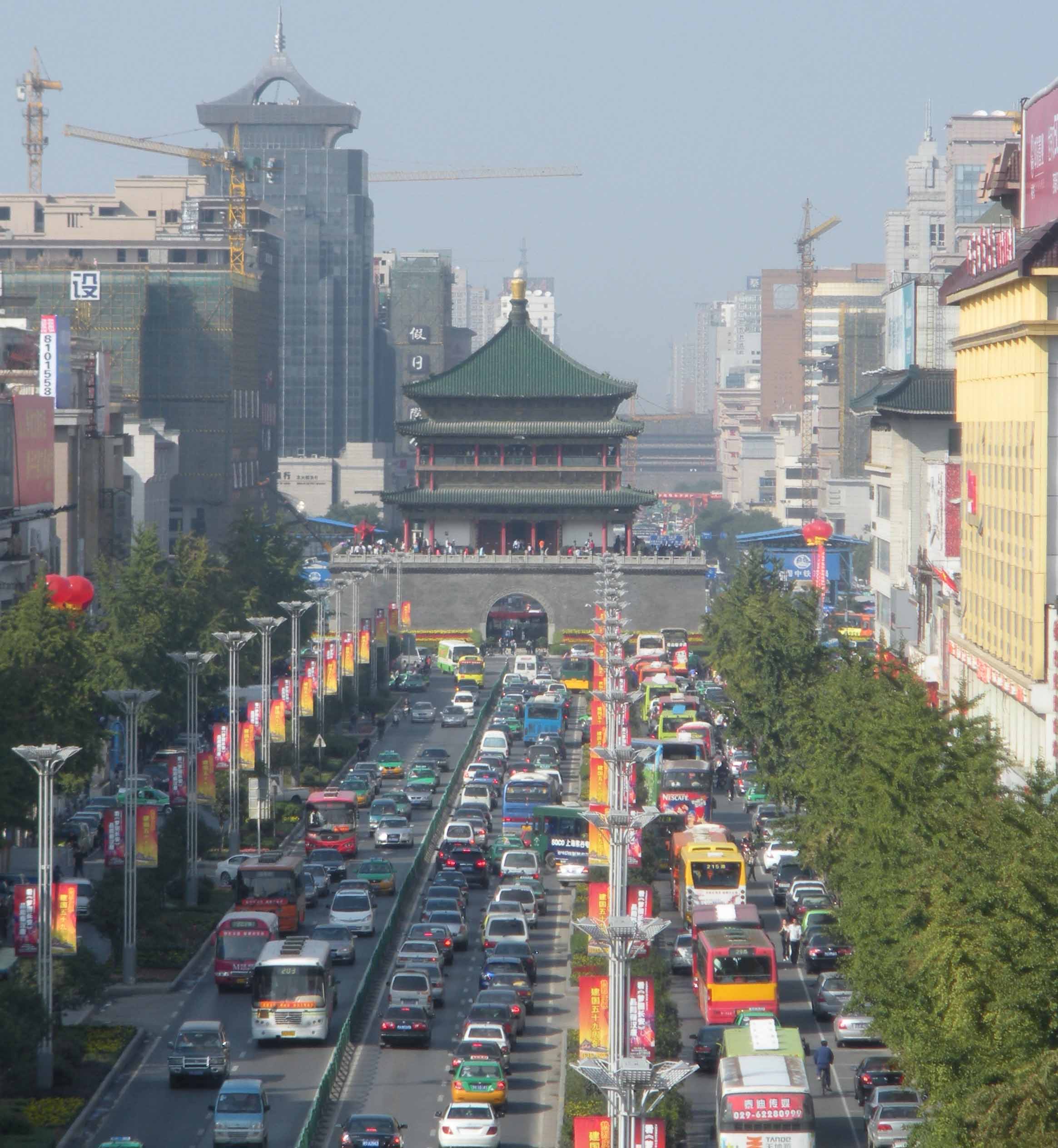
We are taking a quick trip to Xian (in pictures that is). Xian was China’s ancient capital for more than a thousand years before being moved to Beijing.
After landing in Xian in 2008, (our third visit to the city since 1999) we found a great driver. He was honest and knowledgeable. Here’s the cell phone number he had at the time (136-0916-251). If you visit Xian, I recommend you book him for the entire stay. He also introduced us to some experiences we’d never had on previous trips.
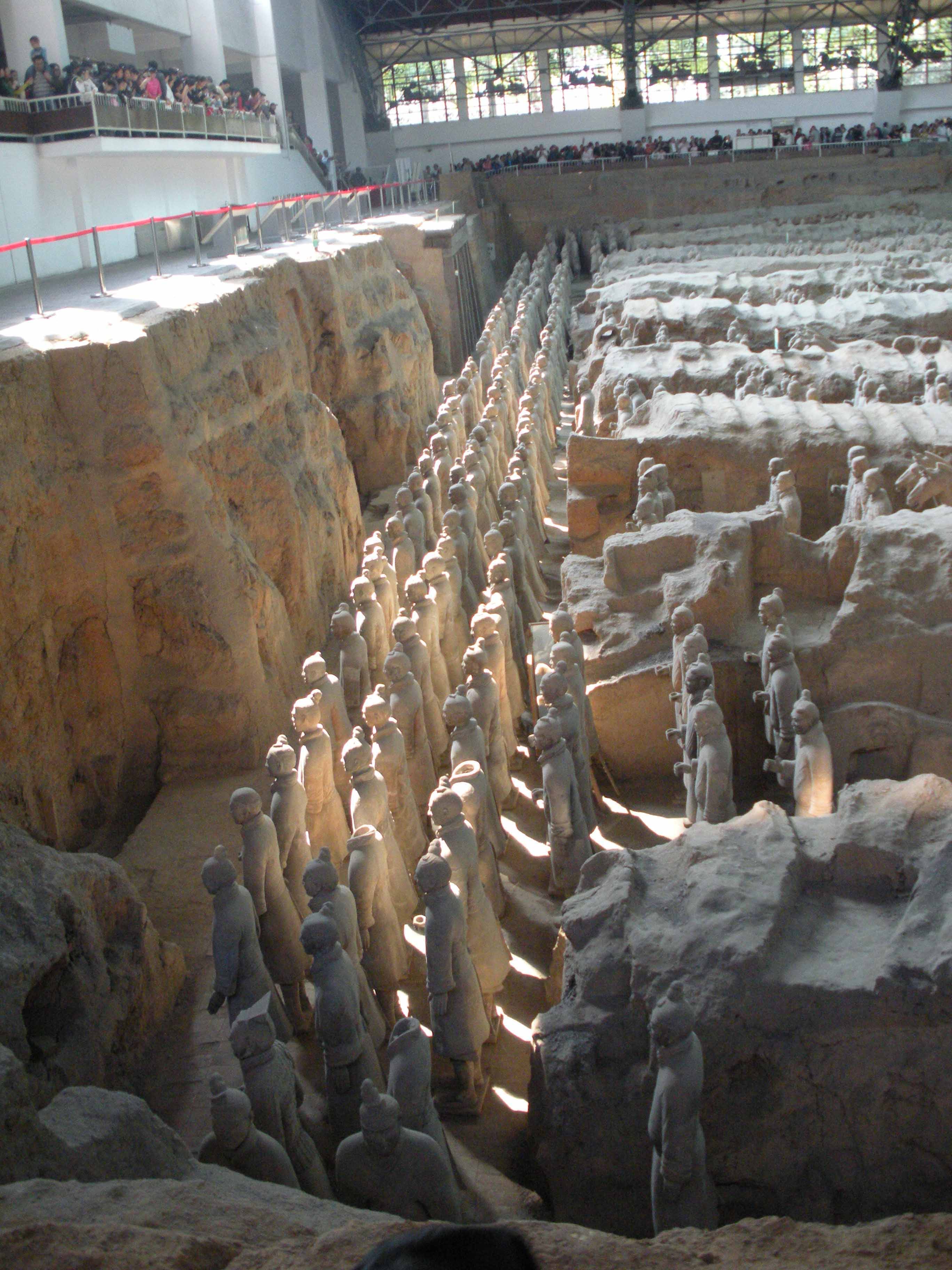
The Famous Terra Cotta warriors were created to guard China’s first emperor Qin Shi Huangdi (221-204 B.C.). Qin Shi Huangdi made Xian China’s first capital until Kublai Khan moved the capital to Beijing where he ruled his Khanbalik Empire, from 1264 to 1267.
Xian was known as Chang’an before the Ming Dynasty and is one of the four great ancient capitals of China having held that distinction under several of the most important dynasties in China’s history. In fact, Xian was a cultural center more than a thousand years before Jesus Christ was born.
______________
Lloyd Lofthouse is the award-winning author of The Concubine Saga. When you love a Chinese woman, you marry her family and culture too. This is the love story Sir Robert Hart did not want the world to discover.
Subscribe to “iLook China” Sign up for an E-mail Subscription at the top of this page.
After the “Puer” tea is ready, the journey begins.
For the Pu’erh that I buy, Emperor’s Pu’erh, it leaves Yunnan, reaches China’s coast and then crosses the Pacific to end on a shelf at a Whole Foods Market. However, before that, for centuries, Puer tea traveled to Tibet and China’s capital for the Emperor.
CCTV 9 Travelogue – Tea and Horse Road – Part 1 1/2
Most people have heard of or read about the Silk Road from China to Europe. I’m sure that few have heard of the Ancient Tea Horse Road, which I discovered in the May 2010 issue of National Geographic magazine.
CCTV 9 Travelogue – Tea and Horse Road – Part 1 2/2
Legend says that tea from China arrived in Tibet as early as the Tang Dynasty (618- 906 A.D.). After that, the Chinese traded tea for horses, as many as 25,000 horses annually.
CCTV 9 Travelogue – Tea and Horse Road – Part 2 1/2
But that isn’t what struck me the most about the piece. It’s the example that demonstrated why the peasants loved and possibly worshiped Mao Tse-Tung.
CCTV 9 Travelogue – Tea and Horse Road – Part 2 2/2
For more than a thousand years, men fed their families by carrying hundreds of pounds of tea on their backs across rugged mountains into Lhasa. Some froze to death in blizzards. Others fell to their deaths from the narrow switchbacks that climbed into the clouds.
CCTV 9 Travelogue – Tea and Horse Road – Part 3 1/2
This all ended in 1949 when Mao had a road built to Tibet and farmland was redistributed from the wealthy to the poor. “It was the happiest day of my life,” said Luo Yong Fu, a 92-year-old dressed in a black beret and a blue Mao jacket, whom the author of the National Geographic piece met in the village of Changheba.
CCTV 9 Travelogue – Tea and Horse Road – Part 3 2/2
Before ending the four posts on Puer [Pu’erh] tea and moving on to Kombucha Fermented Tea in Post 5, Numi Organic tea, Emperor’s Pu’erh, the one I buy at Whole Foods, says, “These old-growth rare Pu’erh trees are communally owned by the local villagers who pick them for their livelihood, ensuring that they continue to grow for generations to come… Pu’erh is an ancient healing tea picked from 500-year-old organic wild tea trees in Yunnan, China. Pu’erh has more antioxidant than most green teas.”
Lloyd Lofthouse is the award-winning author of The Concubine Saga. When you love a Chinese woman, you marry her family and culture too. This is the love story Sir Robert Hart did not want the world to discover.
Subscribe to “iLook China” Sign up for an E-mail Subscription at the top of this page.


 Posted by Lloyd Lofthouse


 iLook China