Buddhism in China

May 24, 2010

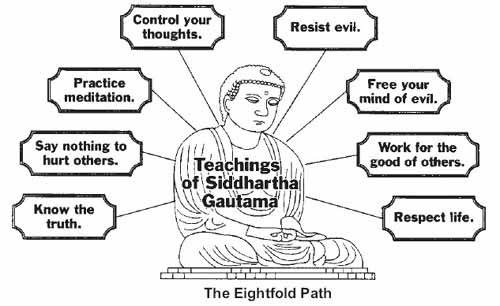
During the Han Dynasty in the first century B.C., trade with Central Asia introduced Buddhism to China.  Over the centuries, interest in Buddhism grew.  However, due to Confucianism and Taoism, the Chinese adapted Buddhist scripture to fit the Chinese culture creating the Mahayana sect, which spread to Korea and Japan.

Like most major religions, there are subdivisions within Buddhism but most may be classified into three. This is why Southeast Asian Buddhists differ from the Chinese.  The Theravada  form of Buddhism is found in Southeast Asia in countries like Burma, Thailand, Cambodia and Laos.
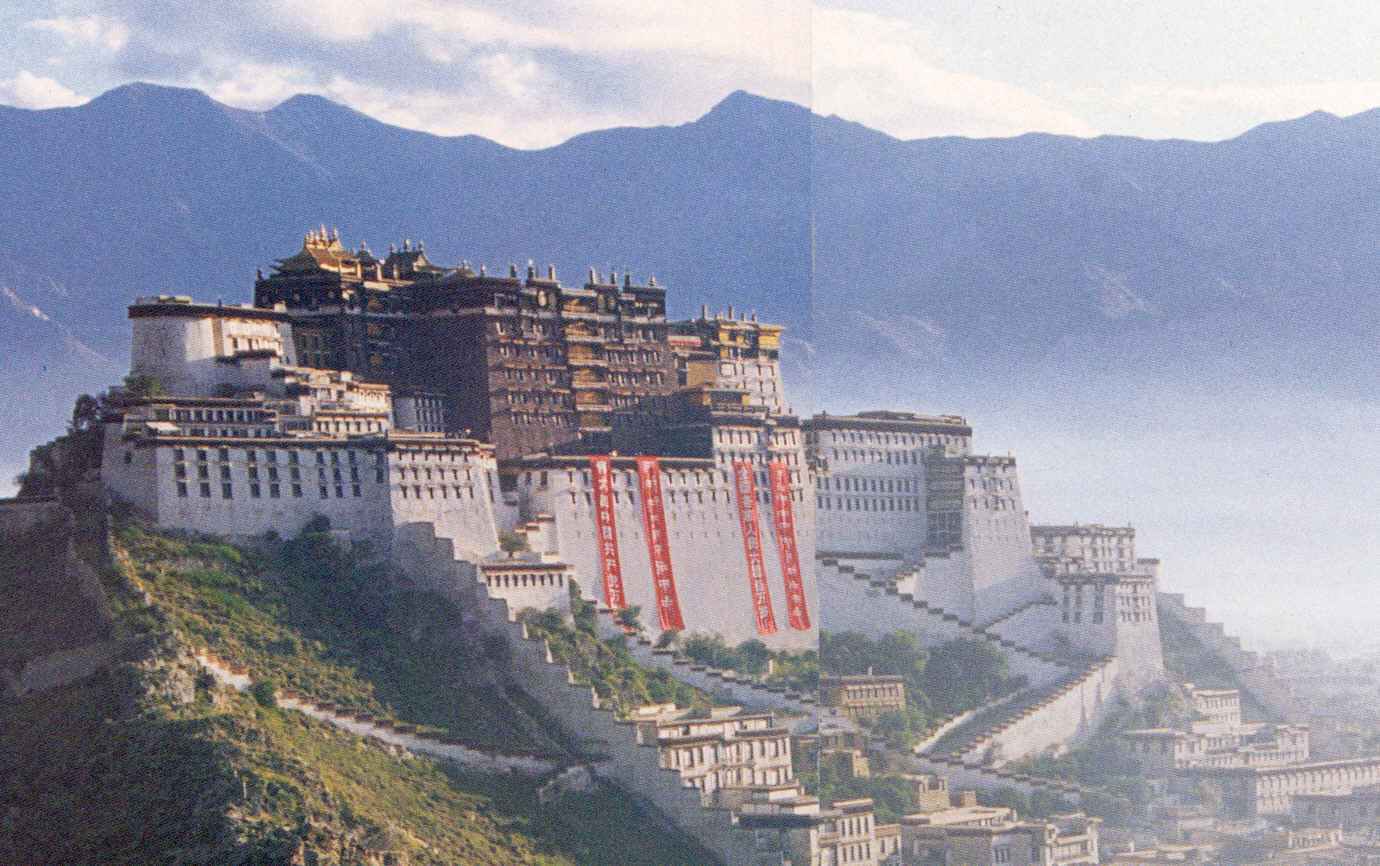
Tibetan Buddhism incorporates other beliefs, and there are four principal schools or types of Tibetan Buddhism. The Dalai Lama is the spiritual leader of one of the four, the Yellow Hat sect.

Buddhism in China reached its high point during the Tang Dynasty, 618 to 907. However, in 845 AD, the Tang emperor suppressed Buddhism and destroyed thousands of monasteries, temples and shrines.

Soon after Mao and the Communists won China, Buddhism flourished for a time but was repressed during the Cultural Revolution along with all other religions. Many monasteries and Buddhist texts were destroyed. After Mao, many of the major monasteries were rebuilt. Today, Buddhists represent the largest religious group in China between 100 to 200 million. Source: PEW Forum

Discover The First of all Virtues

_______________

Lloyd Lofthouse is the award-winning author of My Splendid Concubine [3rd edition]. When you love a Chinese woman, you marry her family and culture too. This is the love story Sir Robert Hart did not want the world to discover.

His third book is Crazy is Normal, a classroom exposé, a memoir. “Lofthouse presents us with grungy classrooms, kids who don’t want to be in school, and the consequences of growing up in a hardscrabble world. While some parents support his efforts, many sabotage them—and isolated administrators make the work of Lofthouse and his peers even more difficult.” – Bruce Reeves.

lloydlofthouse_crazyisnormal_web2_5

Subscribe to “iLook China”!
Sign up for an E-mail Subscription at the top of this page, or click on the “Following” tab in the WordPress toolbar at the top of the screen.

About iLook China

China’s Holistic Historical Timeline


The Tea Horse Road

May 19, 2010

Most of us have heard of or read about the Silk Road from China to Europe. I’m sure that few have heard of the Ancient Tea Horse Road, which I first read about this morning in the May issue of National Geographic.

Legend says that tea from China arrived in Tibet as early as the Tang Dynasty (618- 906 A.D.). After that, the Chinese traded tea for horses, as many as 25,000 horses annually.

But that isn’t what struck me the most about the piece. It’s the example that demonstrated why the peasants loved and possibly worshiped Mao Tse-Tung.

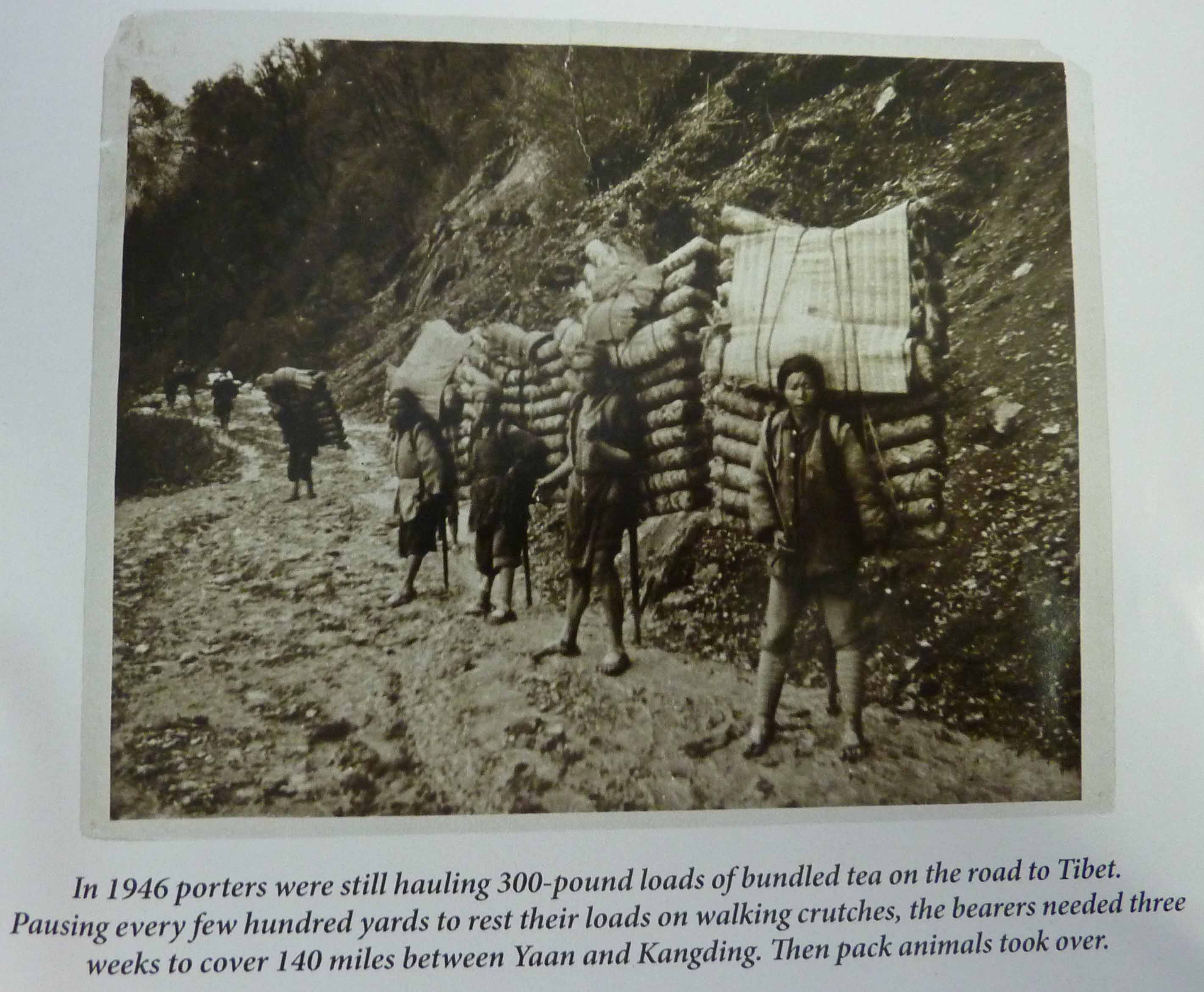
From May 2010 National Geographic, page 103

For more than a thousand years, men fed their families by carrying hundreds of pounds of tea on their backs across the rugged mountains into Lhasa. Some froze to death in blizzards. Others fell to their deaths from the narrow switchbacks that climbed into the clouds.

This all ended in 1949 when Mao had a road built to Tibet and farmland was redistributed from the wealthy to the poor. “It was the happiest day of my life,” said Luo Yong Fu, a 92-year-old dressed in a black beret and a blue Mao jacket, whom the author of the National Geographic piece met in the village of Changheba.

To learn more about Tibet, visit Tibet – Inside China (part one of five)

______________

Lloyd Lofthouse is the award-winning author of the concubine saga, My Splendid Concubine & Our Hart. When you love a Chinese woman, you marry her family and culture too. 

If you want to subscribe to iLook China, there is a “Subscribe” button at the top of the screen in the menu bar.


Four Equals One China—Minority China (Part 5 of 7)

May 16, 2010

There are 56 ethnic Chinese minorities with about 100 million people among them. These minorities have their own languages and cultures. The majority, the Han Chinese, have seven languages. There is one written language in China.

Learning Mandarin and English are mandatory in the public schools. It is expected and mandatory that “all” students will spend 11 years in school.

Until the 11th, Five-Year Plan, urban schools were much better than China’s rural schools.  It’s too early to see the results yet. After all, it took more than three decades to achieve what China has already accomplished.

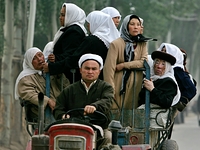
Uighurs in Xinjiang province

The two minorities best known outside China are the Tibetans (4.6 million) and the 8 million Uighurs in China’s northwest Xinjiang province. Few of the province’s Uighurs speak the national language of Mandarin. They are educated in their own tongue in Uighur schools, and they are treated in Uighur hospitals that they claim are sub-par.

The Uighurs have a history of insurrection with the Qing Dynasty (1644-1911). There were several rebellions during the 19th century that were put down ruthlessly by the Manchu.

Go to Four Equals One China: Part 6

_______________

Lloyd Lofthouse is the award-winning author of My Splendid Concubine [3rd edition]. When you love a Chinese woman, you marry her family and culture too. This is the love story Sir Robert Hart did not want the world to discover.

Subscribe to “iLook China”!
Sign up for an E-mail Subscription at the top of this page, or click on the “Following” tab in the WordPress toolbar at the top of the screen.

About iLook China


Water – Two Countries Tell a Tale

April 19, 2010

The National Geographic special issue, “Water, Our Thirsty World” (April 2007) compares the world’s largest democracy, India, with China. In “The Big Melt” by Brook Larmer, we see a convincing reason why China’s mix of socialism and capitalism may be the world’s answer to avoid future calamities. Where Western style democracies stall due to partisanship, special interests, religious beliefs and political agendas, China’s government, ruled by engineers and scientists, appears to be planning decades ahead.

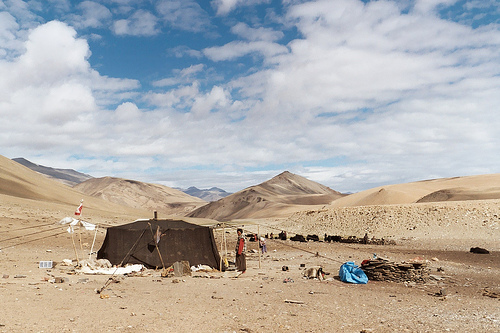
The claims by Tibetan separatists and their supporters that China rules over Tibet with an iron dictatorial fist also appears to be wrong when Larmer visits a family of Tibetan nomads. He writes, “There is no sign of human life on the 14,000 foot high prairie that seems to extend to the end of the world.” Larmer sees “the NOMADS’ tent as a pinprick of white against a canvas of brown.”

Tibetan Nomads

We meet Ba O, a Tibetan nomad. In Ba O’s tent, “there is a small Buddhist Shrine: a red prayer wheel and a couple of smudged Tibetan texts…” A few years earlier, Ba O had several hundred sheep and the grass was plentiful. Now the Tibetan nomad has about a hundred left and fears this way of life is ending.

Ba O says, “This is the way we’ve always done things. And we don’t want that to change.”

However, change is coming, and there is nothing Ba O can do to stop it. The change is not from China’s government. It is from global warming. The Tibetan grasslands are dying and a way of life that has existed for thousands of years may be dying too.

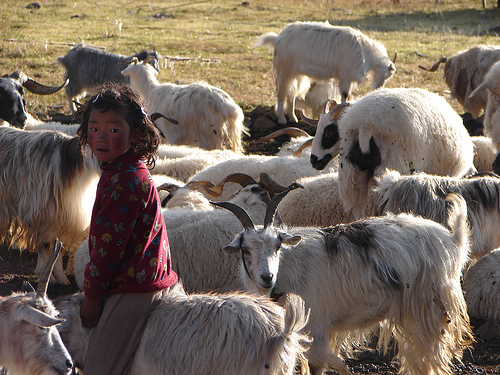
Tibetan girl tending sheep

To insure that the Tibetan nomads will have a place to live, China’s government has been building resettlement villages. The “solid built” houses are subsidized. When the Tibetan nomads can no longer survive on the open Tibetan prairie, it is the nomad’s choice to move into the new villages. The government does not force them to give up their old way of life. Nature does that.

Along with the house comes a small annual stipend for each family so they can eat as they find another way to earn a living. The home Larmer visited had a Buddhist shrine and a free satellite dish for a TV and maybe an Internet connection. In addition, the one child policy does not apply to the Tibetan people since they are a minority in China.

To make sure there will continue to be water to drink, China is planning to build 59 reservoirs in Tibet to capture and save glacial runoff.

In India, the young wife of a fortuneteller spends hours each day searching for water. She lives with her husband and five children in Delhi, India‘s capital. There are fights over water. In a nearby slum, a teenage boy was beaten to death for cutting into a water line.  The demand for water in Delhi exceeds the supply by more than 300 million gallons a day.

What happens to life when there is no water?

See Dictatorship Defined

______________

Lloyd Lofthouse is the award-winning author of the concubine saga, My Splendid Concubine & Our Hart. When you love a Chinese woman, you marry her family and culture too. 

If you want to subscribe to iLook China, there is a “Subscribe” button at the top of the screen in the menu bar.


Tibet Inside China – 5/5

April 13, 2010

Regardless of the evidence that proves the Tibetan government in exile is not telling the truth about Tibet being part of China for centuries before declaring independence in 1913 (when the Ch’ing Dynasty was collapsing and the British Empire urged Tibet to break free for political reasons), the Dalai Lama and his Prime Minister represents less than 100,000 Tibetans outside China.

Tibet Monastery

If Rinpoche’s figure of six million is correct, that means the Tibetan government in exile represents about 1% of the Tibetan population.  If China’s 2.5 million is correct, the percentage goes up to 3.2%.  Not much of a base to wage a violent rebellion. There are more troops in the PRC’s army than the entire Tibetan population inside and outside of China.

I also wonder if that 1% in exile were the Tibetan landowners. Did they leave most of the serfs/slaves behind when they fled?

Maybe the Tibetan separatists/rebels (whatever term you like), with help from the CIA, should join the American Tea Bagger movement and gain the support of Glenn Beck and Rush Limbaugh. They could sit around the campfire during protests and sing hymns about marching into battle to take back the wealth.

Start with Tibet Inside China – Part 1 or discover how Power Corrupts

View as Single Page

_______________

Lloyd Lofthouse is the award-winning author of My Splendid Concubine [3rd edition]. When you love a Chinese woman, you marry her family and culture too. This is the love story Sir Robert Hart did not want the world to discover.

Subscribe to “iLook China”!
Sign up for an E-mail Subscription at the top of this page, or click on the “Following” tab in the WordPress toolbar at the top of the screen.

About iLook China