What does it mean to Eat Bitterness and be Asian in the United States?

December 8, 2015

On April 25, 2011, Nadra Kareem Nittle wrote, Are U.S. Universities Discriminating Against Asian Students? The answer to Nittle’s question was and still is YES.

In the US, since the Civil Rights era preferential treatment favored African-Americans and Latinos since Asian-Americans tend to swallow their bitterness instead of protesting violently as the other minorities have done.

For example, the NAACP says it fights for social justice for all Americans. However, facts demonstrate that the NAACP tends to favor legislation that focuses on benefits for African Americans. If this were not true, there would be no need for political organizations to serve Latinos and Asian-Americans.

In fact, Africana Online said, “The National Association for the Advancement of Colored People (NAACP) has been instrumental in improving the legal, educational, and economic lives of African Americans.” There was no mention of the other minorities that suffer from racism in the U.S.

However, Latino Political Clout is growing in the U.S. to challenge the NAACP’s clout. The recent US Census indicated Latinos continue to become a larger ratio of the American population. With growing numbers will come political and social changes to the country.

But we know that the number of votes a minority such as African-Americans, Latinos and Asian-Americans deliver during an election results in political influence, and it’s obvious that blacks are winning when it comes to clout because a higher ratio of blacks vote than whites, Latinos and Asians.

For instance, in 2012, a larger percentage of blacks—66% of eligible black voters—voted than whites (64.1%). In contrast, Latino voters tend to turn out in slightly lower ratios than blacks or whites. Asians, on the other hand, are not voting like they could. According to Pew Research.org, only three in ten Asian American eligible voters cast ballots in midterm elections.

As demonstrated, Asian American political organizations have a long way to go to catch up to African-American and Hispanic or Latino political influence.

Is this because Asian and Chinese Americans are crippled by the influence of their cultures when it comes to increasing political influence in the U.S. since Chinese parents teach their children to eat bitterness?

In China, the tradition to “eat bitter” has been passed down from generation to generation. “Eat bitter” is a literal translation of Chinese "吃苦", which refers to endure hardship including discrimination without complaint or protest.

The 2014 Census 2014 census revealed that minority influence is not equal since there are about 42.1 million African-Americans, 55.5 million Hispanic or Latino Americans and only 17.1 million Asian Americans, who turn out to vote in lower ratios. Numbers count and it helps that Latinos and African-Americans do not eat bitterness like most Asians do.

I think that the Asian cultural aspect of “eating bitterness” has been influenced by Taoism, Buddhism and Confucius while in the West the warlike and often-violent religions of Christianity and Islam did not follow the same path.

______________________________

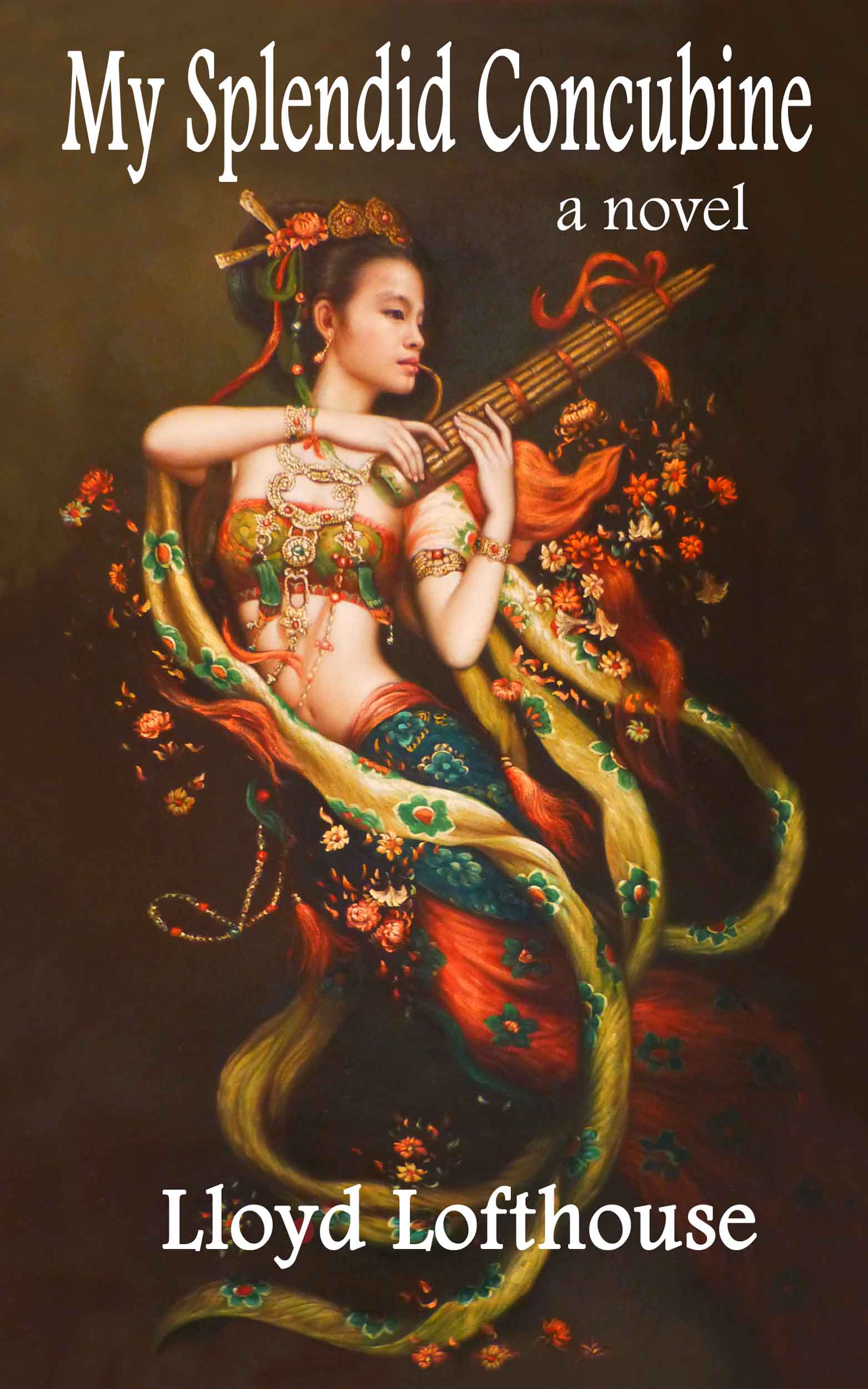
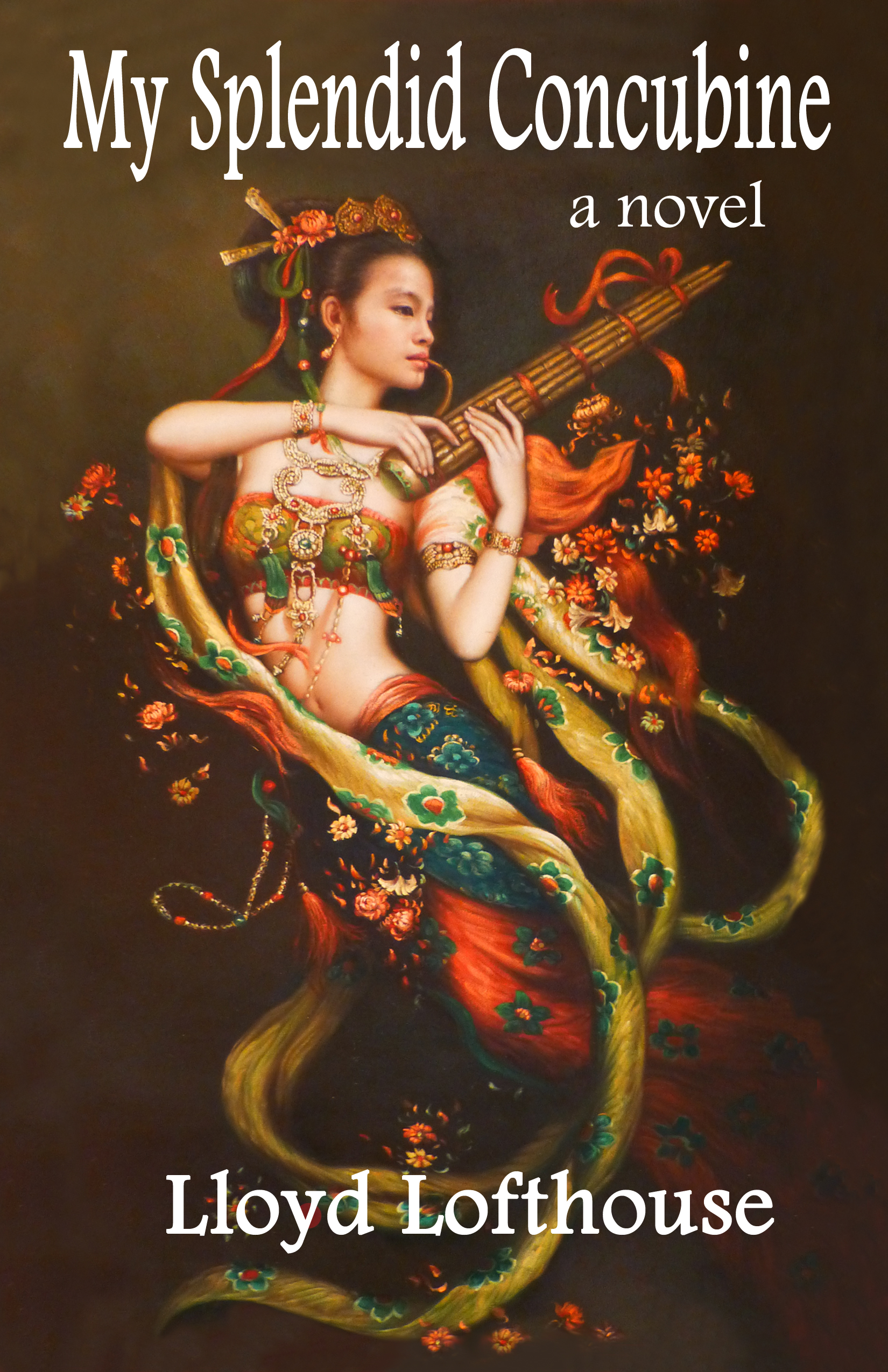
Lloyd Lofthouse is the award-winning author of My Splendid Concubine [3rd edition]. When you love a Chinese woman, you marry her family and culture too. This is the lusty love story Sir Robert Hart did not want the world to discover.

IMAGE with Blurbs and Awards to use on Twitter

Where to Buy

Subscribe to “iLook China”!
Sign up for an E-mail Subscription at the top of this page, or click on the “Following” tab in the WordPress toolbar at the top of the screen.

About iLook China

China’s Holistic Historical Timeline


What is this thing called Enlightenment?

September 15, 2015

Santhip Kanholy, on TED, said, “Enlightenment is an actual experience which changes the perspective and perception of the individual, which has been touted in all the ancient religious scriptures spanning all global cultures. Buddha is considered to be enlightened. So is Jesus. Thus all major religions have sprung from individuals who have experienced enlightenment.”

I admit that I was surprised when I saw the embedded video in this post of a group of Americans searching for and finding their own form of enlightenment in China.

The popular stereotype about someone searching for change and enlightenment fits the plot we find in Eat, Pray, Love, a best seller that was made into a movie with Julia Roberts, where Elizabeth Gilbert’s memoir takes her to Italy for pleasure, India for enlightenment and Indonesia where she discovers love again—repeatedly, it seems.

In the following video, we follow a group of Kung Fu and Tai Chi students from the U.S. in search of Kung Fu wisdom in China.

While in China, they visit Chinese families, schools, temples and universities. They travel through both ancient and modern China visiting Hong Kong, Beijing and Shanghai.

They also climbed two of the five major mountains of China, Songshan and Yellow Mountain.

After surviving personal conflicts and emotional struggles, the group returns to America as Elizabeth Gilbert did in her journey—to be compassionate and harmonious with others and the environment.

Of course, finding harmony might not have worked out for Gilbert because  in a 2015 article for The New York Times titled “Confessions of a Seduction Addict,” Gilbert wrote that she “careened from one intimate entanglement to the next—dozens of them—without so much as a day off between romances.” She acknowledged, “Seduction was never a casual sport for me; it was more like a heist, adrenalizing and urgent. I would plan the heist for months, scouting out the target, looking for unguarded entries. Then I would break into his deepest vault, steal all his emotional currency and spend it on myself.” After reading what Gilbert wrote for the NY Times, I think it is arguable that Gilbert never found the enlightenment she was searching for, but her memoir did make her famous and wealthy.

However, in three weeks, the group that went to China for enlighten went places few foreigners have seen and maybe that adventure and discovery was a form of enlightenment all by itself.

______________________________

Lloyd Lofthouse is the award-winning author of My Splendid Concubine [3rd edition]. When you love a Chinese woman, you marry her family and culture too. This is the lusty love story Sir Robert Hart did not want the world to discover.

IMAGE with Blurbs and Awards to use on Twitter

Where to Buy

Subscribe to “iLook China”!
Sign up for an E-mail Subscription at the top of this page, or click on the “Following” tab in the WordPress toolbar at the top of the screen.

About iLook China

China’s Holistic Historical Timeline


The Yin and Yang of the Traditional Chinese Diet

March 11, 2015

The concept of balance as taught by Confucius and Lao Tzu (Taoism) also plays an important role in diet. In China, yin foods are considered calming. It is believed that traditional Chinese foods come in three categories—yin, yang and neutral.

Yin foods should be eaten in summer and only in moderation in the winter as they are all very cooling. Yin foods are cool or cold in nature, clear away heat and eliminate toxins. Yang is the opposite of yin, and foods in this category are considered warm, dispel cold and treat symptoms from too much yin.

Some yin foods: Bananas, Clams, Crab, Grapefruit, Lettuce, Watercress, Watermelon, Apples, Cucumber, Pears, Mango, Spinach, Strawberries, Tomatoes

Some yang foods: Cherries, Chicken, Dates, Ham, Leeks, Mutton, Peaches, Raspberries, Shrimps, Sunflower Seeds, Wine, Garlic, Ginger, Onion, Pepper

Some neutral foods: Beef, Beets, Carrots, Celery, Corn, Egg, Potatoes

The Chinese philosophy for eating is different from America and the West. Traditional Chinese medicine applies these philosophies to avoid or treat disease through diet. Once a Chinese doctor determines the nature of an imbalance, he or she aims to restore balance through acupuncture, herbs, and changes in diet or lifestyle. It is believed that as balance is restored in the body, so is health.

_______________

Lloyd Lofthouse is the award-winning author of My Splendid Concubine [3rd edition]. When you love a Chinese woman, you marry her family and culture too. This is the lusty love story Sir Robert Hart did not want the world to discover.

Finalist in Fiction & Literature – Historical Fiction
The National “Best Books 2010” Awards

Kindle_LR_e-book_cover_MSC_July_25_2013

Honorable Mentions in General Fiction
2012 San Francisco Book Festival
2012 New York Book Festival
2012 London Book Festival
2009 Los Angeles Book Festival
2009 Hollywood Book Festival

Subscribe to “iLook China”!
Sign up for an E-mail Subscription at the top of this page, or click on the “Following” tab in the WordPress toolbar at the top of the screen.

About iLook China

China’s Holistic Historical Timeline


Finding Balance through Yin and Yang

March 10, 2015

In many ethical systems, the right path is the one that does not stray far from the middle. Aristotle preached that virtue was striking a balance between the vices of excess and of defect. A similar concept was presented by Plato, who was influenced by Pythagorean (570 -495 BC) ideas.

The concept of  balance is also an important aspect of  Confucianism since the philosophy of Yin Yang appeared about the same time as Confucius (551 – 479 BC), who wrote of a harmonious life that avoids excesses and deficiencies where wisdom was learned from both the old and the young, the high and the low.

Since Lao Tzu (the founder of Taoism and the concept of Yin and Yang) and Confucius lived about the same time, they may have met and shared thoughts.

The Doctrine of the Mean was a basis for civil service examinations in China from 1312 to 1905.

The concept of Yin and Yang applies to many aspects of life. In Taoism heaven is masculine and earth is feminine suggesting the dependence of the entire creation upon the Creator.

A whole series of possible interactions between the Yin and Yang in life is contained in the Chinese Book of Changes, the i Ching.

_______________

Lloyd Lofthouse is the award-winning author of My Splendid Concubine [3rd edition]. When you love a Chinese woman, you marry her family and culture too. This is the lusty love story Sir Robert Hart did not want the world to discover.

Finalist in Fiction & Literature – Historical Fiction
The National “Best Books 2010” Awards

Low-Res_E-book_cover_MSC_July_24_2013

Honorable Mentions in General Fiction
2012 San Francisco Book Festival
2012 New York Book Festival
2012 London Book Festival
2009 Los Angeles Book Festival
2009 Hollywood Book Festival

Subscribe to “iLook China”!
Sign up for an E-mail Subscription at the top of this page, or click on the “Following” tab in the WordPress toolbar at the top of the screen.

About iLook China

China’s Holistic Historical Timeline


China’s curious link between Opium, Christians, Cults and Cannon balls

January 27, 2015

Organized religions and cults such as the Falun Gong have been in China for centuries, but have never played a major role in the culture until the 19th century when Christianity and opium was forced on China.

C.M. Cipolla, in Guns, Sales and Empires, wrote, “While Buddha came to China on white elephants, Christ was born on cannon balls” paid for by the profits to be made from opium. Cipolla obtained his first teaching post in economic history in Catania at the age of 27. In 1953, Cipolla left for the United States as a Fulbright fellow and in 1957 became a visiting professor at the University of California, Berkeley. Two years later he obtained a full professorship.

The treaties that ended the two Opium Wars—first Opium war (1839-1842) and second Opium War (1856-1860)—required that China’s emperor allow Christian missionaries free access to all of China to convert the heathens. The treaty also opened all of China to the opium trade. Christianity and Opium might seem a strange partnership but that’s the way it was.

Then there was the Taiping Rebellion led by Hong Xiuquan, God’s Chinese son and a Christian convert, who was responsible for 20 – 100 million deaths over a period of 14 years (1850 – 1864). Hong claimed to be the younger brother of Jesus Christ, and millions of Chinese believed him, but the Taipings were against the opium trade and that led the Christian countries to support China’s emperor against the Christian Taipings proving that profits come before God.

Then in the early months of 1900, thousands of Boxers, officially known as Fists of Righteous Harmony, roamed the countryside attacking Christian missions, slaughtering foreign missionaries and Chinese converts.

Confucius and Lao-Tse have influenced the foundation of Chinese culture and morality, and these two along with Buddha offer more of a blended influence on Chinese culture than Christianity or Islam.

Thanks to Confucius, China’s mainstream culture understands the importance of people within the family and society more so than many other countries and cultures. This may explain why China is a powerhouse of industry today.

_______________

Lloyd Lofthouse is the award-winning author of My Splendid Concubine [3rd edition]. When you love a Chinese woman, you marry her family and culture too. This is the lusty love story Sir Robert Hart did not want the world to discover.

Honorable Mentions in General Fiction
2012 San Francisco Book Festival
2012 New York Book Festival
2012 London Book Festival
2009 Los Angeles Book Festival
2009 Hollywood Book Festival

Finalist in Fiction & Literature – Historical Fiction
The National “Best Books 2010” Awards

 E-book_cover_MSC_July_24_2013

Subscribe to “iLook China”!
Sign up for an E-mail Subscription at the top of this page, or click on the “Following” tab in the WordPress toolbar at the top of the screen.

About iLook China

China’s Holistic Historical Timeline