By accident, I stumbled on a Blog about the “2-28 Massacre” in Taiwan in 1947 when Kuomintang soldiers under orders from Cheng Kai-shek, an American ally, slaughtered about 30,000 Taiwanese citizens. It was the first time I’d heard of this incident. Source Blog: Patrick Cowsill
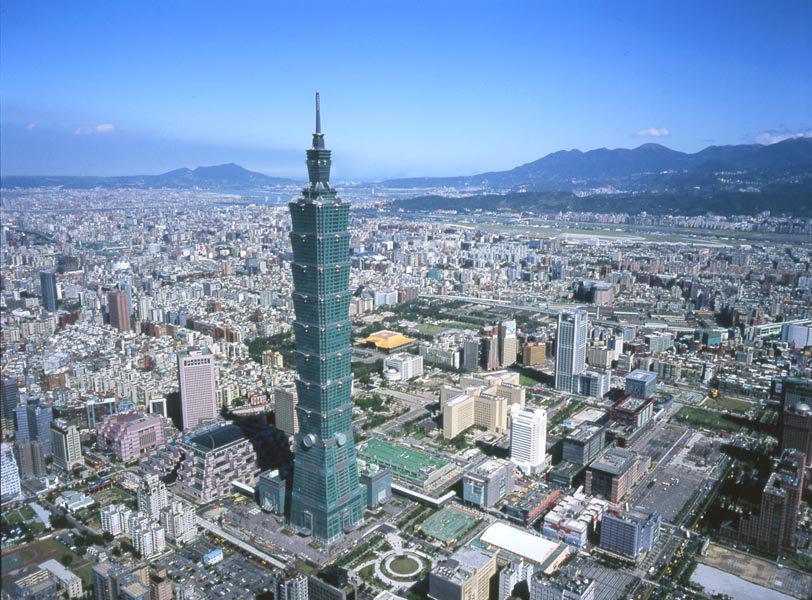
Taipei, Taiwan
When I typed into Google “Tiananmen Square protest”, 1 million 260 thousand (1,260,000) hits came back condemning the 1989 Massacre in Tiananmen Square. “Several hundred civilians have been shot dead by the Chinese army during a bloody military operation to crush a democratic protest in Peking’s (Beijing) Tiananmen Square. Source: BBC
Then I typed a similar question about the massacre in Taiwan by an American ally and 21,200 hits came back.
Here’s what the BBC had to say about the Taiwan incident, “The event was an uprising sparked by the beating of a female vendor by authorities for selling untaxed cigarettes. Between 18,000 and 28,000 people are said to have been killed in riots and a subsequent crackdown.” Source: BBC
Compare the language. When it was about the Communists, it was a “bloody military operation to crush a democratic protest” but when the killings were committed by an American ally, it was “an uprising…sparked by the beating of a female vendor by authorities….”
Of course, we will always remember the man standing in front of the tanks in Tiananmen Square. Have you forgotten what happened in Taiwan yet?
______________________________
Lloyd Lofthouse is the award-winning author of My Splendid Concubine [3rd edition]. When you love a Chinese woman, you marry her family and culture too. This is the lusty love story Sir Robert Hart did not want the world to discover.
Subscribe to “iLook China”!
Sign up for an E-mail Subscription at the top of this page, or click on the “Following” tab in the WordPress toolbar at the top of the screen.
Another day, when our daughter was seven, we were hiking in the hills above a park in Southern California. On our way out of the hills along a steep-dirt trail leading toward the park, our daughter rushed ahead.
Minutes later, she was back looking shocked. She took us to her discovery.
An Asian man had hung himself in a tree beside the trail. He’d used an electric cord. It was obvious that he had climbed into the tree, tied the cord to a limb and around his neck and leaped off.
I called the police on my cell phone. They came, identified who he was and went to his mother’s house. The mother and sister arrived and my wife talked to them (for the police) since the mother and sister didn’t speak English.
The dead man was a Chinese architect from Taiwan. He was a partner in a business that had gone bankrupt and he could no longer support his family. Because he had lost face, he killed himself.
In fact, since the global economic crises caused by US, Wall Street greed, family suicides have been on the rise in Taiwan.
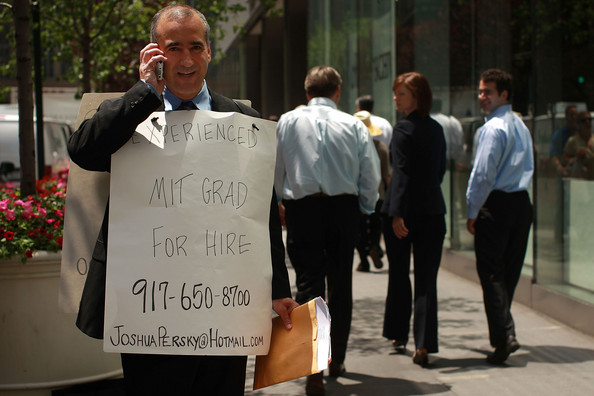
When the economy tanks and Americans lose jobs, I often read or hear that it’s China’s fault. Timothy V, a typical China basher that I’ve been debating on Gather, is an example. Using China as a scapegoat for lost jobs in America appears to be a popular pastime. After all, many in America need someone to blame for the hard times.
The truth is that more jobs have been lost to Mexico and Canada than to China. Citizen.org says that because of NAFTA, Americans lost 3 million manufacturing jobs to Mexico and Canada…
The Economic Policy Institute says that between 1997 and 2006, the trade deficit between the U.S. and China could have supported 2,166,000 jobs. This report doesn’t say that manufacturing jobs were lost in America to China. It means that when China joined the WTO (World Trade Organization), jobs were created for Chinese workers that might have gone to the United States.
What happened after America’s economic bubble popped in 2008? CNN reported that 2009 was the worst year for jobs lost in the United States since 1945. A sobering U.S. Labor Department jobs report showed the economy lost 1.9 million jobs in the year’s final four months.
If you believe someone like Timothy V, those job losses should be blamed on China, but he is wrong. The BBC reported that Chinese migrant factory job losses mount.A Chinese government official, Ma Jian Tang, told reporters in January (2009) he thought roughly 5% of the country’s 130 million migrant workers had returned to their villages after losing jobs. (Note: I wonder why I couldn’t easily find this from an American news source.)
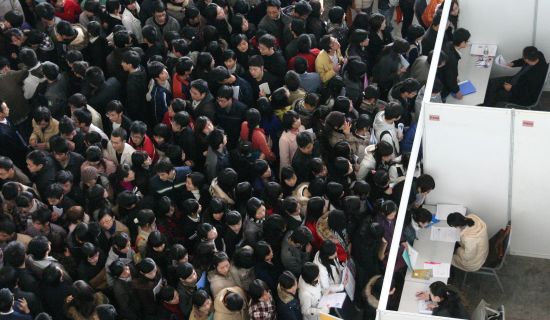
Out of work in China
In fact, a Chinese government survey revealed that 20 million migrant (factory) workers lost jobs, posing a risk for social instability. Some 15.3 percent of China’s 130 million migrant factory workers became jobless. Since the American induced global economic crisis in 2008, Beijing says about 70,000 factories nationwide have closed.
How can anyone in China be stealing jobs from Americans? Do I need to mention the millions of jobs lost to illegals that cross America’s Southern border and take hard, low-paying jobs that Americans don’t want? According to this report from NPR, that number is about 12 million.
When I was fifteen, I started my first job washing dishes in a department store coffee shop that served lunch and dinner and I worked nights and weekends there for three years while attending high school. There were several of us doing that job, and we were all American born teens. Before I joined the US Marines, I worked in a car wash, a McDonald’s and other jobs that most Americans won’t touch today. In Steinbeck’s novels, the farm workers he writes about were mostly poor Americans who went into the fields to plant and pick—not illegals from south of the border.
In fact, the jobs are there but too many Americans won’t consider them because they won’t pay for an American middle-class credit card driven, consumer lifestyle where people eat out more than they eat in and everyone “has” to have the American dream. Can’t buy that with low wages.
This has happened before. After World War II, American jobs were lost to Japan and Germany. Then after the Korean War, more jobs were lost to South Korea and Taiwan as they built factories. In the 1950s, GM, Ford and Chrysler were building and selling about 90% of the cars and trucks globally. Then Toyota and VW arrived in the United States. Who was stealing US jobs then? It wasn’t China.
In reality, it’s all about finding a scapegoat to slaughter while the guilty quietly slip away.
In World War II, the Japanese bombed Pearl Harbor and woke the sleeping tiger, America.
Then in the 1960s, President John F. Kennedy, during the Cuban missile crises, brought the United States to the brink of nuclear Armageddon. He did this believing it was in the National Interest.
Last night (2/28/2010), I watched an episode on 60 Minutes about a Taiwanese man in the pay of China gathering information about the 6.5 billion-dollar arms sale to Taiwan. Does that make China evil? This morning, I had my answer.
From the dawn of rival civilizations, there have been spies. It’s all about survival and the national interest. Robert Hart (19th century), who knew the Chinese better than any Westerner, wrote, After China picks its conquerors’ brains; it will be a super-power again. I don’t know what they will do when that times comes. They will decide to either get along with the world or seek revenge for what the world did to them.
In the 19th century, France, England, Germany, Russia, Japan, and the United States attacked China in a series of wars. The devastation visited on a peaceful China started with the Opium Wars and ended with World War II, Korea and Vietnam. Those wars woke the sleeping dragon.
America supports Taiwan—China’s Cuba. The difference is that China sees Taiwan as part of the mainland. What would America do if Hawaii separated from the union, and China supplied the islands with weapons to defend itself? Don’t be surprised if China responds the same way over Taiwan.
Lloyd Lofthouse is the award-winning author of the concubine saga, My Splendid Concubine & Our Hart. When you love a Chinese woman, you marry her family and culture too.
If you want to subscribe to iLook China, there is a “Subscribe” button at the top of the screen in the menu bar.
I found this information from a 1967 documentary conceived and written by Theodore H. White to have half-truths about Imperial China. It is understandable that any American film from that era would be flawed since McCarthyism’s Red Scare took place in the US the decade before. Even today, Sinophobia infects almost half of America.
Author Theodore White lived in China for seven years and said that foreigners who lived in China during the crises often remembered it differently as if his opinions were correct and they were wrong.
The Roots of Madness unwittingly documents the lies and deceit that demonized the Empress Tsu Hsi when the narrator calls the empress evil. To discover the truth about the empress, I suggest reading Dragon Lady by Sterling Seagrave, who revealed the lies and deceit of Western journalists.
Nothing in China’s ancient culture could guide the Chinese to become part of the modern world.
Instead, China would experiment with different forms of government—a process that is still going on.
Although “China: The Roots of Madness” is a flawed production, there is enough accurate history to show why China is the way it is today.
British and American power controlled the wheels of industry in Shanghai, Nanking, Hankow and Chunking. In the steaming south, peasants, working like beasts, plant rice and speak languages most Chinese do not understand.
At the turn of the century, a three-year-old child was the emperor and the throne sat empty. On October 10, 1911, a riot took place that couldn’t be controlled.
Five weeks later, the Imperial government collapsed. The Qing Dynasty vanished and two-thousand years of Imperial tradition was gone.
The Chinese call this time the “Double Death”.
The British and Americans could not control what replaced the Qing Dynasty.
Students without weapons rioted in the streets.
Warlords that controlled armies divided China and the chaos and anarchy grew worse.
Life became so cheap, that death was like a bloody circus.
However, while the Chinese people suffered and starved, the foreigners live in luxury and controlled China’s industry while being protected by the Western military.
Chinese students demanded a revolt and Sun Yat-sen called on China to slay the dragon of Imperialism. He said China must start with nationalism, then democracy and finally socialism. The only country that offered to help was Soviet Russia.
Death claims Sun Yat-sen (1866 – 1925) after he has accepted support from Soviet Russia. Soon, General Chiang Kai-shek (1887 – 1975), with help from the Communists, consolidates power in southern China.
Chiang is known to Westerners as a fiery nationalist and revolutionary. He mobilizes an army under Sun Yat-sen’s flag and marches north with a few divisions.
Meanwhile, the warlords have gathered half-a-million troops to stop him. Outnumbered, Chiang sends an advance group of nationalists and communists to call the peasants and workers to join his army.
Among those peasants and workers is Mao Tsetung (1893 – 1976).
While moving north, Chiang’s army raids foreign concessions, burns foreign buildings and tears down foreign flags.
Leftist leaders of the Kuomintang distrust Chiang Kai-shek and some want to assassinate him but others disagree.
In Shanghai, Chiang Kai-shek, now a dictator, strikes first on April 12, 1927. His troops kill anyone suspected of being a Communist.
In December, there is a Communist uprising in Canton. A battle rages for two days between the Communists and Kuomintang ending in the executions of most Communists, but Mao escapes and goes into hiding.
Chiang Kai-shek’s army is not ready when Japan invades Manchuria. He doesn’t have tanks, the artillery is old and the Chinese are learning about airplanes.
Meanwhile, the Communists that Chiang thought he had destroyed are back. Mao knew the peasants lived in horrible poverty. He promised land reforms and by 1932 has millions of supporters.
The language in this documentary describing Mao is not flattering.
Yes, when Mao ruled China, he was a dictator but that ended in 1976 when he died. Since then, China has had several presidents that the 1982 Chinese Constitution allows to lead China for two five-year terms and there is an impeachment clause.
However, Chiang Kai-shek was also a dictator. The only difference between Mao and Chiang is that Chiang converted to Christianity in 1929, and the West called him the president of China—not a dictator. Chiang Kai-shek was never elected by the people of a democracy to rule China or Taiwan.
Instead, he ruled Taiwan under martial law until he died then his son became president without a popular vote by the people.
Instead of fighting Japan, Chiang’s army bombs villages that Mao controls killing tens of thousands of noncombatants. Mao takes his ninety thousand troops on the famous thousand-mile Long March.
A year later, only a few thousand remain. Mao calls for unity to fight Japan.
One of Chiang’s generals, Zhang Xueliang, forces the Nationalist dictator to sit down with the Communists where Chiang Kai-shek agrees to fight Japan. As soon as Chiang returns to his capital, he breaks the agreement and throws Zhang in prison.
Meanwhile, Mao’s troops in the hills of Yunnan grow their own food. His army, dressed in shabby clothing wearing straw sandals, doesn’t look like a fighting force. Mao says the people are the sea and guerrillas are like fish that swim in the sea. Within a year, Mao’s army grows to 200,000.
Chiang Kai-shek’s army loses battles and cities to the Japanese. To continue fighting, his government and army moves to the deep mountain city of Chongqing in Sichuan province.
In 1939, the Japanese start bombing Chongqing 24/7.
When asked about the Japanese threat, Chiang says that the Japanese are a disease of the skin, but the Communists are a disease of the heart.
Then on December 7, 1941, Japan bombs Pearl Harbor and America enters the war.
War supplies start to trickle to China through India and across the Himalayas to Chiang Kai-shek’s four-million-man army.
However, his government is corrupt, his troops are poorly fed and morale is low. In fact, the peasants do not trust Chiang’s
troops or him.
Chiang Kai-shek is accepted as an equal among the West’s leaders while Mao works to keep up the moral of his Communist troops through political training—something Western leaders don’t understand and criticize.
Theodore H. White tells of an incident with Chiang Kai-shek’s troops when a Nationalist officer lies to peasants saying he belongs to Mao’s Communist army. When White asks why lie, he is told the peasants would not help if they knew the truth.
In fact, regardless of the suffering from Mao’s Great Leap Forward and the Cultural Revolution, this loyalty never wavers.
Joseph Stilwell, the commanding US general in China, is not happy with Chiang since he is not fighting Japan.
Chiang says he needs his troops to fight the Communists.
In 1945, America invites representatives from Chiang’s government to take part in Japan’s surrender on the battleship Missouri but ignores the Communists under Mao.
An American ambassador urges Mao to join Chiang in a unified government. To bring this about, America offers Mao protection and there are face-to-face negotiations between Mao and Chiang.
During the negotiations, in secret, Chiang moves his troops to launch an assault on the Communists in Manchuria.
America urges Chiang to win the people by implementing Sun Yat-sen’s promised reforms.
Instead, Chiang’s war to destroy the Communists causes run-away inflation. Essential goods become too expensive. The people want peace, and Mao offers the peasants what they want—land.
In 1948, Mao attacks when his army leaves the caves and captures Manchuria
When Chiang Kai-shek’s northern army surrenders, modern American weapons and equipment falls to Mao’s troops.
Mao demands total surrender, but Chiang’s army boards ships for Taiwan taking China’s wealth and historical treasures.
In fear, western businessmen and missionaries flee China.
By 1967, when this documentary was produced, Mao had ruled China for 18 years and was still an inigma to most in the West. Nixon wouldn’t visit China for several more years.
Protected by America’s military and navy, Chiang was still in Taiwan serving as president for life (a dictator). He also had six-hundred thousand Kuomintang troops armed by the US, and the island people lived under martial law.
Theodore H. White says America does not understand Communist China. America could not predict the “Great Leap Forward” or the purges that followed.
White says the quality of life for the peasants had not improved (which is not true since the World Bank has reported that even under Mao the quality of life improved over what it had been), but they still had to work hard.
White’s documentary ends with words of fear for the world’s future because China has nuclear weapons.
There is no mention that America has enough nuclear weapons to destroy the earth a hundred times over and used two of them on Japan killing hundreds of thousands.
This revised post first appeared as an eight-part series starting June 8, 2010 at Roots of Madness – Part 1
______________
Lloyd Lofthouse is the award-winning author of the concubine saga, My Splendid Concubine & Our Hart. When you love a Chinese woman, you marry her family and culture too.
To subscribe to iLook China, look for the “Subscribe” button at the top of the screen in the menu bar, click on it then follow directions.


 Posted by Lloyd Lofthouse
 iLook China