China: The Roots of Madness – Part 4/8

June 10, 2010

In Part 4, Chiang Kai-shek’s army is not ready when Japan invades Manchuria. He doesn’t have tanks, the artillery is old and the Chinese are learning about airplanes.

Meanwhile, the Communists that Chiang thought he had destroyed are back. Mao knew the peasants lived in horrible poverty. He promised land reforms and by 1932 has millions of supporters.

The language describing Mao is not flattering. Yes, when Mao ruled China, he was a brutal dictator. However, Chiang Kai-shek was also a brutal dictator. But Chiang converted to Christian in 1929, and the West still refers to him as the president of China—not a dictator.

Instead of fighting Japan, Chiang’s army bombs villages that Mao controls killing tens of thousands of noncombatants. Mao takes his ninety thousand troops on the famous thousand-mile Long March. A year later, only a few thousand remain. Mao calls for unity to fight Japan.

One of Chiang’s generals, Zhang Xueliang, forces him to sit down with the Communists where Chiang Kai-shek agrees to fight Japan. As soon as Chiang returns to his capital, he breaks the agreement and throws Zhang in prison.

Continued in The Roots of Madness- Part 5 or return to Part 3

View as Single Page

______________

Lloyd Lofthouse is the award-winning author of the concubine saga, My Splendid Concubine & Our Hart. When you love a Chinese woman, you marry her family and culture too.

To subscribe to iLook China, look for the “Subscribe” button at the top of the screen in the menu bar, click on it then follow directions.


Speaking English Means Waging War

June 10, 2010

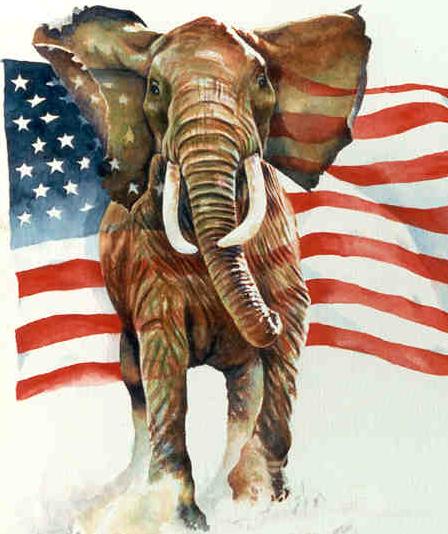
The American Conservative Daily, with air between ears, says this about the fact that learning English is mandatory in China’s public schools, “A nation planning to invade and occupy another nation would learn that nation’s language.”

Republican Elephant

Did the Japanese make learning English mandatory in Japan before bombing Pearl Harbor?

Did Nazi Germany require citizens to learn English before starting World War II in Europe? 

Since when has any nation required its citizens to learn the language of a nation they are planning to invade and conquer? 

When the US waged war against American indians, many indian children were sent to Christian boarding schools and forced to learn English and forget their native language. US citizens were never required to learn any American indian languages.

When the US won the Spanish America war and acquired territories like the Philippians where Spanish was spoken, did the US make Spanish mandatory in the US schools?

When I was in the US Marines and fought in Vietnam, I didn’t have to learn Vietnamese.

The reason China made English mandatory is because America is China’s largest trading partner and China has invested more than a trillion dollars in America.  If you ever visit any of China’s major cities, like Shanghai or Beijing, you may notice that the street signs are in English and Chinese.  On the subways, the voice that announces the next stop says it first in English and then Chinese.

The Chinese are not stupid.  English, thanks to the British Empire (not the United States), is the most spoken language on the planet and is the language of business and science.  If China wants to be successful in a world where business and science are dominated by the English language, the Chinese people must speak English.

See Education Chinese Style

_____________________

Lloyd Lofthouse is the author of the award winning novels My Splendid Concubine and Our Hart. He also Blogs at The Soulful Veteran and Crazy Normal.

Sign up for an RSS Feed for iLook China


China: The Roots of Madness – Part 3/8

June 9, 2010

In Part 3, death claims Sun Yat-sen (1866 – 1925) after he has accepted support from Soviet Russia. Soon, General Chiang Kai-shek (1887 – 1975), with help from the Communists, consolidates power in southern China.

Chiang is known to Westerners as a fiery nationalist and revolutionary.  He mobilizes an army under Sun Yat-sen’s flag and marches north with a few divisions. Meanwhile, the warlords have gathered a half-a-million troops to stop him. Outnumbered, Chiang sends an advance group of nationalists and communists to call the peasants and workers to join his army.

Among those peasants and workers is Mao Tse-tung (1893 – 1976).  While moving north, Chiang’s army raids foreign concessions, burns foreign buildings and tears down foreign flags.  Leftist leaders of the Kuomintang start to distrust Chiang Kai-shek and some want to assassinate him but others disagree.

In Shanghai, Chiang Kai-shek, now a dictator, strikes first on April 12, 1927. His troops kill anyone suspected of being a Communist. In December, there is a Communist uprising in Canton. A battle rages for two days between the Communists and Kuomintang ending in the executions of most of the Communists, but Mao escapes and goes into hiding.

Continued in Part 4, The Roots of Madness or return to Part 2, The Roots of Madness.

View as Single Page

______________

Lloyd Lofthouse is the award-winning author of the concubine saga, My Splendid Concubine & Our Hart. When you love a Chinese woman, you marry her family and culture too.

If you want to subscribe to iLook China, there is a “Subscribe” button at the top of the screen in the menu bar.


Red Dawn Remake

June 9, 2010

Cinematical reports that a remake of “Red Dawn”, a 1984 move about the US being invaded by the Soviet Union, is scheduled to be out later this year.  However, since the evil Communist Soviet Empire does not exist anymore, the remake needed another bad guy to invade the US, so they made Communist China the villain.

This resulted in Chinese newspaper headlines saying the “U.S. Reshoots Cold War Move to Demonize China.”

Judging from at least one comment on Cinematical, I’d say the Chinese have a reason to be upset.  Some person (who can’t spell or punctuate) called “Buzz” said, “Guys china is not our friend or allie.  They are still very bad people (gov’t) who want to dominate the world. Let them grip and complain. Who cares? Their newspapers are full of anyi American propaganda so why should we care what they think.” 

If “Buzz” didn’t grow up in Kentucky or Tennessee, he must be a Tibetan or Uyghur refugee.

Here are a few reasons why the Chinese might be sensitive when demonized in the West.

1. The Opium Wars (1839 and 1860) invaded by France and England
2. Taiping Rebellion (1851 to 1864) led by a Christian convert
3. Burning of the Summer Palace (1860) by a Western allied force
4. Dungan Revolt 1862 (a Muslim rebellion)
5. Yangzhou riot 1868
6. Tianjin Massacre 1870
7. Panthay Rebellion 1856 to 1873 (another Muslim rebellion)
8. Sino-French War (1884 -1885)
9. Sino-Japanese War (1894 – 1895)
10. The Boxer Rebellion followed by a Western invasion
11. The collapse of the Qing Dynasty followed by forty years of civil war and anarchy as warlords fought for control of China and the West did nothing to intervene.
12. World War II (1937 – 1945) invaded by Japan
13. The Korean and Vietnam wars, which to the Chinese were seen as threats to China considering the century that came before those two conflicts. Mao said that Vietnam was the lips to China’s teeth. What happens to the teeth when the lips are gone?

How many times has China invaded America, England, France or Japan with a military force? Has a Chinese Buddhist or any Chinese raised in Confucian tradition started a rebellion anywhere in the world?

See Christianity and Islam in China

___________________

Lloyd Lofthouse is the author of the award winning novels My Splendid Concubine and Our Hart. He also Blogs at The Soulful Veteran and Crazy Normal.

Sign up for an RSS Feed for iLook China


China: The Roots of Madness – Part 2/8

June 9, 2010

In part 2, British and American power controlled the wheels of industry in Shanghai, Nanking, Hankow and Chunking.  In the steaming south, peasants, working like beasts, plant rice and speak languages most Chinese do not understand.

At the turn of the century, a three-year-old child was the emperor and the throne sat empty. On October 10, 1911, a riot took place that couldn’t be controlled. Five weeks later, the Imperial government collapsed. The Qing Dynasty vanished over night and two-thousand years of Imperial tradition was gone. The Chinese called this time “Double Death”.

The British and Americans could not control what replaced the Qing Dynasty. Students without weapons rioted in the streets. Warlords, who controlled armies, divided China and the chaos grew worse. Life became so cheap, that death was like a bloody circus. However, while the Chinese people suffered and starved, the foreigners live in luxury and controlled China’s industry while being protected by the Western military.

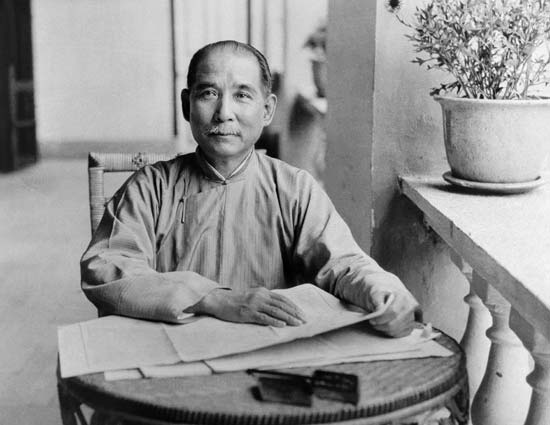
Sun Yat-sen

Chinese students demanded a revolt and Sun Yat-sen called on China to slay the dragon of Imperialism. He said China must start with nationalism, then democracy and finally socialism. The only country that offered help was Soviet Russia. This post was more accurate than Part 1.

Continued in Part 3, The Roots of Madness or return to Part 1, The Roots of Madness.

View as Single Page

Discover A Millennia of History at a Silk Road Oasis

_______________

Lloyd Lofthouse is the award-winning author of My Splendid Concubine [3rd edition]. When you love a Chinese woman, you marry her family and culture too. This is the love story Sir Robert Hart did not want the world to discover.

His latest novel is the multiple-award winning Running with the Enemy.

Subscribe to “iLook China”!
Sign up for an E-mail Subscription at the top of this page, or click on the “Following” tab in the WordPress toolbar at the top of the screen.

About iLook China