This morning I awoke to discover two books printed in Mandarin, not English, that had been tossed on the floor. It seems my wife read both books in one night and didn’t get much sleep. She reads much faster in Mandarin than in English and can polish off books as if she were eating cookies.
When I asked about the two books, it turned out that one of the books was the biography of Wu Guanzhong (1919 – 2010), the father of Chinese Expressionism. This was the first I’d heard of him.
I learned he is considered the Chinese Cezanne. In fact, he is one of the fathers of expressionism.
Wu was born in Yixing, Jiangsu Province, China. He was a graduate of the National Art College in 1942, and then studied oil painting in Paris from 1947-1950.
When Wu returned to China in 1950, he taught Western art to his students at the Central Academy of Fine Art in Beijing to 1953. He then taught art at Tsinghua University in Beijing 1953 – 1964.
Due to criticism that Wu had been influenced by Western Bourgeois ideas, in 1966, during the beginning of Mao’s Cultural Revolution, Wu was told he could not paint or write about art. To avoid persecution and possibly execution by the rampaging teenage Red Guard, he burned many of his paintings.
In 1970, he was separated from his wife and spent three years working at hard labor in the countryside as part of Mao’s re-education program.
After Mao died in 1976 with China now led by Deng Xiaoping, Wu was allowed to paint again. He had his first professional solo exhibition in 1979, and succeed as a professional artist in the 1980s.
His painting of Shakespeare’s hometown was listed to sell for
RMB: 2 million ($US 318,878) – 2.5 million ($US 398,597).
During his life as an art teacher and a professional artist, his goal was to introduce French modernism to the Chinese world of art while preserving China’s cultural identity.
Wu combined his French training and Chinese background to develop a semiabstract style to depict scenes from the Chinese landscape. Before he died, Wu had solo exhibitions in major art galleries and museums around the world, including Hong Kong, Singapore, Tokyo, Taipei, Korea, England and the US.
In 1992, Wu was honored by the French Ministry of Culture. He died at age 90. You may see a sample of his art from the embedded video.
Lloyd Lofthouse is the award-winning author of The Concubine Saga. When you love a Chinese woman, you marry her family and culture too. This is the love story Sir Robert Hart did not want the world to discover.
Subscribe to “iLook China”!
Sign up for an E-mail Subscription at the top of this page, or click on the “Following” tab in the WordPress toolbar at the top of the screen.
Anqing, in Anhui Province, is regarded as the hometown of Huangmei Opera and Hui Opera. Anqing was first built in 1217 and is almost eight-hundred years old, but Huangmei Opera first appeared about two centuries ago as a simple drama of song and dance.
Huangmei Opera Troupe
Huangmei opera did not involve the traditional opera gestures which often-used sleeves and step movements. The music is performed with a pitch that hits high and stays high and does not sound like the typical rhythmic Chinese opera.
The fairy tale of the Cowherd and the Weaving Girl is one of the four most famous folktales of ancient China. It is a classic love story between a fairy and a human being and has a widespread influence. The Qixi Festival is said to have something to do with the fairy tale, and the seventh day of every seventh month of the lunar calendar has become the Chinese Valentine’s Day.
Chinese opera together with Greek tragic-comedy and Indian Sanskrit Opera are the three oldest dramatic art forms in the world.
Lloyd Lofthouse is the award-winning author of The Concubine Saga. When you love a Chinese woman, you marry her family and culture too. This is the love story Sir Robert Hart did not want the world to discover.
Subscribe to “iLook China”!
Sign up for an E-mail Subscription at the top of this page, or click on the “Following” tab in the WordPress toolbar at the top of the screen.
In 1800, most Americans (94%) worked and lived on farms. After the Civil War, many left the farms to work in factories but the pay was low for men and even lower for women and children (a situation similar to what has been happening in China for the last few decades–this evolutionary transition happened in the US first. Now it is repeating itself in other countries.).
If life was so harsh in the cities and factories, these migrants could have stayed on the farms and I’m sure most would have if life had been better on the farm, but it wasn’t. For a migration of this size to take place means those people were desperate. That many people do not walk away from a good thing to be treated as if they were slaves.
Legally, children as young as age three worked in US factories (this is illegal in China…
An erhu is a Chinese two-stringed instrument similar to a fiddle. The erhu has a thin, slightly reedy sound. Since the erhu is so widely used, foreigners see it as an example of Chinese music.
The erhu
However, once you recognize the sound of an erhu, it can usually be readily picked out from other musical instruments, because it is unique.
The history of the erhu spans more than a thousand years. The first erhu was heard during the Tang Dynasty (618 – 907 AD).
Since the traditional Chinese character for “erhu” indicates it has two strings, the erhu has probably changed little over the centuries. Alternate names for the erhu include huqin or hu, and Westerners sometimes call the instrument a “Chinese violin”.
Lloyd Lofthouse is the award-winning author of The Concubine Saga. When you love a Chinese woman, you marry her family and culture too. This is the love story Sir Robert Hart did not want the world to discover.
Subscribe to “iLook China”!
Sign up for an E-mail Subscription at the top of this page, or click on the “Following” tab in the WordPress toolbar at the top of the screen.
Here’s an “AGGRESSION” comparison between People’s Republic of China (PRC) and the United States (USA). To keep score, I will only count casualties (those killed on both sides—the wounded and cost of the wars will not be counted). The most aggressive nation will have the highest score.
First Tibet (1950): Technically Tibet was an independent country from 1911-12 to 1950—thirty-eight years.
Before that, Tibet was ruled over by China starting with the Yuan Dynasty (1277-1367) ), Ming Dynasty (1368-1643) and Qing Dynasty (1644-1911) —five-hundred-forty-three years.
To read about this from a reputable Western source (because few in the West trust PRC sources), I suggest the October 1912 issue of The National Geographic Magazine. There’s a piece in the magazine written by a Western trained, Qing-Dynasty doctor that the Chinese emperor sent to Tibet in 1907 for two years. His name was Shaoching H. Chuan, M.D. ( I have an original copy of this almost 100-year-old magazine).
When the Chinese Communist Party won the Civil War against Chiang Kai-shek’s KMT Party, in 1950, Mao sent the People’s Liberation Army (PLA) to take Tibet back. For a comparison, when the United States declared its independence from the British Empire, the revolution lasted from 1776 to 1783—seven years.
Casualties and losses comparing the America’s Revolution with the British Empire to Tibet’s Revolution with China
Total American causalities 25,000 dead
America’s allies: The French and Spanish lost about 8,000 in Europe and America
The British lost about 20,000.
In comparison to America’s Revolution that cost 53,000 lives over seven years, in 1950 after the PLA reoccupied Tibet, the war was over in a matter of days/weeks.
The Tibetan government in exile exaggerated the number killed in Tibet at 1.2 million and has accused China of genocide.
However, Michael Parenti wrote this in his book Friendly Feudalism: The Tibet Myth: “The official 1953 census–six years before the Chinese crackdown–recorded the entire population residing in Tibet at 1,274,000. Other census counts put the population within Tibet at about two million.”
In addition, China puts the actual combat losses at 114 PLA soldiers and 180 Tibetan troops, while a Western source, Thomas Laird, claims 5,000 (for the comparison, I will use Laird’s number) Tibetan troops were killed.
“Tibetan prisoners of war were generally well treated. After confiscating their weapons, the PLA soldiers gave the prisoners lectures on socialism and a small amount of money, before allowing them to return to their homes. According to Tenzin Gyatso, the 14th Dalai Lama, the PLA did not attack civilians.”
Note: In 1949, the average life expectancy in years in Tibet was 35 years. Today it is close to 70 years. The average life expectancy in a nation may indicate the quality of life.
Korean Conflict (June 1950 – July 1953) – this war never resolved. Technically, America and South Korea are still at war with North Korea.
America and its allies lost 776,360 troops (America’s share of those losses was about 40,000 dead)
China and its allies lost 1,545,822–1,648,582 (easily twice the other side)
America’s Vietnam War (1955 – 1975) – It has been proven that America’s President L. B. Johnson started this war with a lie—watch the video.
America and its allies lost 676,585 – 1,035,585 (America’s share 58,220 dead)
North Vietnam and its allies–the PRC and the USSR lost 588,462 – 1,672,462
Civilians = 486,000 – 1,200,000.
China’s Vietnam War (1979) Note: China occupied and ruled over Vietnam for 1,000 years
“The first major threat to Vietnam’s existence as a separate people and nation was the conquest of the Red River Delta by the Chinese, under the mighty Han dynasty (206 B.C.-A.D. 220), in the first century B.C. At that time, and in later centuries, the expanding Chinese empire assimilated a number of small bordering nations politically and culturally. Although Vietnam spent 1,000 years under Chinese rule, it succeeded in throwing off the yoke of its powerful neighbor in the tenth century.”
China’s casualties = 6,954 – 26,000 (depending on who you believe)
Vietnam’s casualties = 10,000 to 30,000 (depending on who you believe)
China’s War with India (1962 for about two months)
Note: China has clearly been successful in resolving border disputes with most of its neighbours in a ‘win-win’ situation since the 1990s.
However, India has had border wars with three of its neighbors: China, Pakistan and Nepal. In comparison, China has negotiated border disputes peacefully with North Korea, Russia, Mongolia, Kazakhstan, Kyrgyzstan, Tajikistan, Afghanistan, Pakistan, Nepal, Bhutan, Burma/Myanmar, Laos, and Vietnam.
Lloyd Lofthouse is the award-winning author of The Concubine Saga. When you love a Chinese woman, you marry her family and culture too. This is the love story Sir Robert Hart did not want the world to discover.
Subscribe to “iLook China”!
Sign up for an E-mail Subscription at the top of this page, or click on the “Following” tab in the WordPress toolbar at the top of the screen.
 His painting of Shakespeare’s hometown was listed to sell for


 Posted by Lloyd Lofthouse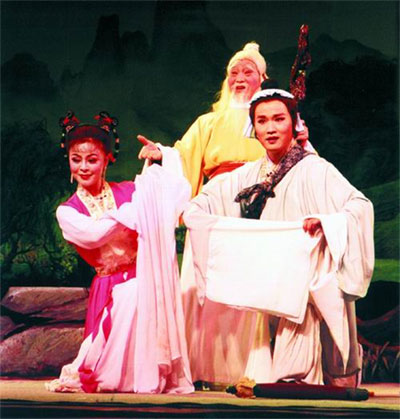


 iLook China