China, the Power of Government and Eminent Domain

December 2, 2012

Gillian Wong of the Associated Press reported on a lone, rural Chinese farmer that had resisted selling his house to the local government so a new road could be completed.  The photo shows a house sitting in the middle of an almost finished road with pavement surrounding it.

If that had been in the US, the house would have been gone long before the road was build—something Wong fails to mention is that this sort of thing happens in the US all the time and it started during the decades that the roads and highways spread across the US like a spider web.

In fact, local US governments do not need to wait for the owner of a house to agree to sell. It can force the owner to sell and then use the police/marshals to move him or her out using force if necessary.

I still remember reading about one incident in The Los Angeles Times that happened in Southern California during the craze to build freeways there.

The home owner was a combat veteran from World War II, Korea or Vietnam (I do not remember which war).  This vet refused to move out of his house even after the local government forced him to sell it.  He claimed he wasn’t being paid what he had invested in the house in improvements.

This American vet filled sandbags and stacked them against the walls of his house; he stocked up on canned foods, bullets, rifles and a gas mask along with a bullet-proof vest. No one was going to take his house away from him.

A swat team had to be called in, tear gas was used and the swat team broke into his house and swarmed him before he could shoot anyone. Then off to jail and court he went to be judged by a jury of his peers. I never did find out what the outcome of that trial was.

In the US, as states, cities and towns expand and improve roadways, sewer and power lines, communications and other system, local governments often secure or acquire access to private land. Without the government’s power to do so, the size and capability or public infrastructure would become inadequate to serve the needs of society (the people) and often in the US the estimated value of a property does not match, because the government uses a different method to determine value not based on what the owner spent on the property but based on the value of other properties in the same community based on an average.  To the government, the value of the property is an estimated value. To the owner, it may be every penny he or she invested in the property.  Source: Find Law.com

In the US, this has been called legalized theft and it has been debated for decades. The following source is one example of that debate: Fee.org

The law is called Eminent Domain and it gives a government the power to buy private property for public use, usually with compensation to the owner.

Britannica Concise Encyclopedia says: “Government power to take private property for public use without the owner’s consent. Constitutional provisions in most countries, including the U.S. (in the 5th Amendment to the Constitution), require the payment of just compensation to the owner. As a power peculiar to sovereign authority and coupled with a duty to pay compensation, the concept was developed by such 17th-century natural-law jurists as Hugo Grotius and Samuel Pufendorf.”

Therefore, why is this incident in China worthy of media attention in the US, and I wonder if China’s media ever reported on similar incidents in America?

After all, they happen all the time and are often ignored by the American media because they are so common. If you doubt what I say, watch the three-part PBS program embedded in this post.

Discover Dr. Li’s illusive Memoires

______________

Lloyd Lofthouse is the award-winning author of The Concubine Saga. When you love a Chinese woman, you marry her family and culture too. This is the love story Sir Robert Hart did not want the world to discover.

Subscribe to “iLook China”!
Sign up for an E-mail Subscription at the top of this page, or click on the “Following” tab in the WordPress toolbar at the top of the screen.

About iLook China


Xiu Xiu: The Sent Down Girl – a movie review

November 26, 2012

The Sent Down Girl was filmed in China and directed by Joan Chen. It is a Mandarin language film with English subtitles and was filmed on the hauntingly beautiful Tibetan high plains.

During the Cultural Revolution, millions of teens were sent from the cities to the country or camps to learn humility and a simpler, peasant life.

This movie stars Lu Lu as Xiu Xiu, a teenage girl and Lopsang as Lao Jin, a castrated Tibetan nomad who is assigned to teach the innocent teen how to handle and train horses.

Xiu Xiu

Lao Jin falls in love with his young charge but he is a eunuch. Then there is a local low ranking Communist official and others, who introduce Xiu Xiu to a brutal world of sex for favors. This movie was not a condemnation of Communist China. This example of sexual harassment and abuse of power can happen anywhere.

The movie was based on an award-winning novella banned in China because of political and sexual content.  This was the first film Joan Chen directed. She is best known for her role in The Last Emperor as one of the emperor’s wives.

Discover Farewell My Concubine, an incredible Chinese film, or learn more abou Slavery is ALIVE today and your Child may be at Risk

______________

Lloyd Lofthouse is the award-winning author of The Concubine Saga. When you love a Chinese woman, you marry her family and culture too. This is the love story Sir Robert Hart did not want the world to discover.

Subscribe to “iLook China”!
Sign up for an E-mail Subscription at the top of this page, or click on the “Following” tab in the WordPress toolbar at the top of the screen.

About iLook China


Honoring Foreign Devil Heroes

November 20, 2012

It is ironic that in the 1940s we were fighting with the Chinese against the Japanese. Then in 1950, China and the US fought against each other in North Korea and Chinese advisers were sent to assist North Vietnam to fight the US in the 1960s.

Then Nixon arrives in China in the 1970s and we were friends again.

In February 2010, I had an instant message chat with Ian Carter, an Australian expatriate living in Southeast China, and learned that during World War II in 1944 an American B-24 Liberator bomber vanished without a trace in Southeast China.

Fifty-two years later in 1996, farmers discovered the bomber’s wreckage and the remains of the ten-man crew on Mao’er Shan (Little Cat Mountain), Southern China’s highest peak. The name of the B-24 bomber was Tough Titi.

These Americans are considered heroes (click on this link for more about this story) to the Chinese, and the remains of the crew were returned to the United States for burial.

There’s a memorial stone near the crash site and Chinese tourists pay honor to these Americans by leaving flowers and other gifts.

To honor these heroes further, the Chinese recovered some of the bomber’s parts and used them as a centerpiece for a museum in Xing’an, about four hours from the crash site.

Discover Country Driving (in China) by Peter Hessler

______________

Lloyd Lofthouse is the award-winning author of The Concubine Saga. When you love a Chinese woman, you marry her family and culture too. This is the love story Sir Robert Hart did not want the world to discover.

Subscribe to “iLook China”!
Sign up for an E-mail Subscription at the top of this page, or click on the “Following” tab in the WordPress toolbar at the top of the screen.

About iLook China


“For All the Tea in China” – a book review

October 23, 2012

If you are interested in a real-life collision between the West and China early in the 19th century, then I highly recommend Sarah Rose’s nonfiction work. You will discover that the British Empire and its merchants were successful, because they were more ruthless and devious than anyone else on Earth.

You may be interested in the list of wars that involved the Kingdom of Great Britain from 1701 – 2011. Be prepared for shock and a dropped jaw. The price of an empire is blood, lots of spilled blood.

At its greatest extent, the British Empire was known as the largest in history, and it covered more than thirteen-million square miles (20,921,472 square kilometers), which is about a quarter of the Earth’s total land area, and she controlled more than 500 million people—a quarter of the world’s population.

The English language, which the British Empire spread, is the second most-widely spoken language in the world today—in reality, the standard language of the world.

What financed the brutal expansion of this empire?  According to For All the Tea in China, drugs paid for the empire.  The British Empire was a thief and the largest drug cartel in human history.

Sarah Rose wrote a fascinating story of Robert Fortune (1812 – 1880) and one of, if not the largest, acts of corporate espionage and theft in history. This nonfiction book is about how the British stole tea plants and the method of producing tea from China and successfully transplanted this industry in India.

For example, if you drink Darjeeling Tea from India, you are drinking a product that was stolen from China by Robert Fortune in the early half of the 19th century.

But there is much more to this story than the theft of tea from the country that may have invented it almost five thousand years ago. In fact, China is considered to have the earliest records of tea drinking, with recorded tea use in its history dating back to the first millennium BCE.

However, first, I want to dispel a misconception I discovered from a two-star Amazon reader review that said, “I was a little skeptical about her comment in the notes ‘As this is a work of popular history, not a scholarly undertaking, I have avoided the use of footnotes and tried to steer clear of mentioning sources in the body of the text. Nevertheless, this is a work of nonfiction …’ “

That unfair review left off the rest of Sarah Rose’s quote that said, “Nevertheless, this is a work of nonfiction, and anything in quotes comes from a letter, memoir, newspaper or other contemporaneous sources.

“I have relied heavily on Robert Fortune’s four memoires (listed at the end of this post), his letters to the East India Company and other company documents housed in the British Library. Over five hundred books and documents were consulted in putting this project together.” (pg. 251, hardcover)

On page 227 of the hardcover, Rose wrote, “By the time the Chinese realized that Fortune had stolen an inestimable treasure from them, it was many years too late to remediate their loss. His theft helped spread tea to a wider world at lower prices.”

In addition, “Tea likewise revolutionized Britain’s capital and banking systems and influenced the rapid growth of trade networks in the Far East. It was instrumental in extending the reach of British colonialism as the empire expanded to include countries such as Burma, Ceylon, East Africa and others where tea could be grown …”

On page 178, we discover, “It was through drug-based commercial enterprises such as the tea and opium trade that Britain became the greatest of all hegemonic empires. The British campaign to sell opium in China was tremendously profitable. … Britain’s all-conquering naval fleet was able to be constantly improved with newly minted capital from the sugar, tea and opium trades. Without opium, the India trade would not have flourished and without India, Britain’s post-Napoleonic global ascendency could well have collapsed.”

However, these few quotes do not do justice to Robert Fortune’s adventure in China. He successfully passed himself off as a citizen of the Qing Empire dressed in mandarin robes. He even had a queue, a braid of hair worn hanging down behind the head, sewn to his scalp and had his head shaved to match the style of the time.

“He eventfully became proficient enough with speaking Mandarin that he was able to adopt the local dress and move among the populous largely unnoticed. By shaving his head and adopting a ponytail, this rather gruff Scotsman was able to effectively blend in. So well in fact, that he was able to enter the forbidden city of Souchow (now Wuhsien) unchallenged.” Source: Planet Explorers.com

Besides being nonfiction loaded with facts, this book was also an adventure and/or spy thriller based on a real person and his mission of intrigue—if caught, he would have been executed. To pull off the biggest heist of all time, Fortune traveled to areas of China that no foreigner had ever visited before, and his only companions were Chinese that he had bribed to work for him.

Today, tea is the most popular drink in the world in terms of consumption. Its consumption equals all other manufactured drinks in the world – including coffee, chocolate, soft drinks, and alcohol – put together. In fact, China is still the leading tea producer in the world: in 2010 China produced 1,467,467 tons (32.5%) compared to second place India at 991,180 tons (21.9%). Third place went to Kenya at 399,000 tons (8.83%).

In addition, consumption of tea in 2010 grew at a faster rate than global production. In the United States alone in 2011, the US tea industry gross revenue through all foodservice and retail outlets was greater than $27-billion (and twelve countries consumed more tea than the US). For a comparison, ticket sales for the US domestic movie market were only $10.28-billion in 2011.

Tea is more popular than Hollywood.

Robert Fortune’s memoirs:

1. Three Years’ Wandering in the Northern Provinces of China, A Visit to the Tea, Silk, and Cotton Countries, with an account of the Agriculture and Horticulture of the Chinese, New Plants, etc., London: John Murray  (1847)

2. A Journey To The Tea Countries Of China; Including Sung-Lo And The Bohea Hills; With A Short Notice Of The East India Company’s Tea Plantations In The Himalaya Mountains. With Map And Illustrations, London: John Murray  (1853)

3. Two visits to the tea countries of China and the British tea plantations in the Himalaya: with a narrative of adventures, and a full description of the culture of the tea plant, the agriculture, horticulture, and botany of China, London: John Murray (1853)

4. A Residence Among the Chinese; Inland, On the Coast and at Sea; being a Narrative of Scenes and Adventures During a Third Visit to China from 1853 to 1856, including Notices of Many Natural Productions and Works of Art, the Culture of Silk, &c, London: John Murray (1857)

5. Yedo and Peking; A Narrative of a Journey to the Capitals of Japan and China, with Notices of the Natural Productions, Agriculture, Horticulture and Trade of those Countries and Other Things Met with By the Way, London: John Murray  (1863)

Discover The Tea Horse Road or learn about The Magic of Puer Tea

______________

Lloyd Lofthouse is the award-winning author of The Concubine Saga. When you love a Chinese woman, you marry her family and culture too. This is the love story Sir Robert Hart did not want the world to discover.

Subscribe to “iLook China”!
Sign up for an E-mail Subscription at the top of this page, or click on the “Following” tab in the WordPress toolbar at the top of the screen.

About iLook China


Xian – the Double Menu Caper

October 16, 2012

On this trip, our hotel was outside of and in sight of Xian’s city walls.  We had a view of the battlements that were centuries old. At night, the walls and towers were outlined with white Christmas lights.

I ached to get up there and walk those walls.  It was 1999, and I’d wait more than nine years before that happened. One day I want to rent a bicycle and explore the entire wall.


This is a different restaurant from the one I mention.

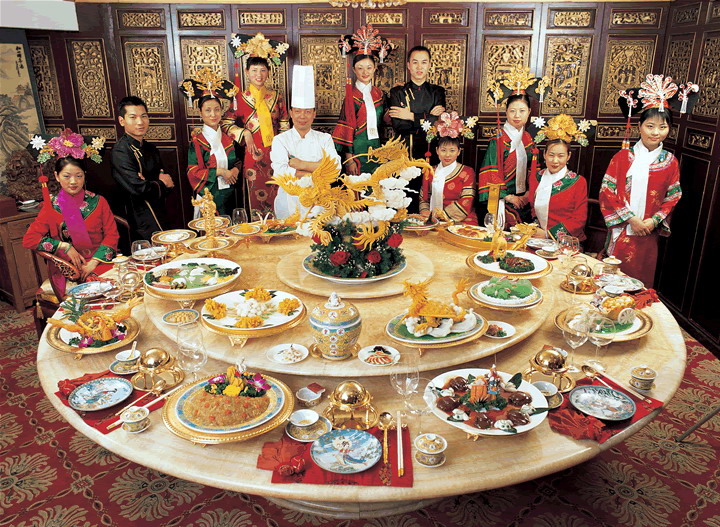
Our second day in the city, we walked from the hotel into the city to a Xian restaurant. I went in first and the hostess, who didn’t speak a word of English, handed me a menu written in English.

My wife, dressed more like a Chinese peasant than an American, walked in after me and she was handed a menu written in Chinese. Then she glanced at my menu before taking it out of my hands and giving it back to the hostess.

“We’ll use the Chinese menu,” she said.

The prices in Mandarin were less than half the English version.  A stunned look appeared on the hostesses face.  It was a Candid Camera moment, and it was all I could do to not laugh.

Discover I Ate no Dog, I Ate no Cat, a Guest post by Bob Grant

______________

Lloyd Lofthouse is the award-winning author of The Concubine Saga. When you love a Chinese woman, you marry her family and culture too. This is the love story Sir Robert Hart did not want the world to discover.

Subscribe to “iLook China”!
Sign up for an E-mail Subscription at the top of this page, or click on the “Following” tab in the WordPress toolbar at the top of the screen.

About iLook China