A brief history of silk: Part 1 of 2

August 27, 2013

I read an Associated Press piece by Mansur Mirovalev about silk’s so-called dark side where Uzbek children had to work and grow cocoons.


Silkworms in a Chinese silk factory

However, that’s not what this post is about.  I will say this. I didn’t see much that was wrong in Mirovalev’s piece about what was taking place in Uzbekistan. About a century ago, American children once worked in the fields alongside their parents. I see nothing wrong with that.

In fact, for most of history, children were just seen as smaller people and had to work just like adults did.


Worker makes silk cloth from a silkworm.

I’ve often read about the Silk Road, but I was curious and wanted to know more about the history of silk so I did some Google research and discovered that silk has a long history in China.

For example, in 1984, silk fabric dating back more than 5000 years was found in Henan Province.


How silk is made.

According to legend, Lei Zu, the queen of China’s legendary Yellow Emperor, was drinking a cup of tea beneath a mulberry tree one day when a silkworm cocoon fell into her cup. Further investigation revealed that the unraveling fibers were light and tough, ripe for spinning. Thus China’s silk industry was born.

What I didn’t know was that merchants from the Roman Empire sent ships by sea to China and traded directly with the Han Dynasty. It’s well known that China traded with India, the Persians and even Europe using a land route called the silk road across Asia. But this was the first time I heard of ships from Europe reaching China about two thousand years ago.

Continued on August 29, 2013 in A brief history of silk: Part 2

Discover A Millennia of History at a Silk Road Oasis

_______________

Lloyd Lofthouse is the award-winning author of My Splendid Concubine [3rd edition]. When you love a Chinese woman, you marry her family and culture too. This is the love story Sir Robert Hart did not want the world to discover.

His latest novel is the multiple-award winning Running with the Enemy.

Subscribe to “iLook China”!
Sign up for an E-mail Subscription at the top of this page, or click on the “Following” tab in the WordPress toolbar at the top of the screen.

About iLook China

China’s Holistic Historical Timeline


China’s long, violent history with Vietnam

August 22, 2013

After the death of Stalin, relations between the Soviet Union and China turned sour while the Russians and the Vietnamese developed a closer relationship.

To counter this perceived threat, China encouraged Cambodia to take aggressive action against Vietnam. By the end of 1978, the Cambodians under the leadership of Pol Pot launched a series of attacks along the Vietnam border.

The Vietnamese retaliated with armored units and captured the capital of Cambodia on January 7, 1979.

Since ten-thousand Chinese military advisers in Camboida became prisoners, China loses face.

On February 15, 1979, China invaded Vietnam to teach it a lesson.

The Vietnamese decided to hold back their regular army and defend the border with militia units using guerilla tactics in the hills and rainforest similar to how they fought America.

China takes heavy casualties after attacking and soon returns to China.

China has a long history with Vietnam. The First Chinese domination of Vietnam took place in 207 BC to 39 AD. The second occupation was from 43 to 544 AD.  The third was from 602 to 905 AD.  The fourth was between 1407 to 1427 AD.

Then France ruled over Vietnam from 1862 until the Japanese invaded during World War II. The French would return in 1946 and fight the Vietnamese until 1954.

The US and Vietnam, once enemies during the American-Vietnam War (1961 – 1975), are now allied to block China’s territorial claims in the South China Sea.  Source: Goldsea Asian American News

Discover China and India at War in 1962

_______________

Lloyd Lofthouse is the award-winning author of My Splendid Concubine [3rd edition]. When you love a Chinese woman, you marry her family and culture too. This is the love story Sir Robert Hart did not want the world to discover.

His latest novel is the multiple-award winning Running with the Enemy.

Subscribe to “iLook China”!
Sign up for an E-mail Subscription at the top of this page, or click on the “Following” tab in the WordPress toolbar at the top of the screen.

About iLook China

China’s Holistic Historical Timeline


Interracial love in China during World War II, a book review of “Shanghai Love”

August 13, 2013

From the title, we already know the story is about love in Shanghai, and it doesn’t take long to discover who the two main characters are that are destined to meet.

It is 1938, and in chapter one, we are introduced to Peilin in China. In chapter two we meet Henri in Nazi Germany.

But the love story isn’t what made this novel worth reading. It was the journey the two characters must take to find each other. They are both doctors. Henri is Jewish and trained in western medicine. He has to leave his family behind in Germany and flee to China to avoid Hitler’s Nazis who are hunting for him because he dared to love a woman who was not Jewish.

Peilin was trained by her grandfather in Chinese herbal medicine, and by the time Henri meets her, she has already been married to a ghost for some time.

As a young girl, a marriage was arranged to a boy almost twice Peilin’s age, but when he was a young man—before the marriage—he was killed in combat fighting the Japanese who invaded China in July of 1937. By the time Pearl Harbor is bombed by the Japanese in December 1941, China has already been fighting Japan for more than four years. To give you an idea of how horrible it was, by the end of World War II, China lost ten to twenty million people to the war compared to 418,500 for the United States.

One would think with her fiancé dead, Peilin would be free to move on with her life, but no—because in China it is expected that Peilin must still marry the man’s ghost, stay a virgin for life and live with her in-laws who will buy a baby for her to raise as if she were its biological mother and the dead man its father.
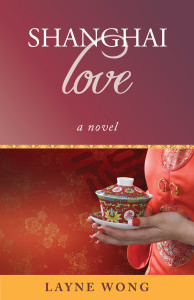
Shanghai-Love-front-cover-194x300

The story is set in an era when both the Chinese and Europeans disapproved of interracial relationships. In Germany, there was racism against the Jews. But in China, there is prejudice from some Chinese because Henri is white. In addition, many of the Jewish refugees look down on the Chinese culture and disapprove of Henri spending time with Peilin. It seems that these two are fated to be star-crossed lovers.

I recommend reading this story because it offers a reminder of the horrors of war and racism. During World War II, 20,000 European Jews fled to Shanghai, one of the few places in the world that put no limits on the number of Jews it would accept.

Another plot thread that runs through the novel is the focus on Chinese herbal medicine and how different it is from the western concept of medical care. The Chinese were studying advanced medical care long before the West. In fact, Chinese medical tradition is more than 5,000 years old including herbal medicine, acupuncture, massage, exercise and dietary therapy—concepts that the West didn’t pay serious attention to until near the end of the 20th century.

I’m not going to tell you how the love story turns out between Henri and Peilin. You will have to buy and read the novel to discover that.

Layne Wong, the author of Shanghai Love

Layne Wong, the author of Shanghai Love

I bought my copy of “Shanghai Love” by Layne Wong at an author event held at the Bancroft Hotel in Berkeley, California earlier in 2013.

_______________

Lloyd Lofthouse is the award-winning author of My Splendid Concubine [3rd edition]. When you love a Chinese woman, you marry her family and culture too. This is the love story Sir Robert Hart did not want the world to discover.

His latest novel is the multiple-award winning Running with the Enemy.

Subscribe to “iLook China”!
Sign up for an E-mail Subscription at the top of this page, or click on the “Following” tab in the WordPress toolbar at the top of the screen.

About iLook China

China’s Holistic Historical Timeline


Jewish Studies in China

August 6, 2013

The Chinese and Jews have a common bond—Sinophobia and Anti-Semitism.  Archaeological evidence suggests that Jews were in China as early as the 8th century having arrived from Persia along the Silk Road.

And in China, Jews found a home without Anti-Semitism, which suggests that Anti-Semitism only exists in Christian and Muslim dominated countries.

In Shanghai, there is the Jewish Refugees Museum located in the former Ohel Moishe Synagogue, which offers a history of refugees who were sheltered in the city during World War II.

There is also a graduate program at Nanjing University, the China/Judaic Studies Association, which furthers the study of Judaism in China at the Glazer Institute for Jewish Studies. The chair for this graduate program, Professor Xu Xin, is the leading Judaic Scholar in China.

Professor Xu said, “Not to understand the contribution of the Jews to world history is not to understand the world … not to understand another people is a failed opportunity to counteract hatred and bigotry.”

The Chinese government now recognizes Jews as an official Chinese ethnic group. Source: Los Angeles Chinese Learning Center

Discover Deep Family Roots

_______________

Lloyd Lofthouse is the award-winning author of My Splendid Concubine [3rd edition]. When you love a Chinese woman, you marry her family and culture too. This is the love story Sir Robert Hart did not want the world to discover.

His latest novel is the multiple-award winning Running with the Enemy.

Subscribe to “iLook China”!
Sign up for an E-mail Subscription at the top of this page, or click on the “Following” tab in the WordPress toolbar at the top of the screen.

About iLook China

China’s Holistic Historical Timeline


China’s Holistic Historical Timeline

August 3, 2013

This holistic timeline in no way represents all of China’s history. This menu of China’s history is here for individuals who want to learn about China and the Chinese from near the beginning to today.

What I’ve done is provide links in chronological order—or as close as possible—to posts on this site that offer a look at China’s long history and her people. Click on the links [in red] to discover some of China’s historical, cultural and artistic evolution.

If you see a post that you feel is in the wrong time slot, let me know and I will look into it. New links may be added at any time.


6987 BC

The Ancient Yue


3000 BC

The Discovery of Silk

God, Ancient Astronauts and China’s Yellow Emperor


2256 – 2205 BC

ShangDi, China’s God of Creation


2205-1783 BC

The Xia, China’s Oldest Known Dynasty


1783 – 1123 BC

Shang Dynasty

The Mandate of Heaven

Links to the Stars – Ancient Astronomy

Spring Festival, Year of the Tiger

The Vanishing Street Art of Chinese Calligraphy

Chinese Drums

The Sheng, one of China’s Oldest Musical Instruments


1126 – 222 BC

China’s Spring and Autumn Period

Emperor Wu of Zhou Dynasty

Guqin means Ancient Musical Instrument

China Points the Way

Sun Tzu’s “The Art of War”

The Bodhidharma

The Life of Confucius

The Influence of Confucius

The two-faces of Confucius

Confucius Returns

Confucius with Chow Yun Fat

A short history of Taoism and its meaning

Yin Yang

China’s Grand Canal

China’s Ancient Chimes


259 – 210 BC

The First Emperor, Qin Shi Huangdi, the man who unified China

Xian, China’s Ancient Capital

The Search for the Tomb of Cao Cao

The Seven Wonders of China starting with the Qin Shi Huangdi

Tea for Emperors and Tibet


206 BC – 219 AD

The Han Dynasty

Buddhism in China

With or Without Paper

Measuring Earthquakes


Near the end of the Han Dynasty to 280 AD

Romance of the Three Kingdoms


300 – 644 AD

A Millennia of History at a Silk Road Oasis

[youtube-http://www.youtube.com/watch?v=R29A0GyLYlE]


596 – 644 AD

Hsuan-tsang – From China to India for Enlightenment


618 – 906 AD

The Tang Dynasty

Wu Zetian, China’s only Female Emperor and an early feminist

Ancient Feminism in China

Tang Dynasty Poetry

The Accidental Discovery of Gunpowder

Ice Cream from China – Myth or Fact

The First Cinderella was Chinese

The Tea Horse Road

Chinese Crossbow and other Inventions

Quyi: Chinese Singing and Storytelling

Christianity and Islam in China

The Kaifeng Jews


925 – 1279 AD

Sung Dynasty

China’s Imperial Encyclopedia

China’s Bound-Feet Women

The Machines of China


1279 – 1368 AD

Yuan Dynasty: Kublai Khan’s Mongol Empire [China conquered]

Shanghai’s History & Culture

China’s Real Karate Kids

The Millennium Cult

The White Lotus Mutation


1368 – 1643 AD

The Ming Dynasty Part 1

The Ming Dynasty Part 2

Emperor Yangle of the Ming Dynasty

Ruling the Oceans

China’s Romeo and Juliet


1644 – 1911 AD

The Qing Dynasty

China’s Last Dynasty

China’s Last Empress Dowager-Regent

The Prince’s Garden

The Qing Dynasty’s Elite Troops

For All the Tea in China

The Connection between Opium, Christianity, Cults and Cannon Balls

The Roots of Madness

The Opium Wars

The Taiping Rebellion; the Kingdom of Heavenly Peace (1845-1864)

A Forbidden City Connection to Tibet Revealed

Dream of the Red Chamber

Jingyun Dagu, Beijing’s Story Telling Opera

Peking Opera

The Importance of Guanxi to Chinese Civilization

Jack London in China

Discrimination against the Chinese in America


1912 to present

Dr. Sun Yat-Sen, the father of China’s Republics

Sun Yat-sen’s Last Days

Yuan Shikai, the general who became China’s president for life

Chiang Kai-shek, brutal dictator and America’s friend

America’s Angel Island

Massacre in Taiwan and America says nothing

Mao’s Long March

China’s Communist Revolution or Civil War

Mao and Snow

World War II and The Rape of Nanking

Japan’s war of lies about atrocities in China

The Rape of Nanking with Iris Chang

China’s Health Care During Mao’s Time

Mao Zedong, the Poet

Xiu Xiu: The Sent Down Girl

From Mao to the Met

Mao’s Last Dancer

The Founding of a Republic

Ah Bing and “Reflection of the Moon”

Balzac and the Little Chinese Seamstress

Tibet Inside China

China’s Sensitivity over Tibet

Tibet as a Province of China – the unresolved issue

No Way is Tibet a Democracy in Exile!

Chinese Gold from Dead Tibetan Caterpillars

China in Korea Protecting the Teeth

China’s Great Leap Forward

China’s Great Famine (1959 – 1961)

Mao’s ‘alleged’ Guilt in the Land of Famines

Mao and Complex Post Traumatic Stress Disorder

China and India at War – 1962

The KMT-CIA Heroin, Cocaine Pipeline to the US

Pearl S. Bucks’ China Predictions – 1966

Nixon in China

Deng Xiaoping

The Sino-Vietnam War of 1979

The Controversy, Complexity and Reality behind China’s One-Child Policy

The Tiananmen Square Hoax

Tiananmen Square Revisited

What is the truth about Tiananmen Square?

On the trail of Dr. Li’s illusive Memories

Water: the Democracy versus the Authoritarian Republic

Greenpeace and the growth of environmentalism in China

China’s Educated Women Work to Bring about Change from Within

China’s Stick People – the rural urban divide

China’s Porn War

Evil Tobacco

Joining the Party

Communism and Socialism are NOT the SAME

Country Driving with Peter Hessler

Oprah Times Four in China

Hooters in China

What do Shanghai’s IKEA and Cupid have in common?

Macao Bringing in the Cash

Falun Gong’s Media Machine

The differences between Individualism and Collective Cultures


_______________

Lloyd Lofthouse is the award-winning author of My Splendid Concubine [3rd edition]. When you love a Chinese woman, you marry her family and culture too. This is the love story Sir Robert Hart did not want the world to discover.

His latest novel is the multiple-award winning Running with the Enemy.

Subscribe to “iLook China”!
Sign up for an E-mail Subscription at the top of this page, or click on the “Following” tab in the WordPress toolbar at the top of the screen.

About iLook China