Three Journeys to the West from China

December 30, 2014

No, this post is not about immigrants, tourists or Chinese armies invading America, because Chinese troops would have to swim the Pacific Ocean since China’s navy isn’t large enough to move a military force of that size.

For instance, China has one 26-year-old used, conventional aircraft carrier with 54 aircraft. The U.S. has twenty with three under construction with almost 100 aircraft on one carrier.

But this post is about China’s classic novel, “Journey to the West”, also known “The Monkey King”.

There are four novels that are considered Chinese classics—Romance of the Three Kingdoms, Dream of Red Chamber, Journey to the West and The Outlaws of the Marsh (some of these classics have been released with other titles), and there are three Chinese books titled “Journey to the West”.

One Journey to the West is nonfiction about K’iu Ch’ang Ch’un, who visited Genghis Khan in Persia between 1221 and 1224.

The second Journey to the West is another nonfiction account about Hsuan-Tsang (Xuanzang,  602  – 664 AD), a Buddhist monk who traveled to India to bring back Buddhist scriptures.

The third Journey to the West is the fictional romance that introduces the Monkey King and his friend the Pig. This Journey to the West is a classic Chinese mythological novel. It was written during the Ming Dynasty based on traditional folktales. Consisting of 100 chapters, this fantasy relates the adventures of a Tang Dynasty (618-907) priest Sanzang and his three disciples, Monkey, Pig and Friar Sand, as they travel west in search of Buddhist Sutra.

_______________

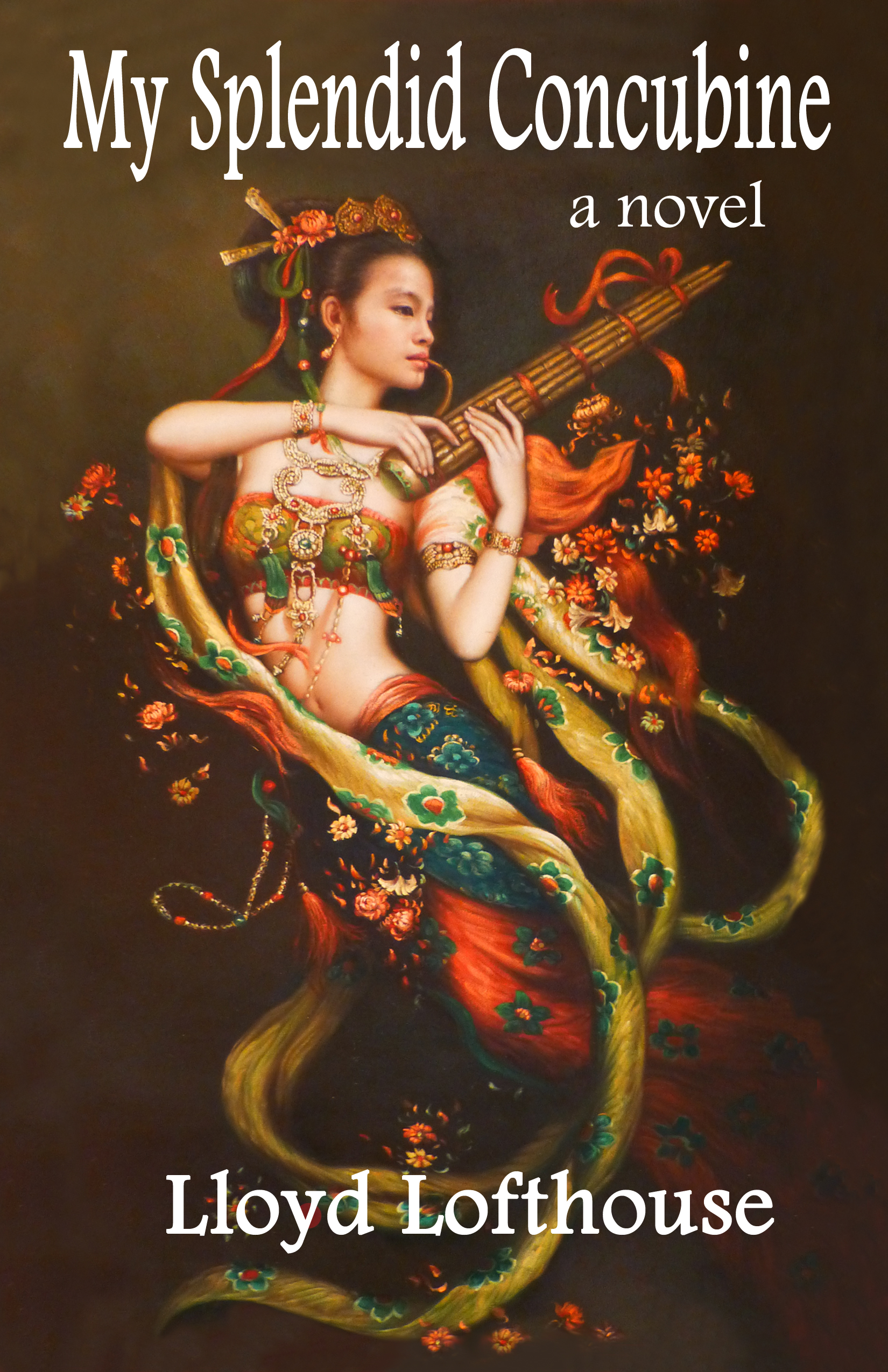
Lloyd Lofthouse is the award-winning author of My Splendid Concubine [3rd edition]. When you love a Chinese woman, you marry her family and culture too. This is the love story Sir Robert Hart did not want the world to discover.

Low-Res_E-book_cover_MSC_July_24_2013

Subscribe to “iLook China”!
Sign up for an E-mail Subscription at the top of this page, or click on the “Following” tab in the WordPress toolbar at the top of the screen.

About iLook China

China’s Holistic Historical Timeline


More than 3,000 Years of Chinese Porcelain

December 24, 2014

Chinese porcelain originated in the Shang Dynasty (16th century BC), and Jingdezhen in Jiangxi province is a well-known Chinese city where porcelain has been an important production center in China since the early Han Dynasty (206 BC – 220 AD).

From China, caravans carried its famous Chinese porcelains west: ceramic lusterware, lacquerware – snow-white vases, bowls, glasses, and dishes with sophisticated patterns. It was solely the Chinese who knew the secret of making the thinnest and resonant porcelain, making it very expensive in European markets. Silk Road Encyclopedia.com and Gotheborg.com

Chinese porcelain was also available in the American colonies as early as the seventeenth century, but it did not become commonplace until after 1730. Before the U.S. Revolution, porcelain was exported to the colonies mainly by English and Dutch traders. European traders sailed to Canton (Guangzhou) in southern China, exchanged their goods for Chinese products, and then returned to sell porcelain and other Chinese imports on the European and colonial markets. In addition to porcelain, teas and silks were also exported from China in large quantities. Mount Vernon.org

“The demand for Chinese products—tea, porcelain, silk, and nankeen (a coarse, strong cotton cloth)—continued after the Revolution. Having seen the British make great profits from the trade when the colonies were prevented from direct trade with China, Americans were eager to secure these profits for themselves.” Source: Early American Trade With China

This hunger for Chinese products, while the Chinese found little in the West to buy, led to the Opium Wars, which Britain and France started and won to force China to even the trade imbalance. Then China sold the West silk, porcelain and tea while the West sold China opium.

_______________

Lloyd Lofthouse is the award-winning author of My Splendid Concubine [3rd edition]. When you love a Chinese woman, you marry her family and culture too. This is the love story Sir Robert Hart did not want the world to discover.

Low-Res_E-book_cover_MSC_July_24_2013

Subscribe to “iLook China”!
Sign up for an E-mail Subscription at the top of this page, or click on the “Following” tab in the WordPress toolbar at the top of the screen.

About iLook China

China’s Holistic Historical Timeline


The last days of Sun Yat-sen: Part 3 of 3

December 4, 2014

Later, it was discovered that the medical report of Sun’s condition was incomplete. Some of the samples and part of the report had been stolen and no one knows why.

During World War II, after the Japanese invaded China, Japanese troops occupied the hospital where Sun Yat-sen’s liver samples were kept.

Chinese representative requested the liver samples and the report be turned over to them.

Some of the liver samples were given to Dr. Tang Qiping, who worked at the Sino-Belgian Radium Institute in Shanghai.

Another man, Chu Minyi, forced Dr. Tang to give him those samples.

In 1946, Chu Minyi would go to prison as a traitor to China. He tried to use Sun Yat-sen’s liver samples to save himself. However, Chu was still executed by Chiang Kai-shek’s Nationalists.

Sun’s liver samples would be lost during the revolution between the Communists and Nationalists. Later, it would be discovered that the samples had been stolen again.

When the Nationalists launched their Northern Expedition to take China from the warlords, the warlord in Beijing, who met with Sun before his death, was their only ally.

When Sun died, his political advisor wrote, “If Dr. Sun Yat-sen had lived for a few years or even a few months longer, China’s situation would have changed completely.”

Soon after Sun’s death in 1925, the democratic government created by him after the 1911 revolution failed.

After a struggle, Chiang Kai-shek gained control of the Nationalists, and because he controlled the army. Chiang then gave orders to his troops to execute all the Communists starting the civil war that led to Mao’s famous Long March.

Return to Part 2  or start with  Part 1

View as Single Page


This film is in Mandarin with no English subtitles.

_______________

Lloyd Lofthouse is the award-winning author of My Splendid Concubine [3rd edition]. When you love a Chinese woman, you marry her family and culture too. This is the love story Sir Robert Hart did not want the world to discover.

Low-Res_E-book_cover_MSC_July_24_2013

Subscribe to “iLook China”!
Sign up for an E-mail Subscription at the top of this page, or click on the “Following” tab in the WordPress toolbar at the top of the screen.

About iLook China

China’s Holistic Historical Timeline


The last days of Sun Yat-sen: Part 2 of 3

December 3, 2014

After arriving in Beijing, Sun Yat-sen saw a French doctor who gave him injections to help with his illness.

With his health getting worse, a nurse that worked at a German hospital was sent to his Beijing hotel to care for him.

His condition was so bad that at times he could not talk.

Since the Western medicine wasn’t improving his health, he was convinced by advisors to talk to an herbalist doctor, Ge Lianfu.

Sun Yat-sen told Ge Lianfu that he would give the Chinese medicine to the Western doctors to see if they could copy it.

Ge said he wasn’t sure if Chinese and Western medicine were interchangeable.

Since Sun was a trained Western doctor, he didn’t believe that Ge’s treatment was going to work. Ge Lianfu concluded that Sun had liver disease, but Sun didn’t trust the diagnosis.

While staying in the Beijing hotel, Sun was treated by doctors from the US, Germany, Russia and the Peking Union Medical College Hospital.  However, the treatments didn’t help, and his condition worsened.

The western doctors concluded that he needed exploratory surgery. After they cut him open, they discovered liver disease as Ge Lianfu had diagnosed without surgery.

In fact, Sun was in the final stages of liver cancer. At the time, Western medicine had no treatment to deal with a disease that he must have had for years.

In 1916, Sun had often suffered from abdominal pain and the Western doctors treated him as if he had stomach trouble.

Continued in Part 3 on December 4, 2014 or start with Part 1

View as Single Page

_______________

Lloyd Lofthouse is the award-winning author of My Splendid Concubine [3rd edition]. When you love a Chinese woman, you marry her family and culture too. This is the love story Sir Robert Hart did not want the world to discover.

Low-Res_E-book_cover_MSC_July_24_2013

Subscribe to “iLook China”!
Sign up for an E-mail Subscription at the top of this page, or click on the “Following” tab in the WordPress toolbar at the top of the screen.

About iLook China

China’s Holistic Historical Timeline


The last days of Sun Yat-sen: Part 1 of 3

December 2, 2014

In October 1911, a revolution in China overthrew the Qing Dynasty and ended more than two-thousand years of imperial monarchy.

After the revolution, the Republic of China was founded but warlords still controlled much of China.

The leader of this revolution was Dr. Sun Yat-sen (1866-1925), and he served as the first president of the Republic of China.

The Chinese Communist Party persuaded Sun that if his Nationalist Party formed an alliance with the Communists, Sun would gain support from China’s peasants and industrial workers to help end the anarchy in China. Time Asia

But, by 1924, Sun Yat-sen’s health was not good. He was so sick he had to turn command of the Nationalist navy and army over to Hu Hanmin, who would later be a rival with Chiang Kai-shek for control of the Nationalists (Kuomintang) in the late 1920s.

The reason that Sun Yat-sen gave command of the navy and army to Hu Hanmin was because he wanted to go to the Baiyun Mountains of Guangzhou to recover from his illness.

However, Sun Yat-sen was invited to Beijing instead—the reason was to meet the warlord that controlled Beijing.

At the time, The Nationalists only held power in Southern China.

When he arrived by train, about 20-thousand people met him at the station.

The warlord had invited Sun Yat-sen to Beijing to talk about how to end the chaos and anarchy that still raged throughout much of China.

Continued in Part 2 on December 3, 2014

View as Single Page

_______________

Lloyd Lofthouse is the award-winning author of My Splendid Concubine [3rd edition]. When you love a Chinese woman, you marry her family and culture too. This is the love story Sir Robert Hart did not want the world to discover.

Low-Res_E-book_cover_MSC_July_24_2013

Subscribe to “iLook China”!
Sign up for an E-mail Subscription at the top of this page, or click on the “Following” tab in the WordPress toolbar at the top of the screen.

About iLook China

China’s Holistic Historical Timeline