What do Moses and China’s Yellow Emperor have in Common?

July 20, 2016

On Tuesday, July 19, in Is 3,799 years old enough for you we learned about the discovery of China’s oldest known dynasty and the myth of the Yellow Emperor.  In this post I link Moses with the Yellow Emperor.

“And Moses brought forth the people out of the camp to meet with God; and they stood at the nether part of the mount. And Mount Sinai was altogether on a smoke, because the Lord descended upon it in fire: and the smoke thereof ascended as the smoke of a furnace, and the whole mount quaked greatly.”  Exodus 19:17, 18

What about China’s Yellow Emperor? Bellaonline.com reports, “Then one day, a yellow dragon descended from the sky to take the Yellow Emperor back to heaven …. Myth says, he ruled for a hundred years before leaving.”

In China no one knows for certain where the Yellow Emperor was from. … He was known as the Yellow Emperor in honor of his contributions to agriculture and the Chinese calendar. In addition to farming, his wife, Lei Zu, is credited with developing the idea of growing silkworms and creating silk. The Yellow Emperor is also noted as the creator of Chinese medicine, and the origins of Taoism and Confucianism trace their roots back to this mythical Emperor.

In addition, consider that the Biblical Moses (1393 – 1273 BC) and the Yellow Emperor were both on Earth about the same time.

Was the Old Testament’s description in Exodus a space ship landing on Mount Sinai, and is the Yellow Emperor returning to heaven on what sounds like another space ship a myth or reality?

Discover China’s First Emperor Qin Shi Huangdi, the man that unified China more than 2,000 years ago.

Lloyd Lofthouse is the award-winning author of My Splendid Concubine [3rd edition]. When you love a Chinese woman, you marry her family and culture too. This is the unique love story Sir Robert Hart did not want the world to discover.
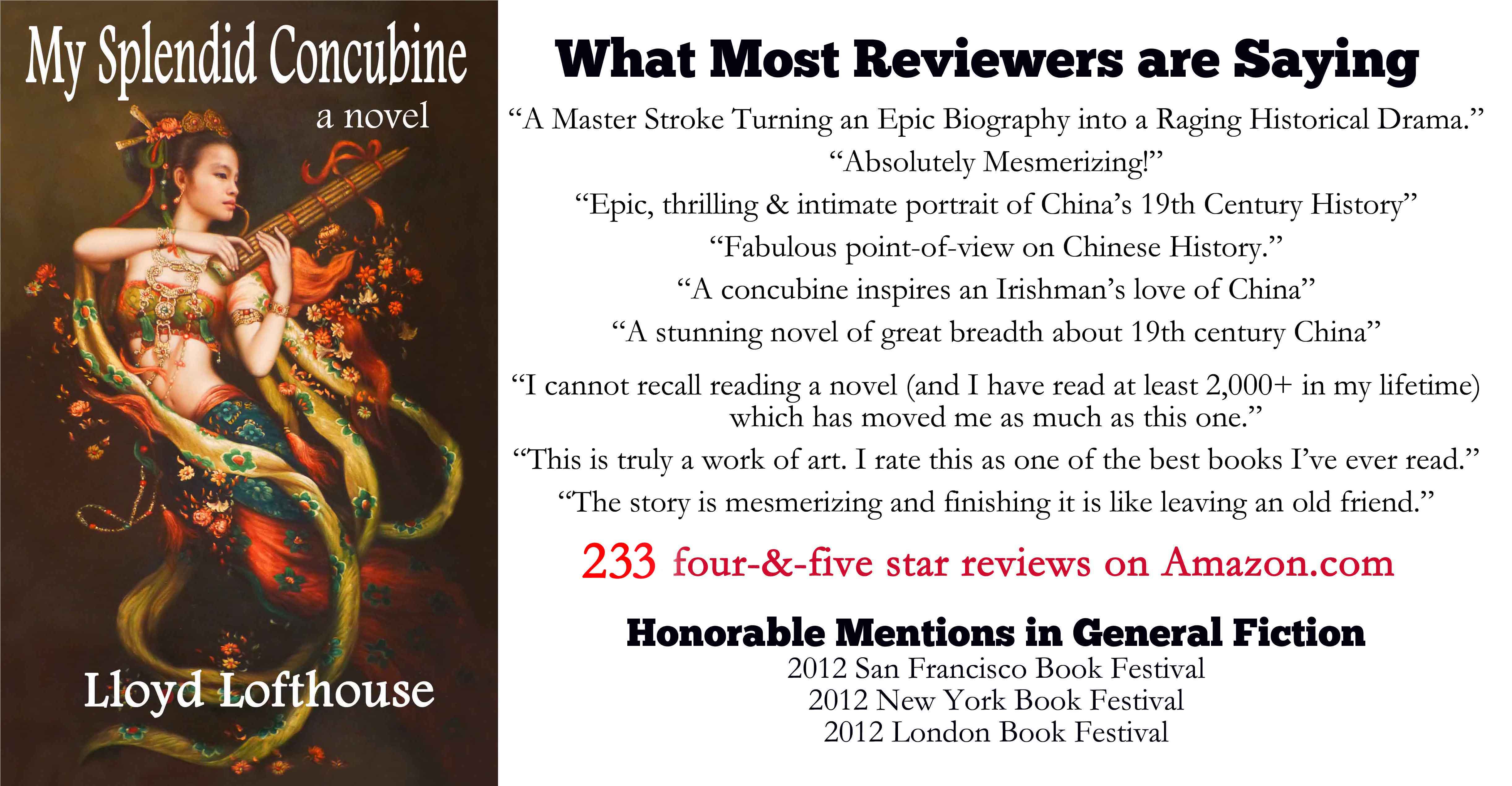
A1 on June 22 - 2016 Cover Image with BLurbs to promote novel

Where to Buy

Subscribe to “iLook China”!
Sign up for an E-mail Subscription at the top of this page, or click on the “Following” tab in the WordPress toolbar at the top of the screen.

About iLook China

China’s Holistic Historical Timeline


Did Mao Zedong have Complex PTSD (C-PTSD)? – Part 2 of 2

July 13, 2016

Mao born in 1893 grew up during a period of madness in China’s history. To learn more, I suggest reading The Roots of Madness.

The Chinese Civil War lasted from 1926 to 1949 with a few years out to fight the horrors of the Japanese invasion of China during World War II.

The horrors of Mao’s Long March by itself was enough to cause PTSD in all 6,000 of its survivors from the more than 80,000 troops that started the year-long journey of retreat, battle, and severe suffering that was threatened by death on a daily basis.

After Mao was China’s leader, there was an assassination attempt by one of his most trusted generals, Lin Biao, a man Mao had named as his successor after he died.  In addition, during China’s Civil WarChiang Kai-shek ordered more than one failed assassination attempt on Mao.

However, the threats and violence that shaped Mao’s life began before The Long March and before he was a leader in the Chinese Communist Party.

As a child, he grew up among farmers and peasants with an average expected life span in China of 35 years. In the 1920s, as an idealist and a sensitive poet, he believed in helping the worker and led several labor movements that were brutally subdued by the Nationalist government led by Chiang Kai-shek.

Once, Mao barely escaped with his life.

In 1930, Yang Kaihu, his wife at the time — Mao was married four times — was arrested and executed. In addition, Mao had two younger brothers and an adopted sister executed by Chiang Kai-shek’s troops.

If you had several close calls with death; lost a wife, two younger brothers and an adopted sister in this way, how would that affect you?

To judge Mao by today’s Politically Correct Western values is wrong, because he grew up in a world ruled by a completely different set of values that shaped him to be tough enough to survive.

Anyone that survived and went on to rule China at that time would have been judged as brutal by today’s Politically Correct Western values. In fact, Chiang Kai-shek was a brutal dictator who ruled Taiwan — after he fled mainland China in 1949 — under military marshal law until his death in 1976. But Chiang didn’t have as many people to rule over so the death count he caused was smaller but no less significant.

The History of Humanitarianism shows us that this concept was born and nurtured in the West and developed slowly over centuries with the result that the individual was made more important than the whole.

However, in China, the whole is still more important than one person as it was during Mao’s time. If you were to click on the link to the History of Humanitarianism and read it, you would discover that China was not part of this movement while Mao lived. (Discover more about China’s Collective Culture)

PTSD as a war wound and a trauma was not recognized or treated until well after America’s Vietnam War.  Prior to its discovery, it was known as shell shock. The diagnosis of PTSD first appeared in the 1980s, and Mao died in 1976.

In fact, if Mao were alive today he would not be alone. In the United States, it is estimated that 7.8% of all Americans suffer from PTSD, and among that segment of the population, more than 300,000 Iraq and Afghanistan military veterans have PTSD in addition to 1.7 million Vietnam veterans.

Return to or start with Part 1

Lloyd Lofthouse, a former U.S. Marine and Vietnam combat vet, is the award-winning author of My Splendid Concubine [3rd edition]. When you love a Chinese woman, you marry her family and culture too. This is the unique love story Sir Robert Hart did not want the world to discover.

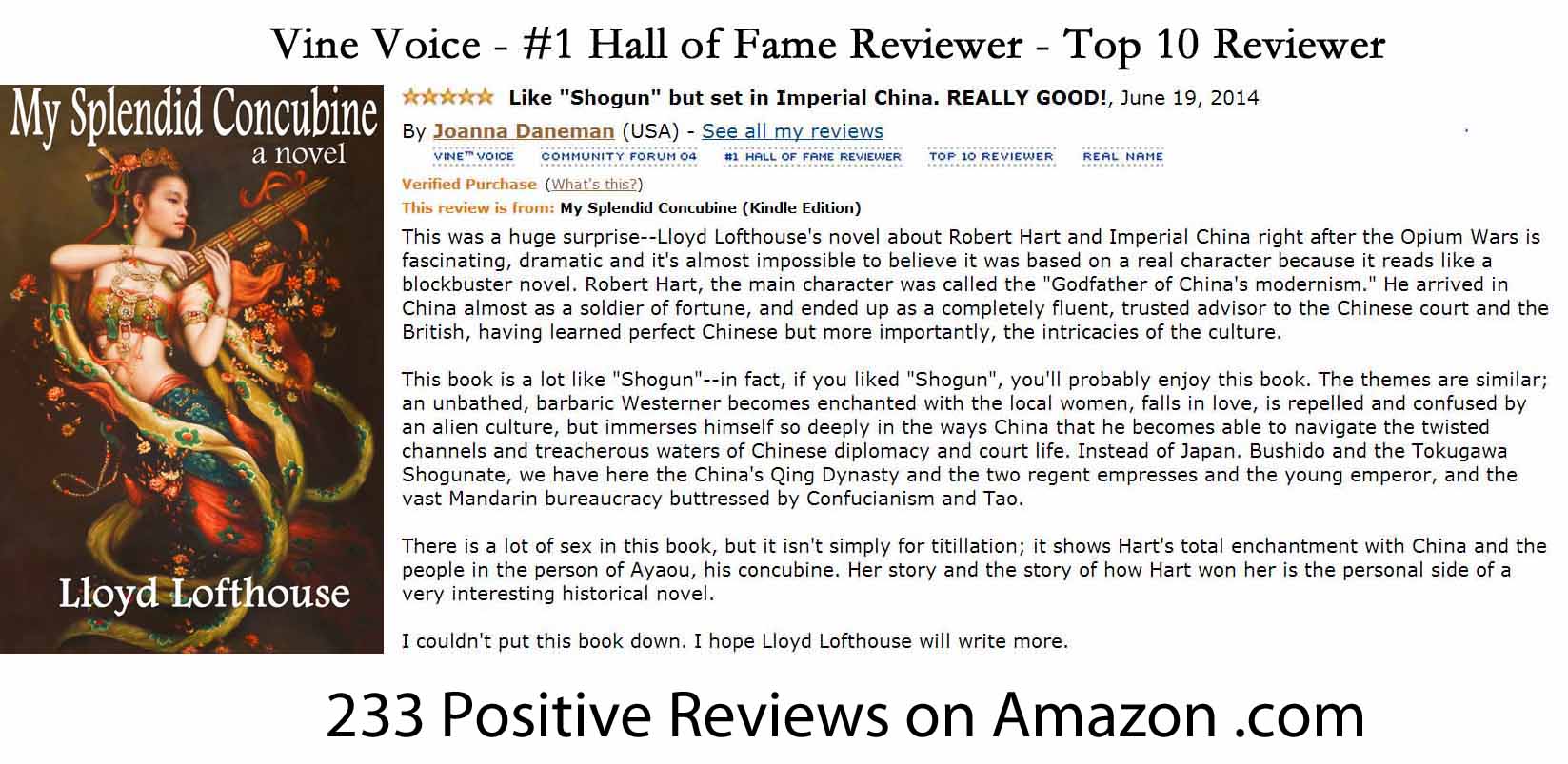
#1 - Joanna Daneman review posted June 19 2014

Where to Buy

Subscribe to “iLook China”!
Sign up for an E-mail Subscription at the top of this page, or click on the “Following” tab in the WordPress toolbar at the top of the screen.

About iLook China

China’s Holistic Historical Timeline


The Story of Silk

June 28, 2016

I’ve often heard about the Silk Road, but I was curious and wanted to know more about the history of silk so I did some Google research and discovered that silk has a long history in China.

For example, in 1984, silk fabric dating back more than 5000 years was found in Henan Province.


Worker makes silk cloth from a silkworm.

According to legend, Lei Zu, the queen of China’s legendary Yellow Emperor, was drinking a cup of tea beneath a mulberry tree one day when a silkworm cocoon fell into her cup. Further investigation revealed that the unraveling fibers were light and tough, ripe for spinning. Thus China’s silk industry was born.

What I didn’t know was that merchants from the Roman Empire sent ships by sea to China and traded directly with the Han Dynasty. It’s well known that China traded with India, the Persians and even Europe using a land route called the Silk Road across Asia. But this was the first time I heard of ships from Europe reaching China about two thousand years ago.

Ships from the Roman Empire first sailed to India and bought silk, which became very popular in Rome. In fact, purple silk was worth its weight in gold.

Eventually the Roman merchants set up trading posts all the way to China and reached Canton; then traded in Chang-Cheou near today’s Shanghai. – Romano-Chinese Relations

In fact, until 73 AD, the silk sea route was the only one open since the caravan routes along the Silk Road were closed at the time.

Roman Emperor Augustus Caesar (31 BC to 14 AD) earned credit for establishing trade between Rome and China.

In 166 AD, Roman travelers arrived at the Court of the Han Dynasty (206 BC – 219 AD) in Chang’an near today’s Xian. These Romans met powerful representative of the Han Dynasty.

About the same time, Buddhist missionaries arrived in China by ship from India and introduced Buddhism to China.

The next paragraph may sound as if history were repeating itself between the U.S. and China.

Romans spent recklessly. Gold left Rome and flowed to the East at such a rate that the government had to restrict imports. After a long period of prosperity in Rome, the empire entered a serious economic crisis.

Rome was bankrupt from its overspending and couldn’t maintain the hundreds of thousands of troops needed to protect the empire.

In 312 AD, Constantine moved the Roman capital to Constantinople.  In 395, the Roman Empire was divided between the Western and Eastern Empires. Then the Western Roman Empire collapsed in 476 AD ushering in what’s known as the Dark Ages in Europe (5th to the 15 centuries AD).

During this same period, the Tang (618 – 907 AD) and Song (960 – 1279 AD) Dynasties ushered in the golden age of China, and China was the wealthiest and most technologically advanced country on the Earth.  The long decline of imperial China’s started in the 15th century as the Renaissance was getting under way in Europe (14th – 17th centuries).

Lloyd Lofthouse is the award-winning author of My Splendid Concubine [3rd edition]. When you love a Chinese woman, you marry her family and culture too. This is the unique love story Sir Robert Hart did not want the world to discover.

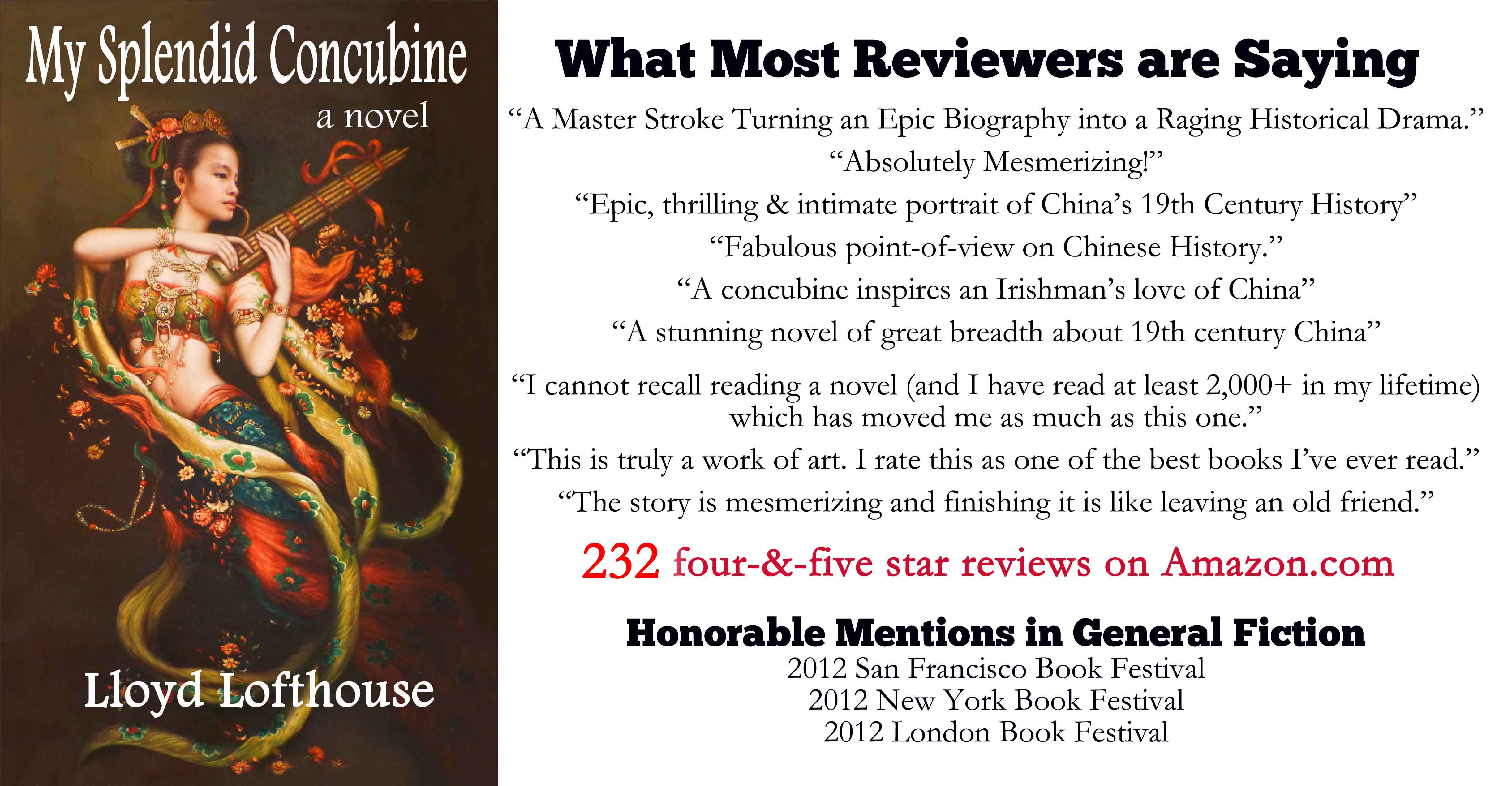
A1 on March 13 - 2016 Cover Image with BLurbs to promote novel

Where to Buy

Subscribe to “iLook China”!
Sign up for an E-mail Subscription at the top of this page, or click on the “Following” tab in the WordPress toolbar at the top of the screen.

About iLook China


Vietnam versus China – 207 BC to Today

June 21, 2016

Compared to China, the few years the U.S. fought in Vietnam is insignificant, and based on history, the United States learned its lesson to get out in a much shorter time span than it took China. And the French learned this lesson in a much shorter time span between 1946 and 1954.

China’s most recent conflict with Vietnam started on February 15, 1979, when China invaded Vietnam to teach it a lesson.

Why did China do this? Well, after the death of Stalin, relations between the Soviet Union and China turned sour while the Russians and the Vietnamese developed a closer relationship.

To counter this perceived threat, China encouraged Cambodia to take aggressive action against Vietnam. Near the end of 1978, the Cambodians under the leadership of Pol Pot launched a series of attacks along the Vietnam border.

The Vietnamese retaliated with armored units and captured the capital of Cambodia on January 7, 1979.

Since ten-thousand Chinese military advisers in Cambodia became prisoners, China lost face, and invaded Vietnam to “teach it a lesson”.

The Vietnamese decided to hold back their regular army and defend the border with militia units using guerilla tactics in the hills and rainforest similar to how they fought America, the French and China in the past.

China took heavy casualties after attacking and soon pulled its troops out 3 weeks and 6 days after crossing the border.  Both sides declared victory. Border clashes between Vietnam and China would continue until 1990.

One would think that China would have learned its lesson long ago, because China has a long and bloody history with Vietnam. The first Chinese invasion and occupation of Vietnam took place in 207 BC to 39 AD. The second occupation was from 43 to 544 AD.  The third was from 602 to 905 AD.  The fourth event was between 1407 to 1427 AD. During this long history of invasions and occupations by China, the Vietnamese rebelled repeatedly to drive the Chinese out and regain their independence as a country.

France ruled over Vietnam from 1862 until the Japanese invaded during World War II. The French would return in 1946 and fight the Vietnamese until 1954.

The US and Vietnam, once enemies during the American-Vietnam War (1961 – 1975), are now allied to block China’s territorial claims in the South China Sea.  – Goldsea Asian American News

I seriously think many leaders do not study history to avoid repeating the same mistakes made by others before them.

Lloyd Lofthouse is the award-winning author of My Splendid Concubine [3rd edition]. When you love a Chinese woman, you marry her family and culture too. This is the unique love story Sir Robert Hart did not want the world to discover.

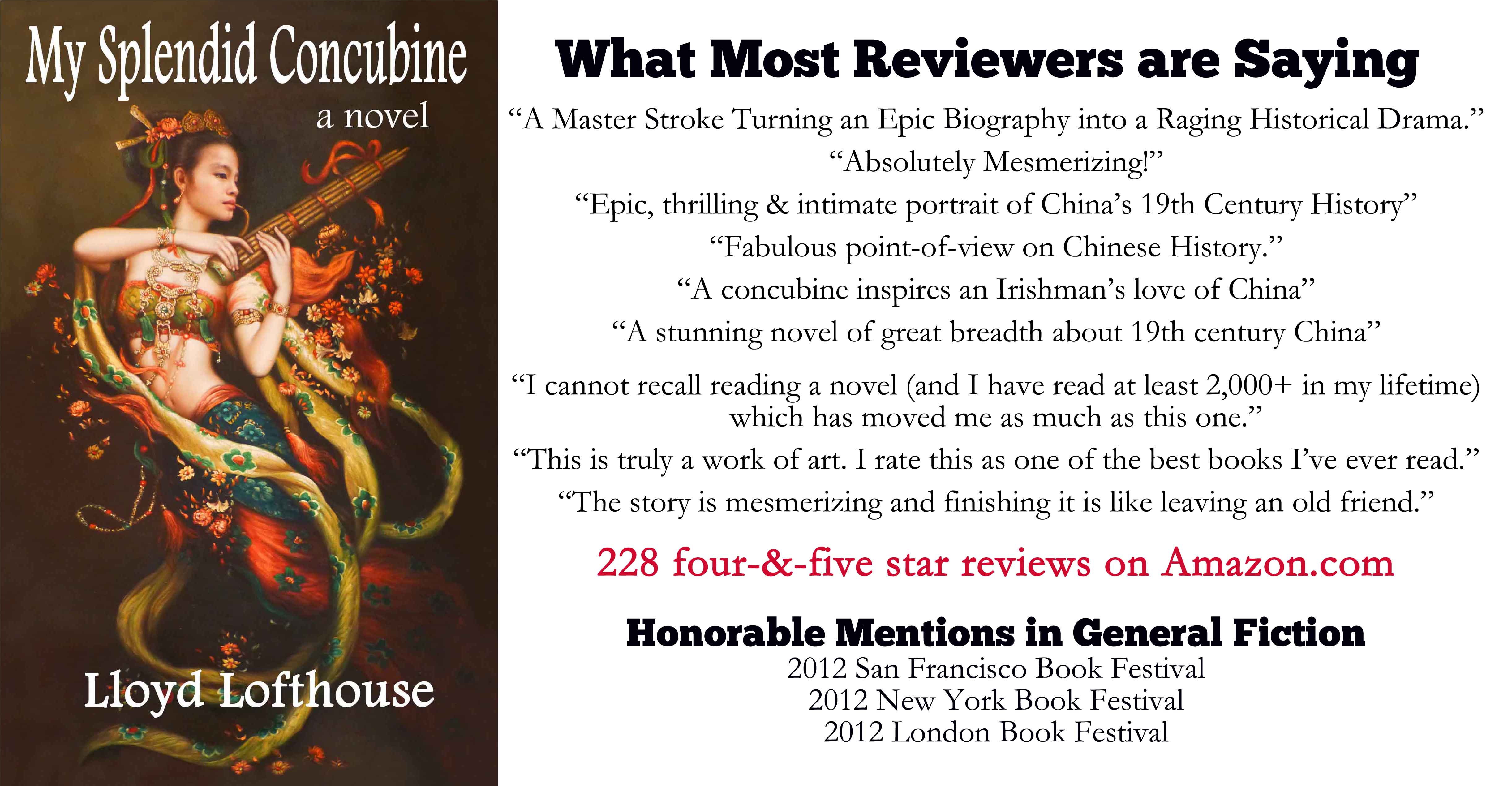
A1 on March 13 - 2016 Cover Image with BLurbs to promote novel

Where to Buy

Subscribe to “iLook China”!
Sign up for an E-mail Subscription at the top of this page, or click on the “Following” tab in the WordPress toolbar at the top of the screen.

About iLook China

China’s Holistic Historical Timeline


Was Hsi Wang Mu real?

June 14, 2016

To the Chinese, Hsi Wang Mu is the Queen Mother of the West (Western China), and she is an important figure in Chinese mythology.

It is believed that the myth of China’s Queen Mother goes back almost three thousand years, but the earliest recorded history was found from the Chou Dynasty (1122 – 222 BC) and was written in the second century BC. It appears that she may have been a real queen of a Western Chinese state and stories of her life become legend over the centuries turning into magical myths.

One of the older stories is about Hsi Wang Mu and the celestial archer, where she asks him to build her a palace of jade in the western sky. His reward was a pill made from the peaches of immortality, which ends in tragedy and heartbreak.

It is said that Hsi Wang Mu had nine sons and twenty-four daughters with her mate, Tung Wang Kung.

 Discover China’s First Emperor Qin Shi Huangdi

Lloyd Lofthouse is the award-winning author of My Splendid Concubine [3rd edition]. When you love a Chinese woman, you marry her family and culture too. This is the unique love story Sir Robert Hart did not want the world to discover.

A1 on March 13 - 2016 Cover Image with BLurbs to promote novel

Where to Buy

Subscribe to “iLook China”!
Sign up for an E-mail Subscription at the top of this page, or click on the “Following” tab in the WordPress toolbar at the top of the screen.

About iLook China

China’s Holistic Historical Timeline