The Concubine’s Journey

January 17, 2011

In 1999, I was introduced to two dead people. One was a white guy from Ireland that died a hundred years ago and the other was Ayaou, a Chinese woman that was a mystery since Robert Hart tried to erase her from his personal history.

I’m fortunate that Hart failed and traces of Ayaou survived.

Since I was a child of seven or eight, I’ve been writing stories. They were short with lots of bad drawings.

Soon after I was honorably discharged from the US Marine Corps in 1968, I took my first writing workshop at a community college. Then Ray Bradbury came to the campus to speak and although I never read his work, what he said inspired me to never stop writing.

Although I did receive a few encouraging rejections through the decades and was represented by two or three reputable agents before Amazon.com and eBooks were born, nothing I wrote was picked up by a traditional publisher.

Believing I wasn’t good enough, I decided to learn more of the writing craft by earning a BA in journalism. An MFA with a focus in twentieth century American literature came much later.

Between earning the two college degrees, I drove about 150 miles one day each week for seven years to attend a workshop out of UCLA’s writing extension program.

The teacher was a chain smoker with an explosive tempter but she was sharp and several of the writers in her workshop went on to publish their work. When she felt one of her students was ready, she went all out and even found an agent for the author. She found one for me, but that’s another story.
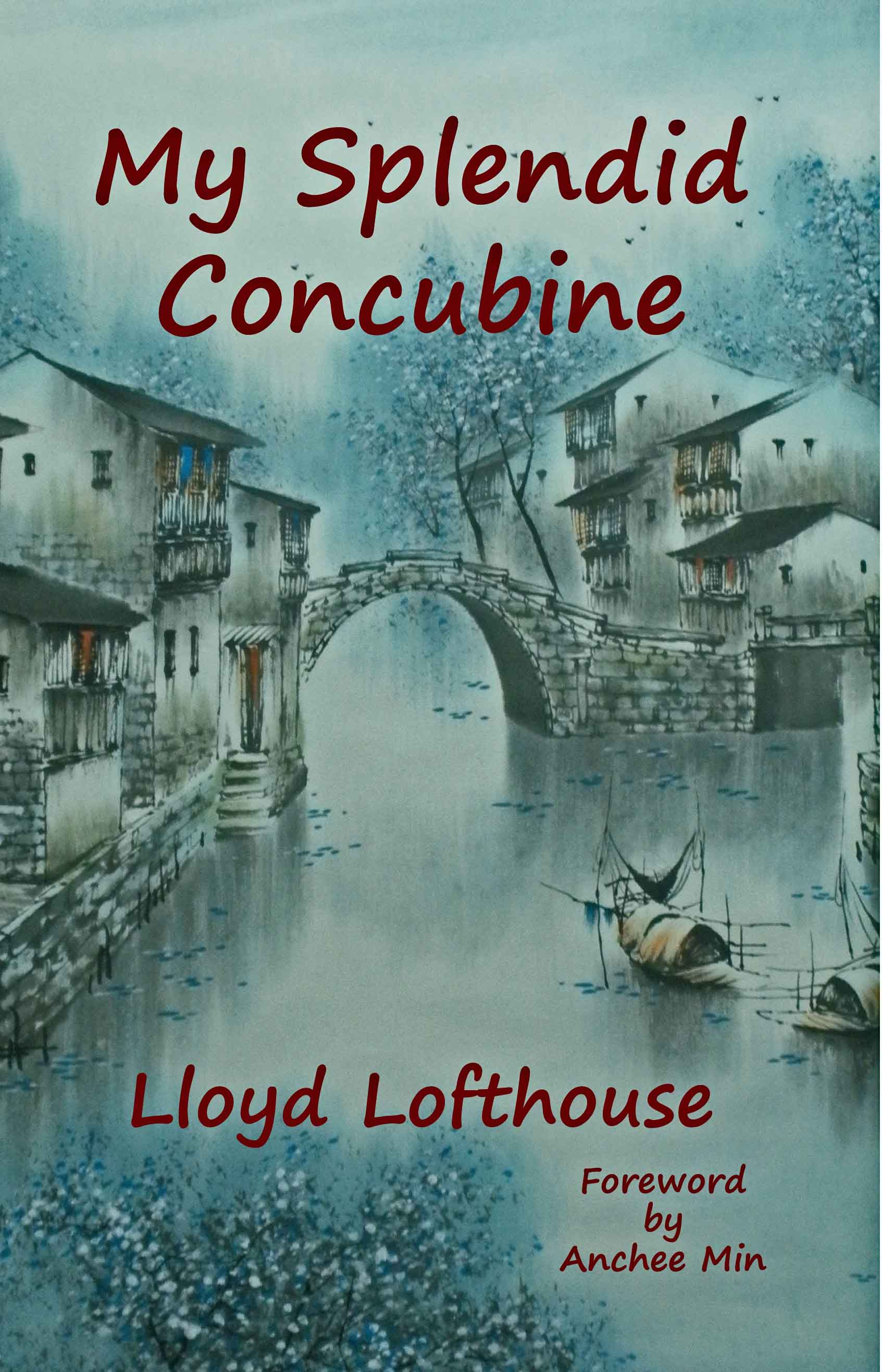
When I published My Splendid Concubine in 2008, I held my breath wondering if anyone would read it and enjoy the lusty, violent story of Robert Hart and Ayaou in the middle of 19th century China immersed in the smoke of the Opium Wars and the oceans of blood of the Taiping Rebellion.

On May 12, 2009, an Amazon reader, an anonymous person in Hong Kong, posted a one-star review of My Splendid Concubine.

The anonymous reader wrote, “As a great fan of Robert Hart’s, I was very eager to get my hands on this book. And what a huge disappointment it proved to be, for many reasons…”

One of those reasons was a “g” missing from one of five “Tang Dynasties” in the novel.

This one-star review was of the first edition. By the time it appeared on Amazon, the second revised edition was out and some of the anonymous reader’s complaints had been corrected.

In three years, My Splendid Concubine earned three honorable mentions in city book festival literary contests then Our Hart earned another four honorable mentions and became a finalist for a national writing award.

About a year ago, the sequel, Our Hart, was submitted to the 18th Annual Writer’s Digest Self-Published Book Awards.

Recently, an envelope arrived from Writer’s Digest.

Jessica Strawser, the editor of Writer’s Digest, wrote that the competition was particularly fierce this year…

Our Hart didn’t win.


This is the book trailer I produced in 2008 of the first edition of
My Splendid Concubine. My wife has been telling me I need a better one and to delete this version.


However, when you enter a book to this Writer’s Digest literary award, a judge writes a commentary of your work and ranks it for plot, grammar, character development, production quality and cover design, which helped dispel the criticism of that one-star review that discovered a missing “g” from one of five “Tang Dynasties” in My Splendid Concubine.

The Writer’s Digest judge, a professional in the publishing industry, awarded grammar a five with five being the highest score.

The judge wrote, “In Our Hart, Elegy for a Concubine, author Lloyd Lofthouse has penned an intriguing story set in an ancient Chinese dynasty. Political intrigue and matters of the heart are both fully explored. The book is meticulously researched and the author’s enthusiasm for his subject is evident.… The author has an ear for natural-sounding dialogue, making Our Hart an engaging read.… That said, readers who enjoy vicariously experiencing other times and cultures will find Our Hart a fascinating journey.”

______________

If you want to subscribe to iLook China, there is a “Subscribe” button at the top of the screen in the menu bar.


Confucius Returns

January 17, 2011

Anita Chang reporting for Associated Press in Beijing says, “There’s a new face keeping Chairman Mao company on Tiananmen Square.”

A bronze sculpture of Confucius now stands tall at 31 feet (9.5 meters) and is described as having a serious expression.

Chang writes, “Confucius is enjoying a revival, in books and films, on TV and in classrooms…”

For those who don’t know, Mao declared war on Confucianism and education during the Cultural Revolution.

My wife, who grew up in China during Mao’s era, still believes Confucian values for harmony and peace are what made China weak and a victim to Western Imperialism during the 19th century and to the Japanese during World War II. She may be right. At the time, China believed it was too civilized to worry and wasn’t prepared to defend itself as it is today.

However, she also says to pay attention to the small things the government does. Don’t expect Chinese to be as direct as Westerners.

There’s a strong message in Confucius standing opposite Mao across the vastness of Tiananmen Square as if he were scolding Mao for what he did and few mainland Chinese will miss it. Mao, the student, has been chastised and Tiger Mothers such as Amy Chua are being sent a message to stay tough with their children when it comes to having the kids eat bitterness and sacrifice having fun while working hard earning an education.

Confucius wouldn’t want it any other way.

Now that China is a capitalist/socialist nation with an open market economy, the need for Confucian values is making a comeback with government support. Confucius taught duty to family, respect for learning, virtuous behavior (three traits rare in the West) and obedience of individuals to the state.

What Chang doesn’t say is that Confucius also had expectations for the state to lead by example and to act the part of a gentleman. China’s leaders are aware that they are responsible to provide security for the nation and economic progress for the people in ways that most Western rulers would never consider.

Although China’s central government hasn’t launched a Western style public relations campaign to resurrect Confucian values, which are still a strong foundation for most Chinese families, Chang indicates that we will see some top leaders promoting Confucianism.

In fact, in 2010, a movie of Confucius with Chow Yun Fat was filmed and released in China.

There’s another message that most American weapons’ manufactures and conservative hawks won’t want the world to understand. If China is really moving back to Confucian values, that means China will not be the aggressor in war but will keep a modern military for defense only.

______________

Lloyd Lofthouse is the award-winning author of the concubine saga, My Splendid Concubine & Our Hart. When you love a Chinese woman, you marry her family and culture too.

If you want to subscribe to iLook China, there is a “Subscribe” button at the top of the screen in the menu bar.


Mark Zuckerberg Discovers China through Love

January 16, 2011

Near the end of December Mark Zuckerberg and his girlfriend/fiancé, Priscilla Chan, went to China on vacation.

There’s a saying, “You can take the Chinese out of China but you can’t take China out of the Chinese.” Priscilla is Chinese-American from the Boston suburbs — a Braintree native, who graduated from Quincy High School in 2003.

Most Chinese, even in America, stay close to their roots, which is Chinese culture. It’s easy to measure how close. From the evidence, Priscilla Chan, even if she doesn’t know it, is still very close to China’s culture. The clues are the fact that she speaks Cantonese along with English and Spanish.

I’ve learned that Cantonese is taught in some US schools. However, in China, Cantonese is a minority language found only in Guangzhou (Canton) a major city in Guangdong Province and Hong Kong, which is about seventy miles from Guangzhou.

My 80-year-old father in law, who is from Shanghai, says most of the people in Guangdong province outside Guangzhou (Canton) speak a different language/dialect and cannot understand Cantonese.

I thought Cantonese was also spoken in Taiwan but my father in law said no. He says the language in Taiwan comes from a province north of Hong Kong and is different from Cantonese and what is spoken in the rest of Guangdong province.

The odds are strong that Chan learned her Cantonese at home in Massachusetts from her family.  You see, most Chinese in America are Cantonese since it was easier to reach America through Hong Kong than other ports in China during the 19th and 20th centuries. If you visit San Francisco, most Chinese-Americans living there speak Cantonese.

The second clue that Chan is still true to her Chinese roots is she hasn’t lost her respect for education.  Most races and ethnicities are absorbed into American culture by the third or fourth generation and by then have lost any respect the old country may have had regarding working hard to earn an education.

The Jewish and Chinese hold onto the belief that education is more important than following your heart and having fun.

Chan graduated from Harvard in 2007 with a BA in biology and is nearing the end of graduate school at the University of California, San Francisco where she is majoring in medicine. To make it to Harvard Chan had to compete in school and most Americans will not compete for good grades.

I should know. I taught in the American public schools for thirty years and my best students were usually Asians. The rest were mostly too busy avoiding reading and homework while chasing dreams of becoming rich and famous but seldom achieving that goal later in life.

In fact, all of Asia, which are collective cultures as is China, has been influenced by the value the Chinese place on gaining an education.

The relationship between Zuckerberg and Chan insures that Zuckerberg, who is Jewish, which is also a collective culture with deep roots, will be influenced by his love of Chan to learn more of China meaning he will leave the Sinophobe stereotypes that surrounded him while growing up in America in the dumpster and will see China with different eyes than most in the US.

Zuckerberg even spent most of a year learning Mandarin before the vacation to China with the woman he loves, which is another clue how important this relationship is to him.

The Huffington Post, along with other Blogs and media, focused on Zuckerberg’s lunch with Baidu’s founder and CEO Robin Li as if there might be a business deal in the works.

I suspect it was a lunch between friends and Zuckerberg had a chance to practice his Mandarin with someone he trusted.

The New Yorker reported that Zuckerberg drives a lot to relax and unwind, his friends say, and usually ends up at Chan’s apartment (before they moved in together). They spend most weekends together; they walk in the park, go rowing (he insists that they go in separate boats and race), play bocce or the board game the Settlers of Catan. Sundays are reserved for Asian cuisine. They usually take a two-week trip abroad in December.

Zuckerberg’s trip to China in December was a vacation and was about bonding and love—not business and for sure if this couple has children, those children will grow up with a high regard for earning an education. Chan will see to that.

Learn more of Deep Family Roots

______________

Lloyd Lofthouse is the award-winning author of the concubine saga, My Splendid Concubine & Our Hart. When you love a Chinese woman, you marry her family and culture too.

If you want to subscribe to iLook China, there is a “Subscribe” button at the top of the screen in the menu bar.


Amy Chua Responds to Tiger Mother Comments and Critics

January 15, 2011

A Wall Street Journal Blog says, “On Saturday (January 8), Review ran an excerpt from Amy Chua’s new book Battle Hymn of the Tiger Mother. The article, titled Why Chinese Mothers Are Superior, attracted a lot of attention, generating more than 4,000 comments on wsj.com and around 100,000 comments on Facebook.”

Amy Chua’s response to that attention had already generated 387 comments as I was writing this post.

In fact, there was also a lot of energy in the Blogosphere with critics calling Chua a fascist and a child abuser while others supported her tough love style of mothering.

The Question and answer format of Amy Chua’s response is at the WSJ Ideas Market Blog.

At the end of the question and answer piece, The Wall Street Journal asked this question: “Which style of parenting is best for children?”

There were two choices:

A. Permissive Western parenting
B. Demanding Eastern Parenting

I was not surprised at the results since Amy’s Tough Love Tiger Mother method of raising her children is probably the norm for most of the globe with America being the exception.

Of 24,424 votes cast, Permissive Western Parenting earned 8,938 votes for 36.6% of the vote and Amy’s Demanding Eastern Parenting style earned 63.4% or 15,486 of the votes.

Historically and culturally, the Demanding Eastern Parenting method is common throughout all of Asia and may have spread from China over a period of more than 2,000 years starting with the Han Dynasty, which is when Confucianism was adopted as the dominant philosophy of life for China.

However, America’s Permissive Western Parenting style (born with the U.S. self-esteem movement) didn’t appear until about a decade after World War II and recent studies show it has serious flaws, which I feel could eventually bring down the American republic.

The Tough Love Tiger Mother approach to parenting has been around for more than two thousand years. I’d say that’s plenty of time to see if it works since it is older than Christianity and Islam. If you are curious to discover more reasons why the Tiger Mother approach works best, learn from In Defense of Tiger Mothers Everywhere.

______________

Lloyd Lofthouse is the award-winning author of the concubine saga, My Splendid Concubine & Our Hart. When you love a Chinese woman, you marry her family and culture too.

If you want to subscribe to iLook China, there is a “Subscribe” button at the top of the screen in the menu bar.


Eating Bitterness

January 15, 2011

Mainland Chinese are different. They are willing to eat more bitterness than others to learn.

The reason I’m writing this post is due to Amy Chua’s Essay in The Wall Street Journal and a response from Funny Little World where Nang Ngot wrote in a comment, “You can have a system like China that churns out smart but obedient drones. There, the collective behavior guides the intellect.”

Mainland Chinese are not obedient drones any more than all Christians, Jews, Muslims, Buddhists or Hindus are obedient drones within their cultures.

Within every culture, each person is an individual. In China, the difference is how the individuals see themselves in relation to the whole. That does not make them drones.

There’s even an ancient Chinese saying that supports being disobedient, which explains why the central government in Beijing is having so much trouble with corruption at the local level. “The emperor lives behind high walls and is a long ways from our village.”

In simple language this means, “What the emperor doesn’t know won’t hurt us.”

Where Jews and Christians have the Bible and Islam has the Quran, the Chinese have a culture governed by a mixture of Confucianism, Taoism and in part by Buddhism.

The Chinese do not need a temple, church or mosque to tell them what to believe and how to act.

Although there is no Confucian bible, the basic guide that Confucius left behind is as significant as the Ten Commandments, the Bible and the Quran.

In Chinese culture, those guidelines were designed for living a moral life and the family teaches the children as the child grows into an adult.

The Chinese family has done this for thousands of years until it became part of the culture, as Christianity is to the West and Islam is to the Middle East.

Stanford.edu says, “A hallmark of Confucius’ thought is his emphasis on education and study.”

Nicholas D. Kristof, writing for the New York Times, says, “Perhaps as a legacy of Confucianism, its citizens have shown a passion for education and self-improvement — along with remarkable capacity for discipline and hard work, what the Chinese call “chi ku,” or “eating bitterness”.

Kristof  is a two-time Pulitzer Prize winner. He graduated Phi Beta Kappa from Harvard College and then studied law at Oxford University on a Rhodes Scholarship, graduating with first class honors. He later studied Arabic in Cairo and Chinese in Taipei.

Kristof writes, “China used to be one of the most sexist societies in the world — with female infanticide, foot binding, and concubinage — but it turned a corner (in 1949 when Mao said women hold up half the sky) and now is remarkably good at giving opportunities to girls as well as boys….”

At China Education Center.com, I learned that many scholars believe the history of education in China started in the 16th century B.C., and Confucianism has had the largest impact on education for more than two thousand years of Chinese history.

In fact, during the Han Dynasty (206 BC – 219 AD) a form of public education was established. Not only for the elite but also for the common man so both would become better gentlemen.

In contrast, it wasn’t until 1918 that all states in the US had laws requiring children to attend at least elementary school. In 1900, only 6% of children graduated from high school. By 1996, 85% were graduating from high school.

Compared to China, the importance of earning an education in the United States is relatively new and doesn’t have as strong of a cultural component.

Discover more on this topic at Mean Chinese Supermoms are Right while Positive Self-Esteemism is Wrong

______________

Lloyd Lofthouse is the award-winning author of the concubine saga, My Splendid Concubine & Our Hart. When you love a Chinese woman, you marry her family and culture too.

If you want to subscribe to iLook China, there is a “Subscribe” button at the top of the screen in the menu bar.