China faces many challenges educating its youth. The Compulsory Education law took effect in 1986. In addition, because urban teachers continue to earn more than their rural counterparts do and because academic standards in the countryside are lower, it remains difficult to recruit teachers for rural areas, so China faces an acute shortage of qualified teachers.
It didn’t help that during Mao’s Cultural Revolution, the education system was gutted and literacy dropped to 20%. However, today, literacy is above 90% and improving.
After Mao’s death in 1976, Deng Xiaoping enacted gradual reforms that included not only the economy but education. One of the first changes was to get rid of Mao’s Little Red Book that inflamed a generation of radical youths during the Cultural Revolution. Today, dogmatic Party slogans have no place in China’s classrooms.
While Chinese education stood still for twenty-seven years under Mao, Western educational science evolved emphasizing critical thinking and problem solving skills over rote learning, and now China is learning those methods and introducing them slowly as teachers are trained.
One component of change sees hundreds of thousands of university students earning degrees in America and other Western nations and then taking that knowledge back to China. In fact, many children of China’s top leaders are attending universities in the West such as Harvard or Stanford.
The first schools to see changes were in Shanghai about 18 years ago, and the results were dramatic when fifteen-year-old Shanghai students took first place in every category in the 2009 international PISA test, which has components that test critical thinking and problem solving skills.
However, China’s central government was quick to announce that the rest of China would take about fifteen to twenty years to catch up to Shanghai.
I understand that over the doorway of classrooms in Shanghai are signs that says something like “there is more than one answers for each question” and the dogmatic methods used for centuries are being phased out as teachers are retrained but change is slow and the challenges many. Teaching an old dog new tricks is not easy.
I taught in Taiwan, where, like China, schooling is test-based, geared toward entrance exams, and bolstered by rote memorization. School days are long (8 to 13 hours), homework received in heaps, and evenings, if free, filled with cram-school classes.
The goal is admission to National Taiwan University, nationally number 1. Globally, it has a Times Higher Education World University Ranking of 115.
In that index’s top 100, China has only 3 entries. Australia has 5, America 52. China’s flagship, Peking University, is ranked 37.
“More than one possible answer,” is great, but I wonder how China can transition to Western education without belittling Confucian principles. I also wonder about returning students, who sometimes find it difficult to assimilate after Western exposure. Returning scientists have said it’s most important to report what superiors want to hear, and that they are powerless to change things. Change requires freedom; freedom is impossible.
Most students in collective Confucian cultures have no problems learning from Western educational techniques while surviving the influence of Western values after returning home.
In Singapore, Confucian beliefs are so autocratic, parents face harsh penalties and jail time if a student’s schoolwork suffers. In addition, Singapore students face caning when breaking rules, yet fifteen-year-old students in Singapore placed fifth in the 2009 international PISA test.
In fact, among the top eleven nations that scored significantly above the OECD average in the PISA test, five were cultures influenced by Confucius.
Shanghai-China placed first, South Korea second, Hong Kong-China fourth, Singapore fifth and Japan eighth, while the US placed seventeenth.
In addition, the US may have 52 of the top 100 universities but 62% of foreign students attending US universities are from countries influenced by Confucius, and Doctoral-level institutions, for example, reported an increase of 130 percent, on average, in Chinese students.
Lloyd Lofthouse is the award-winning author of The Concubine Saga. When you love a Chinese woman, you marry her family and culture too. This is the love story Sir Robert Hart did not want the world to discover.
Subscribe to “iLook China” Sign up for an E-mail Subscription at the top of this page.
My wife and daughter returned from China last summer with a crate of Chinese movies on DVDs—there wasn’t one American movie in the mix and many do not have English subtitles.
Therefore, it is strange that the one Chinese film that impressed me the most (so far) was one I discovered at a local Half Priced Books. The movie was Life Show (2002) adapted from a book by Chinese author Chi Li.
Since the late 1980s, Chi Li has been considered a pioneer of “new realism” and her work depicts ordinary life in China so critics have identified her work with the Western school of “existentialism”.
In fact, it was the “ordinary element” of her work that I saw in the film which captured my curiosity to learn more. Since I’ve traveled to China several times since 1999 and not with tour groups, I’ve visited streets similar to the ones that appear in the film. I’m sure most foreign visitors to China that visit on packaged tours do not see the ordinary side of China as I have.
My wife says Chi Li is one of her favorite Chinese authors. The first time I was introduced to Chi Li’s work was through Life Show, which tells the story of Lai Shuangyang, a restaurant owner played by Tao Hong. Shuangyang’s life is busy dealing with family and business but she is lonely until one of her long-time customers, played by Tao Zeru, shows a romantic interest in her.
Zeru plays a middle-aged businessman, and Shuangyang takes a risk and the two strike up a romance that ends when she discovers he is the developer behind the modernization of the area where she has her restaurant. He offers to take care of her but it is obvious that Shuangyang values her personal freedom and independence and in a fiery scene, she breaks up with him.
Lai Shuangyang’s life is filled with complications. Her younger brother Jiuju is a drug addict in jail/rehab. The woman that loves Jiuju is Mei, who works for Shuangyang in her restaurant. Mei attempts suicide because Jiuju is not interested in her, and then Shuangyang arranged a marriage for Mei to another man, who is mentally ill.
Her sister in law, Xiaojin, is trying to regain the Lai family’s home, which was given to a neighbor during the Cultural Revolution. In addition, Shuangyang is at risk of losing her restaurant due to a redevelopment project in Wuhan.
Chi Li, the author of Life Show, is one of China’s best-known writers and several of her novels have been translated into French by publisher Actes Sud.
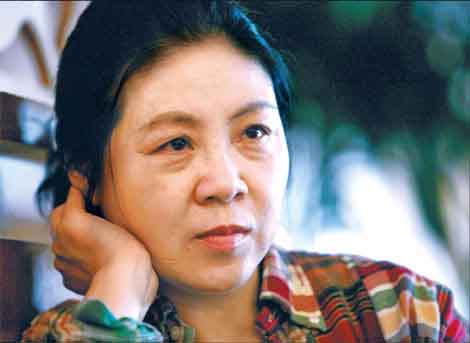
Chi Li was born 1957 in Wuhan, Hubei province, graduated from the Chinese Language Department of Wuhan University and then worked as an editor of a literary magazine called Fang Cao (Fragrant Grass).
Chi Li rarely travels and avoids “literary circles”. “If my unsociability is thought to be a flaw, I admit I’m a person with a flaw,” Chi has said.
Chi Li, Chinese author of "Life Show"
During the Cultural Revolution, like millions of other young Chinese, she was sent to the countryside to become an “educated youth”. Later she studied medicine and practiced for five years before becoming a teacher.
Today, she is a member of the National People’s Congress (NPC), which provides an opportunity to discuss politics with other representative of the NPC providing an understanding/education of China’s policies and political atmosphere.
Chi Li’s work relates to love, marriage, divorce and extramarital affairs of contemporary Chinese life, while her characters are imbued with common human traits such as ambition, deceit, jealousy, and sexual desire. Her work, Comes and Goes, was a story of extramarital affairs occurring in Wuhan and became a TV series of same name.
The city of Wuhan comes alive in her work—enough to be considered a character. Although many of her novels have been translated into French, there are no English translations yet, which is a shame.
Lloyd Lofthouse is the award-winning author of The Concubine Saga. When you love a Chinese woman, you marry her family and culture too. This is the love story Sir Robert Hart did not want the world to discover.
Subscribe to “iLook China” Sign up for an E-mail Subscription at the top of this page.
In addition, at Answers Yahoo.com, Genxi asked, “Why do Americans lack filial piety? At the international level, filial piety is very common… After all, parents definitely would care and protect their children unquestionably—ideal condition—, but why can’t adult Americans have filial piety toward their ageing parents in exchange?” (the few responses to this question are interesting)
However, anyone that believes Confucianism may define China might be surprised to discover that Legalism, Buddhism, Taoism, Islam, Christianity, etc have also influenced the foundation and moral structure of China’s culture. While China has always had a diversity of religious beliefs, filial piety has been common to almost all of them and it worked.
The result, for more than two-thousand years, China was the wealthiest and most powerful, technologically advanced nation on the planet until the 19th century.
As for the United States, back in January 2010, I read a post at Parent Base.com that said any damn fool can be a parent, and although I agree, I thought North America is not a comfortable place to be if you become a geezer.
Our daughter called me a geezer once, which means a man who is (usually) old and/or eccentric, when she was joking around during her early high school years. She was not raised to be a narcissistic self-esteem child but knowing many American children that were raised to have high self-esteem did rub off resulting in that rude comment.
Today, she attends Stanford and the degree of respect she demonstrates for older family members is reassuring. I hope the self-esteem residue wore off.
When I was a child, youngsters were to be seen and not heard, which means we treated our elders with respect, and surprise of surprises, I was born in America and I am a Caucasian of British/Irish ancestry. I’m not Asian or Chinese so I suspect piety was once widespread in American/Western culture but during the 20th century suffered a steep decline.
One exception would be the Amish community in the United States. The Amish are a stark contrast to the American concept of individualism—not only do the Amish encourage reciprocal family assistance but the entire Amish community is responsible for helping each other, including the elderly. According to Reuters, the US Amish population grew 86% to 231,000 in 2008 from 125,000 in 1992 and is set to double by 2026.
However, the Amish are not the norm. After the spread of television, the birth of Disneyland, fast food, MTV, the Internet and the iPod generation, a cancer called self-esteem spread through much of American culture. That self-esteem youth worshiping virus killed off much of the ‘respect’ for one’s elders among many of America’s youth.
In China, what America seems to have lost survives and is the norm. In addition, in Asian countries such as the Philippians, South Korea, Vietnam, Singapore, etc., piety is still strong and is learned in the family—not from a pulpit.
Collins English Dictionary (Harper Collins Publishing) says piety is a devotion and obedience to parents and superiors and says it (piety) is “now rare” (in the West).
In fact, a comment left by an “Aussie in China” on another post verifies that piety is still taught in most Chinese families since piety plays a significant role in the morality of China.
Aussie in China said, “from my experience here, I would argue strongly that there is a commendable level of morality among many of the young Chinese. The issues of morality are well drummed into them at school and at home.”
The decline of the “first of all virtues” in the West first appeared during the 1960s with the spread of the self-esteem movement among American parents. The history of this movement goes back to the late 19th century and by the 1960s, it permeated American culture in addition to many of its private and public schools.
The America of today is not the America prior to World War II, and the United States owes its greatness to that previous generation, which was not raised to have high self-esteem and spurn piety and family values.
One example of this moral decline in the US happened to me one night during the summer of 2008 when a pack of young boys taunted me as they raced in and out of our steep driveway on bicycles.
“Hey, old man,” one boy shouted, “you can’t stop us.”
I called the police and filed a report, and the next day walked the neighborhood door to door seeking support to stop the harassment that had gone on for two years—mostly during the summers when school was out and these children had nothing better to do but run wild without proper parental/adult supervision.
These boys wanted to race their bikes down our steep driveway for a cheap thrill, and I dared to tell them not to do it so they defied me as often as possible.
The reason why I didn’t want them playing in our driveway is because the United States has become a litigation nation and if one of those boys hurt himself on our property, the parents might take us to court and possibly destroy us financially—even take our home from us.
When I talked to the mother of one of these boys, she asked, “What was your reason for not letting them play on your driveway?”
Did I need a reason?
Since the episode with that gang of boys (I’m sure they all had a high sense of self-esteem), that mother who thought I needed a reason to keep them off our driveway, doesn’t talk to me or acknowledge that I am alive if we pass each other on the street.
After all, I ratted out her precious, perfect, wild child and called the police on his pack of young friends. In addition, one of the other boys argued with me the first time I politely asked them to go elsewhere for their thrills.
Of course, as a teacher for thirty years, I’ve heard American parents say, “kids will be kids” to explain this sort of behavior.
However, I do not accept that excuse for defiance, lack of respect, rudeness and unruly behavior. In fact, the way children act is often linked to how parents raise them and children raised by self-esteem obsessed parents are often the worst ones, while children raised to value piety, which means respect and obedience to parents and superiors/adults, are often the best.
In reading a post at Always on the Verge, I discovered a misguided individual that inadvertently advocates a world overrun by noisy children that do what they want whenever they want wherever they want.
The author of the post says, “I have always had issues with this saying (children should be seen and not heard). However, that Blogger called “Webbhouston” does not consider that being quiet around adults is also a sign of respect for those older people that go to work daily to feed the family and pay for a roof over their heads to avoid becoming homeless and hungry.
That, by itself, should be enough for children to learn to keep quiet around adults. Children are not an alien species. They are humans, but when they are born, they are wild animals that parents and adults, such as teachers, tame and train to fit into society.
A cartoon (used for educational purposes only) that dramatically illustrates the decline of piety and family values in America.
I searched for a Blog that talks about teachers being abused by students and found thousands that did nothing but bash teachers. Then I found Who’s to Blame … (a dim light in the wilderness of blame the teacher).
It seems that only a few people in the West care what happens to teachers (Finland may be the only country in the West where teachers are given the respect they deserve and Finland’s education system is one of the best in the world. In Fact, the World’s Happiness Index from Forbes.com places Finland second of 155 countries as the happiest place to live).
Then months after I first wrote this post, which appeared January 2010 as a nine part series, I launched Crazy Normal – the Classroom Expose, another Blog to help fill that lack of support for teachers in the US.
Then there was a second incident I experienced that further demonstrates the loss of piety and family values in American culture.
During the summer of 2007, we had just pulled into a motel parking lot in Southern California after driving several hundred miles. A teen with his girlfriend wanted to rent a room for an hour at the same motel. As we waited to check in, we heard the motel manager say, “No way!”
The boy turned to me, and asked, “Hey, old man, can you give us a ride to the next motel? They will not rent us a room here.”
I’m sure this adolescent was out for quick sex. He probably didn’t even know the girl’s name or care. Nevertheless, the lack of respect was obvious.
Today, it is as if adults are expected to be invisible and silent while youngsters get whatever they want such as a TV, Internet connection and video games in the child’s bedroom.
In most of North America, we have spawned more than one generation of narcissists with no respect for piety or understanding of what family values means and many are now giving birth to the next generation.
More than twenty-four hundred years ago, Confucius dedicated his life to the moral training of his culture. He lived during the Warring States period before China was unified. Living with all of that violence and death, he dreamed of a land where people could live happily and harmoniously together.
To learn more about Confucius and piety, check out this site at the Journal for International Relations. I’m not saying what Confucius taught was perfect but it has served China well for thousands of years and still plays a vital role in that complex culture.
Confucius said, “The reason why the gentleman teaches filial piety is not because it is to be seen in the home and everyday life. He teaches filial piety in order that man may respect all those who are fathers in the world.
“He teaches brotherliness in the younger brother, in order that man may respect all those who are elder brothers in the world. He teaches the duty of the subject, in order that man may respect all who are rulers.
“Those who love their parents dare not show hatred to others.” Confucius taught. “Those who respect their parents dare not show rudeness to others…”
While visiting China, I have never heard, “Hey, old man.”
However, there are always exceptions when it comes to piety. Even in China, there will be the occasional rude individual. The thing is, I haven’t seen or heard one yet, and I have visited China many times since 1999.
I did have a disrespectful, American born Asian student (once) during the thirty years I was a teacher.
I also had a small number of hard-working, respectful students from all ethnic groups—even those that were American born, but those types seem to be a dying breed.
My best students were usually immigrants that came to the United States after living in their birth country for several years where the word “self-esteem” was never heard and parents taught the value of piety instead.
In addition, I had one American born student enter high school as a freshman after being home taught by his Caucasian, conservative Christian parents. He was a great person—polite and he worked hard to further his education.
It was obvious that piety and/or family values had been instilled in this one individual by his parents, a daunting task in a country obsessed with stuffing a high sense of self-esteem in its youth.
______________
Lloyd Lofthouse is the award-winning author of The Concubine Saga. When you love a Chinese woman, you marry her family and culture too. This is the love story Sir Robert Hart did not want the world to discover.
Subscribe to “iLook China” Sign up for an E-mail Subscription at the top of this page.
I found it interesting that the dead linked both America’s Halloween and the Chinese Hungry Ghost Festival — at least historically.
As a child growing up in America, I loved wearing a costume on Halloween and going out “trick-or-treating” at night to return home with a heavy bag (usually a pillowcase) filled with candy.
I still remember how much my stomach hurt and how horrible I felt after gorging myself on all that free candy.
Today, due to the epidemic of diabetes and overweight or obese children in the United States, I do not celebrate Halloween and do not give candy to children. The last time I gave treats to children on Halloween, I handed out small boxes of raisins (sweet dried grapes) instead of candy, and one mother called me cheap.
However, in my defense, Science Daily.com says, “Teenagers who consume a lot of added sugars in soft drinks and foods may have poor cholesterol profiles — which may possibly lead to heart disease in adulthood, according to first-of-its-kind research reported in Circulation: Journal of the American Heart Association.”
In addition, the Centers for Disease Control and Prevention says, “Teenagers and young adults consume more sugar drinks than other age groups and have been linked to poor diet quality, weight gain, obesity, and, in adults and children, type 2 diabetes.”
Then the Mayo Clinic says, “Type 2 diabetes used to be called adult-onset diabetes. But type 2 diabetes in children is on the rise, fueled largely by the obesity epidemic,” and the American Diabetes Association says, “25.8 million children and adults in the US have diabetes while 79 million have prediabetes.
Americans are Addicted to Sugars
“Due to excessive sugar consumption, the risk of diabetes may lead to heart disease, stroke, high blood pressure, blindness, kidney disease, nervous system disease, and/or amputation of feet and legs.”
America could learn something from the Chinese Hungry Ghost Festival. Do not feed sugar-loaded candy to children on Halloween. Instead, give the sugar to the dead and go eat an apple.
Lloyd Lofthouse is the award-winning author of The Concubine Saga. When you love a Chinese woman, you marry her family and culture too. This is the love story Sir Robert Hart did not want the world to discover.
Subscribe to iLook China — there is an “E-mail Subscription” link at the top of the screen.
Pub Med Central provides a better history of the one-child policy.
“In 1979, the one-child family policy was developed and implemented in response to concerns about the social and economic consequences of continued rapid population growth,” Pub Med said, and, “implementation was more successful in urban areas than rural areas.”
Pub Med says, “It was hoped that third and higher order births could be eliminated and that about 30% of couples might agree to forgo a second child… In some of the largest and most advanced cities like Shanghai, sizeable proportions of couples already chose to have only one child (regardless of the law).
“As a result, it was not long before 90 percent of couples in urban areas were (easily) persuaded to restrict their families to a single child.”
However, Pub Med says, in rural areas of China the opposite happened, and 90 percent of women with one child went on to have a second (regardless of the law) and there wasn’t much the Communist Party could do to stop them.
AP’s Louise Watt writes, “Under China’s one-child policy in place for the last three decades to control population growth, couples can be penalized for having more than one child. In Beijing, the penalty is a one-off fee 3-10 times the city’s average income, a maximum of 250,000 yuan ($40,000).”
Watt also tells us that among the 20,000 Chinese with at least 100 million yuan ($15 million) 27 percent have already left China and 47 percent are considering it, and they want to leave so they can have more children on the cheap and buy land that does not belong to the government.
These wealthy Chinese Louise Watt writes of may be surprised to discover that if the U.S. wants to build a school, park, freeway or shopping center, and your house is in the way, it will be bought and bulldozed.
The law for this is called Eminent Doman and 60 Minutes at CBS Newsreported on possible abuses of this in the United States in February 2009. Rebecca Leung of CBS News wrote, “But did you know the government can also seize your land for private use if they can prove that doing it will serve what’s called ‘the public good’?”
In addition, it would be interesting to discover if some or all of the wealthy Chinese claiming to have left China to have more children and buy a home left for other reasons they are not talking of.
In The Danger of False Truths, I mentioned that thousands of corrupt Chinese officials stole more than $120-billion U.S. and fled overseas—and the U.S. was a top destination.
If so, the real reason many of these “wealthy” Chinese left China may have been to avoid going to prison or being executed.
In addition to Eminent Domain, if an American cannot pay the annual property tax or income tax in the United States, the house will be lost to the government. I estimate that the property tax I paid since I first owned a home in 1973 would have paid the penalty for a dozen extra children in China.
In fact, due to property tax, no one really owns their homes in America and everyone is just a tenant, and the U.S. Government is the landlord. In China, they call it like it is, while in the US, most people believe in fairy tales.
And if you were worth $15 million dollars and wanted a second or third child, $40,000 a child would not dent that fortune. In addition, in China when someone buys a house for that 70-year lease, the property tax is paid only once at the time of the purchase and currently there is no law that says you have to pay any property tax again unless it is an investment property.
When these rich Chinese arrive in the US and buy a million dollar house, they will be paying property tax annually. Taxes on land and the buildings on it are the biggest source of revenue for local governments.
In California, for example, property tax for a million dollar house costs about $10,000 a year, and forty years of property tax would cost about a half million dollars, which is much more than $40,000 for the second child and another $40,000 for the third child.
Maybe Louisa Watt should have also mentioned that U.S. citizenship is for sale for foreign millionaires and the details may be found at All Voices.com, and most Americans could not afford this legal bribe (sorry, I meant deal).
In fact, there’s a lot about China’s one-child policy that Louise Watt isn’t revealing, and what she writes may have to do with America’s busy-body, do as I say morality, which interferes as often as possible in the domestic philosophies and affairs of other countries—something China does not do.
For decades, China’s one-child policy has been criticized in America and/or the West mostly by evangelical, fundamentalist Christians that represent one of American’s squeaky wheels with a political agenda to force their beliefs on others.
However, what these critics do not know may shock them, but I doubt if it will deter their misguided zeal.
In the September/October 2011 issue of Foreign Policy magazine, Phillip Longman wrote The World Will Be More Crowded With Old People, and said, “Another related megatrend is the rapid change in the size, structure, and nature of the family. In many countries such as Germany, Japan, Russia, and South Korea, the one-child family is now becoming the norm (without a law)… Today about one in five people in advanced Western countries, including the United States, remains childless.”
AP’s Louise Watt also doesn’t tell us the one-child policy does not apply to the hundred million people in China that belong to one of the fifty-six minorities or many of the Han Chinese living in rural China where most Chinese don’t pay property tax, rent or a mortgage payment since the land is owned collectively and may not be sold.
Since minorities in China are a small segment of the population, China’s government practices flexibility with the minority birth rate in order to keep minorities an important part of China’s culture.
For example, Tibetans may not live the feudal, nomadic lifestyle with the 35-year lifespan they once had under the Dalai Lama (the average lifespan in Tibet today is more than 60 without the Dalai Lama), which they had before Mao sent the People’s Liberation Army (PLA) into Tibet in 1950.
Isn’t it horrible how the Tibetans were forced to give up that shorter average lifespan and feudal servitude?
However, as a minority, Tibetans may have as many children as they want and the penalty Louise Watt writes of does not exist for them.
We often hear of the Uighur Muslims since this minority has an Islamic separatist movement in the northwest near Afghanistan where the US is fighting a war against a similar insurgency, but the Uighurs are a minority so the one-child policy also does not apply them, and they are not the only Muslims in China.
The Hui are unique among the fifty-six officially recognized minorities of China in that Islam is their only unifying identity. They do not have a unique language as the other minorities do and often intermarry with Han Chinese.
In fact, many live outside the Hui autonomous region. Since the Hui are considered a minority, the one-child policy also does not apply to them.
The Chinese government says if it weren’t for the one-child policy, there would be another four-hundred million mouths to feed and provide shelter for. Instead of 1.3 billion people in China, there would be almost 2 billion—more than six times the population of the US, and China cannot grow crops on about 90% of its land.
Chinese law allows married couples in Shanghai that are both the only child of their parents to have two children even if they are Han Chinese.
To make sure these married couples are aware of this exception, China provides support from government run family planning centers that check on women’s health and inform them of their rights and responsibilities to have more than one child.
The Shanghai government encourages married couples eligible to have more than one child to do so, which, in Shanghai, means most married couples.
The Shanghai Family Planning Commission first promoted this policy in 2009. The reason for this campaign lies in Shanghai’s population demographics.
Because of the one-child policy, Shanghai has been particularly hard hit by an age disparity, and 22 percent of the citizens of Shanghai are over sixty and these numbers are expected to grow.
Xu Xihua, the director of Shanghai’s Aging Development Center says that by adjusting the one-child policy in Shanghai, this disparity in ages can be partially reduced and giving couples an opportunity to have two children is part of the plan.
However, the central government stresses it is not abandoning its family planning policies or its control over the number of births. Fear of overpopulation and potential famines remains high in a country that has a history of droughts, floods and famines, which is something the U.S. has not yet experienced in its brief history.
France 24 International Newsalso reported how one Chinese couple wanted to have more than one child and the couple took advantage of loopholes in the one-child policy to have three.
The mother’s first child was a boy, and she was desperate to have a girl.
Since fines are less for a second child if delivered in a remote rural province, the couple moved south.
However, the mother discovered she was pregnant again soon after the birth of the second child, which was a girl, and the doctor told her that because of health reasons she couldn’t have an abortion.
And recently, authorities in China’s most populous province have asked Beijing to ease the one-child policy.
In addition,wealthy Chinese businessmen, television and movie stars often avoid the one-child policy since they have money to pay the fine Louise Watt writes of in her AP piece, and ten percent of rich Chinese have an average of three children and this practice is spreading among the upper-middle class. Since they stay in China, these wealthy Chinese avoid paying annual property tax in America.
Peng Xizhe, dean of social development and public policy at Fudan University, says “In the Maoist era everyone was controlled by his work unit. It’s over now. Many workers are independent. It becomes more and more difficult for the government to pressure people to having only one child.”
In fact, according to some experts, China will adopt a two-child policy in several years.
However, unexpected problems besides an aging population may have developed from the one-child policy, which is explained by a NPR All Things Considered report by Louisa Lim’s Lightning Divorces Strike China’s ME Generation.
Lim says Beijing has the highest divorce rate in China with 39 percent of all marriages ending in a split.
One Beijing woman, Cheng, tells Lim of her six-month marriage that ended as fast as it started. Cheng blamed the divorce on belonging to the generation of spoiled singletons (one-child), known as the post-1980’s generation.
Dr. Perry, a professor of economics and finance in the US, agrees that the upsurge in China’s divorce rate is because of the selfish and narcissistic generation of spoiled one-child children in China (have you already forgotten that many of these urban parents decided to have only one child before or in spite of the law).
But hold on, there may be another explanation why Beijing’s divorce rate is soaring. Eight years ago, a married couple needed permission from their work unit to divorce. Today, couples have the freedom to divorce in China without asking.
Although it may be difficult to link China’s changing divorce rate to the one-child policy, there is another outcome that cannot be denied.
China may have cut off a foot to save its stomach from starvation.
Studies predict that China will soon be short 24 million wives. It doesn’t matter that it is illegal in China to take a test for non-medical reasons that determines the sex of the fetus.
Since China’s culture traditionally prefers boys to girls, many parents go to underground private clinics to find out what the sex of the fetus is. If it is a girl, many terminate the pregnany with an illegal abortion.
The results is a growing shortage of women leading to illegal forced marriages and prostitution (sex slaves), which is a challenge for the police and courts to deal with.
After you learn more of the details of China’s one-child policy, you discover that it was a law without many teeth and didn’t deserve the criticism it received, which leads to the conclusion that the American and/or West’s reaction is due mostly to racist Sinophobia.
______________
Lloyd Lofthouse is the award-winning author of The Concubine Saga. When you love a Chinese woman, you marry her family and culture too. This is the love story Sir Robert Hart did not want the world to discover.
To subscribe to “iLook China”, look for the “Subscribe” button at the top of the screen in the menu bar, click on it then follow directions.


 Posted by Lloyd Lofthouse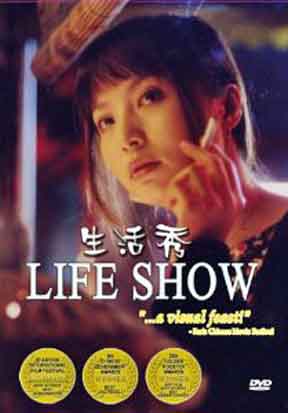

 iLook China