Visiting The Great Wall – Part 2/3

July 24, 2012

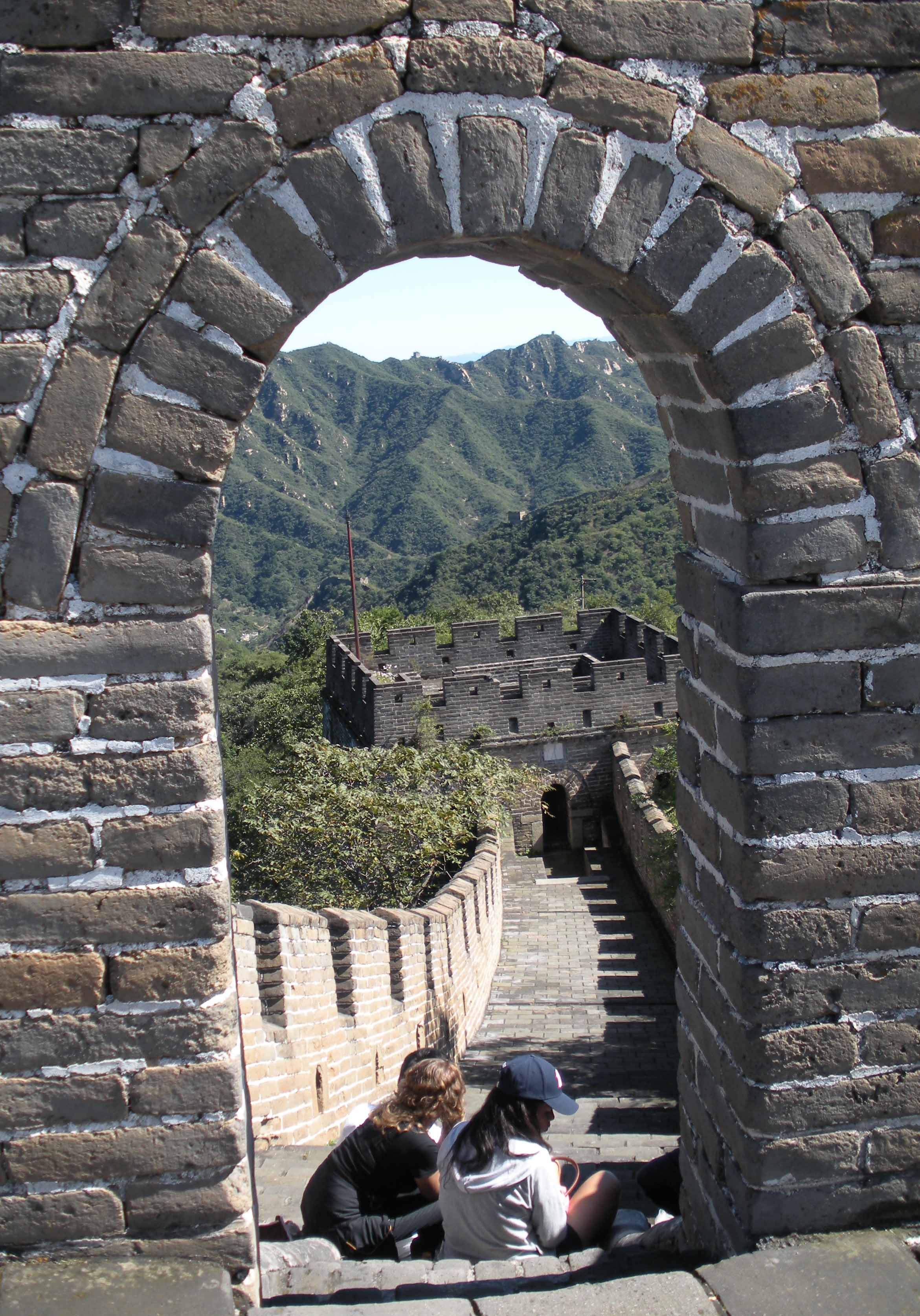
In 1999, I visited the The Great Wall for the first time.  We returned to visit a different section in 2008. The second time, I carried a digital camera (a few of those photos appear with this post)
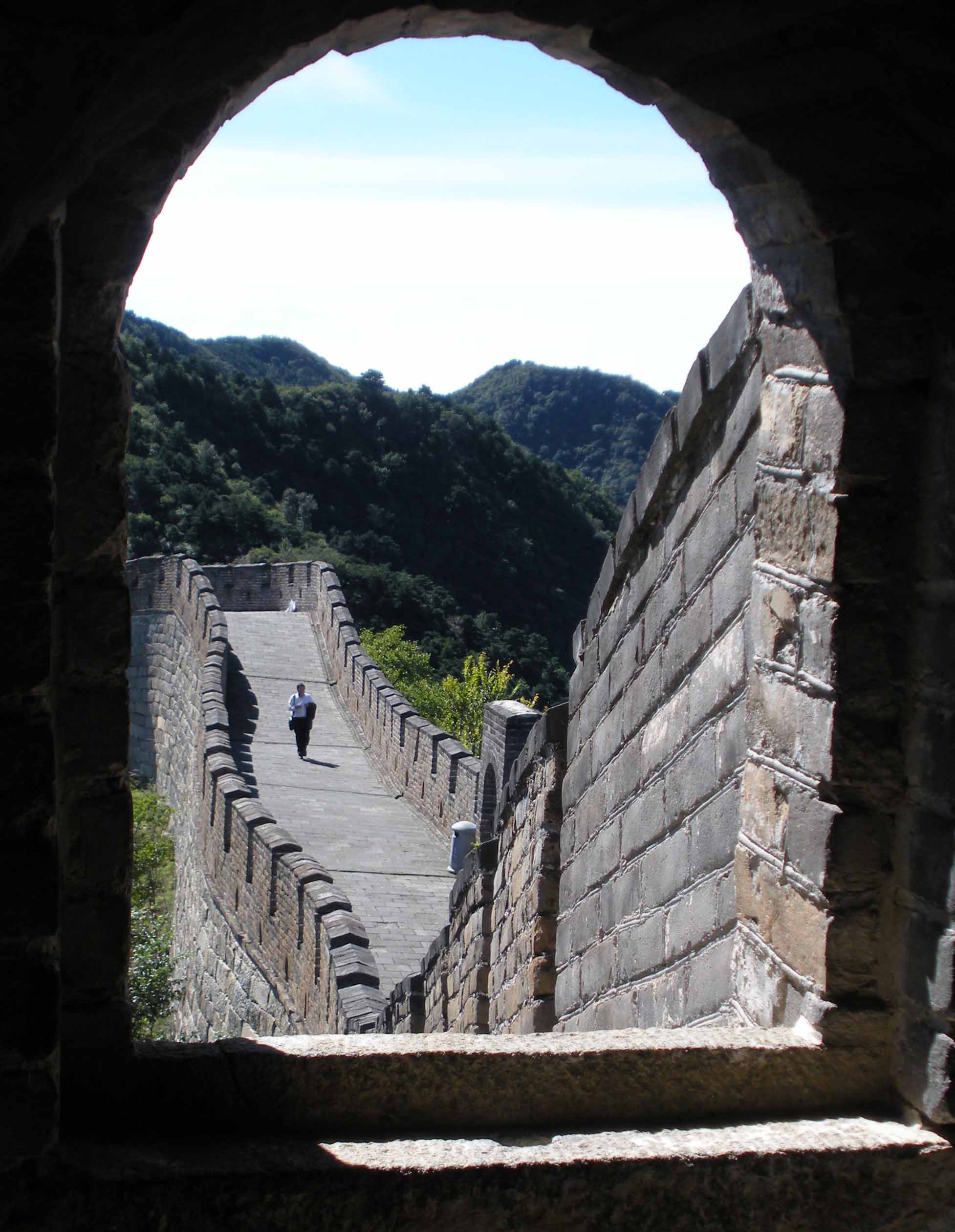
Smithsonian Magazine reported, “Few cultural landmarks symbolize the sweep of a nation’s history more powerfully than the Great Wall of China. Constructed by a succession of imperial dynasties over 2,000 years, the network of barriers, towers and fortifications expanded over the centuries, defining and defending the outer limits of Chinese civilization. At the height of its importance during the Ming dynasty (1368-1644), the Great Wall is believed to have extended some 4,000 miles, the distance from New York to Milan.
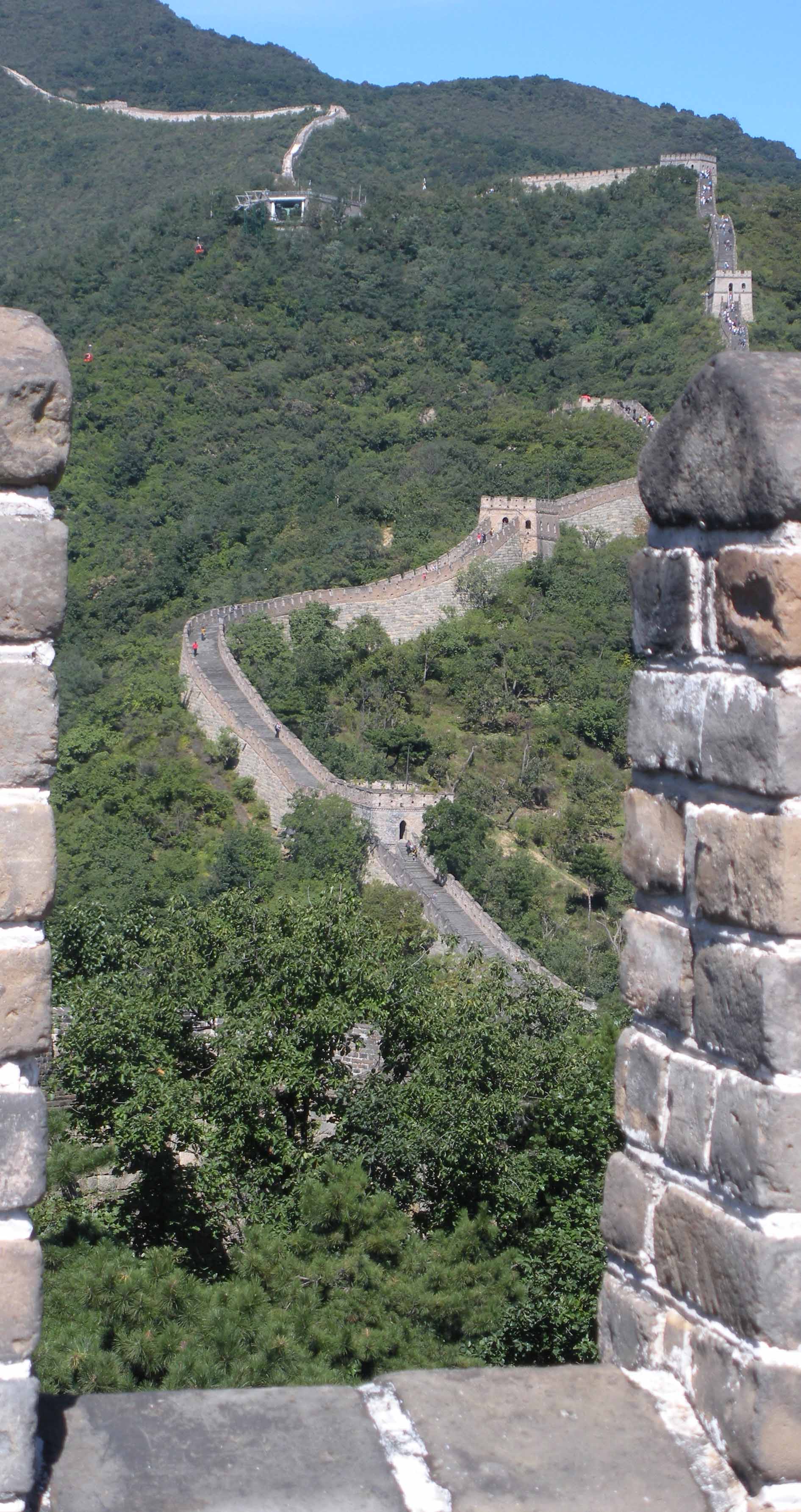
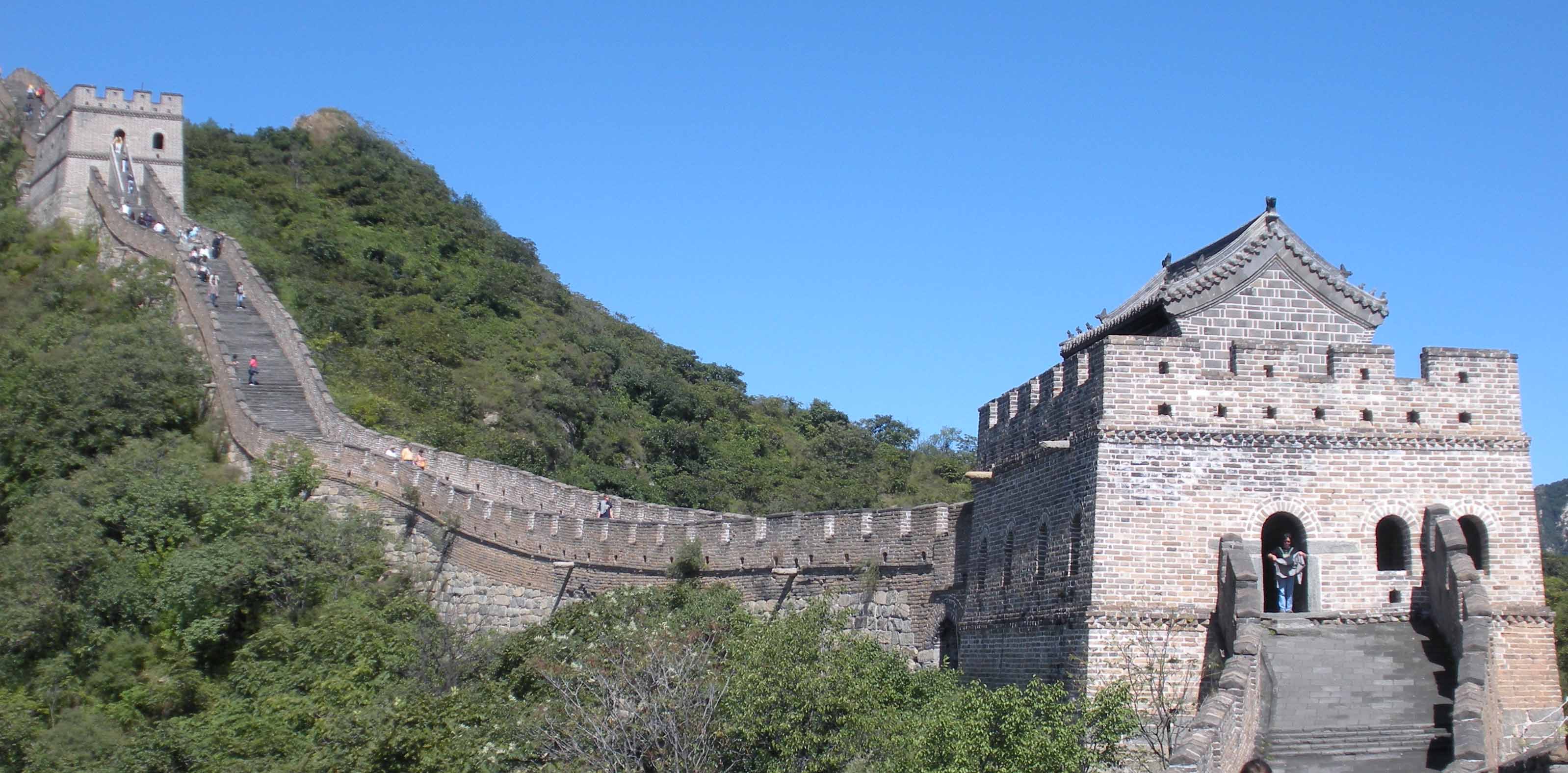
The sections of the Great Wall we visited are about an hour out of Beijing. The most popular site is at Badaling.  The second choice, Mutianyu, is more dramatic. This portion of the Great Wall runs along the ridge of a mountain range. Badaling, meanwhile, is in a mountain pass.

The best way to reach the Great Wall is by taxi or bus. After you get there, you will discover the usual tourist shops. Since I enjoy haggling, I spend time shopping.
At Badaling, there were camels and horses you could pay a fee to sit on while having your photo taken.

Once you reach Mutianyu, you have a choice—take a few hours to climb the mountain to The Wall or ride a ski lift to the top in fifteen minutes.

China’s Great Wall was not built by one emperor. It was built in segments by the kings of several nations over a period of centuries. In addition, the wall was completed and linked together by China’s first emperor in 221 BC.

When you are on the wall, if you get thirsty or yearn for a snack, there are venders that carried their goods often using horses.
Once you are ready to leave the Great Wall at Mutianyu, the toboggan ride is worth the price.( see the embedded video with this post)

Continued on July 25, 2012 in Visiting The Great Wall – Part 3 or return to Part 1

______________

Lloyd Lofthouse is the award-winning author of The Concubine Saga. When you love a Chinese woman, you marry her family and culture too. This is the love story Sir Robert Hart did not want the world to discover.

Subscribe to “iLook China”!
Sign up for an E-mail Subscription at the top of this page, or click on the “Following” tab in the WordPress toolbar at the top of the screen.

About iLook China


Visiting The Great Wall – Part 1/3

July 23, 2012

Like so much about China, The Great Wall is also the victim of myths and lies.

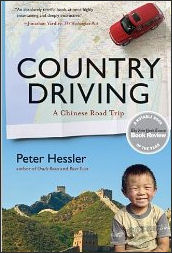
I’m reading Peter Hessler’s “Country Driving“, which is a great book that I plan to review when I finish it. However, his first chapter covers the months he spent driving the length of the Great Wall all the way to Tibet.

In fact, before there was one wall, there were many—all built by different kingdoms before China was unified under Qin Shi Huangdi in 221 BC.

Although I’m enjoying all of Hessler’s memoir, the hundred and twenty-two pages that focus on the Great Walls are the best part of the book.

Before reading Hessler’s memoir, I wrongly believed, as so many others do, that The Great Wall was a failure as a defense against invaders.  However, Hessler proves that myth wrong.  For the most part, the wall did keep marauders out.

In fact, on page 116 of the paperback, he quotes David Spindler who found evidence that the Ming Great Wall actually worked as a defensive structure.

The Wall failed when the unified Mongols invaded China in the 13th century but it didn’t happen overnight. It took sixty years for the Mongols to conquor all of China.

Before Genghis Khan unified the Mongols, there was no unified Mongolia—only nomadic tribes that fought amongst each other and raided into China whenever one or more tribes decided on a whim—that is if they could fight their way past the Great Wall guarding China’s heartland.

In section one of “Country Driving”, The Wall, Hessler points out that no archeologists/historians have studied the history of The Great Wall but there are amateurs that have, both Western and Chinese and these Great Wall amateur (experts) have discovered original documents written by Ming Dynasty military officers and troops detailing the defense of the wall against nomads intent on raiding into China to loot, rape and steal. According to this information, the wall served its purpose more often than not.

Continued on July 24, 2012 in Visiting The Great Wall – Part 2

Note: I wrote this post about two months ago and scheduled it to appear July 23 before I finished reading Hessler’s memoir. Then after I wrote the review, I scheduled it to appear before this post appeared. You may find the review here: Country Driving in China with Peter Hessler

I often write and schedule posts weeks in advance with the goal to stay one month ahead. That way I may take a few days off now and then from writing posts.

______________

Lloyd Lofthouse is the award-winning author of The Concubine Saga. When you love a Chinese woman, you marry her family and culture too. This is the love story Sir Robert Hart did not want the world to discover.

Subscribe to “iLook China”!
Sign up for an E-mail Subscription at the top of this page, or click on the “Following” tab in the WordPress toolbar at the top of the screen.

About iLook China


Country Driving in China with Peter Hessler – Part 2/2

May 29, 2012

In the first 122 pages of Country Driving, Peter Hessler sets out to drive the entire length of the Great Wall in a rented Chinese made Jeep Cherokee and he achieves his goal. In this section, I learned that the Wall was successful most of the time and not the failure historians claim it was. Yes, in several thousand years, the wall failed a few times but it served its purpose and did protect China’s heartland for centuries. Hessler says that there is no archaeologist in the world that has studied the history of the Great Wall but wrote there are amateur experts (we meet a few in this section along with a unique view of rural China) that have proven through historical research that the wall did work.

In Part II, Hessler takes us into a small village a few hours drive outside Beijing where he rents a house and becomes accepted by the insular-rural village community making friends and becoming involved personally with local families. The man that becomes his closest contact and friend in the village eventually joins the CCP (there are only about 80 million members in China) and then uses this to his advantage as he continues to improve the quality of his family’s lifestyle.

In Part III, Hessler travels to the city of Winzhou in Southern China where he spends time developing relationships with factory bosses and workers.  In this section, the Chinese people he meets are open and friendly. Hessler sees a side of China that few witness and it is obvious that the factory workers are not victims because of low pay and long hours of work but see this new life as an opportunity.


Peter Hessler discussing his novel “Oracle Bones”

When I finished Hessler’s memoir, I walked away feeling as if I had experienced an in-depth taste of the dramatic changes that have taken place in China since Mao’s death in 1976. Since China’s critics mostly focus on the negative, which is the corruption and/or authoritarian one-party system, and never admit the good that the CCP has accomplished, most people would not understand what I discovered.  To understand what I mean, one must compare China before 1949 with today by reading such books as those written by Hessler and his wife.

Before 1949, more than 90% of the people in China lived in severe poverty, more than 80% were illiterate, the average lifespan was 35, few people owned land, and the risk of death from famine had been an annual threat for more than two thousand years. In fact, most rural Chinese were treated as if they were beasts of burden and not human.

Today, about 13% live in severe poverty and those people mostly live in remote, rugged, difficult to reach areas of China.  The lifespan is now about 73 years and Helen H. Wang writing for Forbes.com (February 2011) reported that China’s middle class is already larger than the entire population of the United States and is expected to reach 800 million in fifteen years (2026). In addition, no one has died of famine since 1959-1961.

I highly recommend Country Living for anyone that wants to learn more about today’s dramatically changing China from an unbiased perspective.

Return to Country Driving in China with Peter Hessler – Part 1

______________

Lloyd Lofthouse is the award-winning author of The Concubine Saga. When you love a Chinese woman, you marry her family and culture too. This is the love story Sir Robert Hart did not want the world to discover.

Subscribe to “iLook China”!
Sign up for an E-mail Subscription at the top of this page, or click on the “Following” tab in the WordPress toolbar at the top of the screen.

About iLook China


Country Driving in China with Peter Hessler – Part 1/2

May 28, 2012

Most books that I’ve read of China cover its history up to Mao’s death and after 1949, it is difficult to trust almost anything one reads in the West or in China, since most of this work is either biased and/or propagandized in the West or propaganda in China since the mass media is owned by the State.

However, I’m glad that I read Peter Hessler’s memoir of China, Country Driving. Rarely does Hessler intrude with his own Western bias (if there is one), which appears to make a slight appearance near the end. I suspect that his editor at Harper Collins suggested that he add it to the story, and he complied, because the few opinions he expresses near the conclusion of his memoir do not match the experiences that he shares with his readers in the rest of the book. In fact, while reading the book, I grew to trust Hessler’s perspective of today’s China.

It is obvious that Hessler honestly loves/respects China and its people and this infatuation runs throughout the memoir. He also carefully or unintentionally avoids mention of what he thinks about his own culture, which made me wonder if there is a lot he doesn’t respect about his homeland.

Maybe the reason why he continues to return to China is because of this infatuation with a culture that values family more than most Americans do.  In fact, in the memoir’s acknowledgements, I discovered that Hessler was married to Leslie T. Chang, which even my wife—a Chinese immigrant to the US, whose first book, a memoir of growing up during Mao’s Cultural Revolution, was a New York Times Notable Book of the Year—didn’t know.


Leslie Chang discussing her novel “Factory Girls”

Hessler’s wife is the author of Factory Girls, which is also about today’s China. Chang is Chinese-American and a graduate of Harvard. She is also an accomplished journalist and was raised outside New York City by immigrant parents, who forced her to attend Saturday-morning Chinese school, which is so Chinese.

For example, our daughter speaks Mandarin fluently and she was born in Chicago and is a product of the US public schools but with an immigrant mother and an American step father (me), which may explain (in part) why she is completing her second year at Stanford currently majoring in biology instead of trying out for American Idol while waiting tables in a Hollywood coffee shop.

Both Peter and Leslie have published work that went on to be honored as New York Times Notable Books.

Anyway, back to Country Driving. Much of Hessler’s memoir was connected to projects he wrote at The New Yorker or National Geographic. The memoir is divided into three sections:  Book I, The Wall; Book II, The Village, and Book III, The Factory.

Throughout the book there is a common theme: the independence and individuality of most Chinese and the failure of Chinese Communist Party (CCP) propaganda, which is there but often ignored by most of the people unless they can use the CCP to their own advantage.  That doesn’t mean the propaganda has no influence but the people seldom let it get in their way as they work to improve the quality of their lives.

In fact, it becomes clear in Hessler’s memoir that there are three Chinas: there is rural China, urban China and the Chinese Communist Party and many shades of gray among them.

Continued on May 29, 2012 in Country Driving in China with Peter Hessler – Part 2

______________

Lloyd Lofthouse is the award-winning author of The Concubine Saga. When you love a Chinese woman, you marry her family and culture too. This is the love story Sir Robert Hart did not want the world to discover.

Subscribe to “iLook China”!
Sign up for an E-mail Subscription at the top of this page, or click on the “Following” tab in the WordPress toolbar at the top of the screen.

About iLook China


Harlequin Romance Invades China – a guest post by Tom Carter

April 30, 2012

Growing up in a rural, slate-roofed village deep in the countryside of southeast China, the only English books my Chinese wife had to read back then were a brittle copy of Tess of the d’Urbervilles and a set of Harlequin novels.

Yes, I’m talking about Harlequin, those pulpy paperbacks found on revolving wire racks at supermarket checkout aisles across North America and the UK. Their enticing cover art – usually, nay, always featuring shirtless, square-jawed men hovering millimeters away from the glistening-red lips of a damsel in distress – and formulaic flirt/fight/fall-in-love storylines mercilessly targeted housewives and secretaries longing for a 200-page escape from the dirty diapers and pot-bellied husbands of their mid-life realities.

As it turns out, it was by reading books like “Stormy Voyage” by Sally Wentworth and Roberta Leigh’s “Two-Timing Man” (bought used for 7 RMB out of a sidewalk vendor’s book cart), amongst other Harlequin classics, that my wife managed to teach herself English (which explains her tendency to throw her head back dramatically whenever we kiss).

Curious how Harlequin, the forbidden fruit of literature, could be found anywhere in a Communist republic that has the world’s most strict state-sponsored vetting process for publications, I was surprised to learn that in 1995 (about when my fiancée found her copies) Harlequin received official, red star-stamped permission to place half a million copies of twenty titles in Mandarin and a quarter-million copies of ten English versions on the shelves of Xinhua.

Harlequin’s stated goal: “to bring romance to millions of Chinese Women.”

A China.org article on the increasing popularity of romance books in the P.R.C. concurred with Harlequin’s audacious move: “Chinese women today have new demands for their Prince Charming: first, he must be powerful and distinguished…next, he must have unlimited financial resources.”

Wosai! No wonder China has become home to the world’s highest surplus of single men!

Harlequin, which puts out 1,500 new titles annually in over 100 international markets, has yet to think up a romance set in present-day China (Possible storyline: wealthy, second-generation Beijing businessman seduces sexy xiaojie with his shiny black Audie, pleather man-purse and a thick stack of redbacks; he agrees to save her Anhui village from being bulldozed by corrupt cadres if she will become his kept woman.).

Until that day, we will have to entertain ourselves with stories set in China’s olden times starring princesses and concubines.

____________________________

Travel Photographer Tom Carter traveled for 2 years across the 33 provinces of China to show the diversity of Chinese people in China: Portrait of a People, the most comprehensive photography book on modern China published by a single author.

Subscribe to “iLook China”
Sign up for an E-mail Subscription at the top of this page.

About iLook China

Note: This guest post first appeared December 8, 2010