Earning Gold from Dead Tibetan Caterpillars

October 9, 2013

Mary Jenkins writes in the May 2010 National Geographic about Tibetan cowboys and Chinese-made motorcycles in his Tea Horse Road piece unwittingly revealing the truth about Tibetan life under Chinese rule.

The Tibetan cowboys, who once used horses, now use motorcycles to tend their flocks. On the way to 17,756-foot Nubgang Pass, Jenkins passes the black yak-hair tents of Tibetan nomads, and sees big Chinese trucks or Land Cruisers parked outside. He wonders how poor Tibetans can afford such luxuries. Aren’t they supposed to be suffering?

I think, “Maybe they are smuggling drugs into China from India”.  As I read on, I learn I’m wrong.

On his way back from the pass, Jenkins discovers these Tibetan cowboys have found wealth in their high grasslands from parasite infected caterpillars called Yartsa Gompo in Tibet and Chong Cao in China.  These dead caterpillars sell to Chinese medicine shops throughout Asia for as much as 80 dollars a gram—more than the price for a gram of gold.

Why?

The Chinese and Tibetans think these dead caterpillars are a cure-all medicine that also acts as an aphrodisiac boosting sexual performance—just what China needs with its population of almost 1.4 billion.

_______________

Lloyd Lofthouse is the award-winning author of My Splendid Concubine [3rd edition]. When you love a Chinese woman, you marry her family and culture too. This is the love story Sir Robert Hart did not want the world to discover.

His latest novel is the multiple-award winning Running with the Enemy.

Subscribe to “iLook China”!
Sign up for an E-mail Subscription at the top of this page, or click on the “Following” tab in the WordPress toolbar at the top of the screen.

About iLook China

China’s Holistic Historical Timeline


A brief history of silk: Part 1 of 2

August 27, 2013

I read an Associated Press piece by Mansur Mirovalev about silk’s so-called dark side where Uzbek children had to work and grow cocoons.


Silkworms in a Chinese silk factory

However, that’s not what this post is about.  I will say this. I didn’t see much that was wrong in Mirovalev’s piece about what was taking place in Uzbekistan. About a century ago, American children once worked in the fields alongside their parents. I see nothing wrong with that.

In fact, for most of history, children were just seen as smaller people and had to work just like adults did.


Worker makes silk cloth from a silkworm.

I’ve often read about the Silk Road, but I was curious and wanted to know more about the history of silk so I did some Google research and discovered that silk has a long history in China.

For example, in 1984, silk fabric dating back more than 5000 years was found in Henan Province.


How silk is made.

According to legend, Lei Zu, the queen of China’s legendary Yellow Emperor, was drinking a cup of tea beneath a mulberry tree one day when a silkworm cocoon fell into her cup. Further investigation revealed that the unraveling fibers were light and tough, ripe for spinning. Thus China’s silk industry was born.

What I didn’t know was that merchants from the Roman Empire sent ships by sea to China and traded directly with the Han Dynasty. It’s well known that China traded with India, the Persians and even Europe using a land route called the silk road across Asia. But this was the first time I heard of ships from Europe reaching China about two thousand years ago.

Continued on August 29, 2013 in A brief history of silk: Part 2

Discover A Millennia of History at a Silk Road Oasis

_______________

Lloyd Lofthouse is the award-winning author of My Splendid Concubine [3rd edition]. When you love a Chinese woman, you marry her family and culture too. This is the love story Sir Robert Hart did not want the world to discover.

His latest novel is the multiple-award winning Running with the Enemy.

Subscribe to “iLook China”!
Sign up for an E-mail Subscription at the top of this page, or click on the “Following” tab in the WordPress toolbar at the top of the screen.

About iLook China

China’s Holistic Historical Timeline


Li River Cruise 2008

June 27, 2013

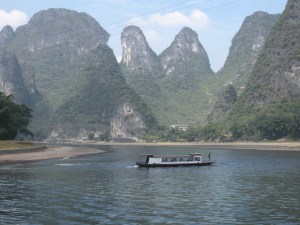
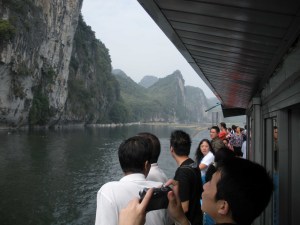
Southeast China near Vietnam and Laos is a beautiful area to visit.  The air is clean. The sky blue. One morning, we left the hotel early to join a river cruise along the Li River. Click on the photos for a larger view.

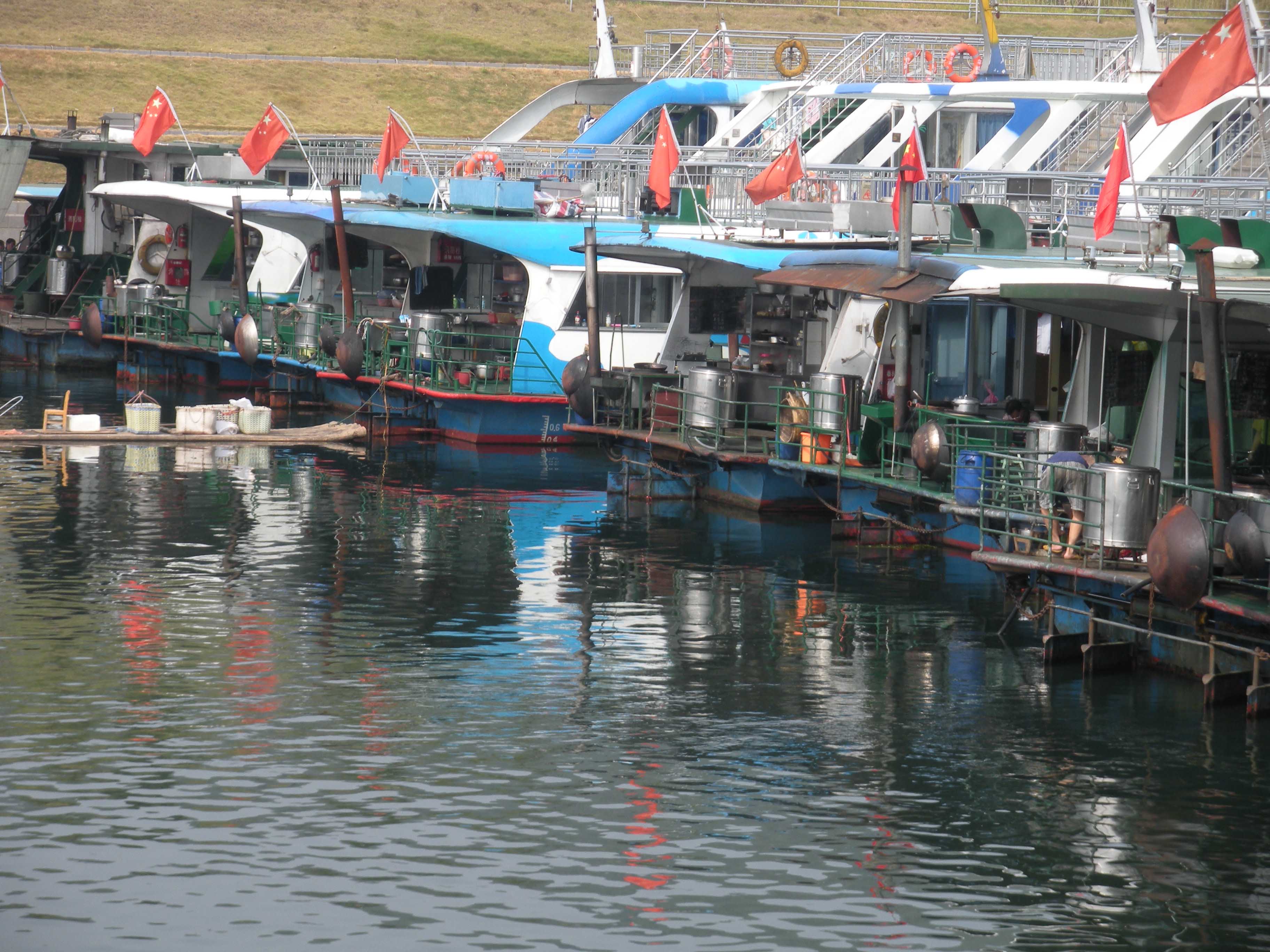
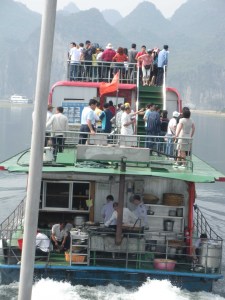
Soon after leaving the dock, I snapped this shot of the boat in front of ours. While the tourists were on the upper decks, the cooks were preparing lunch.  The dinning room is in the large, first-deck cabin.

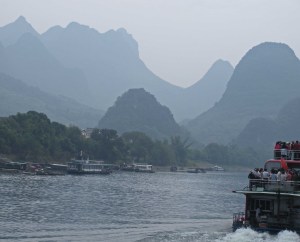
Cruising the Li River will carry you past one of the ten places to see in China.

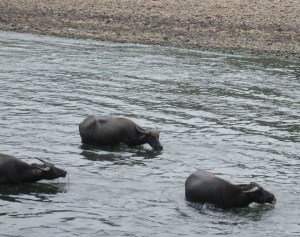
I couldn’t resist taking a picture of water buffalo eating the plants that grow under the water.  They would dip their heads under and come up with a mouthfull of green.

Small boats and villages are scattered along the river.

I wasn’t the only tourist taking pictures.  Most of the tourists were from the Chinese middle class.

If you enjoyed this post, you may enjoy Shanghai Huangpu River Tour

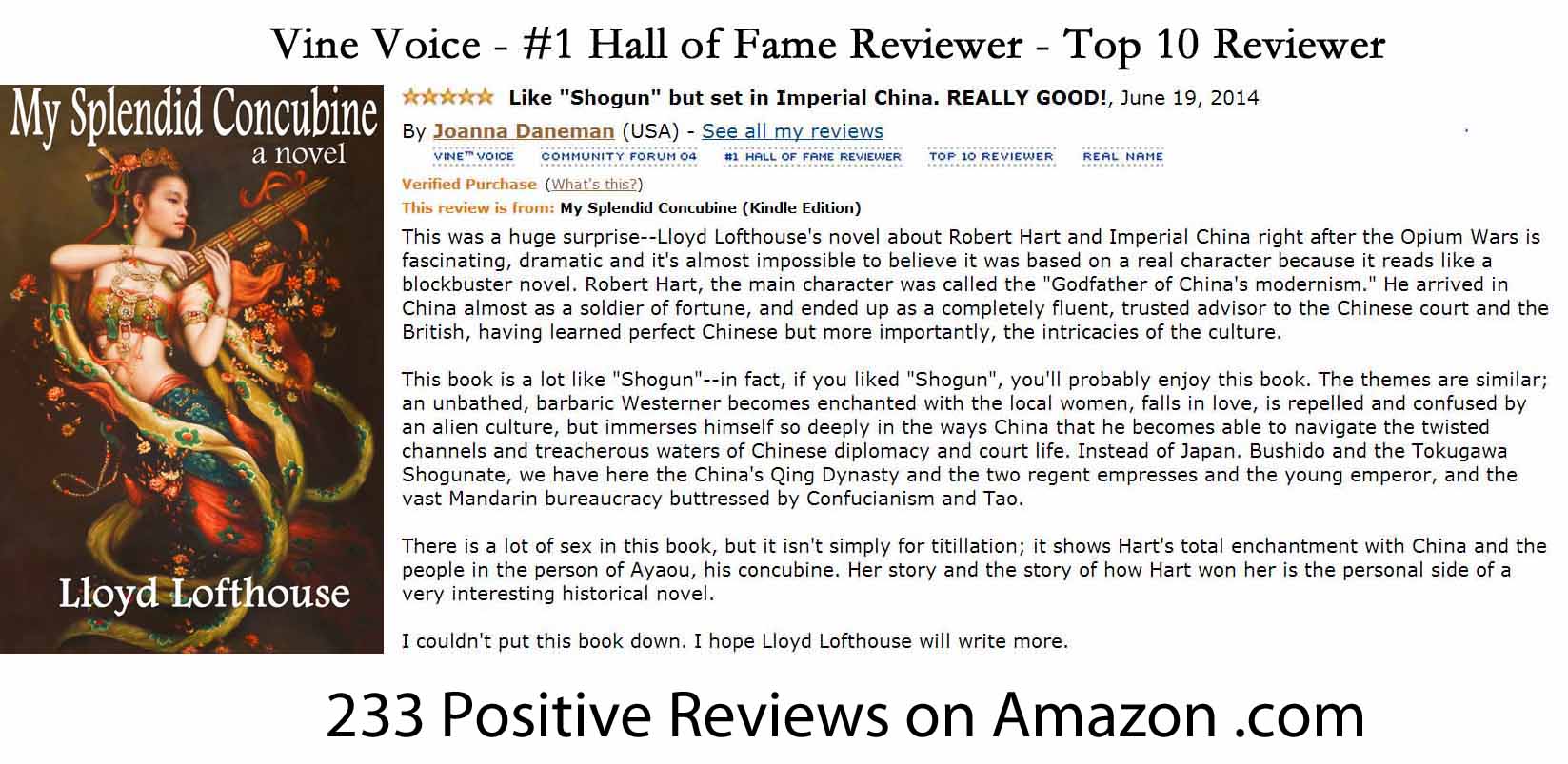
Lloyd Lofthouse is the award-winning author of My Splendid Concubine [3rd edition]. When you love a Chinese woman, you marry her family and culture too. This is the unique love story Sir Robert Hart did not want the world to discover.

#1 - Joanna Daneman review posted June 19 2014

Where to Buy

Subscribe to “iLook China”!
Sign up for an E-mail Subscription at the top of this page, or click on the “Following” tab in the WordPress toolbar at the top of the screen.

About iLook China

China’s Holistic Historical Timeline


Breathing Huangzhou

June 4, 2013

The city of Huangzhou in Zhejiang province is about a hundred miles or 161 kilometers from Shanghai. We’ve visited several times. Our last trip together was in 2008 shortly before the project this story covers was launched. Huangzhou is one of the most beautiful cities in China.

In the video, Al Jazerra’s Melissa Chan reports on one of the largest bike sharing projects in the world and one of the most successful.

Launched in 2008, the city of Huangzhou provides 50,000 free bicycles at 2,000 bike stops across the city, and in July 2012 a paper was published on the Clean Air Action Planning in Chinese Cities: Hangzhou and Jinan Cases.

The people Chan interviewed say they use the bikes to go to work and it is great to be outside and exercising. One woman says it cuts her commute time.

Melissa Chan says the first hour of bike use is free. It’s actually possible to cycle free all day as long as you check in at a stop every hour.

The system is easy to use—just swipe a bike card across a reader (similar to riding many urban rapid transit systems) and off you go.

Registering for a card is simple.  All that’s needed is a deposit and identification.

Huangzhou, also known as the Westlake, has been one of the more environmentally conscious cities in China.

The government made space to build parks alongside the rapid development and modernization. Huangzhou has remained picturesque unlike many other cities in China where the concrete jungle has taken over.

Li Zhi Hong of Hangzhou Public Transport says the city wanted to encourage citizens to leave their cars and use more public transportation. The bicycles allowed people to take that final kilometer from the bus station to their destination.

The bikes are also great for tourism.

Melissa Chan says public busses have also adopted European emission standards. While there are still many cars on the road, people tell her that it could be a lot worse.

The city has taken the pollution issue seriously and Huangzhou’s success has attracted the attention of Beijing where the pollution problem is still “painfully” visible with each breath.

Today, Huangzhou is one of the cleanest cities in the country.  In fact, recently it was one of seven cities in China to limit the number of vehicles driving on roads using travel restrictions based on vehicle license plate numbers.” Source: Hangzhou Weekly.com (2013 update)

In addition, Huangzhou’s air is rated cleaner than seventeen of China’s Provincial Capitals including Xi’an, China’s ancient capital, and Beijing, its modern capital. Source: What’s On Ningbo.com

_______________

Lloyd Lofthouse is the award-winning author of My Splendid Concubine [3rd edition]. When you love a Chinese woman, you marry her family and culture too. This is the love story Sir Robert Hart did not want the world to discover.

Subscribe to “iLook China”!
Sign up for an E-mail Subscription at the top of this page, or click on the “Following” tab in the WordPress toolbar at the top of the screen.

About iLook China


China’s Tiger Farms: Part 2/2

May 21, 2013

Tourists may buy live animals for the tigers to kill and eat. Chickens are the best price.

Allowing the tourists to buy live food for the tigers has to do with money – but money is not the key factor.

In artificial breeding, the park feeds the tigers a fixed diet using artificial or processed food. This diet might eventually lead to malnutrition. The most important thing for the tourists is that they are helping feed the cats.

Feeding the tigers live animals is also part of a long-term project with a goal of releasing tigers back into the wild.

There is another park near Changbai Mountain that has about fifteen specially selected tigers.

These tigers still live behind a fence. However sending tigers to the Changbai Mountains allows them to be more experienced with the natural environment.

The Hunchun Nature Reserve was established in 2001 for the protection of wild Siberian tigers and leopards.

Before releasing the tigers into the wild, the big cats must be given the appropriate wild-habitat training. The first step is for the tiger to adapt to the climate changes of the four seasons. Next, the tigers’ hunting ability must be improved.

Since the Changbai Mountains share a border with North Korea, the big cats are allowed to travel between countries. In the past, the border was divided by iron and wire mesh fences, which blocked the tigers. Now the fence is gone.

It is believed that with wild training over time and with the efforts of several generations of scientists, the tigers will finally return to nature.

Return to China’s Tiger Farms: Part 1

_______________

Lloyd Lofthouse is the award-winning author of My Splendid Concubine [3rd edition]. When you love a Chinese woman, you marry her family and culture too. This is the love story Sir Robert Hart did not want the world to discover.

Subscribe to “iLook China”!
Sign up for an E-mail Subscription at the top of this page, or click on the “Following” tab in the WordPress toolbar at the top of the screen.

About iLook China