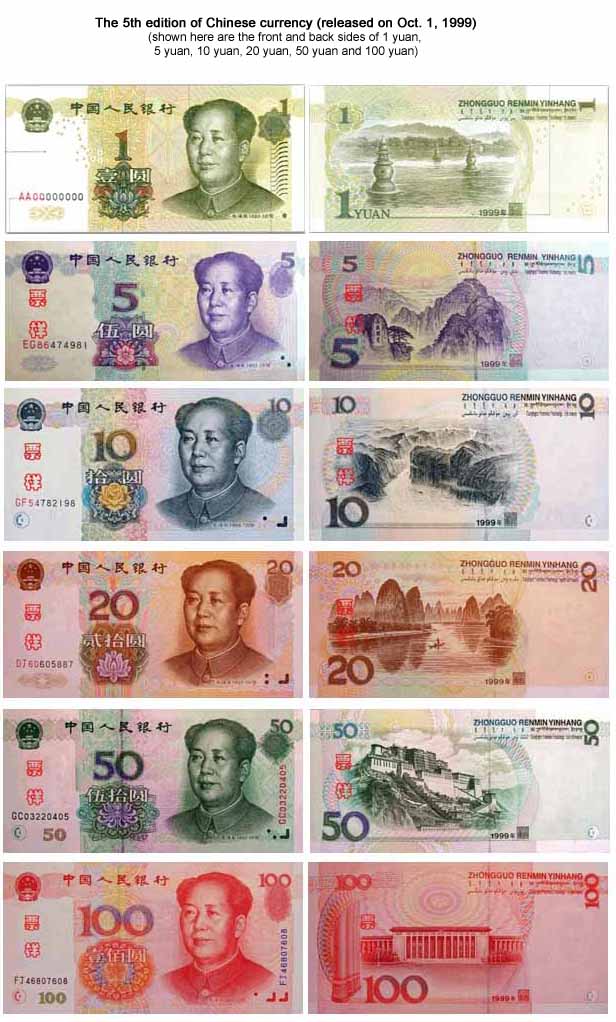
Marxist Maoism Died in 76

June 29, 2010

Walter Russell Mead writes about changes taking place in China, and his long piece was quoted at Beliefnet.com. Read the quote or go to “Walter Russell Mead” for the “longer” piece.

What bothered me was the ignorance of the comments below the shorter Beliefnet piece. “We know what happened when the Velvet Revolution tactics that worked in Eastern Europe were tried in Tiananmen Square—the protesters were crushed to death under tank tracks.… We and they are almost in a prisoner’s dilemma here—doing the morally right thing is hugely dangerous but alone can deliver those 1.2 billion from a form of slavery”.

Have you heard of the 2/28 Massacre in Taiwan? Almost 30 thousand protesters were slaughtered by Chiang Kai-shek’s troops, while only few hundred were killed in Tiananmen Square.

Not counting sexual slavery, which is a global problem and illegal in China, there are no slaves in China. Those factory workers are free to go home to the rural village any time they want. Also, there is an expanding middle class with lifestyles equal to Europe and America.

Most people in the West have no concept of the effort it has taken to lift China from where it was in the 1950s, when Chiang Kai-shek, protected by US military might, fled with most of his troops and all of China’s wealth.

Prior to the Western nations and Japan invading China in the 19th century, China had the world’s largest economy and it wasn’t built on manufacturing or exports. China’s leaders are aware that China cannot rely on this type of economy for long and must return to an economy that supports itself from within. China is not a Maoist Communist country. It’s a blended capitalist, socialist system and is evolving with a Chinese twist.

And by definition, China is not a dictatorship.

_________________________

Lloyd Lofthouse,
Award winning author of Hart’s concubine saga, My Splendid Concubine & Our Hart. When you love a Chinese woman, you marry her family and culture too. 

Sign up for an RSS Feed for iLook China 


The Opium Wars in the 19th Century (1800s)

June 28, 2010

China began the 19th century confident of its superiority over the rest of the world.  China’s population numbered 400 million. The Qing (Manchu) Empire controlled the world’s biggest economy.  China enjoyed a favorable balance of trade with the West—receiving a huge amount of money for its silk, porcelain, and tea.

By 1800, the British consumed 10,000 tons of tea annually.  So much money poured into China, that one Chinese merchant became the richest man in the world, and all foreign business with was restricted to one city, Canton.

However, Britain had a product to reverse that balance of trade—opium. The British shipped opium into China and up its rivers to almost every part of China.  So many became addicted to the drug, the stability China was threatened.

Then in 1839, the Emperor acted to stop the opium trade. Lin, the man in charge, wrote to Queen Victoria asking for her help. Ignored by Great Britain, Lin resorted to confiscating the opium and destroying it, which led to the Opium Wars started by Britain and France, who respected nothing but force. China lost the war and was forced to pay for a war they did not want and did not start.

In the British parliament, William Gladstone criticized his government calling the Opium war a disgrace.

See Mao’s War Against Illegal Drugs

______________

Lloyd Lofthouse is the award-winning author of the concubine saga, My Splendid Concubine & Our Hart. When you love a Chinese woman, you marry her family and culture too.

If you want to subscribe to iLook China, there is a “Subscribe” button at the top of the screen in the menu bar.


A Stable Basket of Cash

June 27, 2010

I laughed when I read The Wall Street Journal’s, Is China Serious This Time About a Yuan Basket? I laughed because the Chinese are serious but not serious enough to risk the yuan fluctuating in value to the point that it becomes a burden to the people.

“A report from the Chinese Academy of Social Sciences indicated that in … 2006, the annual per capita disposable income of urban households was 11,759 yuan compared with only 3,587 yuan in rural households.” Source: China Labour Bulletin

The cost of essential goods must be kept stable. It helps that rural Chinese grow most of their food and live in collectives so there are no mortgages or property tax. The villages and houses belong to everyone and there are no deeds. However, in urban China, many pay rent or a mortgage unless they live in factory dormitories.

Whatever basket of currency China uses, even if it is the same as Singapore, there will still be a narrow band so the yuan doesn’t change value to the point that it would cause an unbearable burden to the people of China. How would you like to be sitting on a powder keg that size?

See The Urban-Rural Divide

_________________________

Lloyd Lofthouse,
Award winning author of Hart’s concubine saga, My Splendid Concubine & Our Hart. When you love a Chinese woman, you marry her family and culture too. 

Sign up for an RSS Feed for iLook China


Reading Barry Ritholtz

June 23, 2010

In “China The Black Box“, Barry Ritholtz demonstrates a better understanding of China than most I’ve read—at least in this piece.  If you are willing to sit for a long read, I suggest clicking on the link. He does a good job explaining how China’s economy works and why it may survive for some time without an economic collapse like the 2008 US meltdown.

Barry Ritholtz

In summary, Ritholtz mentions how several prominent hedge fund managers in the West have said China is making mistakes economically. Then Ritholtz says there is no way these managers know what’s going on in the Middle Kingdom since China is half capitalist and half socialist and doesn’t fit any Western economic norms.

He says China is a unique civilization state, which gives it a tremendous advantage at this stage of its economic development, because China’s citizens have a singular desire to work hard and improve their material lot. It helps that the Chinese prefer to pay cash for things instead of using credit cards as in the US.

Chinese civilization has periods of order followed by periods of disorder and since China recently emerged from two centuries of disorder, the Communist government has a long way to go before it is their turn to leave the leadership stage.

Read how others get it wrong in Belching About China

________________________

Lloyd Lofthouse is the author of the award winning My Splendid Concubine and writes The Soulful Veteran and Crazy Normal.

Sign up for an RSS Feed for iLook China


China’s Next Step

June 22, 2010

In 1950, Mao promised his people that China would stand equal to the world’s major powers. That day is close.  After the Soviet Empire collapsed, the United States treated the world as if it were America’s back yard.  What did that get the US?  9/11, deep debt and three conflicts: Iraq, Afghanistan, and fundamentalist Islamic terrorists whose goal is to destroy America—not China—yet.

I read what Dr. Michael Economides had to say at Forbes.com, and he writes as if we must not allow China to develop into a modern nation that benefits all Chinese.

Dr. Economides is wrong. America should encourage China to globalize and modernize.  Let them drink at the fountain of oil. We need China to be our equal and our ally.  By encouraging China to depend on oil reserves from around the globe, they will have no choice but to be America’s partner and help police the world.

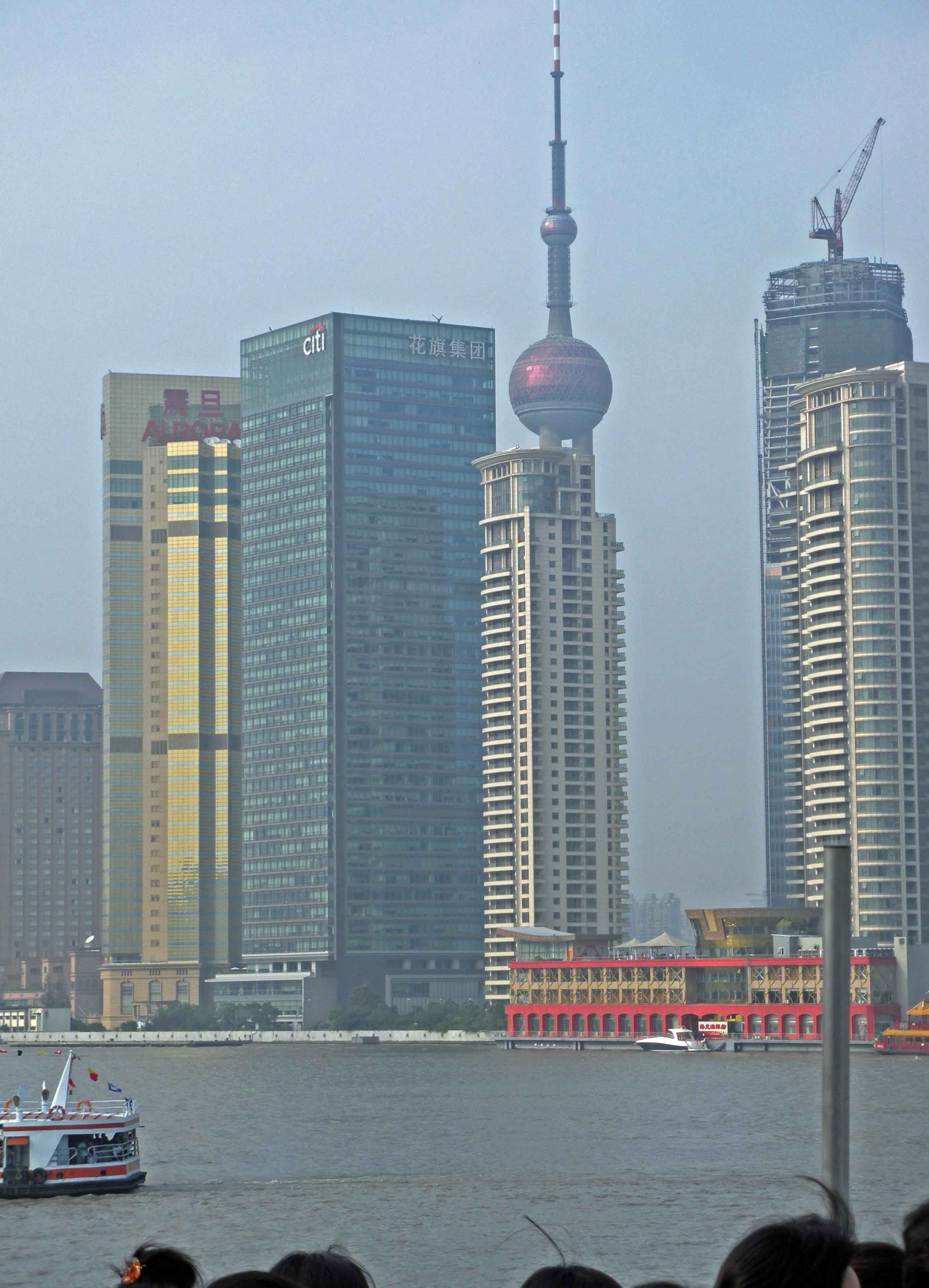
Shanghai

The challenge Americans face is to keep what we already have. What America must do is switch to green energy and break our addiction to oil as soon as possible. In fact, India has the same goals that China has—to have what America has had for decades.  Since China and India have more than 2 billion people, let them share the wealth, and the responsibility that comes with it should be larger too.

See Volting all of China into the 21st Century

________________________

Lloyd Lofthouse is the author of the award winning My Splendid Concubine and writes The Soulful Veteran and Crazy Normal.

Sign up for an RSS Feed for iLook China