The concept of balance as taught by Confucius and Lao Tzu (Taoism) also plays an important role in diet. In China, yin foods are considered calming. It is believed that traditional Chinese foods come in three categories—yin, yang and neutral.
Yin foods should be eaten in summer and only in moderation in the winter as they are all very cooling. Yin foods are cool or cold in nature, clear away heat and eliminate toxins. Yang is the opposite of yin, and foods in this category are considered warm, dispel cold and treat symptoms from too much yin.
Some yang foods: Cherries, Chicken, Dates, Ham, Leeks, Mutton, Peaches, Raspberries, Shrimps, Sunflower Seeds, Wine, Garlic, Ginger, Onion, Pepper
Some neutral foods: Beef, Beets, Carrots, Celery, Corn, Egg, Potatoes
TheChinese philosophy for eating is different from America and the West. Traditional Chinese medicine applies these philosophies to avoid or treat disease through diet. Once a Chinese doctor determines the nature of an imbalance, he or she aims to restore balance through acupuncture, herbs, and changes in diet or lifestyle. It is believed that as balance is restored in the body, so is health.
_______________
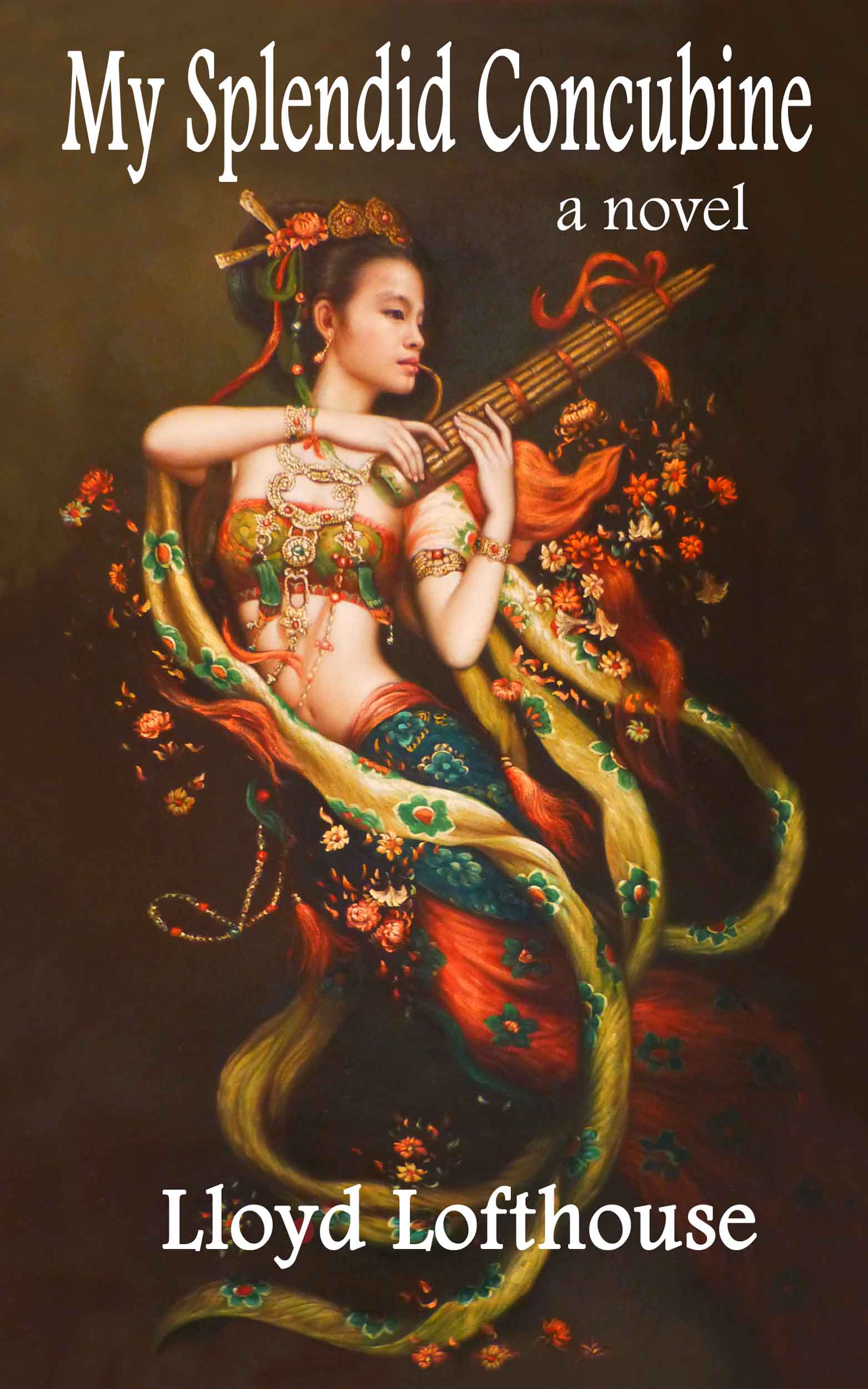
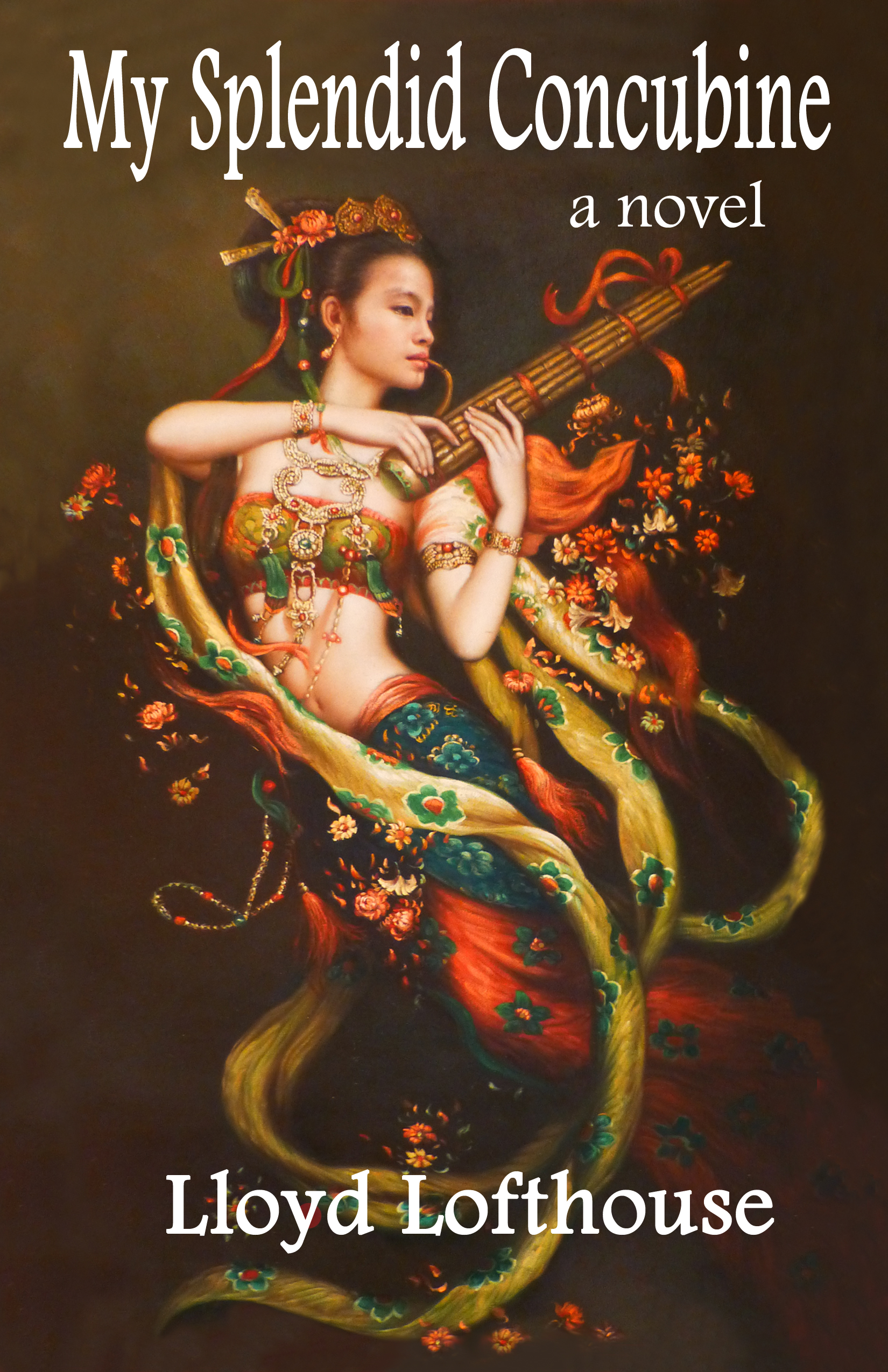
Lloyd Lofthouse is the award-winning author of My Splendid Concubine [3rd edition]. When you love a Chinese woman, you marry her family and culture too. This is the lusty love story Sir Robert Hart did not want the world to discover.
Finalist in Fiction & Literature – Historical Fiction
The National “Best Books 2010” Awards
Honorable Mentions in General Fiction
2012 San Francisco Book Festival
2012 New York Book Festival
2012 London Book Festival
2009 Los Angeles Book Festival
2009 Hollywood Book Festival
Subscribe to “iLook China”!
Sign up for an E-mail Subscription at the top of this page, or click on the “Following” tab in the WordPress toolbar at the top of the screen.
In many ethical systems, the right path is the one that does not stray far from the middle. Aristotle preached that virtue was striking a balance between the vices of excess and of defect. A similar concept was presented by Plato, who was influenced by Pythagorean (570 -495 BC) ideas.
The concept of balance is also an important aspect of Confucianism since the philosophy of Yin Yang appeared about the same time as Confucius (551 – 479 BC), who wrote of a harmonious life that avoids excesses and deficiencies where wisdom was learned from both the old and the young, the high and the low.
Since Lao Tzu (the founder of Taoism and the concept of Yin and Yang) and Confucius lived about the same time, they may have met and shared thoughts.
The concept of Yin and Yang applies to many aspects of life. In Taoism heaven is masculine and earth is feminine suggesting the dependence of the entire creation upon the Creator.
A whole series of possible interactions between the Yin and Yang in life is contained in the Chinese Book of Changes, the i Ching.
_______________
Lloyd Lofthouse is the award-winning author of My Splendid Concubine [3rd edition]. When you love a Chinese woman, you marry her family and culture too. This is the lusty love story Sir Robert Hart did not want the world to discover.
Finalist in Fiction & Literature – Historical Fiction
The National “Best Books 2010” Awards
Honorable Mentions in General Fiction
2012 San Francisco Book Festival
2012 New York Book Festival
2012 London Book Festival
2009 Los Angeles Book Festival
2009 Hollywood Book Festival
Subscribe to “iLook China”!
Sign up for an E-mail Subscription at the top of this page, or click on the “Following” tab in the WordPress toolbar at the top of the screen.
Peter Hessler arrived in China with the Peace Core in 1996 and taught English for two years. After leaving the Peace Corps, Hessler freelanced for The Atlantic Monthly, The Wall Street Journal, National Geographic and The New York Times before becoming the Beijing correspondent for The New Yorker until 2007. He lived in China about fifteen years.
Today, Hessler is better known for his books on China: River Town: Two Years on the Yangtze (2001), Oracle Bones (2006), and Country Driving: A Journey Through China From Farm to Factory(2010). His latest work is Strange Stones: Dispatches from East and West (2013).
I agree with Hessler when he said in a CNNGointerview, “People in China are not forthcoming like Americans; they don’t like to tell you their personal story. It’s a type of modesty, I think, in a culture where people are not encouraged to see themselves as the center of the universe.”
I have a born-again Christian friend—a white American—who boasted about Christianity being the fastest growing religion in China. I wonder what he’d say if he’d read what Hessler thinks: “The Chinese relationship with religion is pragmatic and fluid; people often change their faith very quickly. And I don’t see them following religion to a degree where it’s clearly not in their self-interest.”
And I also wonder what my old fundamentalist Christian friend would think if he knew the results of the CFPS 2012 survey of 25 of the provinces of China that found only 10% of the population belonged to organized religions—specifically, 6.75% were Buddhists (87.8 million), 2.4% (31.2 million) were Christians (of which 1.89% Protestants and 0.41% Catholics), 0.54% were Taoists, 0.46% were Muslims, and 0.40% declared to belong to other religions. Although 90% (1.17 billion) of the population declared to not belong to any religion, the authors of the survey estimated that only 6.3% were atheists neither believing nor worshipping gods and ancestors.
On happiness, Hessler says, “At this particular moment I think that Americans … might be less happy than Chinese people. The Chinese can roll with the punches. … Everybody in China has seen ups and downs; if they get laid off from the factory, they just go back to the village and play mah-jong.”
_______________
Lloyd Lofthouse is the award-winning author of My Splendid Concubine [3rd edition]. When you love a Chinese woman, you marry her family and culture too. This is the lusty love story Sir Robert Hart did not want the world to discover.
Finalist in Fiction & Literature – Historical Fiction
The National “Best Books 2010” Awards
Honorable Mentions in General Fiction
2012 San Francisco Book Festival
2012 New York Book Festival
2012 London Book Festival
2009 Los Angeles Book Festival
2009 Hollywood Book Festival
Subscribe to “iLook China”!
Sign up for an E-mail Subscription at the top of this page, or click on the “Following” tab in the WordPress toolbar at the top of the screen.
“Tom Carter is an extraordinary photographer whose powerful work captures the heart and soul of the Chinese people.” – Anchee Min, author of “Red Azalea”.
Most tourists travel by jet or bus and spend nights in four-or-five star hotels sleeping on plush beds. They eat at only the best restaurants. A rare few visit countries like Sir Richard Francis Burton, the famous nineteenth century explorer and adventurer. Tom Carter is one of the rare few. Imagine backpacking for two years and walking 35,000 miles to capture the heart and soul of a nation. That’s whatTom Carterdid to create China: Portrait of a People.
The consensus among ‘backpackers’ is that China is probably the single most challenging country in the world to visit on foot. That by itself says a lot.
There are more than 1.3 billion people in China. Besides the majority Han Chinese, the population includes fifty-six ethnic groups numbering over one hundred million. Carter saw it all from the teenage girl living in Chengdu dressed like an American punk rocker to the soot covered coal miner in Southern Shanxi. Carter’s camera lens captured the complexity and diversity of China.
Tom Carter is a guerrilla hit-and-run photojournalist with a camera instead of a grenade launcher. To take the up-close-and-personal pictures in ‘Portrait of a People’, Carter risked jail; almost froze on his way to Tibet; faced exhaustion and hunger; was beaten by drunks; plagued by viral infections, and risked being shot by North Korean border guards. The hundreds of photos in ‘Portrait’ are priceless. I doubt if there will ever be another book about China like this one. From Inner Mongolian nomads to newlyweds in Hong Kong, Carter captured it all with his photography.
There is an old saying that a picture is equal to a thousand words. Great pictures tell stories.
In ‘China: Portrait of a People’, each picture is worth ten thousand words or maybe more. Carter’s photojournalist study of China stands alone in its genre as it focuses expressly on the Chinese people. Carter backpacked to remote areas to visit China’s minorities like the thousand year old Phoenix Village perched over the Tuo Jiang River or the seventy-five year old Pai Yao minority farmer in his red turban.
To reach some locations, Carter had to travel on foot into some seriously rugged terrain. To get an idea what I’m talking about, consider that China, almost the size of the United States, has only sixteen percent of its land for growing crops. The rest is either mountains or deserts.
Between the covers of ‘Portrait’, you will see what happens when a modern day Sir Richard Francis Burton spends two years backpacking through China’s thirty-three provinces and autonomous regions, not once but twice. During his odyssey, Carter discovered that the Chinese are a friendly, open hearted people.
If you plan to visit China, buy this book before you go. On the other hand, if you are an armchair tourist that never strays far from home, Carter’s Rembrandt ‘Portrait’ of China will not disappoint. You will chuckle when you see the young, twin boys walking out of the river after a swim or watch the eight-year-old acrobat student at Wuqiao bending herself like a folded sheet of paper.
Between the covers of ‘Portrait’, you will start a vicarious journey visiting China like few have done even among the Chinese. You will travel on this 35,000 mile journey without leaving your house, bus or jet seat.
The Christian Science Monitor said, Tom Carter shows us that there are actually dozens of Chinas. The American photojournalist spent two years traveling 35,000 miles through every province of China by bus, boat, train, mule, motorcycle, and on foot. – August 27, 2010
The San Francisco Chronicle said, Getting a full picture of China – a vast country with an enormous population, a place that is experiencing sweeping cultural and economic changes – is, of course, impossible. But Tom Carter comes close. … It’s a remarkable book, compact yet bursting with images that display the diversity of a nation of 56 ethnic groups. – September 26, 2010
As you might see, there is no way this review does justice for ’China: Portrait of a People’. To try might require a million words—seeing is believing. What are you waiting for?
_______________
Lloyd Lofthouse is the award-winning author of My Splendid Concubine [3rd edition]. When you love a Chinese woman, you marry her family and culture too. This is the lusty love story Sir Robert Hart did not want the world to discover.
Finalist in Fiction & Literature – Historical Fiction
The National “Best Books 2010” Awards
Honorable Mentions in General Fiction
2012 San Francisco Book Festival
2012 New York Book Festival
2012 London Book Festival
2009 Los Angeles Book Festival
2009 Hollywood Book Festival
Subscribe to “iLook China”!
Sign up for an E-mail Subscription at the top of this page, or click on the “Following” tab in the WordPress toolbar at the top of the screen.
In this post there will be a few questions I’m going to answer, but leave others for you—if you want to leave a comment.
First, the dictionary definition for Communism: a theory or system of social organization based on the holding of all property in common, actual ownership being ascribed to the community as a whole or to the state.
What about the definition of socialism—after all, capitalists hate both communism and socialism? Socialism means a political and economic theory of social organization that advocates that the means of production, distribution, and exchange should be owned or regulated by the community as a whole.
How many of the 1.3+ billion people in China belong to the Chinese Communist Party (CCP)? There are 86.7 million members in the CCP and most if not all of the millionaires and billionaires in China are invited to join the CCP after they get rich and are screened, and many of the members who are not millionaires or billionaires have secure jobs, responsibility, power and earn money legally or illegally, but taking money illegally might be dangerous. The CCP aggressively prosecutes white collar crooks if they catch them and sends some to prison and executes a few—white collar crime is not a safe profession in China. In fact, CBS reported that “82,533 Communist Party members had been investigated. Some lost their jobs; others kicked out of the Communist Party … And no one, no matter how high-ranking, appears safe.”
With 6.7% of the population belonging to the CCP that means 93.3% are not Communists—they just live in a country where actual ownership of everything belongs to the collective and/or the state. You don’t buy property in China. In urban China, you lease it and you can sell the lease to someone else, but in most of rural China the land is owned jointly by the people and the state. There is no rent, no mortgage and no property tax. You also can’t sell the house you live or the land you farm. Rural Chinese might not earn much money, but they also don’t get evicted by the bank for missing mortgage payments.
There are essentially two kinds of land ownership in China, state ownership and collective ownership. Rural land, or housing land and the household contract farmland, is collectively owned. Farmers are part of the collective community and have property rights to their land, but with restrictions. – China.org.cn
In addition, in the last 30 years, China is responsible for 90% of global poverty reduction. Since the start of the far-reaching economic reforms in the late 1970s, growth has fueled a remarkable increase in per capita income and a decline in the poverty rate from 85% in 1981 to 6.1% below the poverty line in 2014.
At no stage over the past 30 years has the CCP relinquished control of the “commanding heights” or “levers” of the Chinese economy: agricultural pricing, heavy industry, power and energy, transport, communications, foreign trade, and finance (state banks). – Marxism-Leninism Today
China now boasts 350 million middle-class citizens (more than the entire U.S. population). In addition, China has 2 million millionaires and ranks second only to the U.S. in terms of billionaires. Some 100 million Chinese traveled outside their country this year, and spent an astounding $7,500 per person, per trip, the highest in the world. – The Middle Class: China’s Game-Changing Demographics
For the United States, keep in mind that capitalism does not equal democracy. Capitalism is an economic and political system in which a country’s trade and industry are controlled by private owners for profit, rather than by the state. But a democracy is a system of government by the whole population or all the eligible members of a state, typically through elected representatives—but these days it sure doesn’t feel like it is working that way.
It is possible for a democracy and socialism to exist in the same country.Those countries are called social democracies. In fact, three of the happiest countries in the world are social democracies: Denmark, Finland and the Netherlands. The 10 most socialist countries in the world are: China, Denmark, Finland, Netherlands, Canada, Sweden, Norway, Ireland, New Zealand and Belgium.
There are more than 316.1 million Americans, and how many are successful capitalists? CNN reports that there are 9.63 million millionaires (3% of the population), and 492 billionaires (0.00015% of the population).
Is it possible that in the U.S. the 3.00015% or the 0.00015% want to rule over the remaining 96.99% like the 6.7% does in China for the 93.3%—something to think about? Are some of these U.S. millionaires and billionaires envious of the CCP’s power?
The U.S. has a poverty rate of almost 15%, and poverty has been increasing in recent years. There is also a 2nd poverty rate in the US, and it’s called Extreme Poverty. In fact, in 1900, before the Progressive era launched by President Teddy Roosevelt to make life better for most Americans, 40% of Americans lived in poverty and less than 7% graduated from high school.
Using a World Bank definition, “extreme poverty” is surviving on less than $2 per day, per person, each month. The National Poverty Center finds that 1.65 million American households (not people but families) live in “extreme poverty,” and these households include 3.55 million children.
America has protection for freedom of speech, but China doesn’t. However, the U.S.—even with freedom of speech—has the largest prison population on the planet (2.2+ million), more than China (1.7+ million) that has the second largest prison population, but more than four times the population of the United States.
To compare it another way—the United States has 707 prisoners per 100,000 versus China with 124 per 100,000 behind bars—think about it.
What about cracking down on white collar crime in the United States like China is doing? The New York Times reports, “In Financial Crises, No Prosecutions of Top Figures.” And The New York Times asks, “It is a question asked repeatedly across America: why, in the aftermath of a financial mess that generated hundreds of billions in losses, have no high-profile participants in the disaster been prosecuted?”
For all the problems the U.S. has, I don’t plan to move to China, because the air is cleaner where I live in the United States—but if the Koch brothers and Standard Oil have their way that could change. I also prefer shopping at Costco, Trader Joes, Whole Foods and farmers’ markets for organic fruits and vegetables—although a few U.S. corporations are lobbying to ruin that too.
_______________
Lloyd Lofthouse is the award-winning author of My Splendid Concubine [3rd edition]. When you love a Chinese woman, you marry her family and culture too. This is the lusty love story Sir Robert Hart did not want the world to discover.
Finalist in Fiction & Literature – Historical Fiction The National “Best Books 2010” Awards
Honorable Mentions in General Fiction
2012 San Francisco Book Festival
2012 New York Book Festival
2012 London Book Festival
2009 Los Angeles Book Festival
2009 Hollywood Book Festival
Subscribe to “iLook China”!
Sign up for an E-mail Subscription at the top of this page, or click on the “Following” tab in the WordPress toolbar at the top of the screen.


 Posted by Lloyd Lofthouse
 iLook China