“Hey, old man, you can’t stop us. You can’t take our picture because it’s dark.” Those were the words I heard after dark one night during the summer of 2008 from a pack of kids taunting me as they raced in and out of our steep driveway on their bicycles.
I finally called the police, and the next day walked the neighborhood door to door seeking support to stop the harassment that had gone on for two years—mostly during the summers when school was out.
When I talked to the mother of one of these kids, she asked, “What was your reason for not letting them play on your driveway?”
Do I need a reason? In a piece about The Eternal Value of Privacy, the author never mentioned the tyranny of neighbors and punk kids.
Lloyd Lofthouse is the award-winning author of the concubine saga, My Splendid Concubine & Our Hart. When you love a Chinese woman, you marry her family and culture too.
Subscribe to “iLook China” Sign up for an E-mail Subscription at the top of this page.
I read ‘any damn fool can be a parent’, and it made me think that North America is not a comfortable place to be if you become a geezer. Geezer is the endearing term our teenage daughter used to call me.
When I was a kid, youngsters were to be seen and not heard. We treated our elders with respect. And I was born in America.
After the birth of Disneyland, fast food, MTV, the Internet and the iPod generation, something valuable caught a cancer that spread through too much of American culture. That something is killing off ‘respect’. In China it is called piety and piety is very much alive. In other Asian countries like South Korea, piety is just as strong. You can read more about this in Hello Korea.
Lloyd Lofthouse is the award-winning author of the concubine saga, My Splendid Concubine & Our Hart. When you love a Chinese woman, you marry her family and culture too.
Subscribe to “iLook China” Sign up for an E-mail Subscription at the top of this page.
Three times George Washington acted in a way that would insure the newly born US Republic would survive.
His first act was in 1782, when Colonel Lewis Nicola wrote a letter to Washington suggesting that Washington should set up a constitutional monarchy because of the inefficiency of the Continental Congress.
Washington was offended at such a suggestion and wrote to Nicola telling him to banish such thoughts from his mind. George Washington – Legends and Myths
His second act took place in 1783, when he stepped in and saved the republic by ending the Newburgh Conspiracy, a plot in the military to seize power and create a military dictatorship. Source: Early America
The third act was when Washington stepped down as President (1789 – 1797) and returned to his farm.
When King George III asked his American painter, Benjamin West, what Washington would do after winning independence, West replied, “They say he will return to his farm.”
“If he does that,” King George said, “he will be the greatest man in the world.” Cato Institute
The cover of The Economist for October 23, 2010—in the best tradition of biased and Yellow Journalism— SHOUTED: “The next emperor – Will Xi Jinping change China?”
As I read the feature article on page 13, I laughed when I saw, “Mr. Xi’s appointment was eerily similar to the recent anointment of Kim Jong-un in North Korea.”
The reason I saw humor in this absurd statement was that there is nothing similar. Kim Jong Un inherited his for-life position as Supreme Leader of North Korea. He is the son of Kim Jong-il, and the grandson of Kim Il-sung, the founder of North Korea.
The Economist implied in the October 23, 2010 issue of the magazine, that China is a monarchy.
However, China is not a monarchy as the Kim Dynasty in North Korea has become or a dictatorship-monarchy as many in the West think.
In North Korea, what started as a Socialist Dictatorship modeled on Maoism has become a Socialist Maoist Monarchy.
China, on the other hand, started as a Socialist Dictatorship under Mao (1949 to 1976) and is becoming a fledgling republic with Western critics looking for cockroaches and slugs under rocks.
In fact,Dr. Sun Yat-sen, the father of China’s Republic, wrote that he wanted to model China’s government after America but by combining Western thought with Chinese tradition.
He didn’t say he wanted China to be a clone of America’s Republic.
America was still a Republic prior to World War II. The US wouldn’t become a full-fledged democracy until the 1960s.
Unfortunately, Dr. Sun died in 1925 before he could finish what he started.
It wouldn’t be until after Mao died in 1976, that the leaders of the Communist Party under Deng Xiaoping would start the long journey to implement Sun’s dream of a Republic against great pressure from Western democracies to copy them.
Before we move on, let’s take a brief look at the Athenian democracy that was developed around the 5th century B.C. in the Greek city-state of Athens. Even though there is evidence that democratic forms of government existed before the 5th century, ancient Athens is generally believed to be the first democracy.
What did that democracy look like? Athens had a system of direct democracy, in which participating citizens voted directly on legislation and executive bills. But participation was not open to all residents: to vote, one had to be an adult, male citizen, and the number varied between 30,000 and 50,000 out of a total population of around 250,000 to 300,000—about 150,000 were slaves.
In comparison, the membership of the Chinese Communist Party (CCP) is now 86.7 million—men make-up 77 percent of CP’s membership, while woman make up 23 percent—making the CCP the world’s largest political party representing more than 6 percent of China’s population, and slavery is illegal just like it is in the U.S.
Regardless of what critics claim, China is becoming more like the republic Dr. Sun Yat-sen might have imagined by combining Western thought with Chinese traditions.
After Mao died, The Communist Party worked for several years to draft the 1982 Constitution, which included term limits of two five-year terms for elected government officials.
If you have read the Chinese Constitution carefully, it is obvious that the U.S. Constitution was used as a model. However, these two documents are not the same.
If the Party leadership is not happy with China’s president, he can be removed after one five-year term. There is even an article of impeachment in China’s Constitution.
China’s first president was Li Xiannian (1983 to 1988). He served one, five-year term, and then he stepped down.
From 1988 to 1993, Yang Shangkun would be China’s president for one five-year term. Deng Xiaoping (born 1904 – died 1997) was the Chairman of the Communist Party from 1983 to 1993, which was ten years—what China’s 1982 Constitution calls for, but Deng never served as the country’s president.
Due to how the Tiananmen Square incident in 1989 was handled, President Yang had to step down at the end of his first, five-year term. The only other way to remove him would have been through impeachment.
In 1993, Jiang Zemin became President and Chairman of the Communist Party. Then in 2003, Hu Jintao became President and Chairman of the Party. His term ended in 2012 when Xi Jinping became president of China.
Deng Xiaoping was China’s George Washington. What he did was what Dr. Sun Yat-sen wanted. China is a republic that combines Western thought with Chinese tradition.
However, the task to create China’s Republic fell to the Communist Party so China is a Socialist Republic with capitalist tendencies.
In China, Piety is important and advice from elders is often followed as if it is the law. Due to this, elder statesmen such as Jiang Zemin have great power in the government even after he no longer has a political title. After all, this is a Chinese tradition.
The Economist mentioned disagreements within the CCP among China’s leaders over what the country’s priorities should be—both on the economy and on political reform.
Whatever the final decisions will be, the consensus of the CCP will be guided by Chinese tradition and not Western thought.
The changes that “some” want to see take place in China will probably not arrive in a hurry if the wisdom of the I-Ching, The Book of Changes, is followed, which says change should come slowly.
In fact, China has proven it is a republic because none of China’s first four presidents are the sons of previous presidents and eventually death removes the elders. China’s presidents did not inherit that title due to heredity as kings do or the leader of North Korea did.
_______________
Lloyd Lofthouse is the award-winning author of My Splendid Concubine [3rd edition]. When you love a Chinese woman, you marry her family and culture too. This is the love story Sir Robert Hart did not want the world to discover.
Subscribe to “iLook China”!
Sign up for an E-mail Subscription at the top of this page, or click on the “Following” tab in the WordPress toolbar at the top of the screen.
The reason my mother would have burned “My Splendid Concubine” was because she grew up in a country with the soul of a church. After my mother died, I found a video collection of the Bible, an audio version and about thirty different published versions.
I didn’t know then that there was that many ways to speak for one God.
After my father died, mother spent her last decade to the age of eighty-nine studying the Bible several hours a day. This was her attempt to discover the answer to salvation that haunted her most of her life.
My mother loved to read other books too, as did my father, who was not a religious person. However, if my mother ran into a vivid sex scene in a novel, she threw the book in the fireplace.
Since I was born and raised a Catholic and when I was twelve my mother switched to the Jehovah Witnesses, I know why she would have burned my book.
To Catholics, Jehovah Witnesses, and most devout Christians of all sects, lust is a mortal sin.
In fact, Catholic Questions in a Secular Worldsays, “The seven deadly sins are pride, avarice, envy, wrath, gluttony, sloth and lust.… Lust is the self-indulgent desire for gratification … without the sanctifying graces of marriage.”
When I was single in my thirties, I had a lusty relationship with a lawyer, who ended the relationship due to Christian guilt. She wasn’t a Catholic but she attended two different Christian churches on Sundays, and she made it clear that it was the guilt that drove her to stop seeing me.
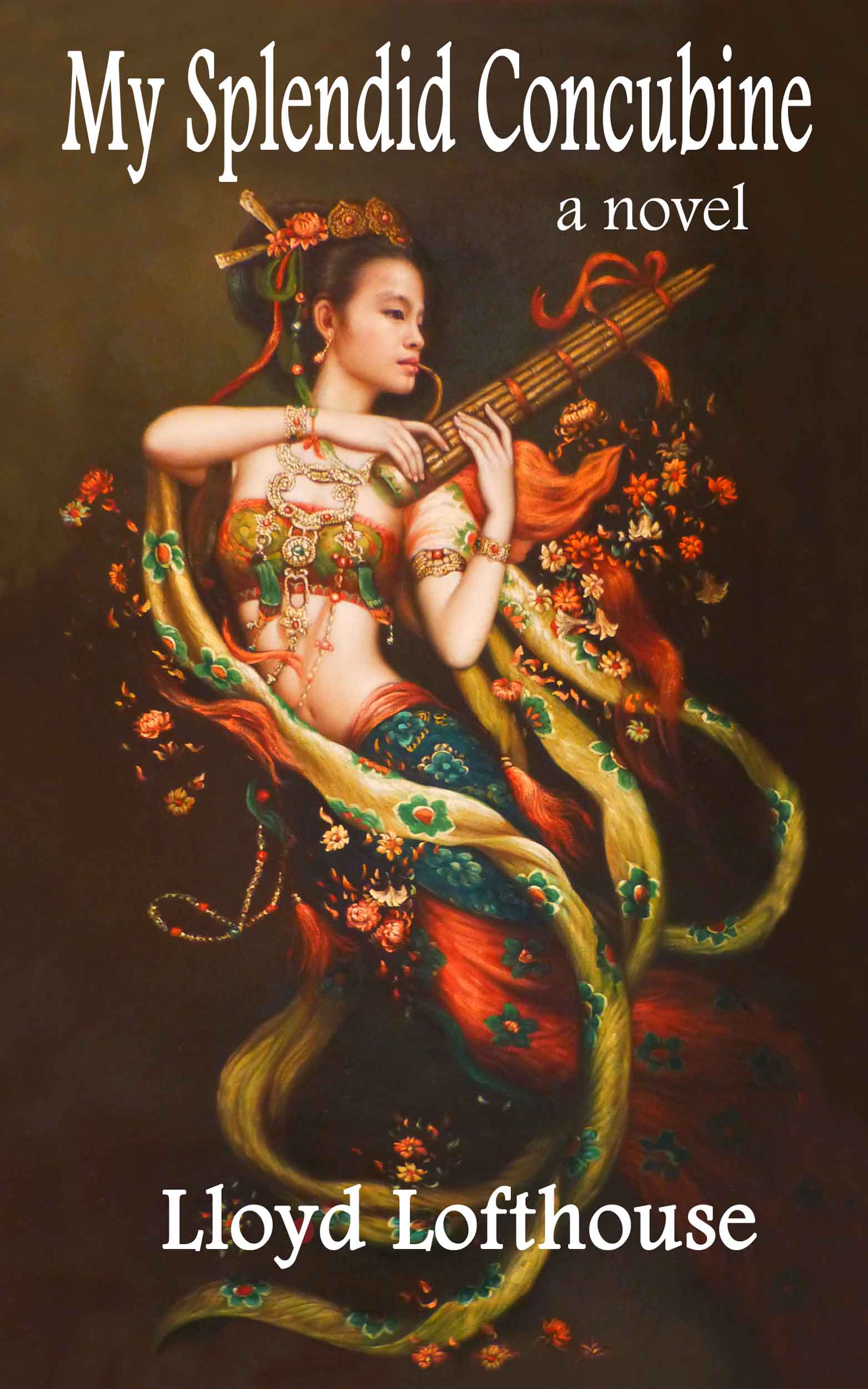
My Splendid Concubine is historical fiction about a real man that went to China in 1854, bought a concubine and stayed until 1908 to become the most powerful Westerner in China’s history and the only foreigner trusted by the Emperor.
My reason for writing this series of posts was to show how cultural differences bring about biased opinions due to religious, spiritual and/or cultural beliefs.
Books have been written on the subject of sex in America that explains why my mother would have burned My Splendid Concubine.
America’s War on Sex: The Attack on Law, Lust, and Liberty by Marty Klein, Ph D. is one example, which “Spotlights the political, legal and civic battles raging in this country against what is arguably our most private and pluralistic right – sexual freedom.”
An anonymous reviewer known as “colorado outback” posted a one-star review on Amazon of My Splendid Concubine, “You should Not Buy This Book – Seriously, just Soft Porn.” My mother would have agreed with “colorado outback”, because she was influenced by her religion.
Outback said: “this seemed more like the sexual fantasy of the author and NOT the historical novel it is purported to be.”
However, “outback” was wrong. The idea to write My Splendid Concubine didn’t originate from a sexual fantasy or wet dream, as I’ll explain.
Since writing My Splendid Concubine was not motivated by sexual fantasies, I responded to “outback’s” biased opinion, and he counterattacked saying my book does not “come up to par with Anchee Min, John Steinbeck, Kurt Vonnegut, Alice Walker, Charles Dickens, Amy Tan, Pearl S. Buck, James Michener, Eudora Welty, Harper Lee, Isabel Allende, Gabriel Garcia Marquez, Aleksandr Solzhenitsyn, Tom Robbins and so on….”
I’d have to agree. I’ve never thought that I was equal or better than these authors.
Outback claimed to have read all of the books by the above authors and thousands more yet he only had two, one-star reviews posted on Amazon (at the time I wrote this post).
Where are all those five-star reviews extolling the virtues of the work he admires?
Outback has a right to “his or her” opinion, but I don’t have to agree or stay silent as he indicated when “outback” wrote, “P.S. You may want to grow a thicker skin.” In fact, there are other opinions of My Splendid Concubine that don’t agree with “colorado outback” that demonstrate a better understanding of why I wrote the novel.
Since “colorado outback” may argue (if he, she or it ever reads this) I quoted a friend’s biased review to defend my “thin skin”, I will use a review from a non-biased source — the Midwest Book Review, which has posted almost 60,000 reviews on Amazon and compiled about 200,000 helpful votes compared to “outback’s” two reviews with two helpful votes.
The Midwest Book Review has a policy that if a reviewer doesn’t like a book, they stop reading and find a book to enjoy. Good thing “colorado outback” doesn’t write reviews for Midwest.
The Midwest Book Reviewer wrote of My Splendid Concubine, “Love for ones wives’ sister is typically forbidden by most western religions, but the most successful westerner in Chinese history is faced with this conflict.
“‘My Splendid Concubine’ is the tale of Robert Hart who deals with his lust the Chinese way, which conflicts with his upbringing.
Midwest says: “The Taiping Rebellion doesn’t help matters, him making enemies of established and skilled mercenaries in the process of protecting his interest and the women he loves. ‘My Splendid Concubine’ is packed cover to cover with intriguing characters and plot, a must read for historical fiction fans and a fine addition to any collection on the genre.”
After first reading The Midwest Book Review for My Splendid Concubine, I thought, “Maybe I can write, but what happens if this is the only person that enjoys the book?”
Then a reviewer from the Historical Novels Review Online, wrote, “Some readers may be uncomfortable with the frank sexuality of the novel, as well as Hart’s simultaneous romantic relationship with both Ayaou and Shao-Mei, but those who are interested in unconventional romances with an out-of-the-ordinary setting will find plenty to enjoy.”
If I didn’t write such a lusty novel from personal sexual fantasies as “outback” claims, why did I write it?
The answer is simple.
I wanted to show the clash between different cultures and Sterling Seagrave showed me the way when he wrote in Dragon Lady: “To take the pain out of learning, his Chinese tutor suggested that (Robert) Hart might buy a concubine and study the local dialect with her.
“Hart wrote in his journal, ‘Here is a great temptation. Now, some of the China women are very good looking: You can make one your absolute possession for from 50 to 100 dollars and support her at a cost of 2 or 3 dollars per month. … Shall I hold out or shall I give way?'”
Seagrave writes in the next paragraph, “By early May he (Robert Hart) had a sleep-in dictionary, his concubine, Ayaou. He had just turned twenty; Ayaou was barely past puberty.”
Then the editors of Entering China’s Service – Robert Hart’s Journals, 1854-1863, wrote on page 8, “But anyone who reads the journals through knows that his mental struggles about women were not soon or lightly won; whether the relapse was to daydreams or to a Chinese mistress, it caused him ambivalence and anguish.”
In China, the concubine is a trophy showing a man’s success, and no major religion on earth has had a lasting impact on the Chinese culture in more than a thousand years.
In fact, the concept that lust is a mortal sin doesn’t exist in China unless a Chinese adopts Christianity as their religion.
That does not mean China is without morals but the moral codes of China exist without the sin of mortal lust as Catholics and many devout Christians believe. In fact, I’ve known mainland Chinese that are extremely moral and would put most Puritans to shame.
The idea to focus on Robert Hart’s struggles with his Victorian, Christian morals while living in 19th century China’s concubine culture sprouted when I first read his journals and letters published by Harvard University Press.
Other influences were Anchee Min’s Empress Orchid and The Last Empress: A Novel—both go into detail about the lives of the more than three thousand concubines that belonged to the emperor.
In fact, in 19th century China, the more power and wealth a man had, the more women he owned.
Another influence was the movie directed by Zhang Yimou in 1991, Raise the Red Lantern, which “focuses on the ever-shifting balance of power between the various concubines while the husband ignores much of what is going on — taking his pleasures when he feels like it.”
_______________
Lloyd Lofthouse is the award-winning author of My Splendid Concubine [3rd edition]. When you love a Chinese woman, you marry her family and culture too. This is the love story Sir Robert Hart did not want the world to discover.
Subscribe to “iLook China”!
Sign up for an E-mail Subscription at the top of this page, or click on the “Following” tab in the WordPress toolbar at the top of the screen.
Who would win in a fight: Mulan or Emmajin Beki or Teenage Angst, Mongolian-style? “Can you imagine, a mere girl fighting on the battlefield?”
The role of females in combat is a debate as timeless as war itself, and one that remains divisive and unresolved to this century.
While present-day arguments for and against allowing women in the military revolve around psychological and biological issues, back in olden times, one needed only cite “tradition” and “familial roles” to silence the detractors.
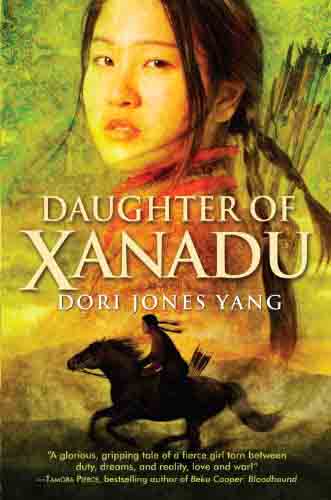
The teenaged heroine of Dori Jones Yang’s new 13th-century historical fiction novel, Daughter of Xanadu, is one such detractor, albeit immutable.
Often imagining herself on the battlefield, “the son my father never had,” Emmajin Beki, the granddaughter of Mongolian king (and emperor of China’s Yuan Dynasty) Khubilai Khan (1215-1294), learned to ride a horse before she could walk and can outshoot all her cousins in archery. She confidently and outspokenly aspires to emulate her female ancestors who assisted Chinggis Khan in conquering Asia (“the blood of all these earlier strong women flowed in my veins”).
Unfortunately, for this princess, “the days of strong women had ended once luxurious court life had begun.”
The Mongols, fattened, lazy and resting on their laurels, now prefer to tell stories of battles-past over lavish “orgies of excess” rather than engage in new wars, much to Emmajin’s restless discontent.
When she makes known her desire to “become a legend” like real-life women warriors Aiyurug Khutulun and Hua Mulan of China, the great Khan placates her by sending her on a secret mission to spy on a family of foreign merchants currently visiting the Mongol court.
The merchants’ young son turns out to be one Marco Polo, the now-legendary Venetian journeyer credited for introducing Asian culture to the west.
To Emmajin, however, he is just another “colored-eye man,” a court curiosity from Christendom whose gallantry and romantic gestures are as ridiculous to the manly Mongolians as his facial hair (“his beard was so thick I could imagine food sticking in it”).
Try as she might, however, Emmajin, caught in the peak of puberty, is unable to resist Marco’s western charm, and quickly finds herself enamored by his worldly vision (“I had learned to see the world through Marco’s eyes”) as well as his pelt.
“What would the hair on his arm feel like?” she often fantasized about at night.
But she was a Mongolian first, and reluctantly sacrifices her blossoming relationship with the foreigner to complete her spy mission (“He was not a friend but a source of information.”).
Authoress Dori Jones Yang is a Caucasian American, yet she is no stranger to writing from the perspective of conflicted adolescent Chinese girls, as evinced in her previous, award-winning novel, The Secret Voice of Gina Zhang.
In Daughter of Xanadu, she hones in even deeper into the physiological confusion and emotional conflictions that make youth such a joy, turning Emmajin into such a hormonal wreck that this male reviewer often found himself gritting his teeth in frustration at such contradictive revelations as, “if he had pursued me, I would have rebuffed him. By holding himself aloof, he challenged me to win back his esteem.”
Daughter of Xanadu is not all-teenage angst. As our protagonist matures, so does the content of the story.
Emmajin eventually persuades Khubilai Khan to allow her to train for war against the Burmese at the Battle of Vochan (present-day Yunnan province), where the embarrassment of getting her period in front of the all-male troops is a bloody omen for what’s to come.
Upon seeing her cousin slain, innocent Emmajin is transformed into a “mindless killer.”
Bloodlust unleashed, the young princess swings her sword indiscriminately (“the hatred pounded in my ears…killing him felt good”), resulting in hundreds of men dead by her hand alone.
One can only imagine all the Mulan vs. Emmajin fan fiction that this novel will inspire!
By story’s conclusion, Messer Polo, who witnessed and wrote about the Mongols’ real-life battle against the Burmese in his book, The Travels of Marco Polo, has elevated “Emmajin the Brave” into the living legend she wanted to be, though she now regrets it.
“These men needed a hero, but I no longer needed to be one.” She resigns her sword and rank, and departs with Polo back to Europe as the Khan’s emissary of peace, leaving the literary door wide open for a sequel.
Dori Jones Yang, who also penned the best-selling Pour Your Heart Into It: How Starbucks Built a Company One Cup at a Time, is a skilled historian.
In researching Daughter of Xanadu, Yang, fluent in Putonghua, traveled all the way to the ruins of Xanadu in remote Inner Mongolia, which this itinerant backpacker can personally attest is no easy journey.
The short chapters and brief sentences, edited with razor precision for a younger audience, along with a helpful glossary for ESL students, make reading Daughter of Xanadu a breeze, though adults will admittedly want to beg this book back afterwards from their tweens.
This post first appeared as a four-part (guest author) series starting April 17, 2011 at Daughter of Xanadu – Part 1


 Posted by Lloyd Lofthouse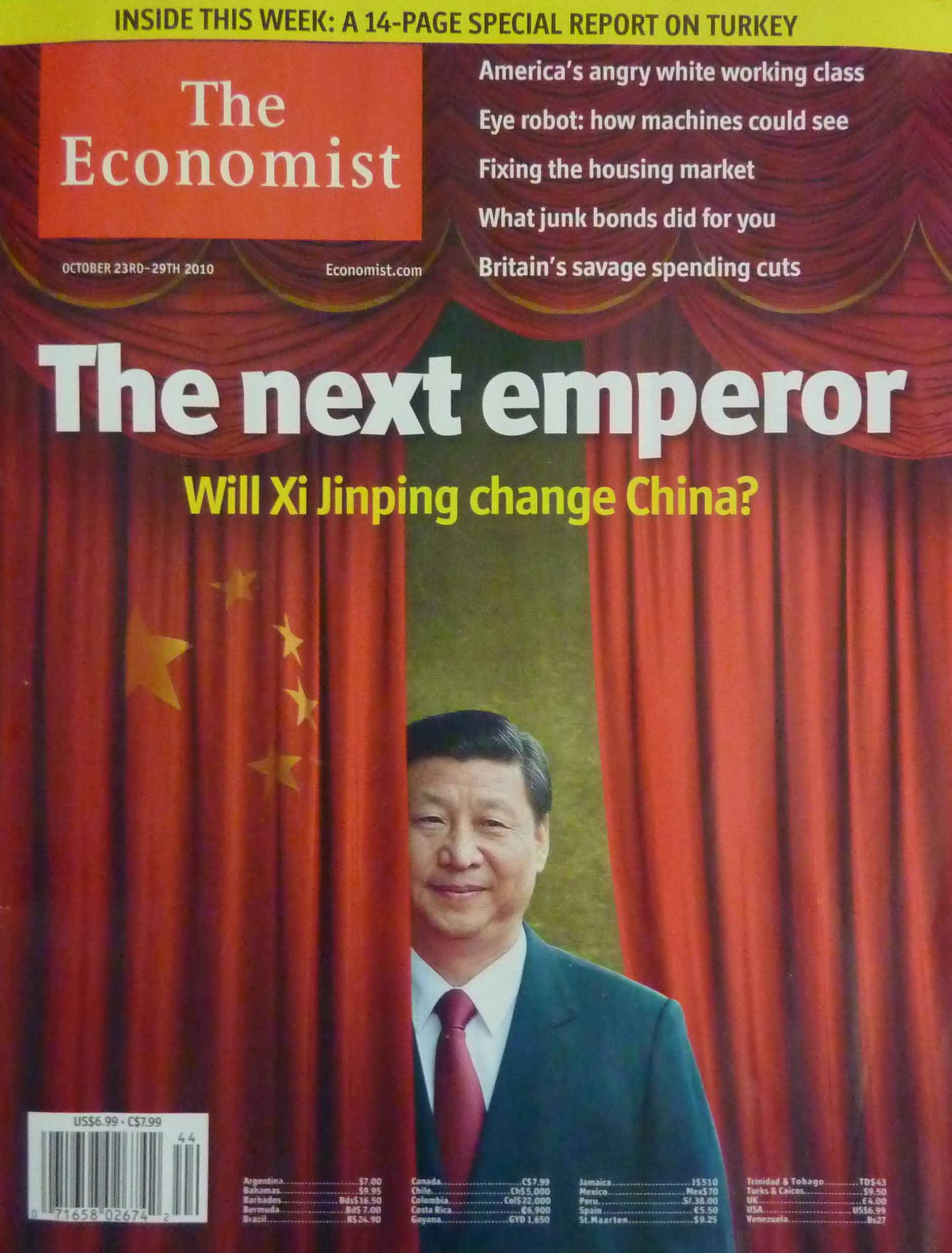

 iLook China