The Tao of Poisonis a powerful, believable story set in 18th century China during the White Lotus Rebellion. The nine-year conflict heavily impacted many districts in central China, leading to widespread losses in the mountainous regions separating Sichuan, Hubei, and Shaanxi provinces.
Qiezi, 17, has practiced mithridatism, a method of building poison resistance, for most of her life. Her body has become toxic. She also studied China’s famous encyclopedia of healing and learned from experts how to heal illness naturally.
Early in the story, a powerful Qing Dynasty official threatens her and her family if she won’t have sex with him. She warns the man that her body is poisonous. The man doesn’t believe her. After he dies, Qiezi and her family are blamed for the powerful official’s death and become fugitives.
Separated from her family while on the run, Qiezi eventually reunites with them after joining a group of Chinese Taoists. These Taoists practice consensual partnered or multi-partnered intimacy to harness sexual energy for self-improvement and spiritual development.
Still, what these Taoists practice is illegal. If caught, they will be executed.
This is a fascinating story of survival in a dangerous China.
The Author
Isham Cook is an American essayist and novelist based in China since 1994. His writing philosophy is big concept, discriminating, provocative. His influences are Ballard, Beckett, Borges, Dick, Kafka, Hesse, Melville, Mishima, Sade—authors and artists who fearlessly forge new territories.
Anna May Wong was born an American citizen on January 3, 1905, and died February 3, 1961. She was the first Chinese-American movie star and the first Asian-American actress to gain international fame.
On March 1, 2003, Bill Moyers reported, Anna was American-born, confident in ways her father’s generation could never be, still she lived suspended between two countries, starting with how people saw her.
“Americans regard [us] as a dark, mysterious race,” Anna May once said, “impossible to understand. Why is it that the screen Chinese is always the villain? And so crude a villain — murderous, treacherous, a snake in the grass. I was so tired of the parts I had to play.”
By the time she was 32, and an established Hollywood star, in August 1937, Japan invaded Shanghai. Anna’s younger sister was living there at the time and managed to escape, but their family couldn’t get out. In 1938, Anna managed to get her family back in the United States. Then she started working with Chinatown communities to get rid of the Chinese Exclusion Act.
Five years later in 1943, this racist legislation that targeted Chinese was repealed.
The Exclusion Act (1882 – 1943) made it virtually impossible for Chinese to have a normal family life inside the United States. The Exclusion law applied to Chinese laborers. It exempted merchants, travelers and students. What this meant to the Chinese who could not become a merchant, and what it meant was not a student or a traveler what it meant was that he could not bring his wife. – Stanford Lyman (Historian)
As a young girl, Anna skipped school to watch silent films at local theaters. By the time she was 9, she had set a goal to become a movie star. She hung around the studios, including MGM, asking for extra work instead of going to school. Eventually, she landed some rolls. At 17, it’s rumored that she had an affair with an older but married director.
In 1924, at 19, Anna had her first success when she played a Mongol slave in the classic film “The Thief of Bagdad” cast alongside Douglas Fairbanks.
The first Chinese film star in Hollywood, the rolls she could play were limited. The Hays Code did not permit the portrayal of interracial relationships on-screen. However, Anna’s rumored lovers, from Vincent Price to Marlene Dietrich, were white, and Douglas Fairbanks called her the “Chink in my amour”. Her most famous movies were denounced as “ghost films” and banned in China. – The Fortunes by Peter Ho Davies.
If you marry someone that grew up in China, the odds favor that you will also be married to a Chinese family. When I married Anchee in 1999, I got a lot more than a wife. In China, I also was accepted by her family, her friends, and I started to learn about the country of her birth, its long history, and its culture, and I haven’t stopped learning. The only thing I haven’t learned is Mandarin, a tonal language where what sounds like one word can be four words depending on the tone. I’m not tone deaf. I enjoy listening to music, but I cannot tell the difference between the sounds needed to pronounce four different words that sound like they are one word.
I saw “The Farewell” alone on a Monday morning in an almost empty theater with two other people that sat higher up in what I call the bleachers. The film offered more than the drama of a Chinese family that discovers their beloved grandmother in China has a short time to live. Throughout the film, the Chinese family and their friends, and even the Japanese bride hide the doctor’s verdict from the grandmother.
To keep this secret, her two sons that haven’t been to China with their families for twenty-five years, use the excuse of a sudden engagement to bring family and friends together for this unexpected wedding before grandmother dies. One son lives in the United States, and his brother lives in Japan where his son has a Japanese girlfriend, the bride to be.
The lead character is Billi. She was six when her mother and father moved to the United States. When we first meet Billi, she is in her twenties and living alone in a postage-stamp-sized apartment in New York City. She can’t pay her rent, won’t ask her parents for financial help, and doesn’t want to move back home.
Billi played by Awkwafina, an actor that was born in New York City in 1988 as Nora Lum, grew up Chinese in the United States helping her understand the differences between the two cultures.
What I think made this film worth watching was witnessing Billi’s American individualism in conflict with China’s collective culture, until she remembers or learns, when in China, do as the Chinese do. By the way, the grandmother lives in an older building. Many residential buildings in China’s cities are newer looking and more modern than what I saw in this film unless the story took place before the 21st century.
Too bad, so many Americans are not interested in learning about other cultures. “The Farewell” opened July 12, 2019, and its total domestic lifetime gross to date is about $12.8 million. More Americans should see films like this one instead of cartoons like “Monsters, Inc.” that grossed almost $600 million.
China and the United States both honor their military. The United States does this on Veterans Day (Monday, November 11) and Memorial Day (Monday, May 25). China celebrates its annual Army Day on August 1st.
Veterans Day in the United States is a federal holiday to honor military veterans that have served in the United States Armed Forces.
History.com says, “Memorial Day is an American holiday, observed on the last Monday of May, honoring the men and women who died while serving in the U.S. military.”
In the United States, federal employees get the day off for Veterans Day and Memorial Day.
China celebrates Army Day August 1st, and according to China HIGHLIGHTS.com, the men and women that are active-duty troops have half a day off. Although Army Day in China is a holiday, it is a working holiday and not an official day off.
Army Techology.com says, China Military Online estimated in 2015, that 53,000 women (less than 5 percent of the total number of troops) also serve in China’s Army. In the United States, according to the Defense Department, women now make up 20 percent of the Air Force, 19 percent of the Navy, 15 percent of the Army and almost 9 percent of the Marine Corps.
The Basics explained by Chinese American Family.com: The People’s Liberation Army was founded on August 1, 1927, in Nanchang during a rebellion against nationalist Kuomintang forces. They were known simply as the Red Army during the Chinese Civil War (April 1927 – May 1, 1950). The People’s Liberation Army assumed its role as the armed forces of the People’s Republic of China in 1949. Today, the People’s Liberation Army counts more than two million troops.
I think it is important to note that China’s Civil War started days after the Shanghai massacre of April 12, 1927 when Generalissimo Chiang Kai-shek had his troops slaughter thousands of Communist Party members and union workers without warning followed by a full-scale purge (executions without trials) of Communists in all areas under the KMT’s military control. Before April 12, 1927, the Communist Party was one of the political parties that made up the fledgling Republic of China started by Dr. Sun Yat-sen.
“You’re unlikely to see any public celebration of Army Day outside of China, except for perhaps a joint ceremony with a host country at a foreign embassy. Otherwise, this is a domestic state occasion marked by speeches and military demonstrations.”
AnydayGuide reports, “The Central Committee of the Communist Party of China established Red Army Day in 1933.”
The Bimbo, an attractive but unintelligent young woman is Trish Regan, a mouthpiece for untrustworthy Fox News, and the Brain is China’s Liu Xin who is an anchor for China’s CGTN.
The South China Morning Post reported, both women are well known in their own countries and regularly deliver opinions that support the administrations of their respective countries. The debate will focus on the trade war, but the two anchors could also clash on topics ranging from foreign policy to human rights.
“Liu, 44, hosts a current affairs programme called The Point and was an English literature major at Nanjing University, winning a number of awards in English competitions,” explaining why I call Liu the Brain.
Trish Regan, a former beauty pageant contestant, was Miss New Hampshire and represented her home state in Miss America 1994 pageant where she probably met Donald Trump who bought the pageant in 1996.
Regan went on to study voice (singing) in Austria and the New England Conservatory of Music in Boston before earning a B.A. in history at Columbia University in 2000.
How do you think Regan’s education helped qualify her to become a Fox News mouthpiece for Donald Trump? In her shows, Trish Regan typically supports President Donald Trump’s line on China policy. Trump is an avid Fox viewer.
“We can make China’s life much harder economically, I promise you that, than they can make us,” Regan said on May 6. “We are their number one customer … Tariffs are our weapon. This is an example of a president [Trump] doing exactly what a president should do.”
Regan went on to say: “From logos to software, you name it, the Chinese have stolen it. And they will keep on stealing it if left unchecked … I’m not willing to give up on being the world’s largest economy so easily. I’m not OK with another country stealing it away from us.”
Liu replied, “Compared to other developed countries, the US has the highest income inequality, the highest youth poverty rate, one of the highest infant mortality rates. Its citizens live shorter and sicker lives.”
Fox’s Trish Regan opened the 15-minute encounter with the show’s only real argument – over whether Liu was speaking for herself or the Chinese Communist Party (CCP) – which led to the two talking over each other in the most intense moments of the interview.
“Trish, I have to get it straight. I am not a member of the Communist Party of China (CCP),” Liu said after Regan introduced her as a member of the CCP. “This is on the record, so please don’t assume that I’m a member, and I don’t speak for the Communist Party of China; and I’m here today, only speaking for myself as Liu Xin, a journalist working for CGTN.”
When the Fox-Trump Bimbo attempted to pin down the Brain over the theft of intellectual property she told Liu there was “evidence that China has stolen enormous amounts of intellectual property, hundreds of billions of dollars’ worth.”
Liu replied that IP infringements were “a common practice probably in every part of the world”, including the United States.
If you are curious about the actual ranking that is published annually by The Global IP Center dot com, click the link in this sentence and discover that there are 25-countries ranked lower than China and Venezuela is in last place proving that Liu was right when she said IP infringements was “a common practice probably in every part of the world.”
The Global IP Center’s annual report says, “according to Index data in this edition and in previous editions, only China has shown real—albeit incremental—signs of positive reform efforts. China’s score has increased again this year, and China has been a consistent performer across all six editions of the Index.” … “However, over the past 3 editions, America’s performance has weakened.”
In addition, if you take the time to check Media Bias/Fact Check, you will discover the Bimbo’s employer Fox News (this link will take you to the Media Bias site) is rated strongly Right-Biased due to wording and story selection that favors the right based on poor sourcing and the spreading of conspiracy theories that later must be retracted after being widely shared.
“Fox hosts may utilize strong loaded words (wording that attempts to influence an audience by using appeal to emotion or stereotypes), publish misleading reports and omit (leave out) reporting of information that may damage conservative causes. Some sources in this category may be untrustworthy.”
Factual Reporting: MIXED Country: USA World Press Freedom Rank: USA 45/180
How about Liu Xin’s employer CGTN?
China Global Television Network was rated LEAST BIASED by Media Bias/Fact Check. These sources have minimal bias and use very few loaded words (wording that attempts to influence an audience by using appeal to emotion or stereotypes). The reporting is factual and usually sourced. These are the most credible media sources.
Factual Reporting: HIGH Country: China World Press Freedom Rank: 176/180


 Posted by Lloyd Lofthouse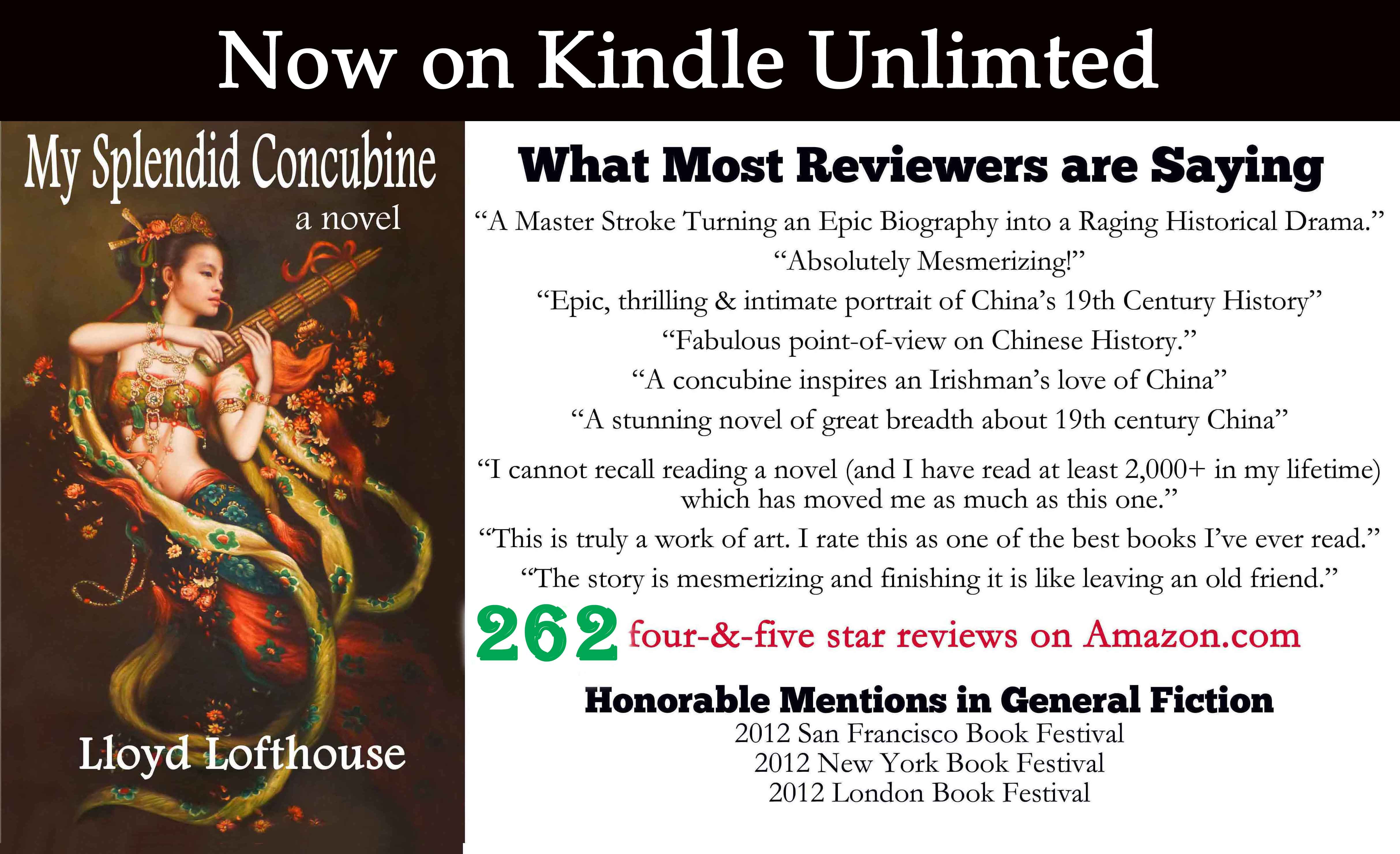
 iLook China