Tainting History

June 4, 2010

As a child, I had a fascination for Alexander the Great and Genghis Khan.  Still do. I read everything I could about these men who built empires and yet I knew little because of the cultural filters the West puts in place for any history outside Christianity and Western Civilization.
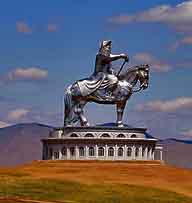
Multi-story statue of Genghis Khan in Mongolia

In Reconsidering Genghis Khan, we discover how history written from a Western perspective was misleading.  Currently through November 1, Genghis Khan, The Exhibition is showing at The Tech Museum in San Jose, California. Prior to arriving in San Jose, the exhibition was on display at the Denver Museum of Nature & Science where it drew 175,000 visitors.

We now know that Genghis Khan was anything but the butcher and barbarian Western historians painted him as. Records from the period, many only now being uncovered, “give you a view of a person who is a superb organizer, a superb lawmaker, a fair and judicious ruler, somebody who supported women and gave women a lot of rights,” says William Fitzhugh, who is a consultant for the exhibition. “It’s wrong to say that Genghis created a democracy, but, for the time, he was remarkably enlightened.” Source: Mercury News

In fact, Kublai Khan, the grandson of Genghis Khan, established the Yuan Dynasty (1279-1368) in China and ruled as the Emperor from Beijing. (Genghis Khan statue )

Discover China’s First Emperor, Qin Shi Huangdi

_____________________

Lloyd Lofthouse is the author of the award winning novels My Splendid Concubine and Our Hart. He also Blogs at The Soulful Veteran and Crazy Normal.

Sign up for an RSS Feed for iLook China


Gold from Dead Tibetan Caterpillars

May 26, 2010

In the May 2010 National Geographic, Mark Jenkins writes about Tibetan cowboys and Chinese-made motorcycles in his Tea Horse Road piece unwittingly revealing more about Tibetan life under Chinese rule.

The Tibetan cowboys, who once used horses, now use motorcycles to tend their flocks. On the way to 17,756-foot Nubgang Pass, Jenkins passes the black yak-hair tents of Tibetan nomads, and sees big Chinese trucks or Land Cruisers parked outside. He wonders how poor Tibetans can afford such luxuries. Aren’t they supposed to be suffering?

I think, “Maybe they are smuggling drugs into China from India”.  As I read on, I learn I’m wrong.

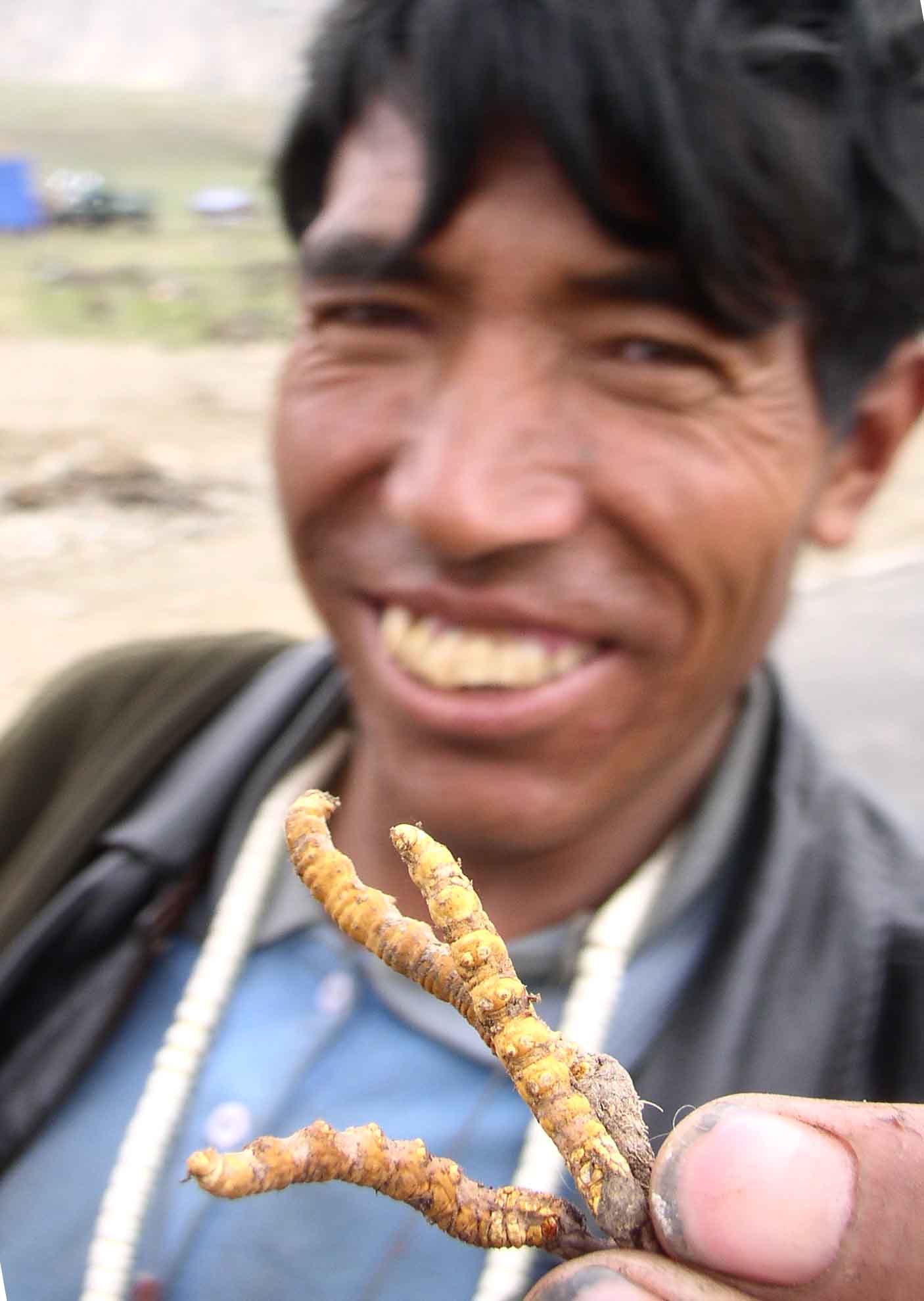
Photo by Tom Carter, author of China: Portrait of a People

On his way back from the pass, Jenkins discovers these Tibetan cowboys have found wealth in their high grasslands from parasite infected caterpillars called “Yartsa Gompo” in Tibet and “Chong Cao” in China.  These dead caterpillars sell to Chinese medicine shops throughout Asia for as much as 80 dollars a gram—more than the price for a gram of gold.

Why? The Chinese and Tibetans believe these dead caterpillars are a cure-all medicine that also acts as an aphrodisiac.

Discover more about Tibet on The Tea Horse Road

______________

Lloyd Lofthouse is the award-winning author of the concubine saga, My Splendid Concubine & Our Hart. When you love a Chinese woman, you marry her family and culture too. 

If you want to subscribe to iLook China, there is a “Subscribe” button at the top of the screen in the menu bar.


Climbing the Dragon Back

May 18, 2010

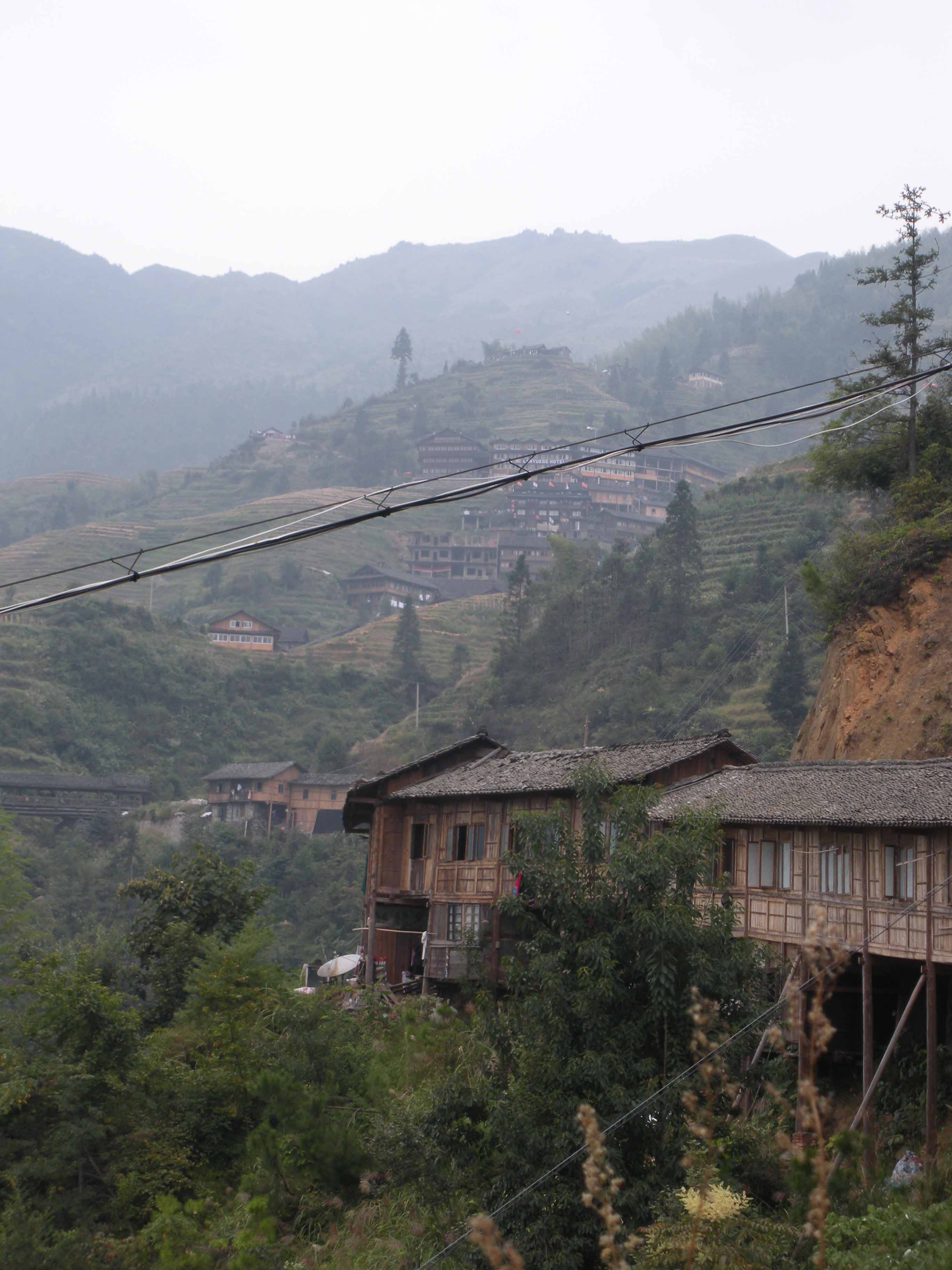
The Dragon Back Rice Terraces are located in Guangxi Province in southeast China near Vietnam.  The nearest city is Guilin, which is close to the Li River. 

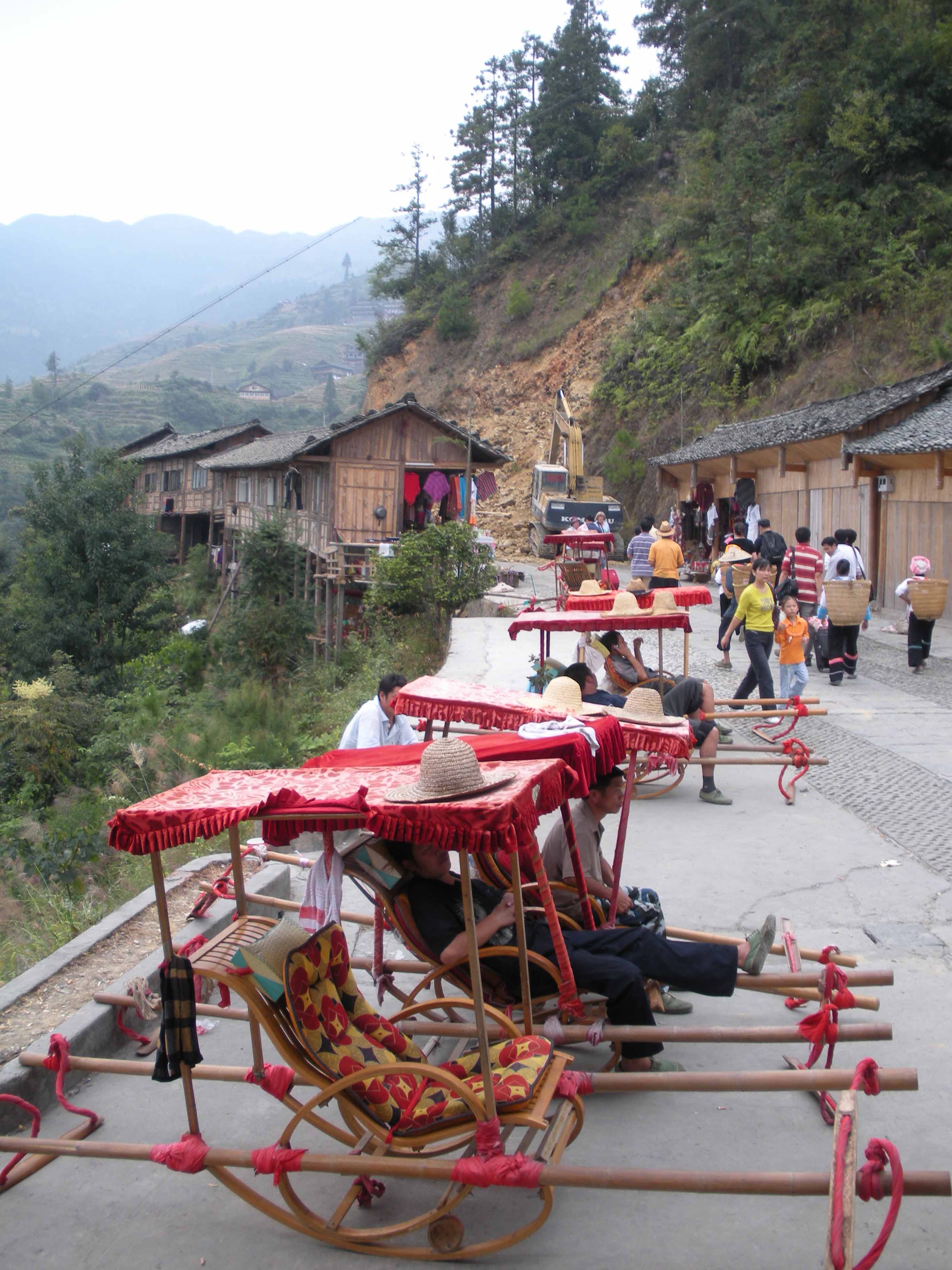
When we arrived, there was two-legged transportation for anyone who wasn’t strong or healthy enough to climb to the top. There are fifty-six minorities in China and this is an autonomous region where the Zhuan minority lives—the largest minority in China.

Halfway to the top

Halfway to the top, we passed this woman cleaning rice.

We arrived in the autumn and the rice had been harvested. The terraces were turning brown. For lunch, we ate in the village.  The terraced rice was cooked in segments of bamboo over an open fire.

at the top looking back

At the top, we looked toward the far mountains—a foggy blue outline. On the way down, we noticed an entrepreneur making money by letting tourists dress in minority costumes and take pictures.

To see more photos of the Dragon’s Back, click on Travel Pod.  You may also want to join me on a Li River Cruise.

____________________________

Lloyd Lofthouse is the author of the award winning novels My Splendid Concubine and Our Hart. He also Blogs at The Soulful Veteran and Crazy Normal.

Sign up for an RSS Feed for iLook China


Four Equals One China—Minority China Continued (Part 6 of 7)

May 16, 2010

The Mongol minority and the Manchu both conquered and ruled China for a time. The Mongols were the Yuan Dynasty (1277-1367) and the Manchu were the Qing Dynasty (1644-1911). China’s largest expansion took place under the Yuan and the Qing. The Yuan occupied Tibet followed by the Ming Dynasty (1368-1643) and then the Qing.

If you are one of the skeptics who believe Tibetan separatists whom claim China never ruled Tibet, I direct you to the October 1912 issue of “National Geographic Magazine” or “The I.G. In Peking, Letters of Robert Hart, Chinese Maritime Customs, 1868 – 1907” where Sir Robert Hart mentioned Tibet in more than fifty of his letters in two volumes published by Belknap Press of Harvard University Press, ISBN 0-674-44320-9.

Since I wanted to see the original, I bought a copy of the October 1912 issue of National Geographic Magazine on e-bay, and it cost $20 plus shipping.

Go to Four Equals One China: Part 7 or discover China’s 56 minorities

_______________

Lloyd Lofthouse is the award-winning author of My Splendid Concubine [3rd edition]. When you love a Chinese woman, you marry her family and culture too. This is the love story Sir Robert Hart did not want the world to discover.

Subscribe to “iLook China”!
Sign up for an E-mail Subscription at the top of this page, or click on the “Following” tab in the WordPress toolbar at the top of the screen.

About iLook China

a


Four Equals One China—Minority China (Part 5 of 7)

May 16, 2010

There are 56 ethnic Chinese minorities with about 100 million people among them. These minorities have their own languages and cultures. The majority, the Han Chinese, have seven languages. There is one written language in China.

Learning Mandarin and English are mandatory in the public schools. It is expected and mandatory that “all” students will spend 11 years in school.

Until the 11th, Five-Year Plan, urban schools were much better than China’s rural schools.  It’s too early to see the results yet. After all, it took more than three decades to achieve what China has already accomplished.

Uighurs in Xinjiang province

The two minorities best known outside China are the Tibetans (4.6 million) and the 8 million Uighurs in China’s northwest Xinjiang province. Few of the province’s Uighurs speak the national language of Mandarin. They are educated in their own tongue in Uighur schools, and they are treated in Uighur hospitals that they claim are sub-par.

The Uighurs have a history of insurrection with the Qing Dynasty (1644-1911). There were several rebellions during the 19th century that were put down ruthlessly by the Manchu.

Go to Four Equals One China: Part 6

_______________

Lloyd Lofthouse is the award-winning author of My Splendid Concubine [3rd edition]. When you love a Chinese woman, you marry her family and culture too. This is the love story Sir Robert Hart did not want the world to discover.

Subscribe to “iLook China”!
Sign up for an E-mail Subscription at the top of this page, or click on the “Following” tab in the WordPress toolbar at the top of the screen.

About iLook China