Country Driving in China with Peter Hessler – Part 1/2

May 28, 2012

Most books that I’ve read of China cover its history up to Mao’s death and after 1949, it is difficult to trust almost anything one reads in the West or in China, since most of this work is either biased and/or propagandized in the West or propaganda in China since the mass media is owned by the State.

However, I’m glad that I read Peter Hessler’s memoir of China, Country Driving. Rarely does Hessler intrude with his own Western bias (if there is one), which appears to make a slight appearance near the end. I suspect that his editor at Harper Collins suggested that he add it to the story, and he complied, because the few opinions he expresses near the conclusion of his memoir do not match the experiences that he shares with his readers in the rest of the book. In fact, while reading the book, I grew to trust Hessler’s perspective of today’s China.

It is obvious that Hessler honestly loves/respects China and its people and this infatuation runs throughout the memoir. He also carefully or unintentionally avoids mention of what he thinks about his own culture, which made me wonder if there is a lot he doesn’t respect about his homeland.

Maybe the reason why he continues to return to China is because of this infatuation with a culture that values family more than most Americans do.  In fact, in the memoir’s acknowledgements, I discovered that Hessler was married to Leslie T. Chang, which even my wife—a Chinese immigrant to the US, whose first book, a memoir of growing up during Mao’s Cultural Revolution, was a New York Times Notable Book of the Year—didn’t know.


Leslie Chang discussing her novel “Factory Girls”

Hessler’s wife is the author of Factory Girls, which is also about today’s China. Chang is Chinese-American and a graduate of Harvard. She is also an accomplished journalist and was raised outside New York City by immigrant parents, who forced her to attend Saturday-morning Chinese school, which is so Chinese.

For example, our daughter speaks Mandarin fluently and she was born in Chicago and is a product of the US public schools but with an immigrant mother and an American step father (me), which may explain (in part) why she is completing her second year at Stanford currently majoring in biology instead of trying out for American Idol while waiting tables in a Hollywood coffee shop.

Both Peter and Leslie have published work that went on to be honored as New York Times Notable Books.

Anyway, back to Country Driving. Much of Hessler’s memoir was connected to projects he wrote at The New Yorker or National Geographic. The memoir is divided into three sections:  Book I, The Wall; Book II, The Village, and Book III, The Factory.

Throughout the book there is a common theme: the independence and individuality of most Chinese and the failure of Chinese Communist Party (CCP) propaganda, which is there but often ignored by most of the people unless they can use the CCP to their own advantage.  That doesn’t mean the propaganda has no influence but the people seldom let it get in their way as they work to improve the quality of their lives.

In fact, it becomes clear in Hessler’s memoir that there are three Chinas: there is rural China, urban China and the Chinese Communist Party and many shades of gray among them.

Continued on May 29, 2012 in Country Driving in China with Peter Hessler – Part 2

______________

Lloyd Lofthouse is the award-winning author of The Concubine Saga. When you love a Chinese woman, you marry her family and culture too. This is the love story Sir Robert Hart did not want the world to discover.

Subscribe to “iLook China”!
Sign up for an E-mail Subscription at the top of this page, or click on the “Following” tab in the WordPress toolbar at the top of the screen.

About iLook China


Vampires in China

May 1, 2012

Belief in vampires is not confined to the people of Transylvania, and half humans able to transform themselves into monsters are no strangers to Chinese folklore. Some tales may be traced back to the third century AD.

Since Bram Stoker’s Dracula was published in 1897, this makes a case that vampire folklore may have originated in China and traveled west along the Silk Road almost two thousand years ago.

The Chinese vampire is called a Jiang-shi (also spelled Kaing-shi or Chiang-shih). However, Chinese vampires are different from Dracula or Anne Rice’s vampires.

Chinese folklore says the Jiang-shi is stiffened by rigor mortis and these vampires have to hop to get around. The Jiang-shi also finds its victims by smelling your breath, so if a hungry Jiang-shi is about, it is best to stop breathing.

In the 1980s, there was a series of vampire movies produced in Hong Kong. The first in the series was Mr. Vampire (you may watch Mr. Vampire here. For parts two through ten, scroll down to the embedded YouTube series at the bottom of this post).


Mr. Vampire – Part 1/10
with English subtitles

Ricky Lau directed Mr. Vampire and the producer was Sammo Hung.

Chopper Time says, “Almost all of these movies are pretty watchable, but the best of the bunch was the first one, an expert horror-comedy called Mr. Vampire.

There were a few Taiwanese vampire films, which include The Vampire Shows His Teeth (a series of three films (1984-1986), New Mr. Vampire (1985), Elusive Song of the Vampire (1987) and Spirit versus Zombie (1989).

Today, Vampires stories are becoming popular in mainland China. Tom Carter, an American author and expatriate living in China, says Twilight is a popular pirated novel and some Twilight fans are now writing their own fan-fiction and vampire stores in Chinese on their Blogs.

In fact, a shop called the Vampire opened its doors recently in Beijing to sell vampire, zombie, and werewolf blood along with Satan poison and UFO fuel.

In November 2010, the China Daily reported Blood Shop drawing a thirsty Crowd.

“The shop, which opened September 20, is reportedly the first of its kind in Beijing. The storefront also has a stained-glass window adorned with a miniature vampire model sucking blood from a cup held in his skeletal hand.”

______________

Lloyd Lofthouse is the award-winning author of The Concubine Saga. When you love a Chinese woman, you marry her family and culture too. This is the love story Sir Robert Hart did not want the world to discover.

Subscribe to “iLook China”
Sign up for an E-mail Subscription at the top of this page.

About iLook China

______________

Mr. Vampire continued
with English subtitles


Mr. Vampire – Part 2/10


Mr. Vampire – Part 3/10


Mr. Vampire – Part 4/10


Mr. Vampire – Part 5/10


Mr. Vampire – Part 6/10


Mr. Vampire – Part 7/10


Mr. Vampire – Part 8/10


Mr. Vampire – Part 9/10


Mr. Vampire – Part 10/10

Note: This post first appeared December 25, 2010


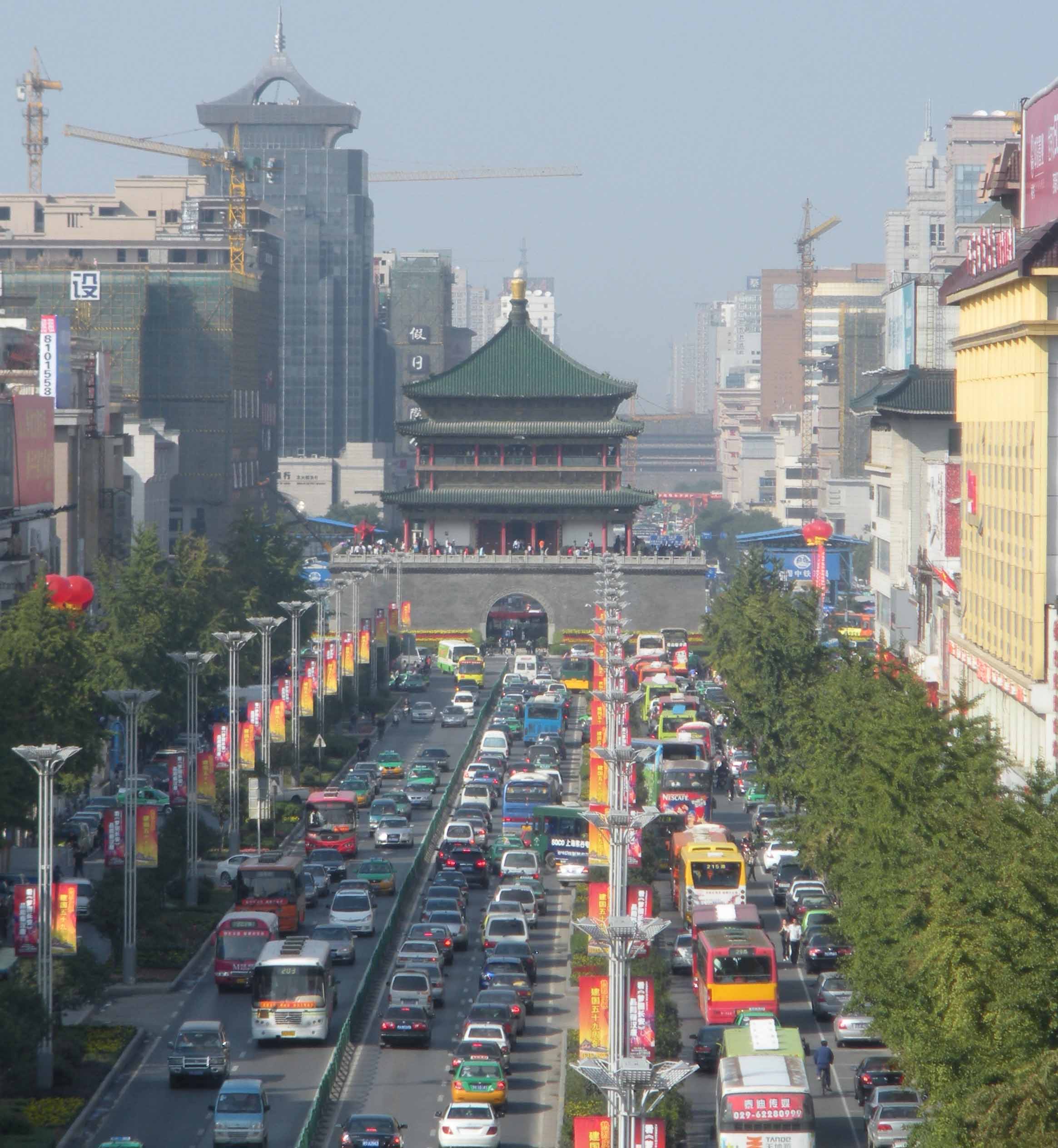
Visiting Xian – a city with more than 3,100 years of history

April 17, 2012

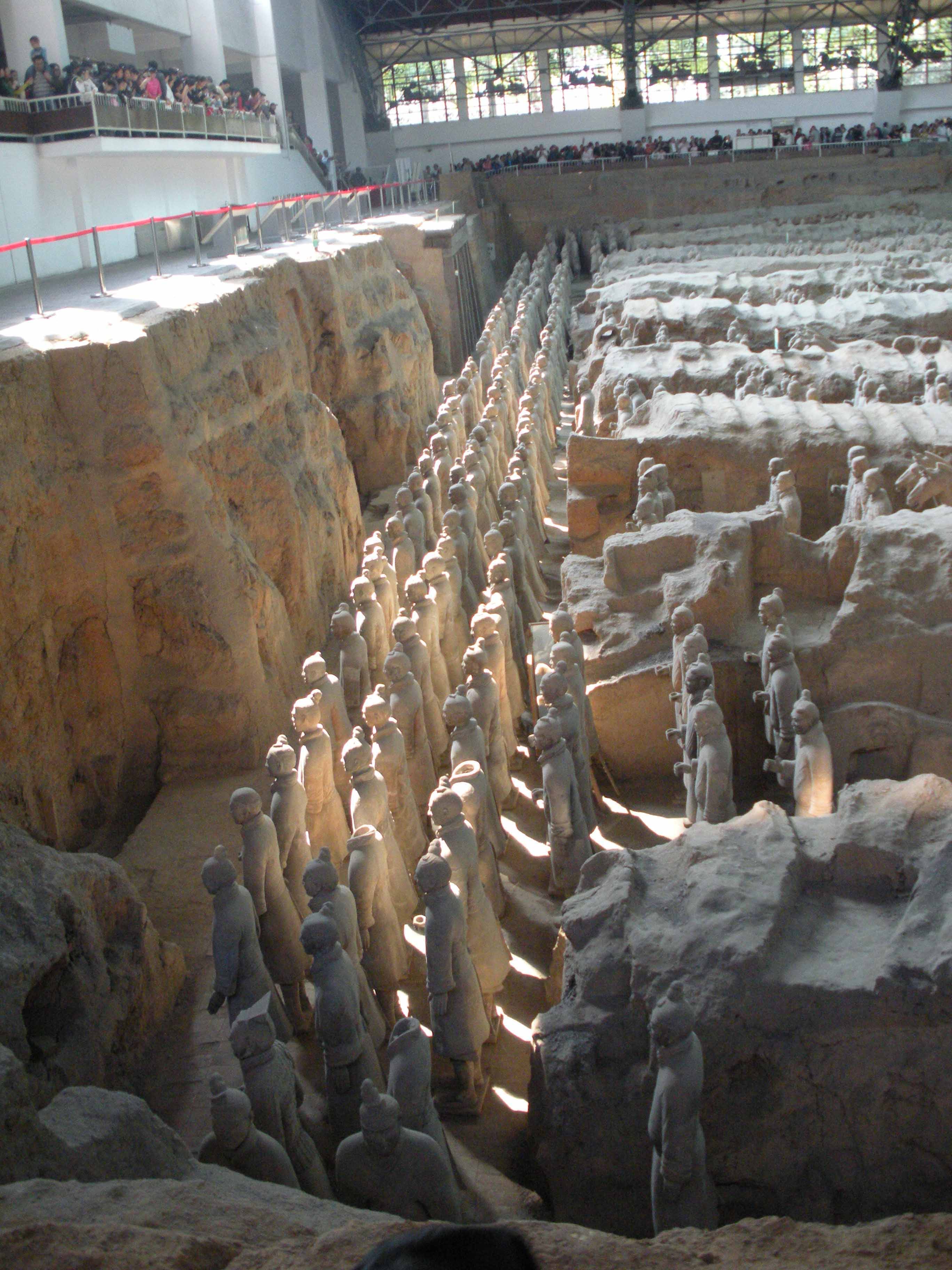
We are taking a quick trip to Xian (in pictures that is). Xian was China’s ancient capital for more than a thousand years before being moved to Beijing.

After landing in Xian in 2008, (our third visit to the city since 1999) we found a great driver. He was honest and knowledgeable. Here’s the cell phone number he had at the time (136-0916-251). If you visit Xian, I recommend you book him for the entire stay. He also introduced us to some experiences we’d never had on previous trips.

The Famous Terra Cotta warriors were created to guard China’s first emperor Qin Shi Huangdi (221-204 B.C.). Qin Shi Huangdi made Xian China’s first capital until Kublai Khan moved the capital to Beijing where he ruled his Khanbalik Empire, from 1264 to 1267.

Xian was known as Chang’an before the Ming Dynasty and is one of the four great ancient capitals of China having held that distinction under several of the most important dynasties in China’s history. In fact, Xian was a cultural center more than a thousand years before Jesus Christ was born.

______________

Lloyd Lofthouse is the award-winning author of The Concubine Saga. When you love a Chinese woman, you marry her family and culture too. This is the love story Sir Robert Hart did not want the world to discover.

Subscribe to “iLook China”
Sign up for an E-mail Subscription at the top of this page.

About iLook China

Note: This revised post first appeared February 19, 2010


The Man that may be China’s next President – Part 2/2

April 4, 2012

From Laura Rozen, who writes a Blog for Yahoo News called The Envoy, we learn that Xi Jinping is 58 years old and is no stranger to the United States.

Rozen says, “His daughter and only child attends Harvard University (under a pseudonym). He himself famously visited Muscatine, Iowa (his current trip will be a repeat visit) in the 1980s when he was a provincial Chinese official trying to promote U.S.-Chinese agriculture ties.

“The son of a Chinese Communist revolutionary general and war hero who was jailed for a time after a falling-out with Chairman Mao, Xi is described as a workaholic pragmatist with a reputation for clean living and (rare among Chinese party bosses) for his anti-corruption practices.”

On February 15, 2012, a staff reporter for Want China Times.com said, “China’s vice president, Xi Jinping, was interviewed by the Washington Post…  he answered six questions but declined to talk about his father, Xi Zhongxun, saying the subject was simply too sensitive, according to the Hong Kong-based Ming Pao… Xi Zhongxun was persecuted by Mao Zedong’s right-hand man, Kang Sheng. He was investigated and put in prison for almost 16 years. After Xi was rehabilitated under Deng Xiaoping, he played an important role in China’s economic reforms.”

In addition, Xi Jinping is married to one of China’s most famous singers, patriotic folk singer Peng Liyuan.

The Daily Beast says, “Xi began pursuing Peng in the ’80s, after his previous marriage ended in divorce. Reportedly, Peng’s parents initially weren’t crazy about the match because of Xi’s label as a ‘princeling’…  Undaunted, Xi continued his courtship, eventually winning over both Peng and her family.”

In 2011, his wife, Peng Liyuan was appointed as a goodwill ambassador for the World Health Organization.

Rozen says,  “Xi reportedly lived in a cave for almost seven years and did hard labor as a young man after his father’s political troubles, and had to apply eight times before being accepted into the Chinese Communist Party.”

China’s vice president since 2008, Xi is expected to become general secretary of China’s Communist Party this fall, and to formally succeed Hu Jintao as China’s president next year. But the succession plan is not absolutely certain, officials caution.

“In fairness, Xi is not yet the number 1 official in China, …. and there’s still a long runway before take-off ahead of him…’

Chinese Leaders.org says, “an unnamed professor who was a childhood friend of Xi reportedly said Xi was drawn to Buddhism during his early career, and had a ‘seeming belief in supernatural forces’. The professor added that Xi was incorruptible by money, did not drink or take drugs and women felt he was ‘boring’.”

Lee Kuan Yew of Singapore was quoted in Time magazine saying, “I would put him in the Nelson Mandela class of persons. A person with enormous emotional stability who does not allow his personal misfortunes or sufferings to affect his judgment. In other words, he is impressive.”

Return to The Man that may be China’s next President – Part 1

______________

Lloyd Lofthouse is the award-winning author of The Concubine Saga. When you love a Chinese woman, you marry her family and culture too. This is the love story Sir Robert Hart did not want the world to discover.

Subscribe to “iLook China”
Sign up for an E-mail Subscription at the top of this page.

About iLook China


The Man that may be China’s next President – Part 1/2

April 3, 2012

I’m sure that you have never heard of a dictator that had term limits—in fact, two different term limits. You may often hear that the president of China is a dictator and that China is a dictatorship. However, the facts say otherwise unless the definition for this term has been changed in recent years to fit China.

However, the Longman Dictionary of Contemporary English says that a dictator is “a ruler who has complete power over a country, especially one whose power has been gained by force.”

The Oxford Dictionary (the world’s most trusted dictionaries – according to them) says, that a dictator is “a ruler with total power over a country, typically one who has obtained control by force.”

Wiki says “A dictator is a ruler who assumes sole and absolute power but without hereditary ascension such as an absolute monarch… In modern usage, the term ‘dictator” is generally used to describe a leader who holds and/or abuses an extraordinary amount of personal power, especially the power to make laws without effective restraint by a legislative assembly.”

Therefore, when the president of China is limited to two, four-year terms and/or must retire at age sixty-eight (whichever comes first) and there is a legislative body that has the power to make laws while the courts enforce them (but may not overrule or interpret those laws), does that mean that president is a dictator too? I’ll leave that answer up to the reader.


Newsmakers 2011 – Xi Jinping

In addition, Article 62 of China’s Constitution says that The National People’s Congress (NPC) “elects the President and the Vice-President of the People’s Republic of China… In Article 63, it also says the NPC has the power to recall or remove from office the President and the Vice-President, which hasn’t happened yet but to be fair, it hasn’t happened in the United States either.

Then in Section 2, Articles 79 to 84 you may discover what the power of China’s president is. In Article 80, it says, “The President of the People’s Republic of China, in pursuance of decisions of the National People’s Congress and its Standing Committee, promulgates statutes … confers state medals and titles of honour; issues orders of special pardons; proclaims martial law; proclaims a state of war; and issues mobilization orders.”

I suggest clicking on this link to China’s Constitution and scrolling down to Section 2 to learn the rest.

Anyway, these two posts are about the man that may rule China as its president for the next four to eight years. Earlier this month, that man visited the United States and his name is Xi Jinping.

We will learn more about him as a person in the next post.

But first, it helps to learn more about how China’s government works. Patrick Chovanec is a professor at Tsinghua University’s School of Economics and Management in Beijing, China. He says, “In China there is the Party, the Army, and the State. Unlike in the U.S., where the three branches are co-equal and are specifically designed to check and balance each other’s powers, in China the Party is supreme and rules over the other two elements. China’s ‘leadership transition’  involves coordinated handovers of power involving all three parts of the political system.”

Chovanec says, “Since the late 1990s, a semi-official mandatory retirement age of 68 has applied to all Politburo members. If that rule is applied in 2012 (and there is no reason to expect that it won’t), all seven members of the current Politburo Standing Committee besides Xi and Li (including Hu and Wen) will retire, and be replaced by new appointees.”

I recommend clicking on this link to Chovanec’s Blog to read the rest of his post on this topic. It may be worth your time to learn more about how China works.

Continued on February 29, 2012 in The Man that may be China’s next President – Part 2

______________

Lloyd Lofthouse is the award-winning author of The Concubine Saga. When you love a Chinese woman, you marry her family and culture too. This is the love story Sir Robert Hart did not want the world to discover.

Subscribe to “iLook China”
Sign up for an E-mail Subscription at the top of this page.

About iLook China