All About Balance

March 8, 2010

 On my last flight to China on United Airlines, I got sick from the food. I knew airline food is often horrible, but I was an idiot and ate anyway.

After landing in China, I went to a Chinese pharmacy for help.  The Shanghai pharmacist took an American medicine for diarrhea off the shelf. I said no. She looked surprised.

“Give me Chinese medicine. Western medicine does too much damage to the body.” 

She smiled and looked impressed. “He knows,” she said. “You do know that the Chinese medicine will take longer to heal you.”

I know that Yin and Yang underlie all aspects of Chinese philosophy and medicine. I know that the Chinese believe in balance so the body remains healthy.  That’s one of the reasons you often see Chinese up early in the morning doing Tai Chi in parks. Maintaining health is more than eating properly. It also includes exercise. That doesn’t mean everyone in China follows the philosophy of Yin and Yang.

Tai Chi

Western medicine, on the other hand, waits until the patient is sick—then uses drugs, many that are dangerous, surgery, chemicals and radiation to try to fix things often with side effects that are worse than the disease.

Discover Attitudes Toward Health in China

______________

Lloyd Lofthouse is the award-winning author of the concubine saga, My Splendid Concubine & Our Hart. When you love a Chinese woman, you marry her family and culture too. 

If you want to subscribe to iLook China, there is a “Subscribe” button at the top of the screen in the menu bar. 


The Man Who Made China

March 8, 2010

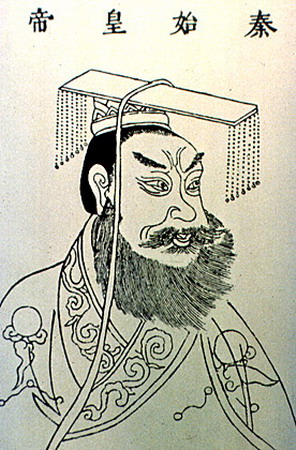
Genghis Khan, Attila the Hun, Alexander the Great, Napoleon Bonaparte, Adolf Hitler, Tamerlane, Mussolini, Stalin, Togo and all the rest of the great conquerors failed where Qin Shi Huangdi, China’s First Emperor, succeeded. National Geographic has a short film that is worth watching.

Qin Shi Huangdi, the man who made China

While history records this emperor as a cruel and brutal tyrant, he did several things that made sure China would stay unified.  First, he forced every nation he conquered to accept one written language. Anyone who protested was killed.  Today, more than twenty-two hundred years later, China still has one written language but many spoken languages. He also created one form of money and a code of laws that everyone had to obey.  Soon after the man who made China died, a rebellion swept the Qin Dynasty (221 – 206 B.C.) away and the Han Dynasty replaced it (206 B.C. to 219 A.D.).

Qin Shi Huangdi may have been the only conqueror in history who did not allow those he defeated to retain their written language. Because of this, China has survived for more than two millennia—something no other civilization may claim.

Visit Xian and see Qin Shi Huangdi’s capital and/or The First Emperor: The Man Who Made China (Part 1 of 9)

______________

Lloyd Lofthouse is the award-winning author of The Concubine Saga. When you love a Chinese woman, you marry her family and culture too. This is the love story Sir Robert Hart did not want the world to discover.

Subscribe to “iLook China”!
Sign up for an E-mail Subscription at the top of this page, or click on the “Following” tab in the WordPress toolbar at the top of the screen.

About iLook China


2012 – Changing the Guard

March 8, 2010

The fifth generation of Communist leadership in China will take charge in 2012, as the fourth generation steps down.  Retirement from public office is mandatory at 67.

Who are these people? There are two factions (recognized by the Western media) competing for leadership of the country.

One faction is the Gang of Princelings whose parents were powerful members of the Communist Party. The other faction comes from those that climbed the ranks from China’s Youth League. This year’s session of the National People’s Congress marks the unofficial start of the campaign season for 2012 when most of the current leadership will retire.

One rival is Wang Yang, once a member of the Communist Youth League. Wang has talked about having new, capital-intensive industries replace the old, labor-intensive industries in Guangdong.

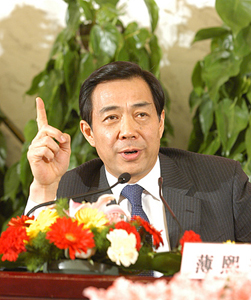
One princiling has been in the spotlight recently. He has achieved celebrity status in China because he was successful fighting organized crime in Chongqing, a city with a population that is more than thirty million.  His name is Bo Xilai, one of the princelings, and his father was one of China’s eight Communist Immortals.

Bo Xilai

In China, family history is important and always has been. The Chinese look at the history of the family, the father, the mother and believe that will show them who the child will be and if that man or woman can be trusted.

See Family Connections

______________

Lloyd Lofthouse is the award-winning author of the concubine saga, My Splendid Concubine & Our Hart. When you love a Chinese woman, you marry her family and culture too. 

If you want to subscribe to iLook China, there is a “Subscribe” button at the top of the screen in the menu bar.


Family Connections

March 7, 2010

In China, if you can’t trust anyone else, you should be able to trust your family. That belief also applied to the emperors.

In China, when a minority king became too powerful and caused unrest, the emperor proposed that this king marry the emperor’s real daughter (instead of an adopted daughter), as if to say, “You will be a member of my family so stop what you are doing—stop fighting with The Middle Kingdom. Since we are soon to be related through marriage, there is no need to fight.”

This happened more than a thousand years ago with Tibet when the Emperor of the Tang Dynasty married his daughter to the Tibetan king so the Tibetans would stop raiding China.

Traditional Chinese Wedding

Under the rule of emperors, minorities were not forced to pay taxes like the Han Chinese. It was believed that minorities were less fortunate and did not have the same advantages. After Mao, China’s government, with few exceptions, continued this policy.

More about a few of China’s Minorities
China’s Zhuang & Yao ethnic people
Li River Minority area
Li River Minority area # 2

______________

Lloyd Lofthouse is the award-winning author of the concubine saga, My Splendid Concubine & Our Hart. When you love a Chinese woman, you marry her family and culture too. 

If you want to subscribe to iLook China, there is a “Subscribe” button at the top of the screen in the menu bar.


China’s Health Care During Mao’s Time

February 27, 2010

After the Communists won China in 1949, health care improved. Prior to that, life expectancy for the Chinese people was thirty-five years. By Mao’s death in 1976, average life expectancy had increased by twenty years.

There were three basic areas of medical care. Free substandard medical care was provided to the proletarian working class, meaning workers and peasants.

Mao started a program called ‘bare-foot doctors’. This program was the backbone of rural health care in China. This meant anyone could become a doctor.

  • Video: Documentary of Bare-Foot Doctors in China

Mao told the people that if you wanted to be a doctor, you didn’t need to go to medical school. All you had to do was have the motivation to provide medical care to needy people and the government would support you and provide limited training.

The second class of medical care went to people like teachers, clerks and secretaries, ‘friends’ of the working class, the proletariat. The only difference was that these ‘friends’ had to pay to get medical treatment. It was possible to face financial ruin from one hospital stay.

The third class were termed enemies of the proletariat like former shop-owners, landlords and denounced intellectuals like liberal arts professors. These people were denied treatment altogether.

Learn about China’s Urban Rural Divide

______________

Lloyd Lofthouse is the award-winning author of The Concubine Saga. When you love a Chinese woman, you marry her family and culture too. This is the love story Sir Robert Hart did not want the world to discover.

To subscribe to “iLook China”, look for the “Subscribe” button at the top of the screen in the menu bar, click on it then follow directions.