The Opium Wars in the 19th Century (1800s)

June 28, 2010

China began the 19th century confident of its superiority over the rest of the world.  China’s population numbered 400 million. The Qing (Manchu) Empire controlled the world’s biggest economy.  China enjoyed a favorable balance of trade with the West—receiving a huge amount of money for its silk, porcelain, and tea.

By 1800, the British consumed 10,000 tons of tea annually.  So much money poured into China, that one Chinese merchant became the richest man in the world, and all foreign business with was restricted to one city, Canton.

However, Britain had a product to reverse that balance of trade—opium. The British shipped opium into China and up its rivers to almost every part of China.  So many became addicted to the drug, the stability China was threatened.

Then in 1839, the Emperor acted to stop the opium trade. Lin, the man in charge, wrote to Queen Victoria asking for her help. Ignored by Great Britain, Lin resorted to confiscating the opium and destroying it, which led to the Opium Wars started by Britain and France, who respected nothing but force. China lost the war and was forced to pay for a war they did not want and did not start.

In the British parliament, William Gladstone criticized his government calling the Opium war a disgrace.

See Mao’s War Against Illegal Drugs

______________

Lloyd Lofthouse is the award-winning author of the concubine saga, My Splendid Concubine & Our Hart. When you love a Chinese woman, you marry her family and culture too.

If you want to subscribe to iLook China, there is a “Subscribe” button at the top of the screen in the menu bar.


Conversation—Sung Dynasty Philosophy

June 28, 2010

China may be the only ancient culture that survived the spread of Islam and Christianity and managed to hold onto its identity.

________________________________

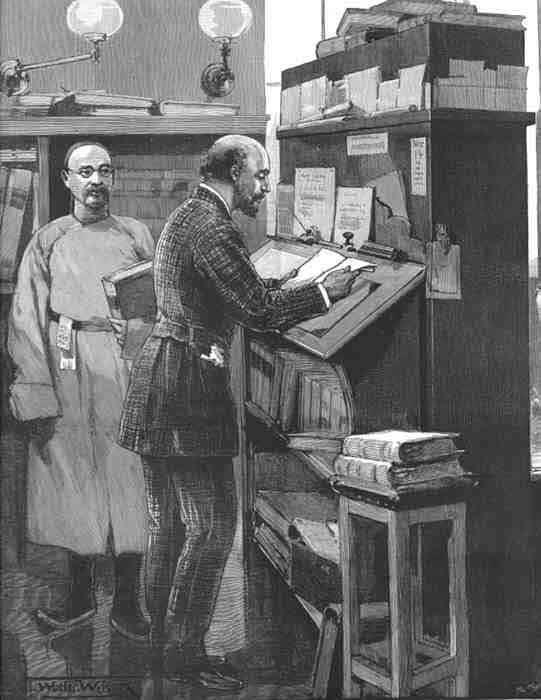
“Guan-jiah,” Robert said, “before I came to China I read The Travels of Marco Polo. Do you know who he was?”

“No, Master,” Guan-jiah replied.

“He came to China from Europe more than six hundred years ago and served under Kublai Khan during the Yuan Dynasty. Polo wrote that Hangzhou was the finest and noblest city in the world.”

“Hangzhou was the capital of the Southern Sung Dynasty, Master,” Guan-jiah said. “I’ve heard it is beautiful. Sung philosophy says that we have the power in our minds to overcome our emotions.”

“Marco Polo believed it was God’s will that he came back from China so others in the West might know what he’d seen.” Robert turned to his servant, who was the last in line. “Do you believe in this Sung philosophy, Guan-jiah?”

Guan-jiah and Robert Hart - 19th century China

“The Sung said that if you know yourself and others, you would be able to adjust to the most unfavorable circumstances and prevail over them.”

“That’s admirable, Guan-jiah. You never mentioned you were a scholar. If the Sung Dynasty was that wise, I want to see Hangzhou one day.”

“I am no scholar, Master, but I must believe in the Sung philosophy to survive. I have read and contemplated much literature. However, I am like a peasant and have never mastered calligraphy. It is a skill that has eluded me.”

“How old were you when you studied this philosophy?”

“I was eleven, Master, two years after I was sent to Peking.”

Source: From Chapter 4, My Splendid Concubine
See The Influence of Confucius

_________________________

Lloyd Lofthouse,
Award winning author of Hart’s concubine saga, My Splendid Concubine & Our Hart. When you love a Chinese woman, you marry her family and culture too. 

Sign up for an RSS Feed for iLook China


The Prince’s Garden

June 26, 2010

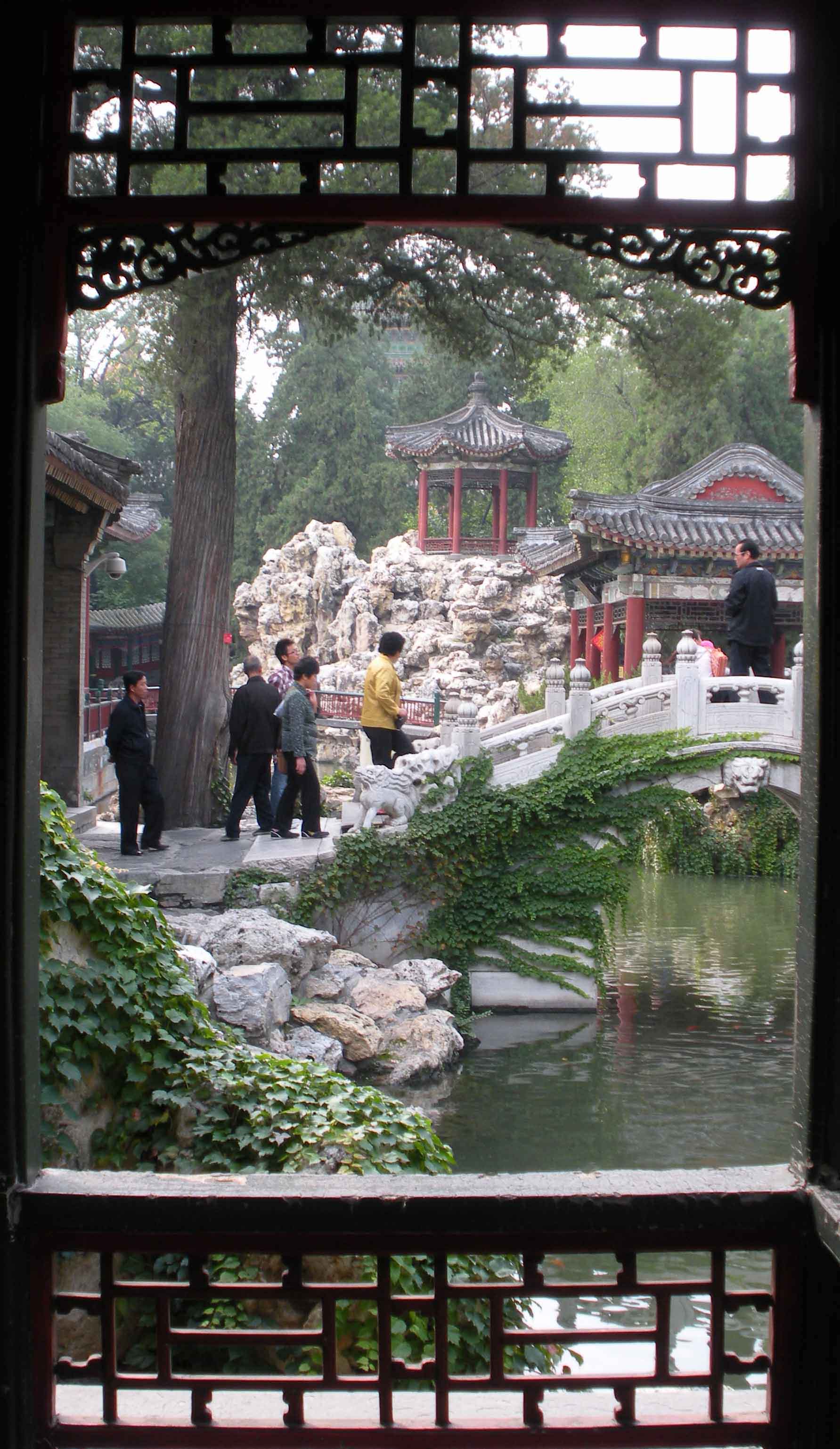
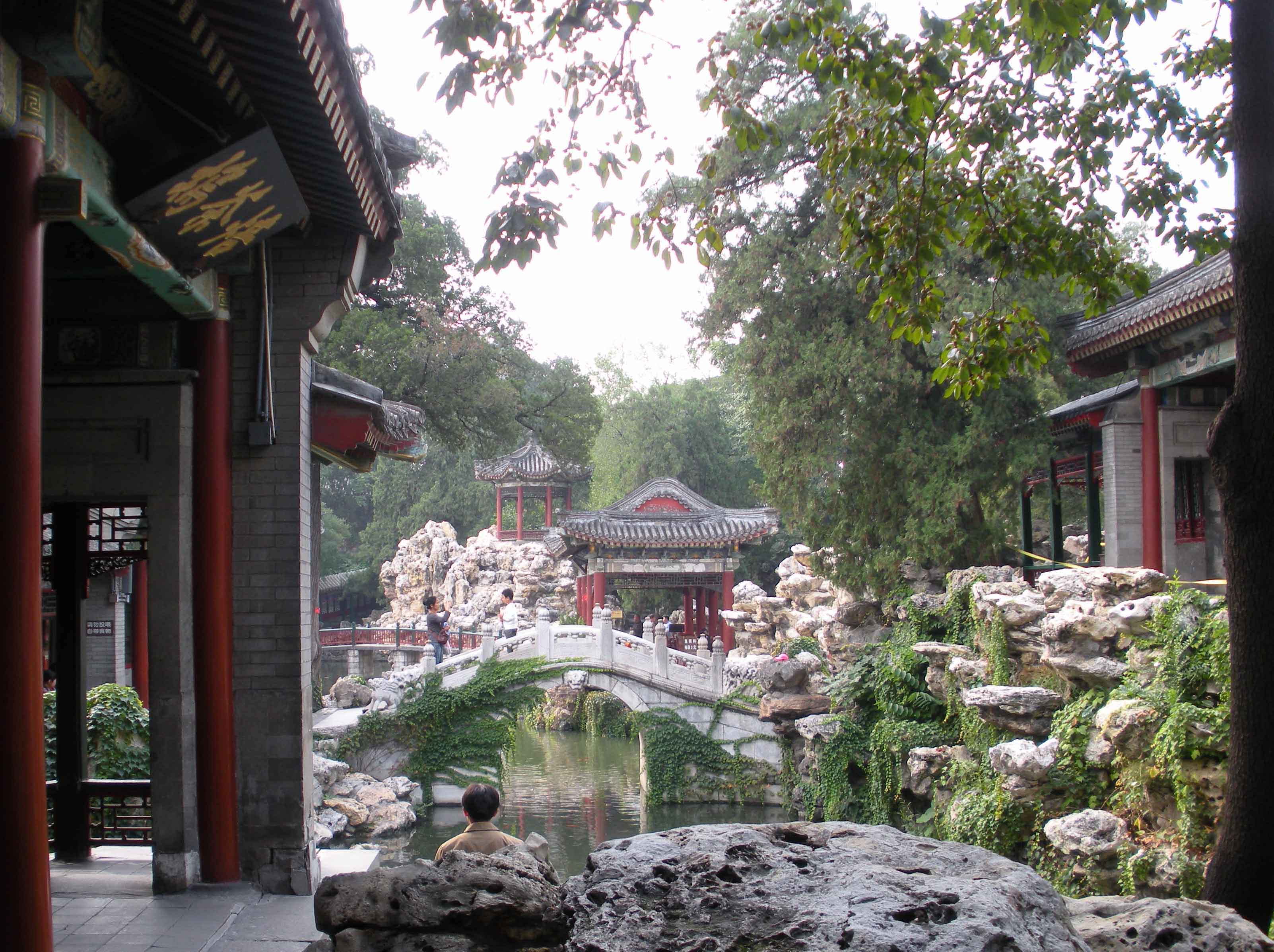
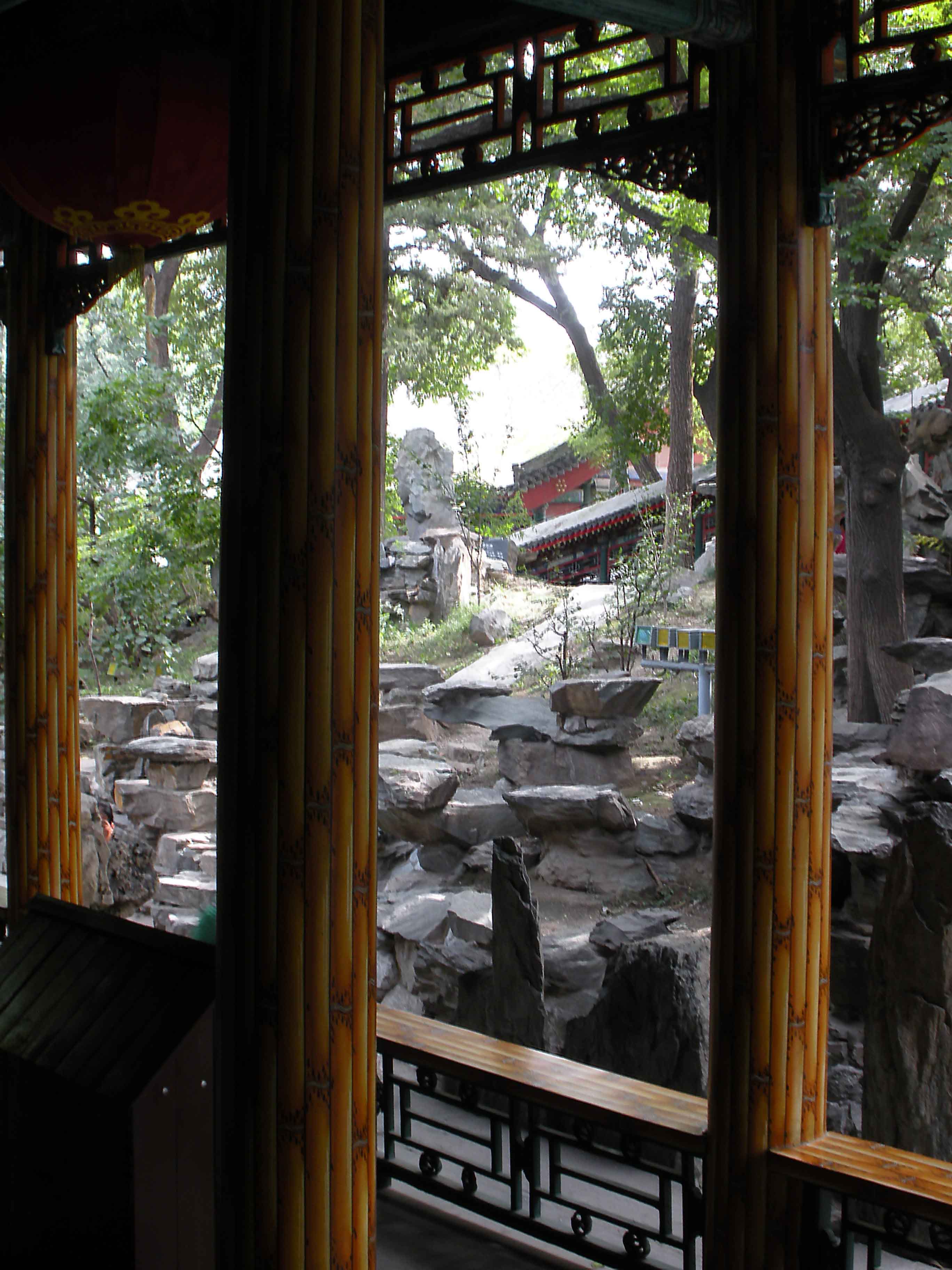
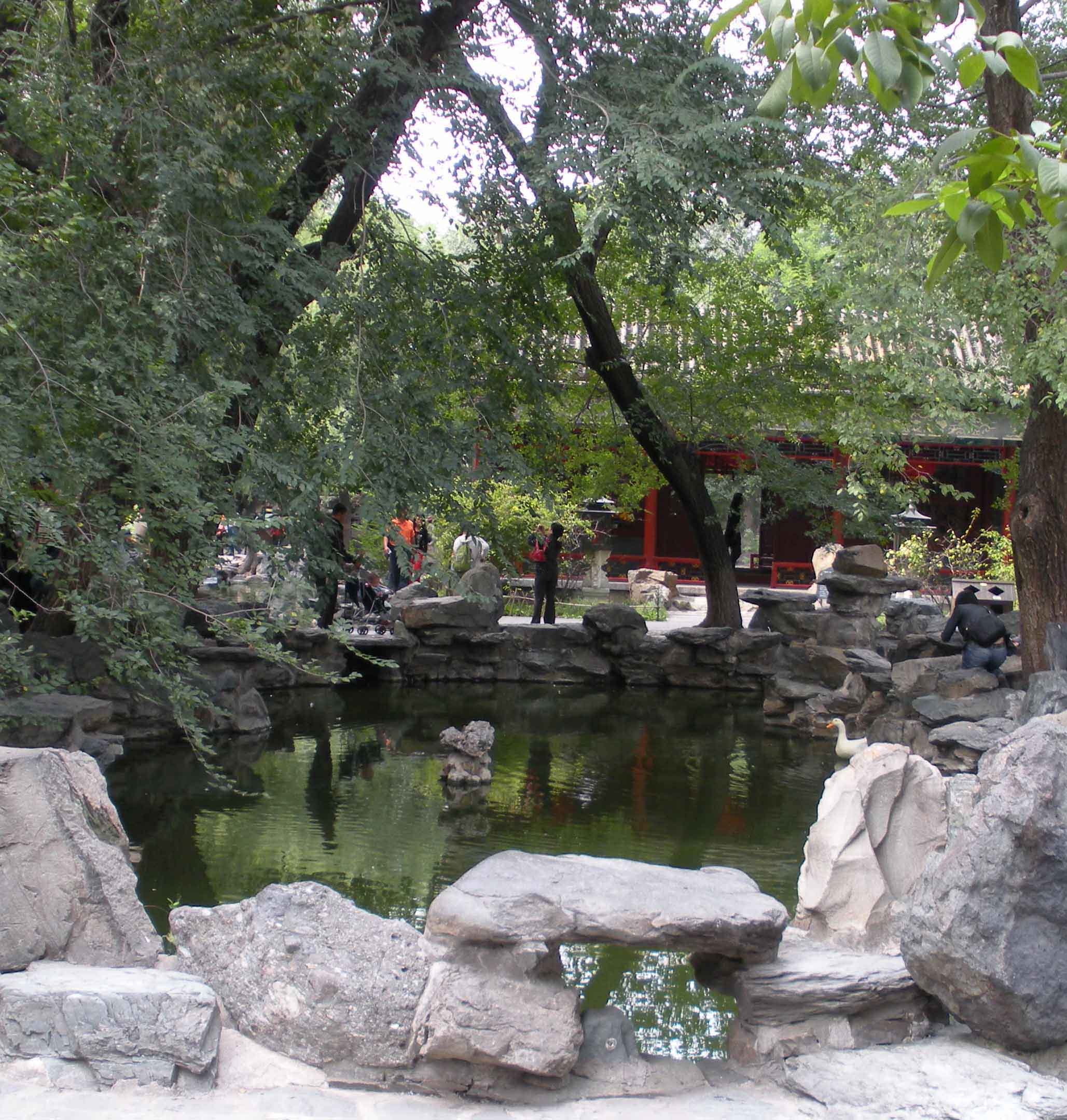
These photos were taken inside Prince Kung’s (1833-1898) palace and garden (once called Gongwangfu). This palace is in Beijing’s Beihai district. Prince Kung was Emperor Hsein Feng’s (1831-1861) younger brother.

As Inspector General for the Emperor of China, Robert Hart, known as the Godfather of China’s modernism, lived in the same hutong that Prince Kung lived in.  The Forbidden City was on the far side of Tiananmen Square.

Robert Hart, the main character in “My Splendid Concubine” and “Our Hart”, often met Prince Kung in this garden.

After 1950, for several decades, this palace and the garden became a communal home for many Chinese. In recent years, the garden, considered one of the best in China, was renovated and is now a tourist attraction, which attracts thousands of visitors daily.

To design a proper Chinese garden one must build a big place in a small space.  Prince Kung’s garden and estate is surrounded by a high wall and outside is Beijing.  Once inside, it is easy to forget that outside the walls is a crowded city. It was also easy for the Qing (Manchu) royals to forget about what was happening throughout China.

Discover The Summer Palace

________________________

Lloyd Lofthouse is the award-winning author of the concubine saga, My Splendid Concubine & Our Hart. When you love a Chinese woman, you marry her family and culture too.

To subscribe to “iLook China”, look for the “Subscribe” button at the top of the screen in the menu bar, click on it then follow directions.


Mao’s War Against Illegal Drugs

June 25, 2010

From The Opium Monopoly by Ellen N. La Motte, we learn how opium addiction became an epidemic in China. Although The Chinese knew about opium for more than a thousand years, it wasn’t until the Portuguese arrived in the 18th century that  the Chinese used it as a drug by smoking it. Merchants from Britain, France, Portugal, America and other nations became the drug cartels that plagued China into the 20th century.

In 1729, the emperor issued the first anti-opium edict, but the supply of opium flooding China went from 220 chests in 1729 to 70,000 in 1858.

It is estimated that before 1950, as many as 20 million Chinese were addicts. Then Mao had the Red Army execut the drug dealers and forced millions of addicts into compulsory treatment.

Opium growers, who did not want to comply, fled into the Golden Triangle Region of Southeast Asia where many of Chiang Kai-shek’s nationalist troops had gone to escape defeat. Those generals also did business with the CIA, and American soldiers in Vietnam became the new customers. It is estimated that at least 20% of the almost nine million American troops that served in Vietnam became addicted.

China remained free of drugs until Deng Xiaoping declared, “Getting Rich is Glorious” and opened China to world trade. In 2003, it was estimated that China had four million regular drug users even with China’s strict laws concerning illegal drug use.

Sources: Opium and Illegal Drugs in China and How Maoist Revolution Wiped Out Drugs in China

To learn more about Mao’s China, see China’s Great Leap Forward

______________

Lloyd Lofthouse is the award-winning author of the concubine saga, My Splendid Concubine & Our Hart. When you love a Chinese woman, you marry her family and culture too.

If you want to subscribe to iLook China, there is a “Subscribe” button at the top of the screen in the menu bar.


China’s Great Leap Forward and the Cultural Revolution Ends in 1976 (Part 6)

June 24, 2010

In Part 6, the anarchy led by Mao spread. Schools and hospitals closed.  Offices and factories were in chaos. Qi Youyi, who was a factory worker in Beijing, describes how bad it was. Production stopped. No one knew when he or she might be denounced and arrested. Many workers committed suicide.

After two years, the army was called to restore order and reestablish the Communist Party. The Red Guards were sent to the countryside to learn from the peasants. However, the Cultural Revolution did not really end until 1976 when Mao died.

Deng Xiaoping's China where Getting Rich is Glorious

After his death, Mao’s closest supporters, the Gang of Four, were arrested and Mao’s revolutionary activities were abandoned. In an attempt to hold the country together, the Communist Party used propaganda and the Red Army to maintain control so the country would not fall apart.

Deng Xiaoping replaced ideological fervor with economic activity so the people would be motivated not by dreams of equality but by money. In the 1980s, the new message was “to get rich is glorious”.

Return to Part 5, China’s Great Leap Forward or start with Part 1

______________

Lloyd Lofthouse is the award-winning author of the concubine saga, My Splendid Concubine & Our Hart. When you love a Chinese woman, you marry her family and culture too.

If you want to subscribe to iLook China, there is a “Subscribe” button at the top of the screen in the menu bar.