Deng Xiaoping’s first Steps to Open China to the World

July 18, 2018

It’s time to leave Mao behind as part of China’s history. His era ended with his death and the arrest of the “Gang of Four”, including Mao’s widow, Jiang Qing. The “Gang of Four” was convicted of crimes against the state and Jiang said in court, “I was Chairman’s Mao’s dog. What he said to bite, I bit.”

Jiang was Mao’s third wife, and she was convicted in 1981 of “counter-revolutionary crimes” and imprisoned. In 1983, her death sentence was commuted to life imprisonment. On June 5, 1991, she hung herself while still in prison. She was seventy-seven.

In 1977, Deng Xiaoping emerged as the dominant figure among pragmatists in the leadership. Under him, China launched far-reaching economic reforms.

One of the most famous maxims of Deng, dating back to the years before the Cultural Revolution, states that “It doesn’t matter whether a cat is black or white, as long as it catches mice.” That quote caused trouble between Mao and Deng because it meant Deng did not worry about whether a person was a revolutionary or not, as long as he or she was efficient and capable of doing their job under the socialist economy.

Once you understand that quote, you will understand China’s amazing economic reforms in the decades since Mao’s death and why one of Deng’s first steps in 1979 was to establish diplomatic relations with the United States.

Deng Xiaoping paid an official goodwill visit from January 20 to February 4, 1979, to the United States at the invitation of President Carter. This was the first visit by a Chinese leader to the United States after the founding of the People’s Republic of China.

During his visit, Deng exchanged views with President Carter on the international situation.

About Taiwan, Deng said that China was willing to solve the Taiwan question in a peaceful way. The Joint Press Communiqué issued by both sides said that both sides are of the view that differences in social systems of the two countries should not impede the enhancement of mutual friendly relations and mutual cooperation.

During the visit, China and the United States signed an agreement on cooperation in science and technology and a cultural agreement. They also signed agreements on cooperation in education, commerce, and space, and on the mutual establishment of consular relations and the opening of Consulates-General in each other’s country.

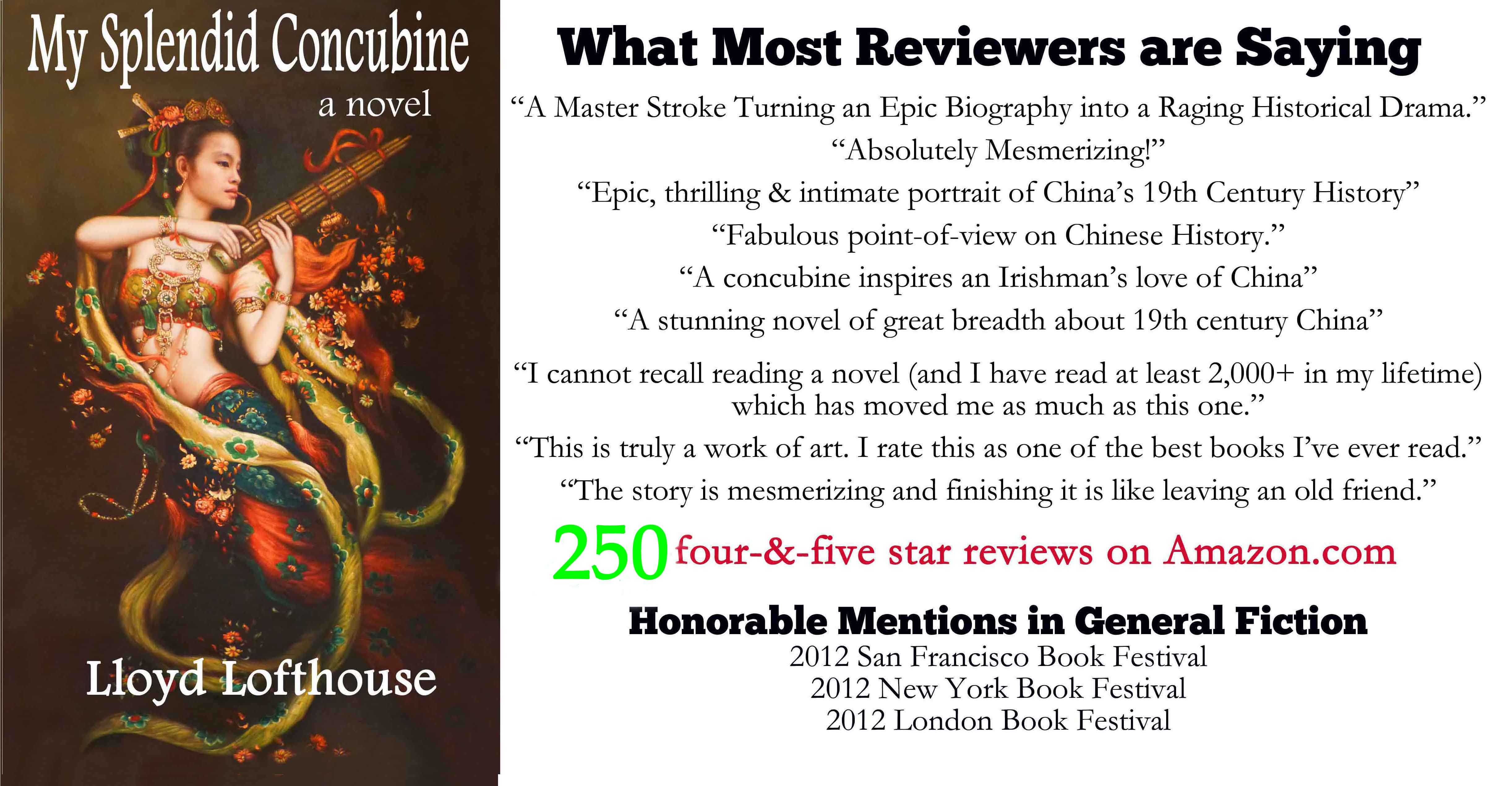
Lloyd Lofthouse is the award-winning author of My Splendid Concubine, Crazy is Normal, Running with the Enemy, and The Redemption of Don Juan Casanova.
Where to Buy

Subscribe to my newsletter to hear about new releases and get a free copy of my award-winning, historical fiction short story “A Night at the Well of Purity”.

About iLook China


Tibet Today

July 11, 2018

The population of the Tibetan Ethnic group is about six million and the majority live in Tibet, Qinghai, Sichuan, Gansu, and Yunnan. In the Tibetan areas of Southwest China, reforms were introduced between 1955 and 1957 in the farming areas. Feudal land ownership and all feudal privileges were abolished.  In September 1965, the Tibet Autonomous Region was officially established.

Twenty to forty thousand Tibetans live in Nepal and one hundred and twenty thousand live in India. More than three million people live in the Tibet Autonomous Region and 8%, about 248,000, are Han Chinese.

The Tibet Autonomous Region is located on the Tibetan Plateau, the highest region on earth. In northern Tibet, elevations reach an average of over 4,572 meters (15,000 ft). Mount Everest is located on Tibet’s border with Nepal.

Religious activities are protected by the government. Temples have been renovated and repaired. Buddhist statues, volumes of scriptures, ancient porcelain articles and other precious relics lost during the ten-year turmoil of the “Cultural Revolution” have been returned to the monasteries. Among them was a bronze statue of Sakyamuni brought to Tibet by Princess Brikuthi from Nepal in the 7th century. It is now kept in the Qoikang Monastery in Lhasa. An institute of Buddhist theology has been set up and preparations are being made to restore the scripture printing house. Tibet now has several thousand lamas, and the government sets no limit to the number of monks in the monasteries.

According to Lonely Planet, “Tibet offers fabulous monasteries, breathtaking high-altitude treks, stunning views of the world’s highest mountains and one of the most likable peoples you will ever meet.”

Lonely Planet.com says, “For centuries, Tibet was cut off from the outside world by its remote location, extreme climate, and geographic environment. This far-flung region thwarted all but the boldest travelers and explorers — that is, until the construction of the Qinghai-Tibet Railway in 2006, which connected Tibet to the rest of China. …

“To protect passengers from high-altitude sickness, trains have an oxygen supply system that increases the oxygen in the cabin as the train ascends and cabins have private oxygen-dispensing outlets. The temperature in the train is regulated and pressurized and the windows are glazed with a UV coating to protect against the powerful high-altitude rays.”

CNN Travel reports, “Robbie Barnett, a Tibet scholar at Columbia University, says China has poured in huge sums of money to make the high-altitude region accessible for mass tourism.”

The UK’s Telegraph says, “According to Xinhua News Agency, Tibet received more than 20 million tourists for the first time in 2015, representing 190-per cent growth from five years ago. Tourism revenue reached 28.19 billion yuan (£3.42 billion) in the same year, equal to 27.5 percent of Tibet’s GDP.”


In this video, the CNN reporter says the rent could be high in a new Tibetan village, but rural Chinese seldom pay rent or make mortgage payments.

Twenty million tourists is more than six times the population of Tibet.

People.cn says, “Thanks to the improvement in medical services over the past six decades, average life expectancy in Tibet jumped from 35.5 to 67 years by the end of 2010, says a white paper issued by the Chinese government on Monday …

“Improvement has also been seen in education.

“The enrollment rate for school-age children was less than 2 percent and illiteracy rate was as high as 95 percent among the young and the middle-aged in 1951. …

“Sixty years later, the enrollment rate for primary school-age children of the Tibetan ethnic group has reached 99.2 percent and the illiteracy rate among the young and the middle-aged has fallen to 1.2 percent …”

Lloyd Lofthouse is the award-winning author of My Splendid Concubine, Crazy is Normal, Running with the Enemy, and The Redemption of Don Juan Casanova.

Where to Buy

Subscribe to my newsletter to hear about new releases and get a free copy of my award-winning, historical fiction short story “A Night at the Well of Purity”.

About iLook China


China’s long History with Tibet

July 10, 2018

On October 7, 1950, the People’s Liberation Army (PLA) invaded Tibet. The PLA quickly surrounded the outnumbered Tibetan forces, and on October 19, the five thousand Tibetan troops surrendered.

When you hear about China and Tibet, what are your first thoughts? I suspect most people in the United States and Europe only know about China’s alleged ‘brutal’ conquest of Tibet and think Tibetans lost their freedom. If that’s what they have been programed to think, they are wrong. If they think Tibet was never part of China before October 19, 1950, they are also wrong.

The October 1912 issue of National Geographic Magazine describes how the Imperial government in Beijing managed a difficult Tibet, and letters Sir Robert Hart wrote in the 19th century also mention Tibet as part of China.

China considered Tibet a vassal state or a tributary of the empire.  In fact, starting in the 13th century, Yuan, Ming, and Qing Dynasty troops occupied Lhasa. There was a political governor and the Dali Lama, the religious leader of Tibet. Both were selected for their positions by the Emperor of China. When a Dali Lama died, the list of replacements was sent to the Emperor in Beijing and he selected the new Dali Lama.

In 1890, a Convention between Great Britain and China was signed that offers more evidence that China’s emperor considered Tibet part of his realm and Great Britain agreed. Tibet is mentioned twenty-nine times in that treaty.

Tibet has never had a Democracy and will probably never have one. The following quotes show you what Tibet was like before 1950.


One error mentioned in this video is that “many” Tibetans live outside of Tibet. Only 1-percent of Tibetans live outside of Tibet and they represent the landowners and ruling class that fled when China returned to Tibet in 1950.

The October 1912 National Geographic Magazine, page 979, reported, “Lamaism is the state religion of Tibet and its power in the Hermit Country is tremendous. Religion dominated every phase of life. … For instance, in a family of four sons, at least two, generally three, of them must be Lamas. Property and family prestige also naturally go with the Lamas to the monastery in which they are inmates.

“Keeping the common people or laymen, in ignorance is another means of maintaining the power of the Lamas. Nearly all of the laymen (serfs) are illiterate. Lamas are the only people who are taught to read and write.”

Under theocratic Lamaism, there was no freedom of religion, no freedom of speech, and there were no elections.

It is a historical fact that a Tang Dynasty Emperor married his favorite daughter to Tibet’s king as a way to stop Tibetans from raiding into China, something that Tibetans had done for centuries. Tibetans were not always Buddhists. Buddhism was introduced to Tibet by a conquering Mongol king around the time of Kublai Khan’s Yuan Dynasty.

Then a reluctant Tibet was ruled over by the Yuan (Mongol), Ming (Han) and Qing (Manchu) Dynasties from 1277 to 1913, when Great Britain convinced Tibet to break from China at the same time the Qing Dynasty was collapsing.

Between 1913 and 1950, Tibet was ruled by a Dalai Lama and was an autocratic theocracy, not a democracy or a constitutional republic like the United States. In case you don’t know it, a theocracy is a system of government in which priests rule in the name of God or a god. In Tibet’s case, his holiness the Dalai Lama is considered a living “God-King”, and he isn’t a Christian, a Jew, or a Muslim.

Lloyd Lofthouse is the award-winning author of My Splendid Concubine, Crazy is Normal, Running with the Enemy, and The Redemption of Don Juan Casanova.

Where to Buy

Subscribe to my newsletter to hear about new releases and get a free copy of my award-winning, historical fiction short story “A Night at the Well of Purity”.

About iLook China


Mao Zedong’s Legacy: Part 2 of 2

July 4, 2018

Before I get to Mao’s Cultural Revolution, I want to point out a few of Mao’s achievements. In the “Land of Famines”, China’s last famine was in 1958-62. For the first time in China’s long history, there hasn’t been a famine since 1962, fourteen years to Mao’s death in 1976 and another forty-two years since then.

The Mao era started in October 1949.  Mao said the People’s Republic of China would be free of inequality, poverty and foreign domination. The population of China was 541,670,000. Women were given new rights at work and in marriage, and foot binding was abolished. To deal with disease, Mao launched programs to improve health care that never existed before, and most of the people were inoculated against the most common diseases. When Mao died, the average life expectancy had increased from 35 to 55, and it is now 76.

When Mao died, the population had increased to more than 700,000. Extreme poverty had been reduced by about 14 percent. Since his death, poverty was reduced to where it is today at 6.5 percent of the population.

With a poverty rate of about 95-percent, Mao had promised land reforms to divide the land more equally. In 1950, with Mao’s blessing, rural property owners were judged enemies of the people by the rest of the rural people and hundreds of thousands were executed for their alleged abuses and crimes against the people that denounced them.

Soon after discovering that the famine was real, Mao ended the Great Leap Forward and publicly admitted he had been wrong and stepped aside to let someone else run the country. The large communes were abandoned, and the peasants returned to their villages and were given land again.  At the time, Mao was popular with the people but he still resigned as the head of state.

Then Mao wrote his infamous “Little Red Book” and used it to start the Cultural Revolution.

Zhang Baoqing, an early Red Guard member in Beijing, said, “Chairman Mao started the Cultural Revolution (1966 – 1976) to keep up the momentum for change. We thought if we followed Mao, we could not go wrong.”

Millions, mostly teenagers, willingly followed Mao’s advice.

The Cultural Revolutions stated goal was to preserve ‘true’ Communist ideology in the country by purging remnants of capitalist and traditional elements from Chinese society and to re-impose Mao Zedong Thought as the dominant ideology within the Party.

Britannica.com says, “Mao pursued his goals through the Red Guards, groups of the country’s urban youths that were created through mass mobilization efforts. They were directed to root out those among the country’s population who weren’t ‘sufficiently revolutionary’ and those suspected of being ‘bourgeois.’ The Red Guards had little oversight, and their actions led to anarchy and terror, as ‘suspect’ individuals—traditionalists, educators, and intellectuals, for example—were persecuted and killed. The Red Guards were soon reined in by officials, although the brutality of the revolution continued. The revolution also saw high-ranking CCP officials falling in and out of favor, such as Deng Xiaoping and Lin Biao.

“The revolution ended in the fall of 1976, after the death of Mao … The revolution left many people dead (estimates range from 500,000 to 2,000,000), displaced millions of people, and completely disrupted the country’s economy.”

Return to or Start with Part 1

Lloyd Lofthouse is the award-winning author of My Splendid Concubine, Crazy is Normal, Running with the Enemy, and The Redemption of Don Juan Casanova.

Where to Buy

Subscribe to my newsletter to hear about new releases and get a free copy of my award-winning, historical fiction short story “A Night at the Well of Purity”.

About iLook China


Mao Zedong’s Legacy: Part 1 of 2

July 3, 2018

Mao ruled China as its head of state from 1949 – 1959. To understand what Mao faced, it helps to know what life was like in China before 1949.

China had few railroads. Before 1949, there were 6,835 miles in service and most of those rail lines were in the northeast and coastal areas of China.

China did not have a paved highway system, did not have an electric grid linking every village and city. In fact, most of the electricity was only generated in a few cities like Shanghai and Beijing where wealthy foreigners lived. There was no telephone system in rural China and most of the cities where wealthy foreigners didn’t live. The average lifespan was 35. The literacy rate was only 15-to-25 percent, and poverty was worse than it was in 1981 when it was 88 percent. In 1949, when Mao became China’s leader, extreme poverty was closer to 95 percent.

China had just emerged from more than a century of wars: the Taiping Rebellion (about 20 million killed), the two Opium Wars started by England and France, the Boxer Rebellion, the chaos and anarchy after the collapse of the Qing Dynasty in 1912, the long Civil War between the Chinese Communists and the Nationals (1927 – 1950), World War II (15 – 20 million killed by Japanese troops), the Korean War (180,000 Chinese troops killed), the failure of Mao’s Great Leap Forward that resulted in what’s known as Mao’s Great Famine, and the ravages of his Cultural Revolution.

Britannica.com says, “The disorganization and waste created by the Great Leap, compounded by natural disasters and by the termination of Soviet economic aid, led to widespread famine in which, according to much later official Chinese accounts, millions of people died. …”

“The official Chinese view, defined in June 1981, is that his leadership was basically correct until the summer of 1957, but from then on it was mixed at best and frequently wrong. It cannot be disputed that Mao’s two major innovations of his later years, the Great Leap and the Cultural Revolution, were ill-conceived and led to disastrous consequences. His goals of combating bureaucracy, encouraging popular participation, and stressing China’s self-reliance were generally laudable—and the industrialization that began during Mao’s reign did indeed lay a foundation for China’s remarkable economic development since the late 20th century—but the methods he used to pursue them were often violent and self-defeating.”

Before anyone blames Mao’s policies on what’s known as Mao’s Great Famine, 1958-62, you should know about China as the “Land of Famines.”

The Oxford Research Encyclopedias says, “The fall of the Qing and the birth of China’s new Republican government in 1912 did not reduce the number, severity, or impact of famines. Destroying the imperial system of government that had lasted for two millennia proved far easier than building a new system. In the first decades after 1912 the collapse of central political authority, constant fighting between rival warlords, increasing foreign domination, and unprecedented environmental decline undermined efforts to prevent successive natural and manmade disasters from resulting in famines. … Xia Mingfang estimates that more than 15.2 million people died in ten major drought famines that struck during the Republican period (1912–1949), and another 2.5 million Chinese perished in thirty serious floods. Major disasters struck so frequently that many Chinese observers joined Western relief workers in calling China the ‘Land of Famine’.”

Continued with Part 2 on July 4, 2018

Lloyd Lofthouse is the award-winning author of My Splendid Concubine, Crazy is Normal, Running with the Enemy, and The Redemption of Don Juan Casanova.

Where to Buy

Subscribe to my newsletter to hear about new releases and get a free copy of my award-winning, historical fiction short story “A Night at the Well of Purity”.

About iLook China