In Search of the Tomb of Cao Cao – Part 3/3

September 20, 2010

Due to a victory against overwhelming odds, Cao Cao became one of the top generals of the Eastern Han Dynasty (23 – 220 A.D.)

In 189 AD, the emperor died and there was a power struggle to see who would control the dynasty. Thousands were murdered. 

By 196 AD, out of the chaos, Cao Cao became the power behind the powerless, last emperor.

Due to the years of struggle, many of the farms had been abandoned leading to famine.

Cao Cao described the situation, “Dead body’s can be seen here and there.  No roosters can be heard crowing anywhere.”  

Cao Cao became prime minister and reestablished the farms around the capital to end the famine. To deal with the danger, each farm was populated with a mixture of farmers and soldiers to work the land.

The following harvests ended the food shortages and the famine.

The following video reports the discovery of Cao Cao’s tomb in late 2009, in Xigaoxue village near the ancient city of Anyang in Henan Province.

The archeologists discovered an epitaph and inscriptions that indicate the tomb belonged to Cao Cao.

Pan Wenbing, the archaeological team leader said, “Cao Cao commonly used broadswords and short spears for defense. We have found six of them in the tomb.”

The skull of a man in his 60s was discovered, which fits Cao Cao’s age at death. 

After his death, Cao Cao was named Emperor Wei Wudi of the Wei Dynasty (215 – 265 AD).  Source: kongming.net

Return to In Search of the Tomb of Cao Cao – Part 2

______________

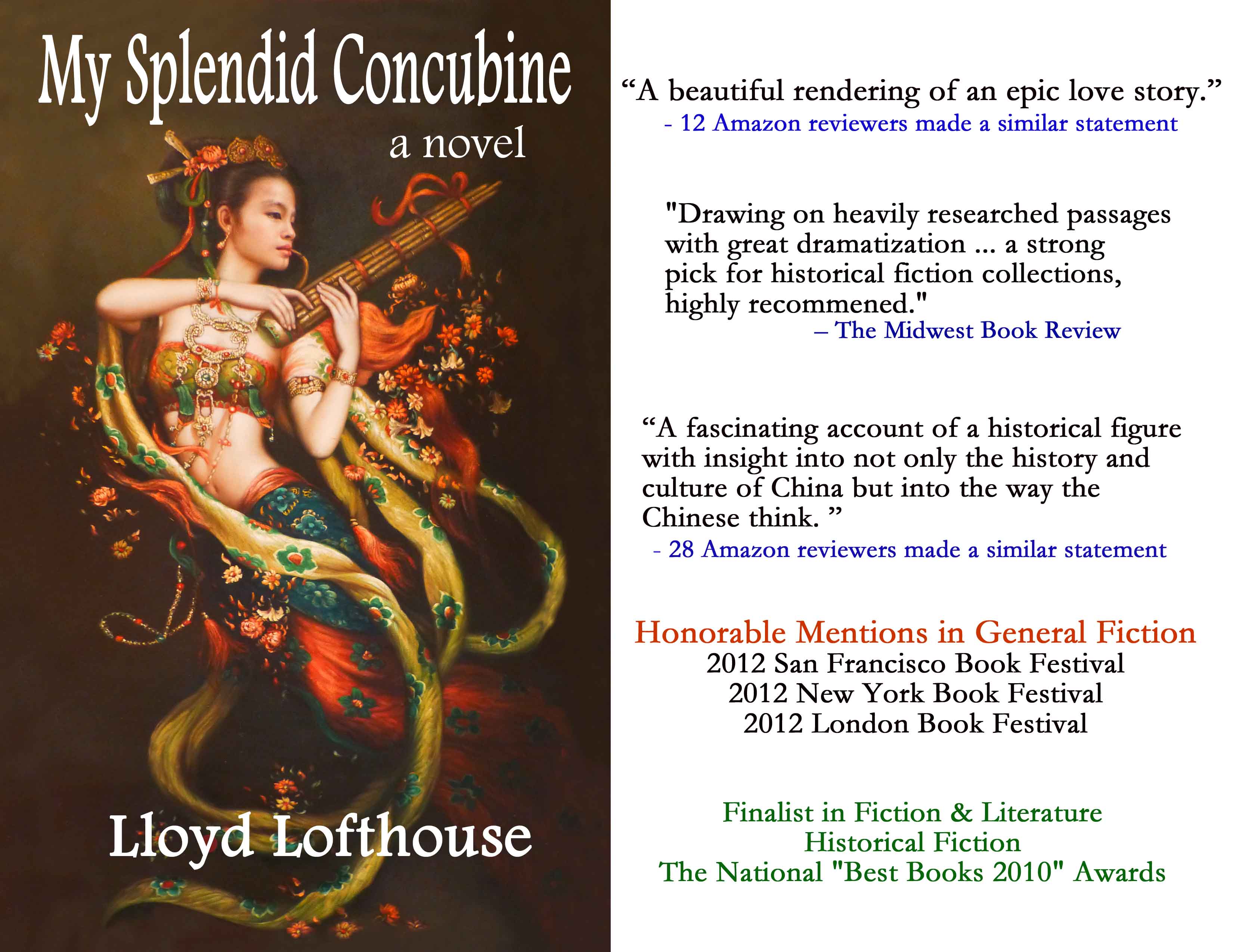
Lloyd Lofthouse is the award-winning author of the concubine saga, My Splendid Concubine & Our Hart. When you love a Chinese woman, you marry her family and culture too.

If you want to subscribe to iLook China, there is a “Subscribe” button at the top of the screen in the menu bar.


In Search of the Tomb of Cao Cao – Part 2/3

September 20, 2010

Cao Cao must have studied Sun Tzu’s The Art of War. His battle plans against the rival army of Yuan Shao was evidence of a military genius.

He carefully studied the terrain and selected the location where the battle would be fought so his smaller army could not be outflanked or surrounded.

The only way to fight would be across a small front with the armies facing each other sort of like King Leonidas and the 300 Spartans of Thermopylae.

In August 208 AD, the enemy army approached and camped facing Cao Cao’s troops.

After a three month standoff, Cao Cao took a small force and led a night raid to the town where the enemy stored its food supplies and his troops burned those supplies.

When the battle with Yuan Shao’s army finally took place, Cao Cao used deception again, as Sun Tzu teaches, to make the enemy believe he was attacking in the east when he was in the west fifty kilometers from where the enemy expected him.

In response, the enemy general, Yuan Shao, divided his army.

However, while Yuan was marching east, Cao Cao turned and moved quickly to attack the other half of Yuan Shao’s unprepared troops located in the west, which ended in victory.

After the battle, Cao Cao had consolidated his strength in the north but he still had other enemies.

Return to In Search of the Tomb of Cao Cao – Part 1

______________

Lloyd Lofthouse is the award-winning author of the concubine saga, My Splendid Concubine & Our Hart. When you love a Chinese woman, you marry her family and culture too. 

If you want to subscribe to this Blog, there is a “Subscribe” button at the top of the screen in the menu bar.


China’s Bloody History with Japan

September 19, 2010

For the second day in a row, I’ve read about the captain of a Chinese boat that collided with a Japanese patrol ship in waters both China and Japan claim they control. Source: Guardian.co.uk

Poor relations with Japan started as far back as 1840, when Japan joined the British, French and Americans during the Opium Wars to gain concessions from China.

In 1843, under the agreement of the Nanjing Treaty, Shanghai became one of five treaty ports to be turned into a colonial city that would be under control of foreign countries—Great Britain, France, America and Japan. Source: McGill.ca

Until 1871, the Japanese had never had much contact with the Chinese. Getting to know the Chinese led to a Japanese opinion that the Chinese were ethnically inferior since they were different from the Japanese and most Japanese haven’t changed their minds to this day.

In 1884, Japanese and Chinese troops faced off in Korea, which ended in a lopsided stalemate in Japan’s favor.

In 1894, Japan and China fought their first war over Korea. Like Tibet, Korea had been a tributary state of China for centuries.

China was defeated in 1895 losing Korea as a tributary and a large portion of Eastern Manchuria.

Then in 1870, Japan annexed the islands of the Ryukyu Kingdom, which had also been a tributary to China.

A Ryukyuan envoy even begged England for help but the British ruled that the islands should belong to Japan instead of China.

On July 7, 1937, Japan launched a war to conquer China. Over the next 8 years, Japan would occupy most of China.

In fact, Japan has never apologized for The Rape of Nanking and other atrocities during World War II that resulted in millions of Chinese deaths.

“The Chinese have resented the Japanese ever since Japan conquered and occupied China in the 1930s and 40s. The Japanese prime minister’s yearly visits to a Tokyo shrine for war veterans has always played in China as a reminder of Japan’s wartime brutality and continued lack of remorse.” Source: U.S. News & World Report

Long memoires and hard feelings still smolder and sometimes ignite into flames. Since China has risen from the ashes, Japan should walk softly around the mighty reborn dragon.

______________________________

Lloyd Lofthouse is the award-winning author of My Splendid Concubine [3rd edition]. When you love a Chinese woman, you marry her family and culture too. This is the lusty love story Sir Robert Hart did not want the world to discover.

2015 Promotion Image for My Splendid Concubine

Subscribe to “iLook China”!
Sign up for an E-mail Subscription at the top of this page, or click on the “Following” tab in the WordPress toolbar at the top of the screen.

About iLook China

China’s Holistic Historical Timeline


In Search of the Tomb of Cao Cao – Part 1/3

September 19, 2010

Knowing the country’s history helps to understand China today. The Romance of the Three Kingdoms was a historical novel written by Luo Guanzhong in the 14th century. 

The novel is based on events in the turbulent years near the End of the Han Dynasty when China fell into chaos and anarchy. The Three Kingdom era of China started in 169 AD and ended with the reunification in 280 AD.

Similar events took place in China after the Qing Dynasty (1644 – 1911 AD) collapsed eventually ending in the Communists ruling the mainland in 1949. See The Roots of Madness

The man credited for reuniting China when the Han Dynasty ended was Cao Cao (155 – 220 AD).

According to the historical records, Cao Cao was a brilliant ruler and a military genius. However, in literature and opera, Cao Cao has often been portrayed as a cruel and despotic tyrant—an image of a Chinese ruler unique in history.

What was Cao Cao really like?

For centuries, the search for Cao Cao’s tomb was unsuccessful.

At the time, there was the Kingdom of Wei, Shuhan and Wu. Cao Cao ruled Wei in Northern China.

Soon after his death, Wei defeated the other kingdoms and reunified China establishing the Western Jin Dynasty (265 – 420 AD).

When the war to reunify China began, Cao Cao had the smaller force—10,000 troops against 100,000.

See The Han Dynasty

______________

Lloyd Lofthouse is the award-winning author of the concubine saga, My Splendid Concubine & Our Hart. When you love a Chinese woman, you marry her family and culture too. 

If you want to subscribe to this Blog, there is a “Subscribe” button at the top of the screen in the menu bar.


Careful Dreaming

September 17, 2010

Trying to understand our dreams is as old as history.

Three thousand years ago, Grandmaster Zhou Gong, who lived during the Zhou Dynasty, wrote the book of Auspicious and Inauspicious Dreams.

Freud-Sigmund.com says, Zhou Gong’s book “is a book that is commonplace in a lot of houses of Chinese people.” 

When someone wakes up and wants to know the meaning of a dream, he or she opens that book.

Zhou Gong wrote that there were seven dream categories. For example, if you dream of the sun or moon rising, your family will be prosperous, educated and have good jobs. 

However, if you dream of dirty clothing covered with mud, your wife’s pregnancy will be challenging.

This video is a short documentary about Chinese interpretations and the meanings of dreams in relation to past lives.

Selfgrowth.com has a post that goes into detail with examples of Zhou Gong’s categories.  The interpretations range from good luck to bad. 

There’s also a book on Chinese Medicine that has a section about how dreams help with a medical diagnosis. 

Sad dreams are due to a deficiency of ‘qi’ in the heart and liver or of ‘yin’ in the liver meaning, you might have liver disease and tuberculosis. Source: Absolutely Feng Shui

See Chinese Herbalism

______________

Lloyd Lofthouse is the award-winning author of the concubine saga, My Splendid Concubine & Our Hart. When you love a Chinese woman, you marry her family and culture too. 

If you want to subscribe to this Blog, there is a “Subscribe” button at the top of the screen in the menu bar.