Explaining China and Defining the Value of Tough Love

January 26, 2011

China is the polar opposite of America in many ways.  In China, as a collective culture, the child is an extension of the parent and is not seen as an individual.

China has been this way for thousands of years where the family is more important than the individual is and the country is more important than the family and the individual.

The rules of Confucianism emphasized this cultural structure and these behaviors were practiced, endorsed and enforced by the Han Dynasty centuries before the birth of Christ.

In contrast, the American brand of individualism, which is represented by the rudeness and rebellion we see in America today has only been in practice for about fifty years.

Contrary to popular opinion, Americans have not always been rebels. That image was born and reinforced by 20th century Hollywood films that often depict rebellious children and criminals as clever, popular heroes while turning hard working authority figures such as the police, teachers and parents into idiots and oppressors.

In fact, if you read the history of child labor in the United States, you would discover that forms of child labor, including indentured servitude and child slavery, have existed throughout American history.

It wasn’t until the passage of the Fair Labor Standards Act in 1938, which set federal standards for child labor that the US moved toward providing a free, compulsory education for all children instead of children working in factories or coalmines or on farms as young as five.

Before 1938, instead of going to school, most American children went to work at a very early age and often labored twelve or more hours a day six days a week with only the Sabbath off.

The cultural concept that earning an education is worth the sacrifice of hard work that it demands has never existed in America.

However, China has a long history of providing an education to children of all classes as far back as the Han Dynasty since that is what Confucius taught.

In China for more than two thousand years, teachers and parents have been the heroes and are respected for the sacrifices they make to better a child’s future, which does not translate into encouraging a child to chase his or her dreams since, in reality, fantasies seldom come true and only a “few” achieve such dreams

After all, not “everyone” can become the next Bill Gates, Oprah or Selene Dion.

The collective concept of Confucianism has no room for an individual’s rights or dreams. What an American sees in China as oppression, most Chinese don’t even think about because that way of thought doesn’t exist in China’s Confucian dominated collective culture.

Hence, a Tiger Mother, such as Amy Chua, is respected for doing her duty as a Chinese parent. Being a SAP (the Self-esteem arm of Political Correctness) parent would be unthinkable.

I suspect that even if Amy Chua doesn’t sell the Chinese rights to her book, a publisher in China will steal the book, translate it and it will be a massive bestseller as Chinese parents buy and read her book to discover tougher methods of parenting.

That means Chinese mothers will be reading Chua’s book to learn what it takes to raise a child that performs in Carnegie Hall, while those mothers criticize Chua in public instead of praising her while secretly trying out what she learned from Chua.

That sort of behavior to say one thing while doing another is also common in China since Taoism is the other side of the Chinese character.

Bragging is also not acceptable until you have earned the right to brag by achieving the goals you set for yourself that no one else has ever heard of since bragging that you will be the next Bill Gates when you are a child is considered stupid and maybe a sign of a mental illness.

______________

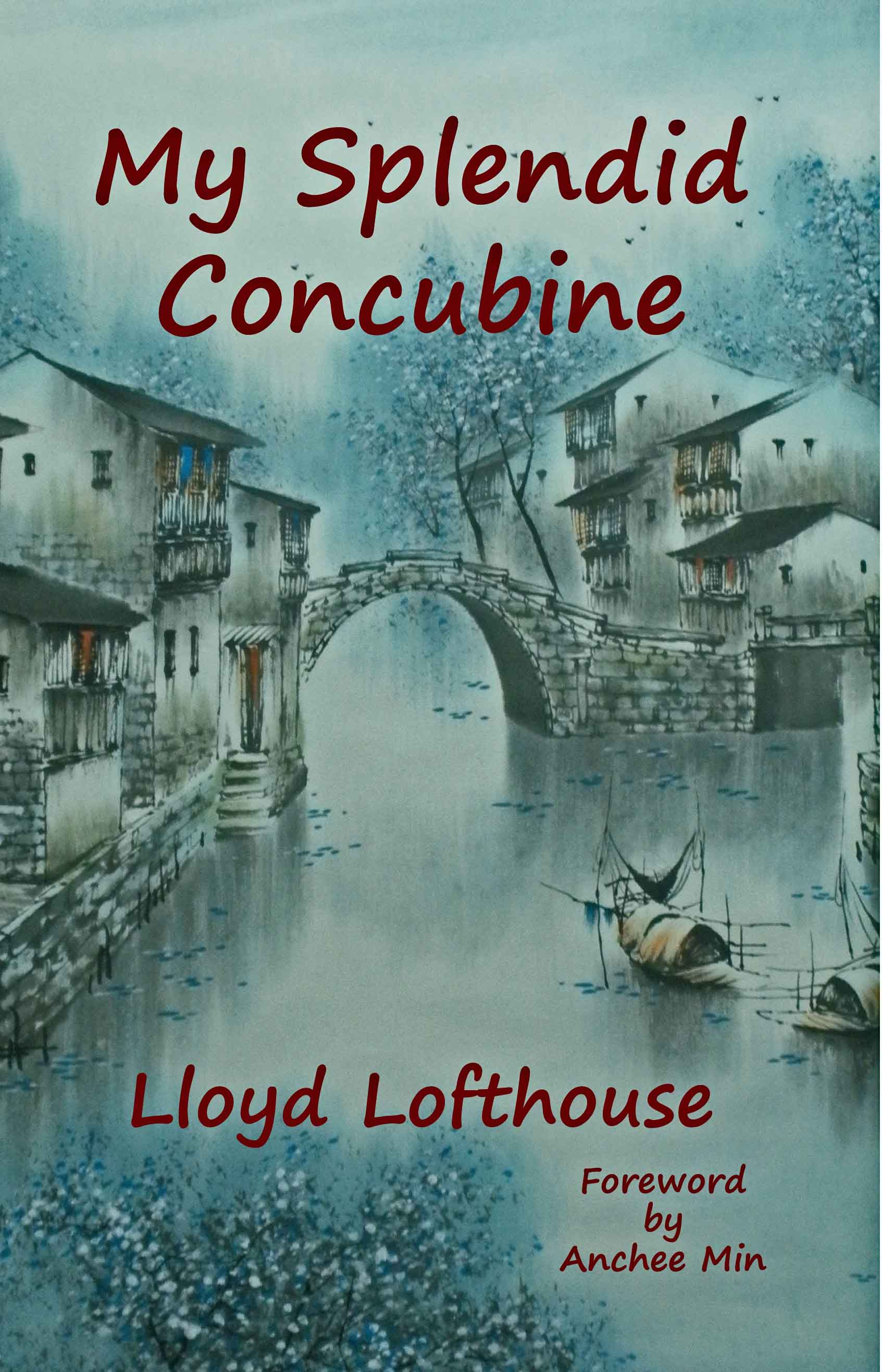
Lloyd Lofthouse is the award-winning author of the concubine saga, My Splendid Concubine & Our Hart. When you love a Chinese woman, you marry her family and culture too.

If you want to subscribe to iLook China, there is a “Subscribe” button at the top of the screen in the menu bar.


Jewish Visitors to China

January 25, 2011

A friend sent me a link to a New York Times Freakonomics Opinion Page where Stephen J. Dubner lifted a paragraph from Newsweek of Jewish visitors to China hearing that they are “very smart, very clever and very good at business” from Chinese they meet.

Is this an example of a stereotype, the truth or a mix of both?

As I often do, I found the comments more interesting than the post.  However, this time, I found the comments (with a few exceptions) of a higher quality than most.

Here are a few examples of comments following the Freakonomics post: Eric M. Jones says, “Basically a smart Jewish kid is supported, appreciate and encouraged to persevere.”


Brief History of Kaifeng Jews

Note—Many Chinese also support and encourage their children to work hard and not give up. Both Jews and Chinese tend to respect earning an education more so than the other racial groups.

Drill Baby says, “The Jews are a Diaspora, and though they have not grown their own empire, (they) have had secondary and behind the scenes roles in just about every modern world movement. If China ascends to a world power it would be exceptional in that it has NO Jewish roots, advisers, or talent.”

Note—I suspect Drill Baby would be surprised to learn that Jews have been in China more than a thousand years. During the Tang Dynasty (618-906 AD), Jews arrived in China and the emperor offered them a home in Kaifeng, the capital of the time. The Tang emperor encouraged the Jews to build a synagogue there, which they did.

Diego.CMS says, “Chinese also like the concept that Jewish people are also hard workers and have money. The Chinese are trying to get better and why not copy the good things from other cultures, specially the Jews?”

D says, “Is there any group with an avg IQ above 100 that isn’t clever, smart, and good at business? It ain’t the Talmud. It’s IQ.”

Note—You may be surprised to learn from Living With Evolution or Dying Without It by K. D. Koratsky that “D” may be correct.

Koratsky’s Racial Group IQ Comparisons (page 575) show European Jews with the highest average IQ at about 110 with Asians close behind at 105.  Caucasians, Hispanics (Latinos) and African-Americans have lower average IQs.

Learn of Jews in Modern China

______________

Lloyd Lofthouse is the award-winning author of the concubine saga, My Splendid Concubine & Our Hart. When you love a Chinese woman, you marry her family and culture too.

If you want to subscribe to iLook China, there is a “Subscribe” button at the top of the screen in the menu bar.


The Concubine’s Journey

January 17, 2011

In 1999, I was introduced to two dead people. One was a white guy from Ireland that died a hundred years ago and the other was Ayaou, a Chinese woman that was a mystery since Robert Hart tried to erase her from his personal history.

I’m fortunate that Hart failed and traces of Ayaou survived.

Since I was a child of seven or eight, I’ve been writing stories. They were short with lots of bad drawings.

Soon after I was honorably discharged from the US Marine Corps in 1968, I took my first writing workshop at a community college. Then Ray Bradbury came to the campus to speak and although I never read his work, what he said inspired me to never stop writing.

Although I did receive a few encouraging rejections through the decades and was represented by two or three reputable agents before Amazon.com and eBooks were born, nothing I wrote was picked up by a traditional publisher.

Believing I wasn’t good enough, I decided to learn more of the writing craft by earning a BA in journalism. An MFA with a focus in twentieth century American literature came much later.

Between earning the two college degrees, I drove about 150 miles one day each week for seven years to attend a workshop out of UCLA’s writing extension program.

The teacher was a chain smoker with an explosive tempter but she was sharp and several of the writers in her workshop went on to publish their work. When she felt one of her students was ready, she went all out and even found an agent for the author. She found one for me, but that’s another story.

When I published My Splendid Concubine in 2008, I held my breath wondering if anyone would read it and enjoy the lusty, violent story of Robert Hart and Ayaou in the middle of 19th century China immersed in the smoke of the Opium Wars and the oceans of blood of the Taiping Rebellion.

On May 12, 2009, an Amazon reader, an anonymous person in Hong Kong, posted a one-star review of My Splendid Concubine.

The anonymous reader wrote, “As a great fan of Robert Hart’s, I was very eager to get my hands on this book. And what a huge disappointment it proved to be, for many reasons…”

One of those reasons was a “g” missing from one of five “Tang Dynasties” in the novel.

This one-star review was of the first edition. By the time it appeared on Amazon, the second revised edition was out and some of the anonymous reader’s complaints had been corrected.

In three years, My Splendid Concubine earned three honorable mentions in city book festival literary contests then Our Hart earned another four honorable mentions and became a finalist for a national writing award.

About a year ago, the sequel, Our Hart, was submitted to the 18th Annual Writer’s Digest Self-Published Book Awards.

Recently, an envelope arrived from Writer’s Digest.

Jessica Strawser, the editor of Writer’s Digest, wrote that the competition was particularly fierce this year…

Our Hart didn’t win.


This is the book trailer I produced in 2008 of the first edition of
My Splendid Concubine. My wife has been telling me I need a better one and to delete this version.


However, when you enter a book to this Writer’s Digest literary award, a judge writes a commentary of your work and ranks it for plot, grammar, character development, production quality and cover design, which helped dispel the criticism of that one-star review that discovered a missing “g” from one of five “Tang Dynasties” in My Splendid Concubine.

The Writer’s Digest judge, a professional in the publishing industry, awarded grammar a five with five being the highest score.

The judge wrote, “In Our Hart, Elegy for a Concubine, author Lloyd Lofthouse has penned an intriguing story set in an ancient Chinese dynasty. Political intrigue and matters of the heart are both fully explored. The book is meticulously researched and the author’s enthusiasm for his subject is evident.… The author has an ear for natural-sounding dialogue, making Our Hart an engaging read.… That said, readers who enjoy vicariously experiencing other times and cultures will find Our Hart a fascinating journey.”

______________

If you want to subscribe to iLook China, there is a “Subscribe” button at the top of the screen in the menu bar.


Confucius Returns

January 17, 2011

Anita Chang reporting for Associated Press in Beijing says, “There’s a new face keeping Chairman Mao company on Tiananmen Square.”

A bronze sculpture of Confucius now stands tall at 31 feet (9.5 meters) and is described as having a serious expression.

Chang writes, “Confucius is enjoying a revival, in books and films, on TV and in classrooms…”

For those who don’t know, Mao declared war on Confucianism and education during the Cultural Revolution.

My wife, who grew up in China during Mao’s era, still believes Confucian values for harmony and peace are what made China weak and a victim to Western Imperialism during the 19th century and to the Japanese during World War II. She may be right. At the time, China believed it was too civilized to worry and wasn’t prepared to defend itself as it is today.

However, she also says to pay attention to the small things the government does. Don’t expect Chinese to be as direct as Westerners.

There’s a strong message in Confucius standing opposite Mao across the vastness of Tiananmen Square as if he were scolding Mao for what he did and few mainland Chinese will miss it. Mao, the student, has been chastised and Tiger Mothers such as Amy Chua are being sent a message to stay tough with their children when it comes to having the kids eat bitterness and sacrifice having fun while working hard earning an education.

Confucius wouldn’t want it any other way.

Now that China is a capitalist/socialist nation with an open market economy, the need for Confucian values is making a comeback with government support. Confucius taught duty to family, respect for learning, virtuous behavior (three traits rare in the West) and obedience of individuals to the state.

What Chang doesn’t say is that Confucius also had expectations for the state to lead by example and to act the part of a gentleman. China’s leaders are aware that they are responsible to provide security for the nation and economic progress for the people in ways that most Western rulers would never consider.

Although China’s central government hasn’t launched a Western style public relations campaign to resurrect Confucian values, which are still a strong foundation for most Chinese families, Chang indicates that we will see some top leaders promoting Confucianism.

In fact, in 2010, a movie of Confucius with Chow Yun Fat was filmed and released in China.

There’s another message that most American weapons’ manufactures and conservative hawks won’t want the world to understand. If China is really moving back to Confucian values, that means China will not be the aggressor in war but will keep a modern military for defense only.

______________

Lloyd Lofthouse is the award-winning author of the concubine saga, My Splendid Concubine & Our Hart. When you love a Chinese woman, you marry her family and culture too.

If you want to subscribe to iLook China, there is a “Subscribe” button at the top of the screen in the menu bar.


Eating Bitterness

January 15, 2011

Mainland Chinese are different. They are willing to eat more bitterness than others to learn.

The reason I’m writing this post is due to Amy Chua’s Essay in The Wall Street Journal and a response from Funny Little World where Nang Ngot wrote in a comment, “You can have a system like China that churns out smart but obedient drones. There, the collective behavior guides the intellect.”

Mainland Chinese are not obedient drones any more than all Christians, Jews, Muslims, Buddhists or Hindus are obedient drones within their cultures.

Within every culture, each person is an individual. In China, the difference is how the individuals see themselves in relation to the whole. That does not make them drones.

There’s even an ancient Chinese saying that supports being disobedient, which explains why the central government in Beijing is having so much trouble with corruption at the local level. “The emperor lives behind high walls and is a long ways from our village.”

In simple language this means, “What the emperor doesn’t know won’t hurt us.”

Where Jews and Christians have the Bible and Islam has the Quran, the Chinese have a culture governed by a mixture of Confucianism, Taoism and in part by Buddhism.

The Chinese do not need a temple, church or mosque to tell them what to believe and how to act.

Although there is no Confucian bible, the basic guide that Confucius left behind is as significant as the Ten Commandments, the Bible and the Quran.

In Chinese culture, those guidelines were designed for living a moral life and the family teaches the children as the child grows into an adult.

The Chinese family has done this for thousands of years until it became part of the culture, as Christianity is to the West and Islam is to the Middle East.

Stanford.edu says, “A hallmark of Confucius’ thought is his emphasis on education and study.”

Nicholas D. Kristof, writing for the New York Times, says, “Perhaps as a legacy of Confucianism, its citizens have shown a passion for education and self-improvement — along with remarkable capacity for discipline and hard work, what the Chinese call “chi ku,” or “eating bitterness”.

Kristof  is a two-time Pulitzer Prize winner. He graduated Phi Beta Kappa from Harvard College and then studied law at Oxford University on a Rhodes Scholarship, graduating with first class honors. He later studied Arabic in Cairo and Chinese in Taipei.

Kristof writes, “China used to be one of the most sexist societies in the world — with female infanticide, foot binding, and concubinage — but it turned a corner (in 1949 when Mao said women hold up half the sky) and now is remarkably good at giving opportunities to girls as well as boys….”

At China Education Center.com, I learned that many scholars believe the history of education in China started in the 16th century B.C., and Confucianism has had the largest impact on education for more than two thousand years of Chinese history.

In fact, during the Han Dynasty (206 BC – 219 AD) a form of public education was established. Not only for the elite but also for the common man so both would become better gentlemen.

In contrast, it wasn’t until 1918 that all states in the US had laws requiring children to attend at least elementary school. In 1900, only 6% of children graduated from high school. By 1996, 85% were graduating from high school.

Compared to China, the importance of earning an education in the United States is relatively new and doesn’t have as strong of a cultural component.

Discover more on this topic at Mean Chinese Supermoms are Right while Positive Self-Esteemism is Wrong

______________

Lloyd Lofthouse is the award-winning author of the concubine saga, My Splendid Concubine & Our Hart. When you love a Chinese woman, you marry her family and culture too.

If you want to subscribe to iLook China, there is a “Subscribe” button at the top of the screen in the menu bar.