Yuan-Xiao Festival

February 17, 2011

The Yuan-Xiao Festival, which is also known as the Lantern Festival or the Sweet Dumpling Festival, arrives this time of year.

China Online.com says, “Chinese started to celebrate the Lantern Festival during the Han Dynasty (206 BC to 221 AD) then it regained popularity during the Tang and Song Dynasties.”


Yuan Xiao (
元宵 or 元宵節) is an ancient Chinese tradition that celebrates a new beginning and a fresh start on life.

This is a festival for people to have fun. On the night, people go to streets with a variety of lanterns under the full moon, watching Lion or Dragon Dances, playing Chinese riddles and games, enjoying the typical food called Yuan Xiao (sweet dumplings) and setting off firecrackers.

The sweet dumplings are made of glutinous rice flour and may be stuffed with either a sweet or a salty filling.  Sweet fillings may have walnuts, sesame seeds, osmanthus flowers, rose petals, tangerine peel, bean paste or jujube paste.

The salty Yuan Xiao is filled with a minced meat and/or vegetable mixture.

Traditionally, this day marks the end of celebrations of the Lunar New Year.

Lighting paper lanterns is a tradition during this festival, which is why it is also known as the Lantern Festival. The Lantern Festival was once a version of another Chinese Valentine’s Day but has been gradually losing its romantic allure while the Western Valentine’s Day is gaining in popularity among younger Chinese.

If you pay attention to Chinese holidays, eating is important.  China is an eating culture where family and friends gather to stuff themselves and have an enjoyable time.

Learn more of China’s Eating Culture

______________

Lloyd Lofthouse is the award-winning author of the concubine saga, My Splendid Concubine & Our Hart. When you love a Chinese woman, you marry her family and culture too.

If you want to subscribe to iLook China, there is a “Subscribe” button at the top of the screen in the menu bar.


The Qing Dynasty’s Banner Armies

February 14, 2011

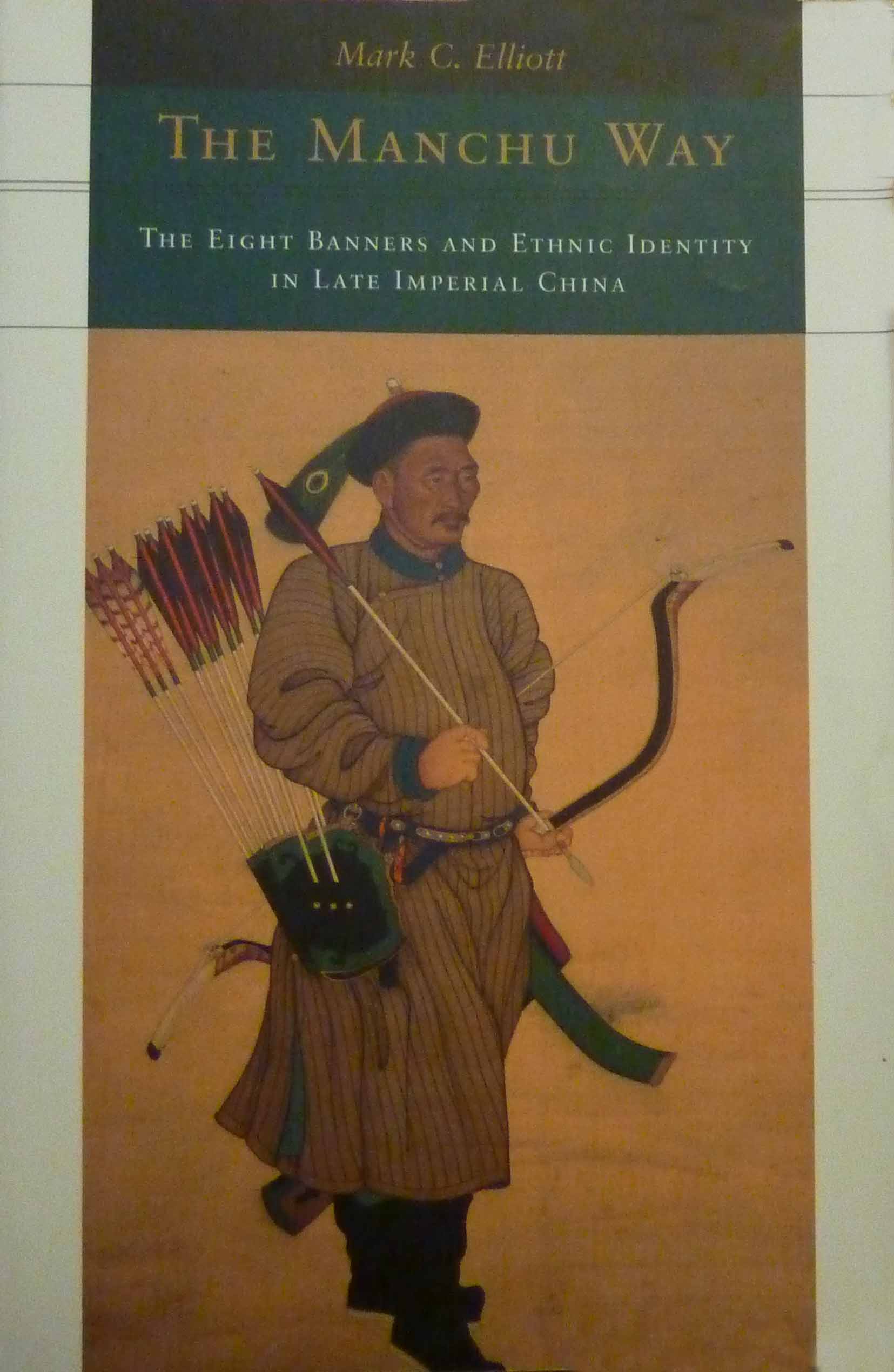
I have a book on the elite troops of China’s Qing Dynasty, and used The Manchu Way for research (along with lots of other work) while writing My Splendid Concubine and Our Hart. I spent from 1999 to late 2007 researching, writing, revising, editing and rewriting the manuscript.

I wanted 19th century China to come alive and be another character in Hart’s Concubine Saga.

Mark C. Elliott wrote The Manchu Way. I was attending a NCIBA Trade Show in Oakland, California several years ago and met Elliott.  When I expressed interest in the book due to my project, he gave me a copy.

History Today said of Elliott’s book, “This is a wide-ranging and innovative book. Furthermore, it is written in a lively, accessible style… Overall, it is undoubtedly a scholarly achievement of the highest order.”

I was fortunate to have this resource while writing of Robert Hart’s early years in China. In fact, Hart was the only foreigner the emperor trusted and Hart worked for Qing Dynasty for most of his life.

The Qianlong emperor (pronounced “chien-lung”) was the fourth monarch of the Qing dynasty (1644-1911) who reigned from 1736 to 1795.

The four-minute video starts by saying that during the reign of the Qianlong Emperor there were several rebellions in Sichuan province.

The Qing banner armies fought wars against the Uyghurs, Kazakhs, Kyrgyzs, Evenks and Mongols. Unsuccessful costly wars were also fought with Vietnam and Myanmar.

Although millions of square miles or kilometers were brought into the empire, the strain on China’s treasury and military due to casualties and deaths resulted in a military decline.

This decline contributed to China’s weakness a few decades later when the British Empire and France invaded China to force the Qing Dynasty to allow opium to be sold to the Chinese people and give missionaries total freedom to convert the population to Christianity, which caused more wars and tens of millions of deaths during the 19th century.

The Qing army was divided into eight banners. Each banner had its own color scheme, which was reflected in their clothing, armor and flags. There were eight Manchu banners, eight Mongolian banners and eventually eight Han Chinese banner armies for twenty-four armies. In 1648, there were between 1.3 and 2.44 million people in the Chinese, Manchu and Mongol Banner armies.  By 1720, the numbers were estimated at between 2.6 and 4.9 million.

China has a history of maintaining large armies for more than two thousand years mostly for defense.

Discover China’s Greatest Emperors

______________

Lloyd Lofthouse is the award-winning author of the concubine saga, My Splendid Concubine & Our Hart. When you love a Chinese woman, you marry her family and culture too.

If you want to subscribe to iLook China, there is a “Subscribe” button at the top of the screen in the menu bar.


Kingdom of Heavenly Peace (1845-1864)

February 13, 2011

I’ve mentioned the Taiping Rebellion often. After writing more than a thousand posts and about four hundred thousand words, it’s difficult to recall all that I’ve said of the man that started this rebellion.

There is irony in Hong Xiuquan’s choice of naming his kingdom. During the years his Christian rebellion thrived, he ruled over a third of China and had an army of more than two million troops.

Since he was a converted Christian, Hong Xiuquan made overtures to the British and French asking for an alliance to help defeat the Godless Qing (Manchu) Dynasty. The British and French turned him down.

After all, profits often come before God. Christians may always ask for forgiveness later.

Xiuquan made his mistake by wanting to rid China of opium, which British merchants along with French, Germans, Americans, etc. wanted to keep selling to the Chinese.

The embedded video is about Hong Xiuquan. Hal Holbrook is the narrator and says, “While the seventh day Sabbath doctrine was gaining ground in America in the middle of the 19th century, the Taiping Revolution was sweeping across China…”

Hong Xiuquan was the ambitious son of a poor, peasant farmer.

However, he had a goal to become successful. After failing the Chinese civil service examinations several times, he met a Chinese Christian convert passing out pamphlets published by Protestant missionaries.

Hong put the pamphlets on a shelf and forgot them. After failing several more civil service exams, Hong suffered a breakdown and had strange dreams of an old man.

Holbrook says, “Traditional Chinese would not attach any importance to dreams unless or until there was some clear connection to real life.” At first, Hong did not see a connection.

Jonathan Spence, the author of God’s Chinese Son, which is about the Taiping Heavenly Kingdom of Hong Xiuquan explains that eventually the connection was made between the dreams and the Protestant pamphlets. The old man in Hong’s dreams had to be God.

After that, Hong Xiuquan believed the purpose of his life was to establish the Taiping Heavenly Kingdom of Great Peace. His religious zeal spread among the suffering peasants and inspired the greatest revolutionary movement of the 19th century.

The Qing Dynasty successfully asked the British and French for help, which allowed the Manchu to crush Hong’s Christian rebellion in 1864. In 19 years of rebellion, more than 20 million died.

Learn more of The Opium Wars (1839 – 1852) and (1856-1860)

______________

Lloyd Lofthouse is the award-winning author of the concubine saga, My Splendid Concubine & Our Hart. When you love a Chinese woman, you marry her family and culture too.

If you want to subscribe to iLook China, there is a “Subscribe” button at the top of the screen in the menu bar.


Nixon in China – Part 1/3

February 4, 2011

In 1969, the Soviet Union was planning a nuclear attack on China. The USSR only backed down when President Nixon’s administration warned Moscow that such a move would start World War Three since the US would bomb Russia in retaliation.

The United States, under President Nixon (1969-1974), clearly indicated that China’s interests were closely related to America’s. Source: Free Republic

At the time, I’m sure President Nixon had no idea how close those relations would become.

Thirty-nine years ago this month, in February 1972, President Richard Nixon went to China and changed the course of history a second time. His motives may not have been meant to encourage China to become the economic powerhouse it is today.

However, if it weren’t for Nixon, the odds say the Soviet Union would have bombed China with nuclear weapons and China would have retaliated.

While flying to China, President Nixon made notes. Here are a few.

What they (China) want? Build up their world credentials, Taiwan, and get the U.S. out of Asia (In 1968, Nixon ran for President promising to get the U.S. out of Vietnam).

What we (the US and China) both want? Restraint on USSR

The BBC reporter in the embedded video says that Nixon’s trip to Beijing wasn’t to see if China would help get the US out of Vietnam. Instead, the trip was designed to put pressure on the USSR with a goal to make them agree to strategic arms limitations.

Soon after Nixon’s China trip, the Soviets were forced to negotiate and within three months signed two arms control agreements.

What I find interesting is how often US Presidents (and politicians) have been wrong about China.

In 1961, President John F. Kennedy said if China had nuclear bombs, it would swallow Southeast Asia. That never happened and today China has more than three hundred nuclear bombs with the missiles to deliver them to targets thousands of miles distant.

In 1965, China successfully tested its first nuclear bomb. President Lyndon Johnson said it was “the blackest and most tragic day for the free world”.

How was that day the “blackest and most tragic day for the free world”?

After all, China has never used a nuclear weapon on another country as the US did on Japan to end World War II by bombing Hiroshima and Nagasaki killing about a quarter million people.

In fact, about 25 American POWs were also killed in the first blast. Most of the Japanese dead were noncombatants—the elderly, women and children.

Di Text.com reports that the US firebombed (with napalm) 67 Japanese cities in World War II.  More than half of Tokyo (one of the 67 cities) was destroyed. Estimates of the number killed in Tokyo range between 80,000 and 200,000.

Robert S. McNamara was reported to have said, “If we’d lost the war, we’d all have been prosecuted as war criminals.”

Question — In modern times, has Communist China inflicted that many casualties on another nation’s civilian population? Don’t forget that Japan killed about 30 million Chinese during World War II.

Discover what it took to survive Mao’s Long March.

______________

Lloyd Lofthouse is the award-winning author of the concubine saga, My Splendid Concubine & Our Hart. When you love a Chinese woman, you marry her family and culture too.

If you want to subscribe to iLook China, there is a “Subscribe” button at the top of the screen in the menu bar.


“Cupping” – Another element of Traditional Chinese Medicine

January 29, 2011

I’ve been aware of “cupping” for some time since I married into a Chinese family and one of my wife’s sisters uses this method of Chinese medicine.

However, I didn’t pay much attention to “cupping” until I wrote the piece about Gwyneth Paltrow Popular in China, which appeared on January 7.

Researching the Gwyneth Paltrow post, I discovered that she believes in Chinese medicine and has used “cupping”. She even told Oprah, “It feels amazing and it’s very relaxing, and it feels terrific. It’s just one of the alternative medicines that I do instead of taking antibiotics.”

The history of Chinese cupping dates from 281 AD. It was an ancient Taoist medical practice and was widely used in the courts of Imperial China at the time.  Its administration was first recorded by Ge Hong in an ancient tract called Handbook of Prescriptions for Emergencies.

In fact, medical education in China was elevated to a higher standard in 443 AD when Qin Cheng-zu petitioned Emperor Wen of the North and South Dynasty period to appoint physicians to teach medical students.

By 493 AD, the Imperial Academy had expanded to include lectureships and chairs for teaching Chinese medicine. Source: Shen-nong.com

Chinese medicine from the beginning focused on prevention to avoid illness where Western medicine has always focused on cures for illnesses after a life is threatened by diseases such as cancer, diabetes or heart disease.

However, the focus of western medicine may be changing with programs such as the Dr. Oz TV Program leading the way.

______________

Lloyd Lofthouse is the award-winning author of the concubine saga, My Splendid Concubine & Our Hart. When you love a Chinese woman, you marry her family and culture too.

If you want to subscribe to iLook China, there is a “Subscribe” button at the top of the screen in the menu bar.