On this trip, our hotel was outside of and in sight of Xian’s city walls. We had a view of the battlements that were centuries old. At night, the walls and towers were outlined with white Christmas lights.
I ached to get up there and walk those walls. It was 1999, and I’d wait more than nine years before that happened. One day I want to rent a bicycle and explore the entire wall.
This is a different restaurant from the one I mention.
Our second day in the city, we walked from the hotel into the city to a Xian restaurant. I went in first and the hostess, who didn’t speak a word of English, handed me a menu written in English.
My wife, dressed more like a Chinese peasant than an American, walked in after me and she was handed a menu written in Chinese. Then she glanced at my menu before taking it out of my hands and giving it back to the hostess.
“We’ll use the Chinese menu,” she said.
The prices in Mandarin were less than half the English version. A stunned look appeared on the hostesses face. It was a Candid Camera moment, and it was all I could do to not laugh.
Lloyd Lofthouse is the award-winning author of The Concubine Saga. When you love a Chinese woman, you marry her family and culture too. This is the love story Sir Robert Hart did not want the world to discover.
Subscribe to “iLook China”!
Sign up for an E-mail Subscription at the top of this page, or click on the “Following” tab in the WordPress toolbar at the top of the screen.
China has a unique food culture. My wife loves noodles. I’ve followed her down narrow Shanghai streets to a famous won-ton and noodle shop on the corner of Chang-le and Shang-yang Road. The front is open and the ceiling low with each narrow table crowded with Chinese sitting on small chairs shoveling noodles in with chopsticks.
My wife orders a small bowl of noodles with peanut sauce for me and a bowl of blood soup and another bowl of noodles with spicy hot Sichuan peppercorn sauce for her. As she eats, sweat beads her face but there is not one word of complaint—not one sign that she suffers. Instead, this seriously satisfied look spreads across her face as if she has entered a Chinese noodle heaven.
When we are visiting Nanjing Road in Shanghai between People Square and the Bund, we always stop at the same food shop where my wife orders steaming hot noodles with the same peppercorn sauce, and I order deep fried, fresh chou dofu (stinky tofu) with the same sauce that makes me sweat.
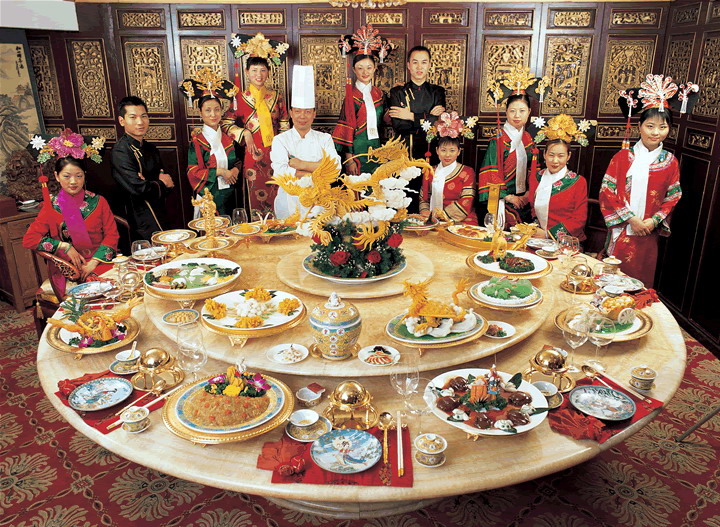
At celebration feasts, a wider variety of food will be served from whole fish, crab, a variety of vegetable dishes and tofu.
Lloyd Lofthouse is the award-winning author of The Concubine Saga. When you love a Chinese woman, you marry her family and culture too. This is the love story Sir Robert Hart did not want the world to discover.
Subscribe to “iLook China”!
Sign up for an E-mail Subscription at the top of this page, or click on the “Following” tab in the WordPress toolbar at the top of the screen.
In 1949, China’s peasantry, more than 85% of the population, was still largely individualistic, illiterate, superstitious and lived in extreme poverty. Fast forward to the early 21st century and we may understand how much China has changed in the sixty-three years since then. Today, more than 90% are literate and learning English is mandatory in China’s public schools.
“Yes China” by Clark Nielsen is an honest memoir written by a young American going to China to teach English in an alien and foreign culture. Nielsen pulls no punches in describing himself and his experiences teaching ESL in China, and is not shy when it comes to scorching himself and his former religion in the process.
In fact, his vivid descriptions of teaching in China reminded me of my three decades as an English and Journalism teacher in US public schools.
In the late 1970s, I worked as a substitute teacher and the descriptions of the first classes Nielsen taught reminded me too much of the American grade school, then middle school and eventually high school students I taught 1975 – 2005.
Songs that help teach English as a second language.
For example, in 1977, I was a substitute teacher in Southern California and as the fifth-grade students I taught one day—and never to see again—flooded into the classroom at the beginning of school, one boy saw me, squealed “Sub!” and then started to chase and pummel other students while knocking over desks as if having a substitute teacher was a ticket to mayhem.
I suspect that the young Chinese students Nielsen first taught may have had similar thoughts when they saw his foreign face.
Like Nielsen, I had classes I loved to teach and others I hated to face each day, and this went on for the thirty years I was a classroom teacher.
I hate to say this but the old phrase, “kids will be kids” has a ring of truth to it even though I hate hearing it since many parents seem to use it as an excuse to do nothing to correct unacceptable behavior.
From Nielsen’s vivid descriptions of the behavior of Chinese grade-school students, I discovered that there is little difference between America’s children and China’s — it seems that “kids will be kids” in any country/culture if the parents allow them to behave as if they were wild animals and/or barbarians.
However, similar to my experience as a teacher, Nielsen also found gold in some of his students. In fact, the last semester he taught in China, he fought back tears as he said goodbye to one of his good classes.
There are also vivid scenes, from his foreign perspective, of what it must be like to live and work in a developing country where more than a billion people still live in poverty. Before 1949, the average life span in China was age thirty-five. When Nielsen arrived to teach ESL, that number had changed drastically. Today, the average lifespan is 73, and less than 3% live in severe poverty.
China is a developing country on steroids and Nielsen’s experiences in China reflect that. For this reason, when wanting to discover what it is like to move from a Western culture such as America’s to an alien and foreign land, it is best to read more than one memoir on that subject for a better perspective.
For example, I found “Yes China” an interesting contrast to Janet Elaine Smith’s memoir, “Rebel With a Cause”. While Nielson rejected and abandons his Mormon religion, Smith went abroad to spend nine years as an evangelical missionary in Venezuela. She was not a Mormon and her motives were almost the exact opposite of Nielsen’s.
Before becoming an expatriate, Smith worked with Native Americans and Latinos in the US, so the culture shock was not as great, and Nielsen did not work with people living in extreme poverty as Smith did.
However, Smith was not prepared for the extreme poverty of most of the people the mission she was with were serving, and, unlike Nielsen, she used teaching English to become more of a part of the culture.
Smith was “warned” by her superiors not to minister to the wealthy class, as they would never accept the gospel. Nielsen probably worked mostly with children of middle class and wealth parents in urban China.
When Smith was approached by a bank president, a physician, a teacher and a government officer to teach them English, she took the open door as a “sign” from God and defied the orders and held free English classes out of her home.
For a richer experience and to understand the culture she was living in, she exchanged the English lessons for Spanish classes to help her learn the local vernacular of Spanish and the customs of the Venezuelan people—something Nielsen and most Western/American ESL teachers in China do not do. Instead, they arrive in China ready to criticize anything different that does not fit the Western lifestyle they are used to.
For Smith, this different attitude paid off. Later, when Smith needed help for paper work, cashing checks, medical care, etc. Venezuelans were available to help her, while her American Evangelical overseers struggled trying to find such help.
Although Nielsen meets his future wife in China—a Chinese citizen—and they both live in Utah today, I doubt that he truly understood or embraced the Chinese culture as Smith did in Venezuela due to the differences in how they approached their experiences as expatriates teaching English in a foreign land—a developing and/or third world country, which is very different from being a citizen in North America. In Smith’s memoir, I do not sense the love-hate relationship that Nielsen had with China. He seems to have no purpose for going there to teach English other than some need to rebel and escape Mormon Utah where he grew up.
In fact, Nielsen’s passages that paint an unflattering picture of Mormonism reveal his true motive for going to China. I felt as if Nielsen fled to China to escape the reaction of his Mormon friends and peers after he let them know he wasn’t going to go out as a missionary, which is expected of all Mormons, and in spite of himself, once he arrived in China, he found more acceptance from the Chinese than he did in Utah. After all, he came home with a Chinese wife and that was not the reason he went to China.
I enjoyed reading Nielsen’s memoir and found myself laughing at his misadventures while teaching ESL in China. In addition, on his days off from teaching, he traveled about the country as more than a tourist but less than someone like Janet Elaine Smith who found a way to reach across the culture gap and accept and understand the differences that exist.
Another book I recommend is Tom Carter’s “China: Portrait of a People”, which shows his experiences in China in mostly pictures with some text. Carter, like Nielsen, taught ESL in China and then married a Chinese citizen, but Carter is still working in China. In addition, he visited, often on foot, every province of China and took thousands of photos of his two year epic journey.
Lloyd Lofthouse is the award-winning author of The Concubine Saga. When you love a Chinese woman, you marry her family and culture too. This is the love story Sir Robert Hart did not want the world to discover.
Subscribe to “iLook China”!
Sign up for an E-mail Subscription at the top of this page, or click on the “Following” tab in the WordPress toolbar at the top of the screen.
In August 2010, the China Daily reported, “The number of private enterprises reached 7.5 million, accounting for half of China’s gross domestic product, 70 percent of the nation’s technical innovations and 60 percent of its patents.” In addition, “China’s top 500 private companies have surpassed State-owned enterprises in many indicators, especially tax payments and employment creation, according to a report from the All-China Federation of Industry and Commerce.”
In fact, Bloomberg.com says, “Many of the world’s richest self-made women are Chinese,” and Psychology Today.com tells us, “Women own more than 40% of private businesses in China.”
Meet one of those women. Judy Leissner was 24 when she became the CEO and President of 168-acre Grace Vineyard in Shanxi province, south of Beijing after she quit her job at Goldman Sachs.
The first grape-vine plantings were in 1997 and the first vintage in 2001. Judy started the winery because her father liked to drink. Today, Judy produces a quality wine—about 700,000 bottles annually.
Most people do not know that quality wine is produced in China. In fact, Judy has competition since there are about 400 wineries in China.
Judy says there is an opportunity in China to make a lot of money in a short period of time, because the country is developing and growing.
The difference between the wine market in China and the rest of the world is that most drinkers in China must drink because they have to. It’s part of the culture of doing business and developing guanxi.
In an update, Grape Wall of China.com visited Grace Vineyard in September 2011, and Jim Boyce says he visited Grace CEO Judy Leisser. He says, “About a week ago, she sent an email that the wines Grace bottled under screw cap earlier this year are doing fine and, if all goes well with final trials, the winery will switch closures this year for its entry level and premium level wines. Grace’s Premium Chardonnay ranks among the better Chinese wines and is found in top hotels and restaurants in Beijing and Shanghai.”
In addition, in an interview at 24×75.com with Judy Leissner October 17, 2011, she was asked how different the work environment for Grace Vineyard was compared to Goldman Sachs where she worked prior to becoming CEO of the vineyard in Shanxi Province. She said, “Goldman Sachs is a fast-pace, can-do, efficient place.” However, for the winery, she said, “The whole atmosphere was rather sleepy.”
In another question, Judy was asked about social responsibility and what those two words mean. She responded with, “We guarantee our growers basic income… Grace is a perfect example of an environmentally friendly and sustainable business. We provide many jobs for people from nearby villages.”
______________
Lloyd Lofthouse is the award-winning author of The Concubine Saga. When you love a Chinese woman, you marry her family and culture too. This is the love story Sir Robert Hart did not want the world to discover.
Subscribe to “iLook China” Sign up for an E-mail Subscription at the top of this page.
Sometimes I wonder about the sanity of most Americans. It seems they will drink or eat anything that arrives on an attractive plate or in a fancy bottle. I read a piece recently that said Lindsay Lohan and other Hollywood types like Madonna, Kirsten Dunst and Halle Berry are into this new (but old) synergy drink called Kombucha.
No one knows for sure where this fermented tea originated but recorded history says it started in Russia during the late 19th century.
However, promotional material says the drink comes from ancient China or Japan. In fact, some say that kombucha, known as Godly Tsche, dates back to the Qin Dynasty (221-206 BC) and was “a beverage with magical powers enabling people to live forever”. Since the first emperor, Qin Shi Huangdi, didn’t live forever, we can discount that claim.
I asked my wife about this tea and she said that as a child she saw it being fermented and that the stuff floating around inside the jar reminded her of dead cockroaches.
Once someone like Pepsi or Coke gets hold of something old like this there is no telling what kind of chemicals will be added. If you want to make this tea, click Kombucha Tea for the home brew recipe.
If you believe the health claims of this tea, you may want to learn about the Chinese “Chong Cao“. Remember, the Food and Drug Administration (FDA) hasn’t evaluated any of these claims.
Lloyd Lofthouse is the award-winning author of The Concubine Saga. When you love a Chinese woman, you marry her family and culture too. This is the love story Sir Robert Hart did not want the world to discover.
Subscribe to “iLook China” Sign up for an E-mail Subscription at the top of this page.


 Posted by Lloyd Lofthouse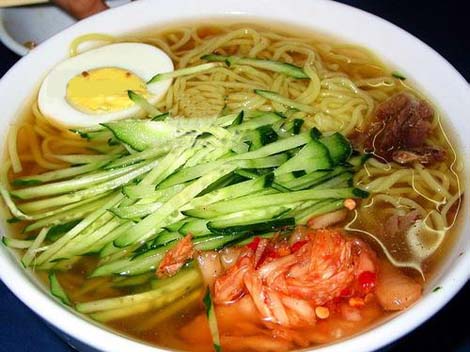
 iLook China