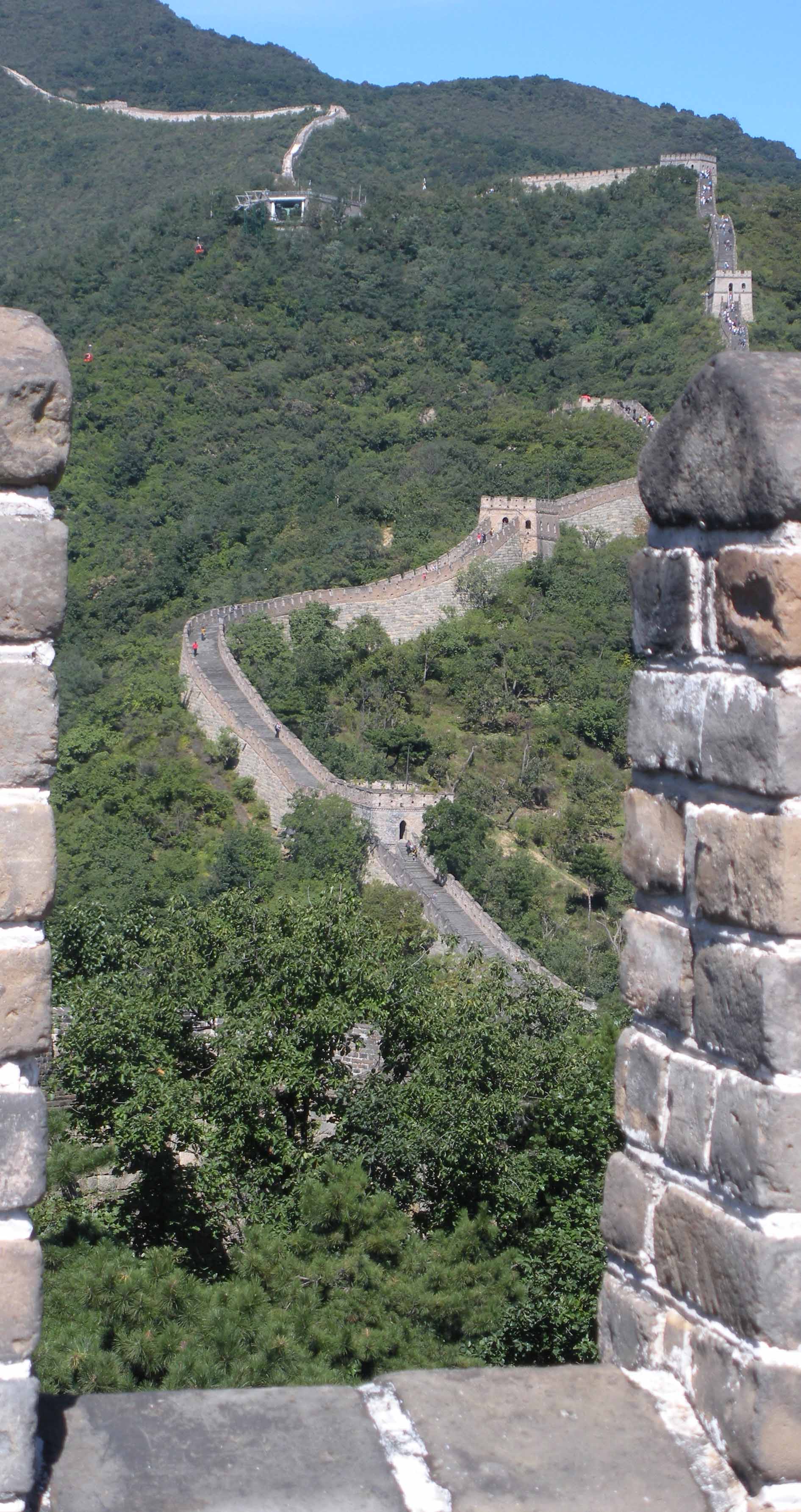
Visiting The Great Wall Part – Part 3/3

July 25, 2012

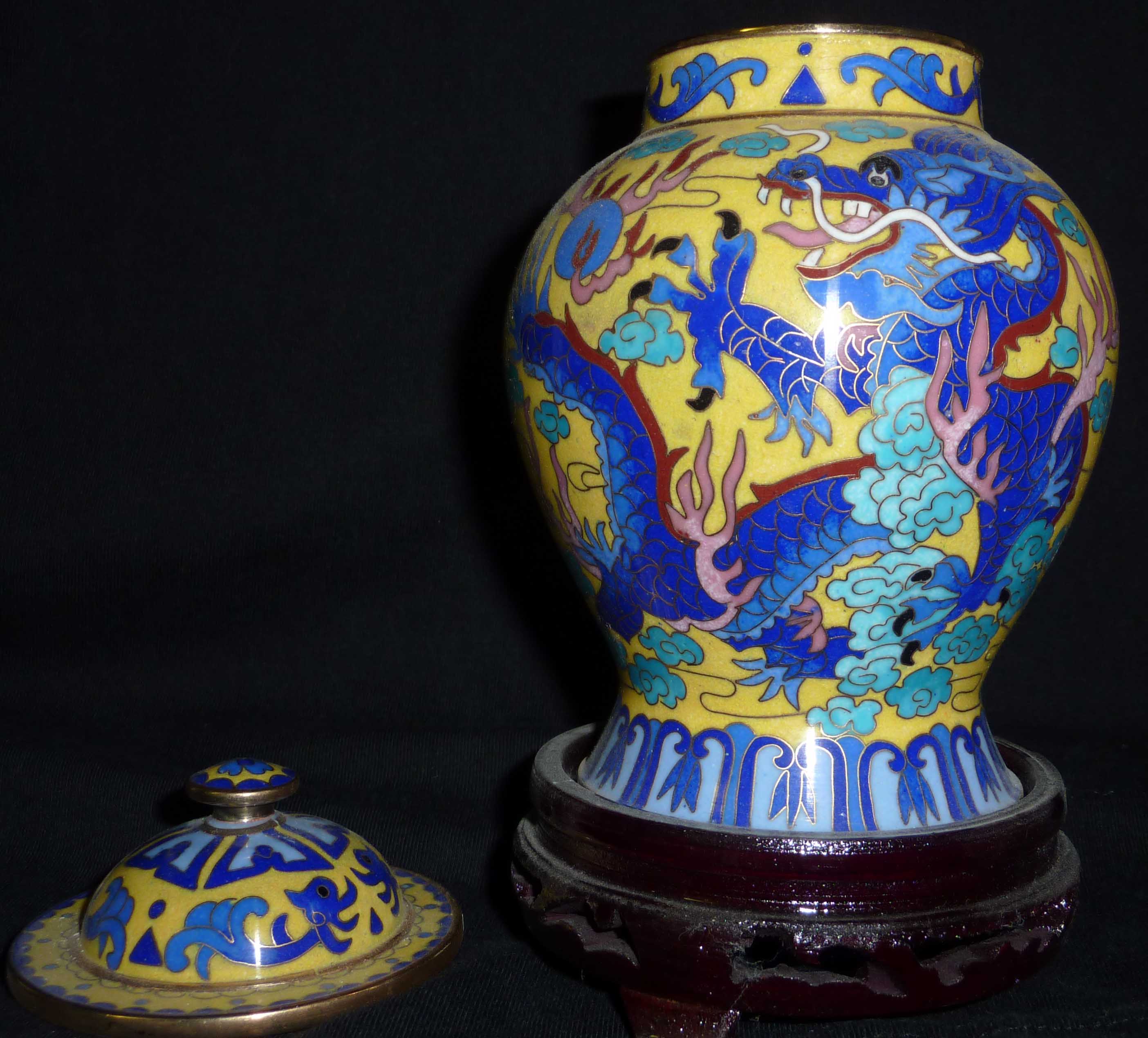
On our way back to Beijing from the Great Wall at Mutianyu, our driver stopped at a factory-showroom where we learned about the manufacturing techniques for Cloisonné brass vases.

I’ve read some tourists/expatriates complain of these sort of stops, but I enjoy window shopping and this was something new—sometimes I even buy something.  In this case, I bought three vases (photos are included here).

First, we went on a tour where we watched men and women creating vases. Once the tour was over, we went into the showroom.

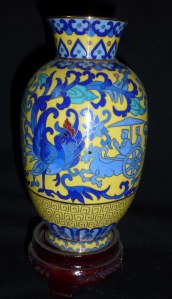
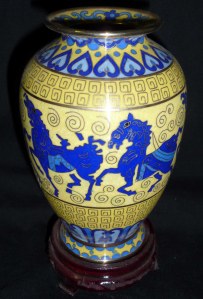
The vases I bought (after negotiating the price) are yellow with a blue trim.  One has a blue dragon on it, the second a phoenix beside a chariot, and the third running horses. Each one is about the size of my hand (see photos)

The cloisonné process is enamel on copper craftwork. It first appeared in Beijing in the Yuan Dynasty (1271-1368) and continued during the Ming Dynasty (1368-1644). Cloisonné vases are crafted by using a copper porcelain process. The vase is made from copper with brass wires soldered to the body. Then a porcelain glaze is applied to cells between the brass wires.

After a series of complex procedures, such as burning, burnishing and gilding, the cloisonné vase is done. Chinese name: 景泰蓝(jǐng tài lán)

Return to Visiting The Great Wall – Part 2 or start with Part 1

______________

Lloyd Lofthouse is the award-winning author of The Concubine Saga. When you love a Chinese woman, you marry her family and culture too. This is the love story Sir Robert Hart did not want the world to discover.

Subscribe to “iLook China”!
Sign up for an E-mail Subscription at the top of this page, or click on the “Following” tab in the WordPress toolbar at the top of the screen.

About iLook China


Visiting The Great Wall – Part 2/3

July 24, 2012

In 1999, I visited the The Great Wall for the first time.  We returned to visit a different section in 2008. The second time, I carried a digital camera (a few of those photos appear with this post)

Smithsonian Magazine reported, “Few cultural landmarks symbolize the sweep of a nation’s history more powerfully than the Great Wall of China. Constructed by a succession of imperial dynasties over 2,000 years, the network of barriers, towers and fortifications expanded over the centuries, defining and defending the outer limits of Chinese civilization. At the height of its importance during the Ming dynasty (1368-1644), the Great Wall is believed to have extended some 4,000 miles, the distance from New York to Milan.

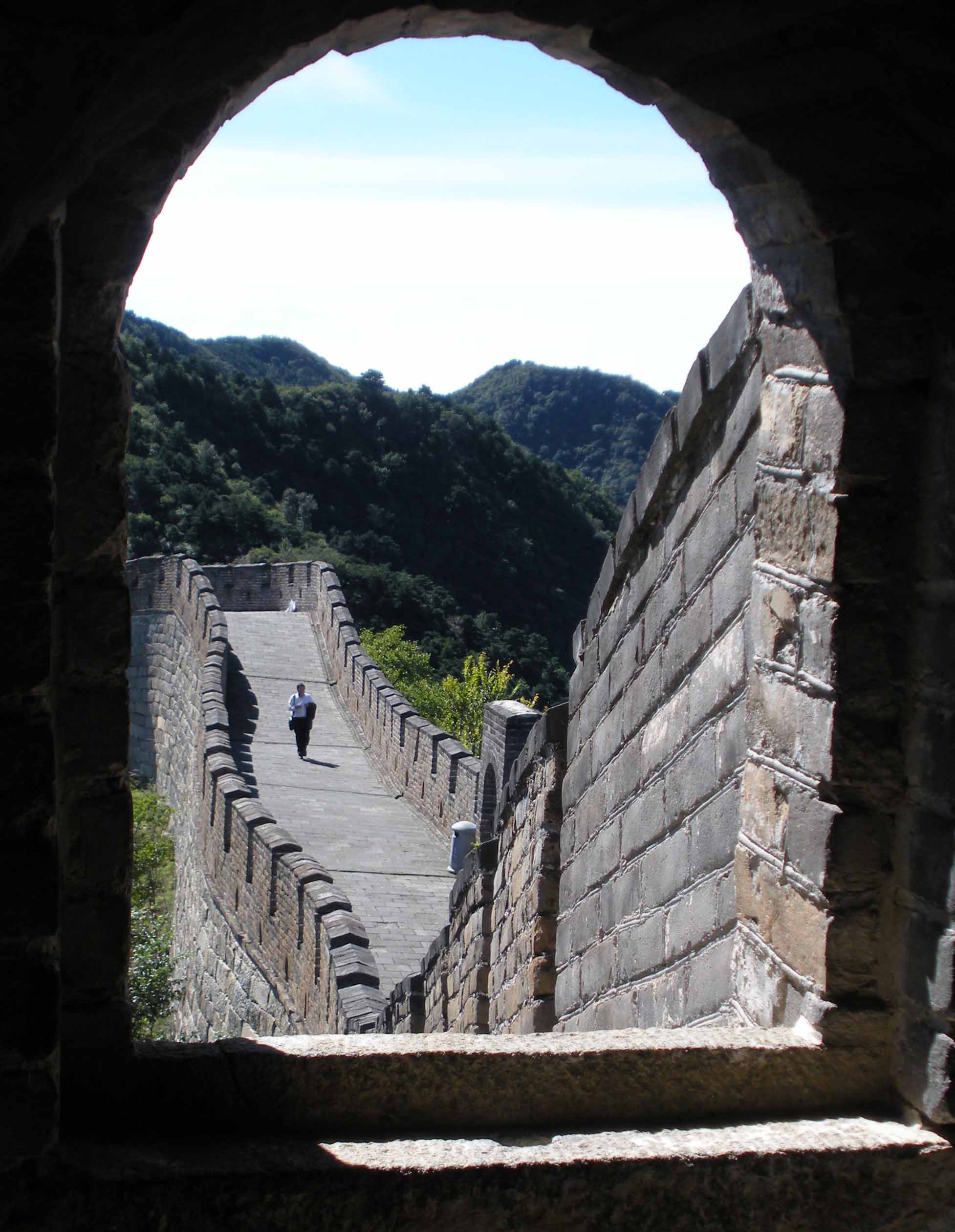
The sections of the Great Wall we visited are about an hour out of Beijing. The most popular site is at Badaling.  The second choice, Mutianyu, is more dramatic. This portion of the Great Wall runs along the ridge of a mountain range. Badaling, meanwhile, is in a mountain pass.

The best way to reach the Great Wall is by taxi or bus. After you get there, you will discover the usual tourist shops. Since I enjoy haggling, I spend time shopping.

At Badaling, there were camels and horses you could pay a fee to sit on while having your photo taken.

Once you reach Mutianyu, you have a choice—take a few hours to climb the mountain to The Wall or ride a ski lift to the top in fifteen minutes.

China’s Great Wall was not built by one emperor. It was built in segments by the kings of several nations over a period of centuries. In addition, the wall was completed and linked together by China’s first emperor in 221 BC.

When you are on the wall, if you get thirsty or yearn for a snack, there are venders that carried their goods often using horses.

Once you are ready to leave the Great Wall at Mutianyu, the toboggan ride is worth the price.( see the embedded video with this post)

Continued on July 25, 2012 in Visiting The Great Wall – Part 3 or return to Part 1

______________

Lloyd Lofthouse is the award-winning author of The Concubine Saga. When you love a Chinese woman, you marry her family and culture too. This is the love story Sir Robert Hart did not want the world to discover.

Subscribe to “iLook China”!
Sign up for an E-mail Subscription at the top of this page, or click on the “Following” tab in the WordPress toolbar at the top of the screen.

About iLook China


Visiting The Great Wall – Part 1/3

July 23, 2012

Like so much about China, The Great Wall is also the victim of myths and lies.

I’m reading Peter Hessler’s “Country Driving“, which is a great book that I plan to review when I finish it. However, his first chapter covers the months he spent driving the length of the Great Wall all the way to Tibet.

In fact, before there was one wall, there were many—all built by different kingdoms before China was unified under Qin Shi Huangdi in 221 BC.

Although I’m enjoying all of Hessler’s memoir, the hundred and twenty-two pages that focus on the Great Walls are the best part of the book.

Before reading Hessler’s memoir, I wrongly believed, as so many others do, that The Great Wall was a failure as a defense against invaders.  However, Hessler proves that myth wrong.  For the most part, the wall did keep marauders out.

In fact, on page 116 of the paperback, he quotes David Spindler who found evidence that the Ming Great Wall actually worked as a defensive structure.

The Wall failed when the unified Mongols invaded China in the 13th century but it didn’t happen overnight. It took sixty years for the Mongols to conquor all of China.

Before Genghis Khan unified the Mongols, there was no unified Mongolia—only nomadic tribes that fought amongst each other and raided into China whenever one or more tribes decided on a whim—that is if they could fight their way past the Great Wall guarding China’s heartland.

In section one of “Country Driving”, The Wall, Hessler points out that no archeologists/historians have studied the history of The Great Wall but there are amateurs that have, both Western and Chinese and these Great Wall amateur (experts) have discovered original documents written by Ming Dynasty military officers and troops detailing the defense of the wall against nomads intent on raiding into China to loot, rape and steal. According to this information, the wall served its purpose more often than not.

Continued on July 24, 2012 in Visiting The Great Wall – Part 2

Note: I wrote this post about two months ago and scheduled it to appear July 23 before I finished reading Hessler’s memoir. Then after I wrote the review, I scheduled it to appear before this post appeared. You may find the review here: Country Driving in China with Peter Hessler

I often write and schedule posts weeks in advance with the goal to stay one month ahead. That way I may take a few days off now and then from writing posts.

______________

Lloyd Lofthouse is the award-winning author of The Concubine Saga. When you love a Chinese woman, you marry her family and culture too. This is the love story Sir Robert Hart did not want the world to discover.

Subscribe to “iLook China”!
Sign up for an E-mail Subscription at the top of this page, or click on the “Following” tab in the WordPress toolbar at the top of the screen.

About iLook China


China’s Ancient Chimes

July 17, 2012

In 1977, a discovery was made in China—a complete set of chime bells were unearthed from the tomb of Marquis Yi, who lived during the Warring States Period (475 to 221 BC). These chimes were older than the Qin Dynasty’s famous Terra Cotta warriors (221 to 206 B.C.) were.

When the chimes were discovered in Hubei Province (located in Central China), a plot of land was being leveled to build a factory.  The Red Army officer in charge of the work had an interest in archeology.

The officer discovered that the workers were selling the ancient bronze and iron artifacts they were digging up. He convinced local authorities there might be an ancient tomb buried below the site.

When the tomb was unearthed, a set of chime bells was found.  These musical instruments were an important part of ritual and court music going back to ancient times. An American professor in New York City even called these chimes the eighth wonder of the ancient world.

The sixty-five chime bells weighed about 5 tons.

No other set of chimes like this had been discovered in China before and this set was in excellent condition.

A project was launched in 1979 to duplicate four sets of these chimes. More than a 100 scientists and technicians were recruited.  In 1998, twenty years after the discovery, the project was completed. One of the sets was sent to Taiwan as a gift.

______________

Lloyd Lofthouse is the award-winning author of The Concubine Saga. When you love a Chinese woman, you marry her family and culture too. This is the love story Sir Robert Hart did not want the world to discover.

Subscribe to “iLook China”!
Sign up for an E-mail Subscription at the top of this page, or click on the “Following” tab in the WordPress toolbar at the top of the screen.

About iLook China

Note: This post originally appeared September 2010


The Kaifeng Jews (960 AD)

July 16, 2012

The Jews settled in Kaifeng, Henan Province in 960 AD after arriving along the Silk Road.  The Jews who first arrived in China were welcomed by the  Imperial government, which encouraged them to retain their cultural identity by building a synagogue, which was finished in 1163 AD.

The Kaifeng Synagogue had a Torah written on sheepskin. The architecture of the buildings reflects Jewish culture. Evidence indicates that  the Kaifeng Jews were very traditional and obeyed Kosher dietary laws and practiced circumcision for males.

The Jewish community in China thrived for centuries before it was assimilated into Chinese culture through intermarriage. By the middle of the 18th century, little survived of the Jewish community.

In 1849, the Yellow River flooded causing what was left of the Jewish community to break apart. Today there are about 500 descendents of the Kaifeng Jewish community who hope to reclaim their Jewish tradition.

______________

Lloyd Lofthouse is the award-winning author of The Concubine Saga. When you love a Chinese woman, you marry her family and culture too. This is the love story Sir Robert Hart did not want the world to discover.

Subscribe to “iLook China”!
Sign up for an E-mail Subscription at the top of this page, or click on the “Following” tab in the WordPress toolbar at the top of the screen.

About iLook China

Note: This post first appeared July 2010