Risks on the Road

February 23, 2010

I’ve learned that the Chinese don’t restrict gambling to lotteries, dice or cards.  They also gamble on real estate along with any venture that might turn a profit.

Most Chinese are born entrepreneurs. I’ve read that the Chinese invented paper money and added credit to banking a thousand years ago during the Sung Dynasty. The Chinese are masters at doing business and that’s probably why my wife, who is Chinese, warned me not to do business in China. Do not misread my words—I don’t mean Westerners shouldn’t work with the Chinese. Read my piece on Doing Business in China or what Bob Grant has to say on the topic.

However, it was during a trip to the shores of the Westlake in Hangzhou where I learned how far Chinese drivers are willing to take risks to earn quick dollars. 

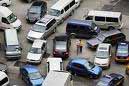
Traffic in China. This is mild!

On a drizzly, cold evening, we hired a three-wheeled motorcycle to carry us to the lake where there is a paved walkway along the shore.  It was raining but we had umbrellas. The driver decided traffic was too slow on the right side of the road so he drove onto the walkway where a police officer appeared from the shadows, blew a whistle and waved him off.

Then the driver drove down the wrong side of the street with a wall of traffic headed toward us. We were sitting on a seat behind the driver of a three-wheel motorcycle.

There was a bus in the lane we were in and the bus started to flash its lights.  Our driver did not blink, and the bus swerved out of the way.  All the cars behind the bus went around us too as if our driver were Moses parting the Red Sea.

We reached the lake alive, and the driver went in search of another paying customer.


Flying the Friendlier Skies in China

February 22, 2010

Originally published at Speak Without Interruption on February 10, 2010
By Bob Grant — publisher/editor for Speak Without Interruption

When I first started going to China, I was warned not to fly on Chinese domestic airlines.  I was told they were old, cast-off planes or old military planes, and that people were crammed into each plane with barnyard and other animals.  Before I felt daring and took a domestic flight one day, I was under the influence of yet another case of Chinese stereotyping. 

In all honesty, over the years, I have not had an uncomfortable or unpleasant flight anywhere inside China.  To get to our meetings we had to fly quite a bit.  We went, mainly, to cities up and down the eastern coast; however, we did fly occasionally to inland locations.  Some flights were long—some were short—all were without mishap.

Chinese Stewardess Photo courtesy of Bob Grant

I found the service provided, once inside the plane, to be exceptional.  I was always greeted in English even if I was the only non-Chinese on the flight, which occurred many times.  I was even handed Chinese newspapers in English. The flight attendants were quite efficient. On most flights, we received drinks, a snack, more beverages, a hot Chinese meal (which was always good), and then a last set of beverages.  I never paid extra for my checked luggage, the snacks, drinks, meals or great service.

I was also impressed with the screening, security, and overall terminal experience.  There “are” many people in China—most seemed to be flying on the same days that I flew.  However, in going through the document check (passport for me—identity cards for my Chinese associates) and then the security check which is similar to the security checks I have been through in other countries including the US, I found the process to be quite efficient.  I am an “early get to the airport” type of guy—my Chinese associates are not.  They gave me much concern on numerous occasions when we would arrive at the airport a half-hour before our plane departed.  Fortunately, we never missed our flight and never really had to run to catch it. We went through all stations in such an efficient manner that I should not have bothered to worry (but I always did).

Again, as with my other posts regarding China, I can only speak to my own experiences.  I am certain other travelers have horror stories about flying domestically within China.  My main reason for offering this insight is, for me, another example of incorrect information when it came to China, its people, and its functioning.

If you would like to read other guest posts by Bob Grant, start with They All Look Alike.


China’s Modern Dynasty

February 21, 2010

In 2012, the new rulers of China will “all” have been educated in the West.

After Mao died, Deng Xiaoping and his supporters “rebuilt” the government. The party instituted term limits, two five-year terms for any political position and an age limit of sixty-seven.

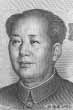
Mao

These changes were implemented to avoid having another modern emperor like Mao. Those who spoke out against Mao while he ruled China were usually killed, went to prison or fell out of favor. Deng Xiaoping’s son was dropped from a high rise and paralyzed for life—the message to Deng was to “shut up or else”.

A high-ranking, retired Communist who fought with Mao during World War II and the revolution told me that the seventy million party members (like America’s Democrats and Republicans) do not always agree on issues.

The difference is that the world hears little of what goes on behind the scenes in China. Doing business that way has little to do with the party. That type of behavior is classically Chinese—not to talk about the elephant in the room or to hang out your dirty laundry for everyone to see as the West does. Behaving like that goes against what “face” means in China.

______________

Lloyd Lofthouse is the award-winning author of the concubine saga, My Splendid Concubine & Our Hart. When you love a Chinese woman, you marry her family and culture too. 

If you want to subscribe to iLook China, there is a “Subscribe” button at the top of the screen in the menu bar.


Teahouse in Shanghai

February 20, 2010

This is where I like to shop when I’m in Shanghai.

It isn't crowded yet

The Huxinting Teahouse has been around for awhile.  Nice place to stop and have a cup of tea.  Go early.  It gets crowded.

famous Shanghai tea house on the water

This area in Shanghai around the Huxinting Teahouse is a good place to shop. Do not pay asking price. Be willing to bargain.  Start low and meet in the middle. Don’t be too cheap either.

Shopping before it gets crowded.

 The following video gives you a musical tour of the sights of Shanghai’s Old District including Yu Yuan Garden and Huxinting Tea House.

For more about Shanghai, also see:
Shanghai
Shanghai’s History & Culture
Shanghai Huangpu River Tour
Eating Gourmet in Shanghai
Chinese Pavilion, Shanghai World Expo

______________

Lloyd Lofthouse is the award-winning author of the concubine saga, My Splendid Concubine & Our Hart. When you love a Chinese woman, you marry her family and culture too. 

If you want to subscribe to iLook China, there is a “Subscribe” button at the top of the screen in the menu bar.


I Ate no Dog – I Ate no Cat

February 19, 2010

Originally published at Speak Without Interruption on February 9, 2010
By Bob Grant — publisher/editor for Speak Without Interruption

When I first traveled to China, I was warned about the food from many well-meaning people—some who had traveled to China and some who had not.  I was told that I would starve if I did not take food in my suitcase, so I did.  I took trail mix and hard candy nearly overloading my suitcase.  It was just one of the stereotypes of China that I had heard and believed before I experienced true Chinese food for myself.  For that first trip, I ended up throwing away most of the food that I had brought because I did not want to lug it back to the U.S.

I will admit that the food is different from what I normally eat—to be honest, it is definitely healthier.  I found there to be a lot of vegetables, fish, and chicken—I never ate Dog or Cat at least to my knowledge.  I ate at restaurants and I ate in factories.  I ate what was put in front of me, and I stayed in places where my associates stayed.  I had customers who went to China on their own for other products.  They would not stay in anything but “Western Style” hotels and would not eat anything but “Western Style” food, and there are places in the larger cities, which have both.  Some of them would even go as far as to not eat during the day with their hosts—rather waiting until they returned to their hotels for their “Western Style” food.  I always felt that was rather rude to say the least and a bit disrespectful. 

As for the food itself, I found it to be, for the most part, rather tasty.  I took my hosts advice and did not drink the tap water.  I drank bottled water, their very excellent hot tea, and a lot of their extremely appealing Chinese beer.  The food was normally brought out as it was prepared and put on a Lazy Susan.  Everyone turned it until the food they wanted was in front of them and then put it on their plates or ate it over, or on, a bowl of steamed white rice.  We ate a lot in restaurants in private rooms, which I truly enjoyed.  There was no outside noise, and the atmosphere was more personal.  When I ate in factories, it was what the employees ate and in their dining area—each experience was unique and enjoyable.  I learned to use Chopsticks at least enough to get food from the plate to my mouth.  Although people keep bringing me utensils, I stuck with the Chopsticks while in the country.  I “never” got sick from anything that I ate or drank in China, which is more than I can say for my normal diet.

The food is just one of the misconceptions of China and its people.  I believed what I was told until I experienced it myself—not unlike other things in my life that I have been told by others only to be dispelled once I experienced it personally.

If you would like to read other guest posts by Bob Grant, start with They All Look Alike