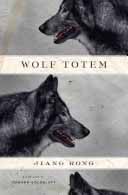
Wolf Totem: A Novel by Jiang Rong-book review

March 2, 2010

Jiang Rong

Another way to learn about China is through Chinese literature and film. Jiang Rong is the pen name for Lu Jiamin, a Chinese citizen. Set during the Cultural Revolution, Wolf Totem describes the education of an intellectual living with nomadic herders in the grasslands of Inner Mongolia.

The publisher of Wolf Totem says this novel is an epic Chinese tale and that is true. Wolf Totem taught me a lot about this almost extinct culture. I learned about the fascinating connection between wolves and Mongols and why this connection may have been the reason why Genghis Khan was so successful in his conquests.

I recommend this novel to anyone that wants to learn more about the life of the Mongols and another aspect of the Cultural Revolution. However, the philosophy of maintaining a balance with nature is a bit overdone. I got the message the first time the characters talked about it but then the topic comes up over and over and over—a bit to much for my taste.

I won’t give away the ending, but don’t expect it to be a happy. Most Chinese novels don’t end with happy endings.

A defense of Wolf Totem By Timothy Weston


China: Portrait of a People–a book review

March 2, 2010

Most tourists travel by jet or bus and spend nights in four or five star hotels sleeping on plush beds. They eat at only the best restaurants. Only a few visit countries like Sir Richard Francis Burton, the famous nineteenth century explorer and adventurer. Tom Carter is one of those few. Imagine backpacking for two years and walking 35,000 miles to capture the heart and soul of a nation. That’s what Tom Carter did to create China: Portrait of a People.

The consensus among ‘backpackers’ is that China is probably the single most challenging country in the world to visit on foot. That by itself should tell you a lot.

There are more than 1.3 billion people in China. Besides the majority Han Chinese, the population includes fifty-six ethnic groups numbering over one hundred million. Carter saw it all from the teenage girl living in Chengdu dressed like an American punk rocker to the soot covered coal miner in Southern Shanxi. Carter’s camera lens captured the complexity and diversity of China.

Tom Carter is a guerrilla hit and run photojournalist with a camera instead of a grenade launcher.  To take the up close and personal pictures in ‘Portrait of  a People’, Carter risked jail; almost froze on the way to Tibet; faced exhaustion and hunger; was beaten by drunks; plagued by viral infections, and risked being shot by North Korean border guards.  The hundreds of photos in ‘Portrait’ are priceless. I doubt if there will ever be another book about China like this one. From Inner Mongolian nomads to newlyweds in Hong Kong, Carter saw it all.

There is an old saying that a picture is equal to a thousand words. Great pictures tell stories.

In ‘China: Portrait of a People’, each picture is worth ten thousand words or maybe more. Carter’s photojournalist study of China stands alone in its genre as it focuses expressly on the Chinese people. Carter  backpacked to remote areas to visit China’s minorities like the thousand year old Phoenix Village perched over the Tuo Jiang River or the seventy-five year old Pai Yao minority farmer in his red turban.

To reach some locations, Carter had to travel on foot into some seriously rugged terrain. To get an idea what I’m talking about, consider that China, almost the size of the United States, has only sixteen percent of its land for growing crops. The rest is either mountains or deserts.

Between the covers of ‘Portrait’, you will see what happens when a modern day Sir Richard Francis Burton spends two years backpacking through China’s thirty-three provinces and autonomous regions, not once but twice. During this odyssey, Carter discovered that the Chinese are a friendly, open hearted people.

If you plan to visit China, buy this book before you go. On the other hand, if you are an armchair tourist that never strays far from home, Carter’s Rembrandt ‘Portrait’ of China will not disappoint. You will chuckle when you see the young, twin boys walking out of the river after a swim or watch the eight year old acrobat student at Wuqiao bending herself like a folded sheet of paper.

Between the covers of ‘Portrait’, you will start a vicarious journey visiting China like few have done even among the Chinese. You will travel on this 35,000 mile journey without leaving your house, bus or jet seat.

There is no way that this review can do justice for ’China: Portrait of a People’. To try would require millions of words. Seeing is believing. What are you waiting for? Take that first step.

Discover Tom Carter’s Guest Post at 24 Hours in Qiannianyaozhai

______________

Lloyd Lofthouse is the award-winning author of the concubine saga, My Splendid Concubine & Our Hart. When you love a Chinese woman, you marry her family and culture too. 

If you want to subscribe to iLook China, there is a “Subscribe” button at the top of the screen in the menu bar. 


Disneyland Chinese Style

March 2, 2010

President Obama’s half brother, Mark Okoth Obama Ndesandjo, is married to a Chinese woman and lives in China. Ndesandjo speaks fluent Mandarin and practices Chinese calligraphy. In a TIME interview, he said, “I’ve experienced the warmth and the graciousness of the Chinese people.” Ndesandjo is overwhelmingly positive about his life in China.

Disneyland

TIME magazine also reported that a Shanghai Disneyland has been approved, and according to a report by the Burbank, California based Themed Entertainment Association, “Chinese consumers have a lot of love for Disney. They’re more excited about Disneyland than the EXPO 2010 Shanghai China.”

To give you an idea how much Chinese love everything American, visit Zhang Yimou’s musical, the Impressions of Liu Sanjie. This musical with a cast of hundreds is staged on and alongside the Li River in Southeast China near Vietnam. The theater reminded me of similar theaters at American theme parks like Six Flags or Disneyland but the musical was local and ethnic.

_______________

Lloyd Lofthouse is the award-winning author of the concubine saga, My Splendid Concubine & Our Hart. When you love a Chinese woman, you marry her family and culture too. 

To subscribe to “iLook China”, look for the “Subscribe” button at the top of the screen in the menu bar, click on it then follow directions.


A Contradiction of Times

March 1, 2010

This guest post from Bob Grant had several photos.  If you want to see them, I suggest you click on the Originally Published link and visit Speak Without Interruption.  I will add two photos here that I took on my last trip, And yes, Bob, I also wish I had taken pictures every time I have visited China since 1999.  I took my first pictures in 2008. Digital makes it easy.

Shanghai

_____________

Originally Published at Speak Without Interruption on February 12, 2010 by Bob Grant — publisher/editor for Speak Without Interruption. Posted on iLook China, 3/1/10 at 12:00

During my trips to China, I wish I had taken more photos of the places I passed, to and from the factories I visited.  In lieu of those photos, I am going to mix some that I found on the Internet with those that I took.

The one phenomenon that I experienced was the contradictions in times as I passed through the cities and into the countryside and back again.  As I have mentioned in earlier postings, I have been traveling to China since 1998.  My time spent there was mainly for business purposes—I rarely took time for sightseeing.

Guilin

However, it was the “everyday” sights that interested me the most—not the so called tourist spots of which China has many.  I would pass from new building construction to old crumbling buildings in a matter of blocks.  I would drive by places in the countryside where it appeared to me that people were living the same way they had for millions of years.  We would drive from beautiful multi-lane highways to rutted brick and dirt roads in a matter of miles.  Workers were sweeping the freeways and other roads with large straw brooms.  Everywhere I looked, I could see new and old in a single setting—a large high rise apartment building next to agricultural areas where people were working the land by hand and animals.

Our office was in Bao’an, which is a suburb, if you will, of Shenzhen which is in southern China across from Hong Kong.  Here is a photo of the view from our office.  Shenzhen has around 14 million people—according to the sources I checked—and it was nothing but swampland almost 30 years ago when it was designated China’s first economic zone. 

The construction that goes on in this and other larger cities is unbelievable. 

However, we visited one factory in what I would call the countryside where the owner was enticed to build a new factory because of the inexpensive cost of the land—somewhere around $4 per acre as I recall as the government wanted to build up business in this rural area. 

This factory was in an extremely picturesque location and from the owner’s balcony, I took a photo of an older boat going down the river.  It reminded me of how the setting (or view) must have been centuries ago.  China has a tremendous amount of history associated with their country—I could see it, in many ways, as I looked out the vehicle window passing to and from our meetings during my numerous visits in country.

I certainly found China to be a country in transition—but as a visitor—I hope they never modernize their country to the extent that it is no longer a Contradiction of Times.

If you enjoyed this piece by Bob Grant, you may want to read these guest posts
I have a Love Affair with China and its People 
http://wp.me/pN4pY-5p

I Am Not the Manchurian Candidate
http://wp.me/pN4pY-6o

I ate no Dog, I Ate no Cat http://wp.me/pN4pY-8y


In the National Interest

March 1, 2010

In World War II, the Japanese bombed Pearl Harbor and woke the sleeping tiger, America.

Then in the 1960s, President John F. Kennedy, during the Cuban missile crises, brought the United States to the brink of nuclear Armageddon. He did this believing it was in the National Interest.

Last night (2/28/2010), I watched an episode on 60 Minutes about a Taiwanese man in the pay of China gathering information about the 6.5 billion-dollar arms sale to Taiwan. Does that make China evil? This morning, I had my answer.

From the dawn of rival civilizations, there have been spies.  It’s all about survival and the national interest. Robert Hart (19th century), who knew the Chinese better than any Westerner, wrote, After China picks its conquerors’ brains; it will be a super-power again. I don’t know what they will do when that times comes. They will decide to either get along with the world or seek revenge for what the world did to them.

In the 19th century, France, England, Germany, Russia, Japan, and the United States attacked China in a series of wars. The devastation visited on a peaceful China started with the Opium Wars and ended with World War II, Korea and Vietnam. Those wars woke the sleeping dragon.

America supports Taiwan—China’s Cuba. The difference is that China sees Taiwan as part of the mainland. What would America do if Hawaii separated from the union, and China supplied the islands with weapons to defend itself? Don’t be surprised if China responds the same way over Taiwan.

The China Americans learned about in school has changed. See Deng Xiaoping’s 20/20 Vision

______________

Lloyd Lofthouse is the award-winning author of the concubine saga, My Splendid Concubine & Our Hart. When you love a Chinese woman, you marry her family and culture too. 

If you want to subscribe to iLook China, there is a “Subscribe” button at the top of the screen in the menu bar.